I am so excited to share with you my experiences of trialling ‘Talk For Writing’ with young preliterate learners. It is an ingenious method that supports preliterate learners to actually ‘read’ target language stories after many novel (pun intended) engaging repetitions of the text.
In this post, I plan to give a very brief introduction to the Talk For Writing (TfW) approach and then demonstrate how TfW supports the early years outcomes as stated in the Australian Languages Curriculum v9. In a following post, I will outline how I adapted TfW for my Indonesian classroom and share the success I enjoyed with my preliterate learners.
If you watch the TfW FAQ videos (scroll down to the bottom) in which Pie Corbett explains the approach, he stresses that it is a cumlative whole school approach. At my site, TfW was initially trialled with two kindergarten classes. It was so successful, that in the following year, it was rolled out to all pre-primary classes, which meant I could incorporate TfW into my transition (4 year olds), kindergarten (5 year olds) and year 1 (6 year old) classes. The added bonus for me was that I could ride on the shirt tales of the junior primary teachers as they implemented TfW in their classrooms; meaning all my students were completely familiar with TfW protocols. After trialling TfW for 2 years, I am confident that it would be straightforward to implement it into any early years language classroom, even those with learners unfamiliar with TfW protocols.
Talk for Writing Background Understandings
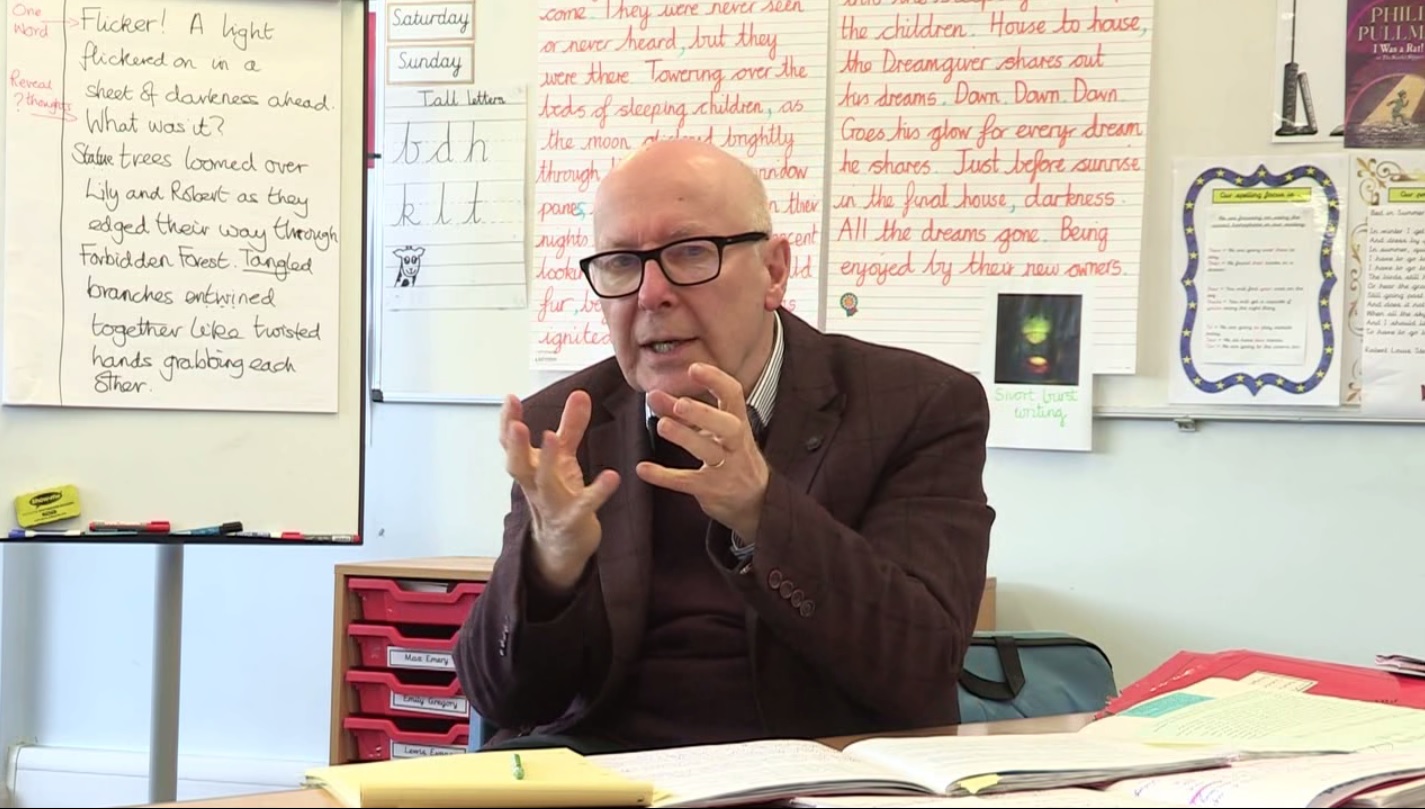
Talk for Writing (TfW) is a 3 step literacy framework developed by Pie Corbett (pictured above) in England. Learners initially focus on a story, before being guided through the writing process before finally creating their own original story version.
According to their website, research data from participating schools demonstrates that TfW impacts significantly on student success and thus motivation and engagement. I too have observed a significant improvement in engagement and outcomes using the TfW approach with preliterate learners. This is because TfW is an oral and pictorial/image centred approach in the early years classroom. Oral story telling is the main focus, and is followed by an ingenious strategy whereby students ‘read’ and ‘write’ versions of the story.
Why Talk For Writing is Perfect for Preliterate Learners
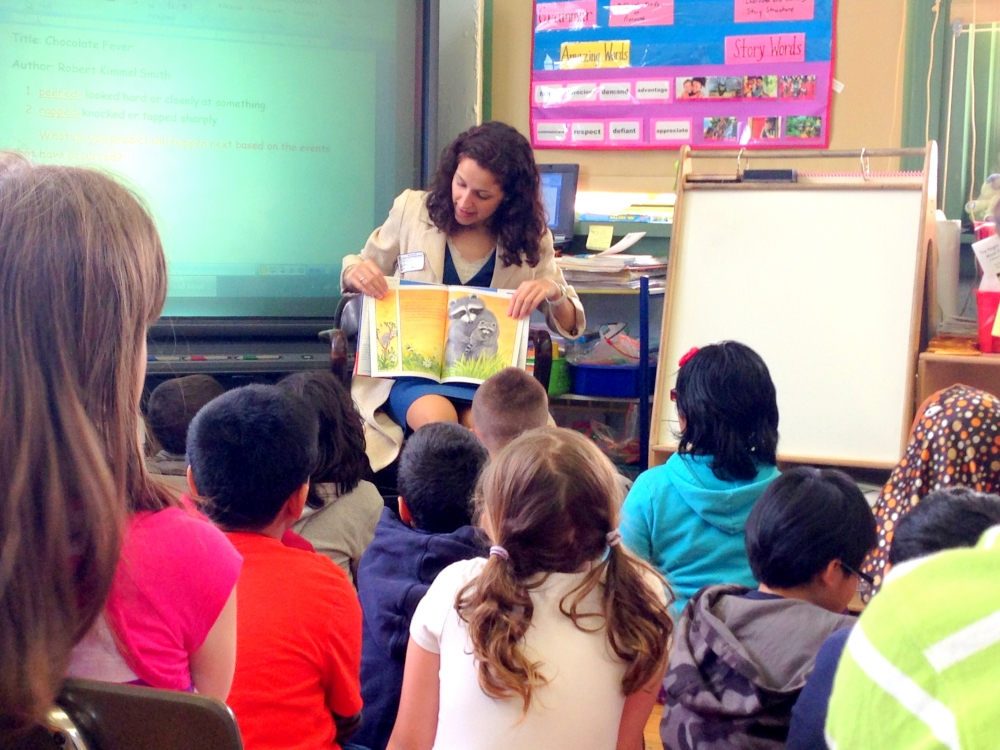
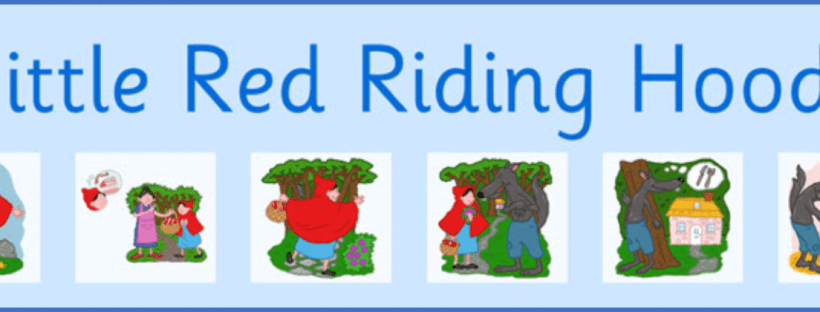
While TfW is usually a whole school program, the approach varies depending on the reading and writing level of the students. For older literate students, who are able to both read and write, the literacy lessons varies significantly to that of preliterate learners. To accomodate for preliterate and emerging literate learners, a body of text is replaced with pictorial images arranged on a story map. The beauty of the images, is that they magically allow learners to ‘read’ effortlessly.
Keeping that in mind, let me now go into greater detail about the stages of TfW so you can appreciate further how it is perfect for preliterate learners.
What is Talk for Writing?
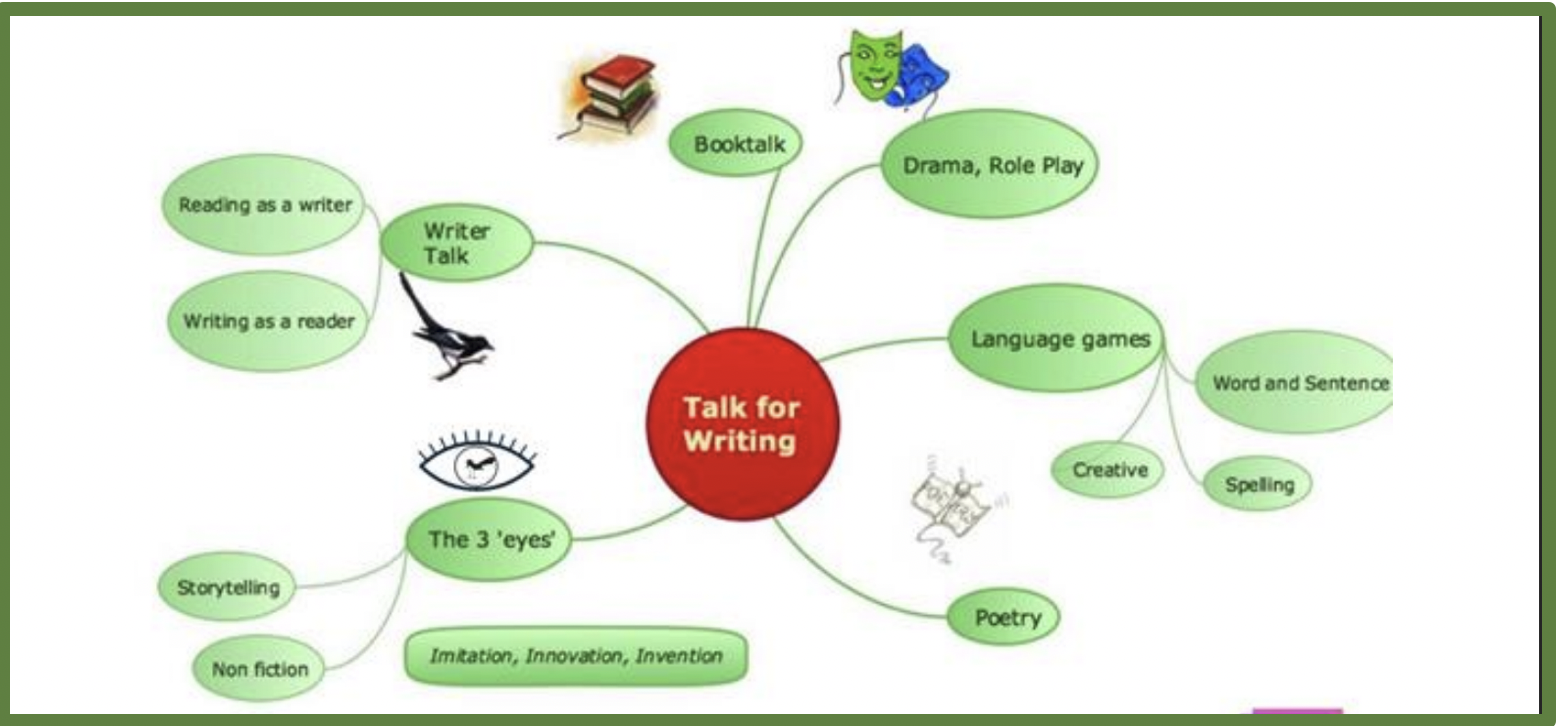
In a classroom context, TfW can be broken down into three main stages.
- IMITATION – learning and internalising a story
- INOVATION – using a learnt story (shared writing, co-creating)
- INVENTION – drawing on all that students know to create their own story
IMITATION
In this initial stage, the goal is to flood students with enough oral repetitions of the story so that through internalising elements, including story framework, the target structures, language conventions, students can independently retell the story. This is a multi sensory stage exploiting the benefits of kinesthetic learning. The kinesthetic techniques used that resonate with my teaching style include using actions/gestures for target structures, TPR and utilising student actors for story retells; all of which are ideal for young preliterate learners. Here is a list of other movement suggestions provided on their website. Choose the ones that best align with CI/ADI.
INOVATION
This stage has the single goal of preparing students for creating their own story version through shared and guided writing. With young learners, the story scaffold is created on a stoiry map using pictorial images. The beauty is that only the important target structures of the story are pictorally represented.
For example, an image of an eye could represent look/see/saw or an image of someone running could represent running/ran/run to (a place).
INVENTION
During this stage, learners create their own stories based on the text they have been studying. Initially, the teacher and students explore aspects of the class story that can be changed, eg the characters, the setting, the complication and the resolution, and then co-create their own class adaptation of the story. This is done both formally with the ‘written’ text and informally through drama and other forms of play based learning. Students are then given many opportunities to not only explore their own adaptions of the model text through drawing, writing and speaking, but also to share their versions with the class.
ACARA – Languages (v9)
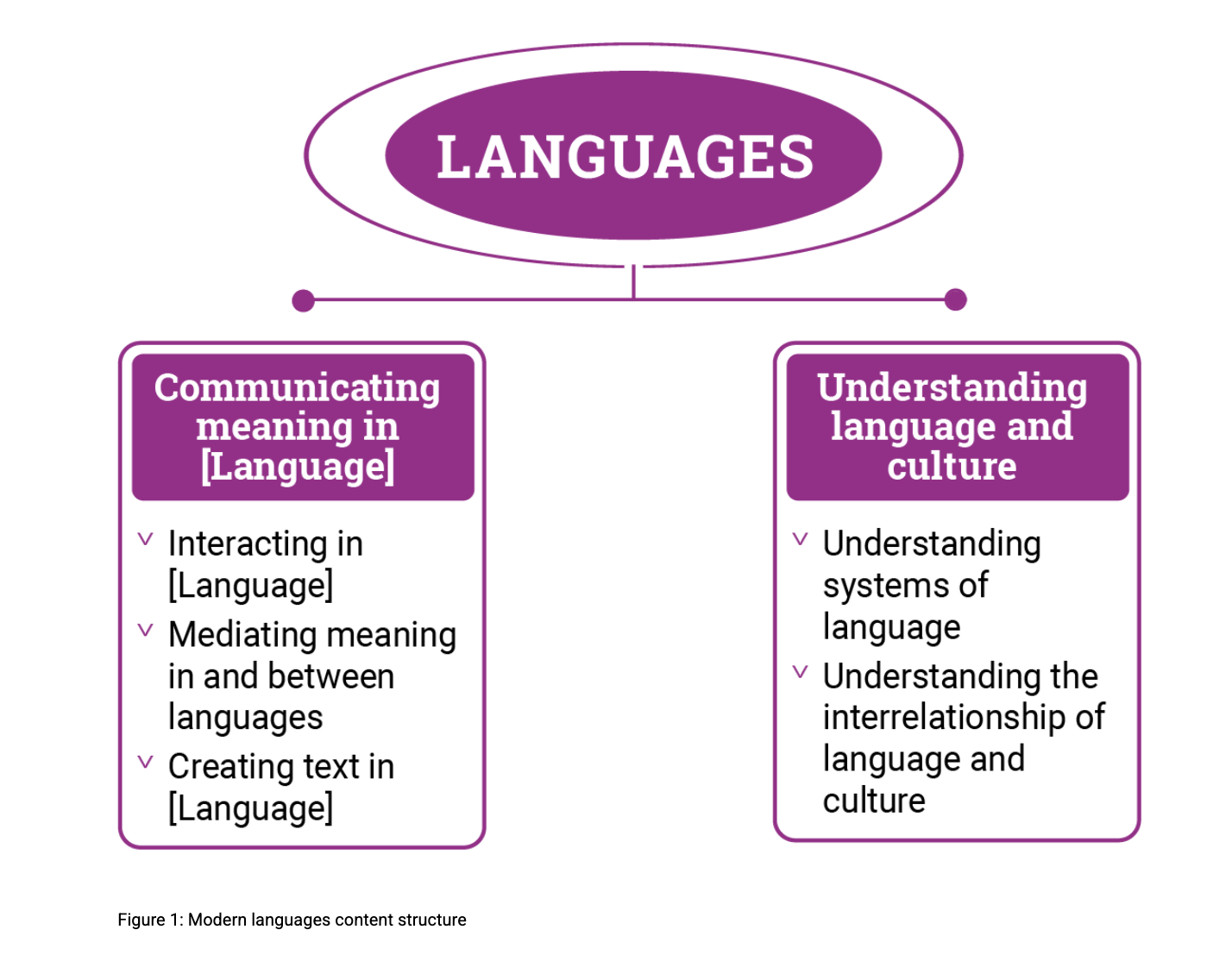
Looking at the diagram below from the 2022 ACARA website, it is clear how Talk for Writing is a brilliant approach for the communication strand and sub-strands within the Languages Learning Area from the Australian Curriculum v9? Through using CI/ADI in a languages classroom, while the interacting strand is covered organically, TfW offers teachers of young learners a novel avenue to cover both:
-Mediating meaning in and between languages &
-Creating text in Language.
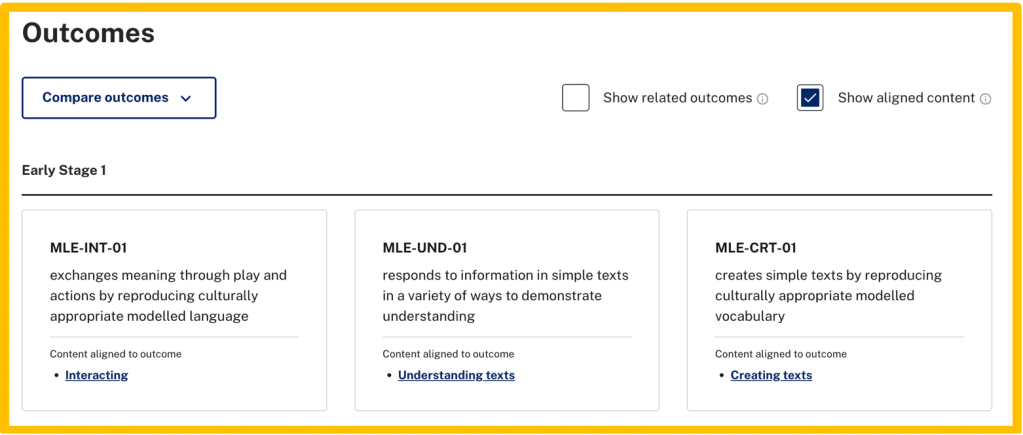
In defining the Early Years substrand outcomes the NSW syllabus is the best in my opinion. Have a look at the following screenshot taken of the NSW Early Years Languages Curriculum Outcomes. Click on the image to go to the page & open the blue links which will outline just how beautifully CI/ADI and TfW align with ACARA outcomes.
In Conclusion….
As this approach is, as the title suggests, aimed at developing writing competency for classroom teachers, there are many components that are not applicable for the CI/ADI language classroom context. The most significant being the considerably shorter amount of lesson time per week language teachers have with students and the considerable difference in learner Target Language proficiency. Classroom teachers using this approach also explicitly teach writing techniques, text analysis, spelling and grammar ‘rehearsals’; none of which would faciliate language acquisition in our context! However it is well worth mentioning that the lessons I observed with a class of 4 year olds, blew my mind. Over the term, the teacher Jen, skillfuly focused on text analysis, vocabulary development and basic aspects of grammar (conjunctions) all pitched well above her 4 year olds proficiency level yet in a masterful way that had impressed parents raving about the story retells heard in the car going home!
Thus, as with any new and appealing idea, the most important thing is pinpointing what it is that would work for your learners & your teaching style and then adapt it to suit your context.
If you are interested in how I adapted the Talk for Writing framework for my preliterate learners, my next blog post will outline how through TfW, I was able to support my preliterate language learners to not only ‘read’ the class story but also to enjoy and benefit from this additional input opportunity; both being unusual in the preliterate language classroom context.
 Indonesian Teacher Reflections