Running Dictation

A couple of weeks ago, I tried Running Dictation with my students using a recommended twist I read about on one of the many amazing TCI blogs I follow.

All year 3-7 students have been focusing on the following target Language this term:
mau – want
kasih – gives
punya – has
minum/makan – drinks/eats

Using a familiar mini story about Spongebob and Patrick, (who are without doubt the most popular celebrities I have discovered for all year levels), I pared down one of our stories down to:
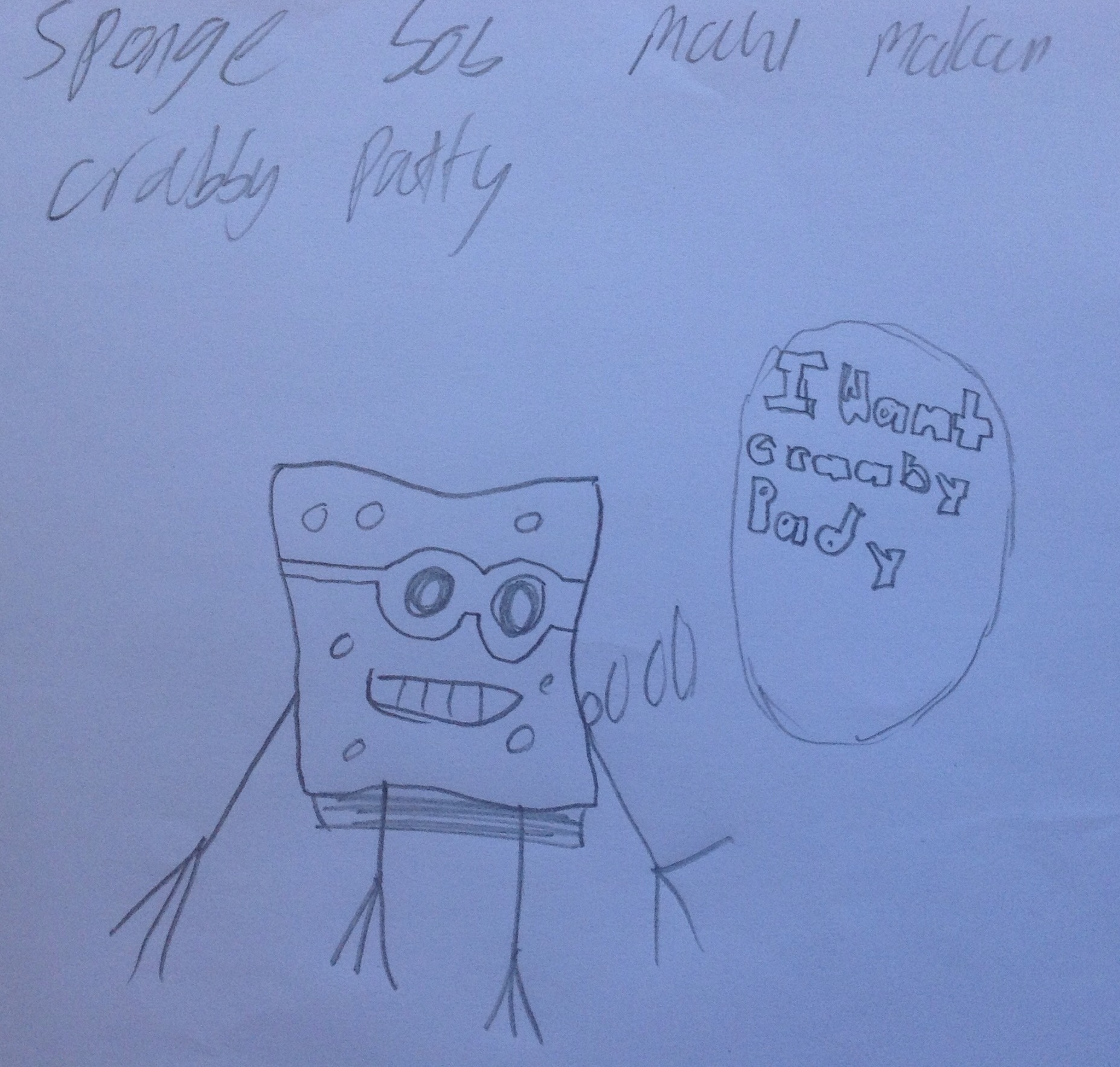
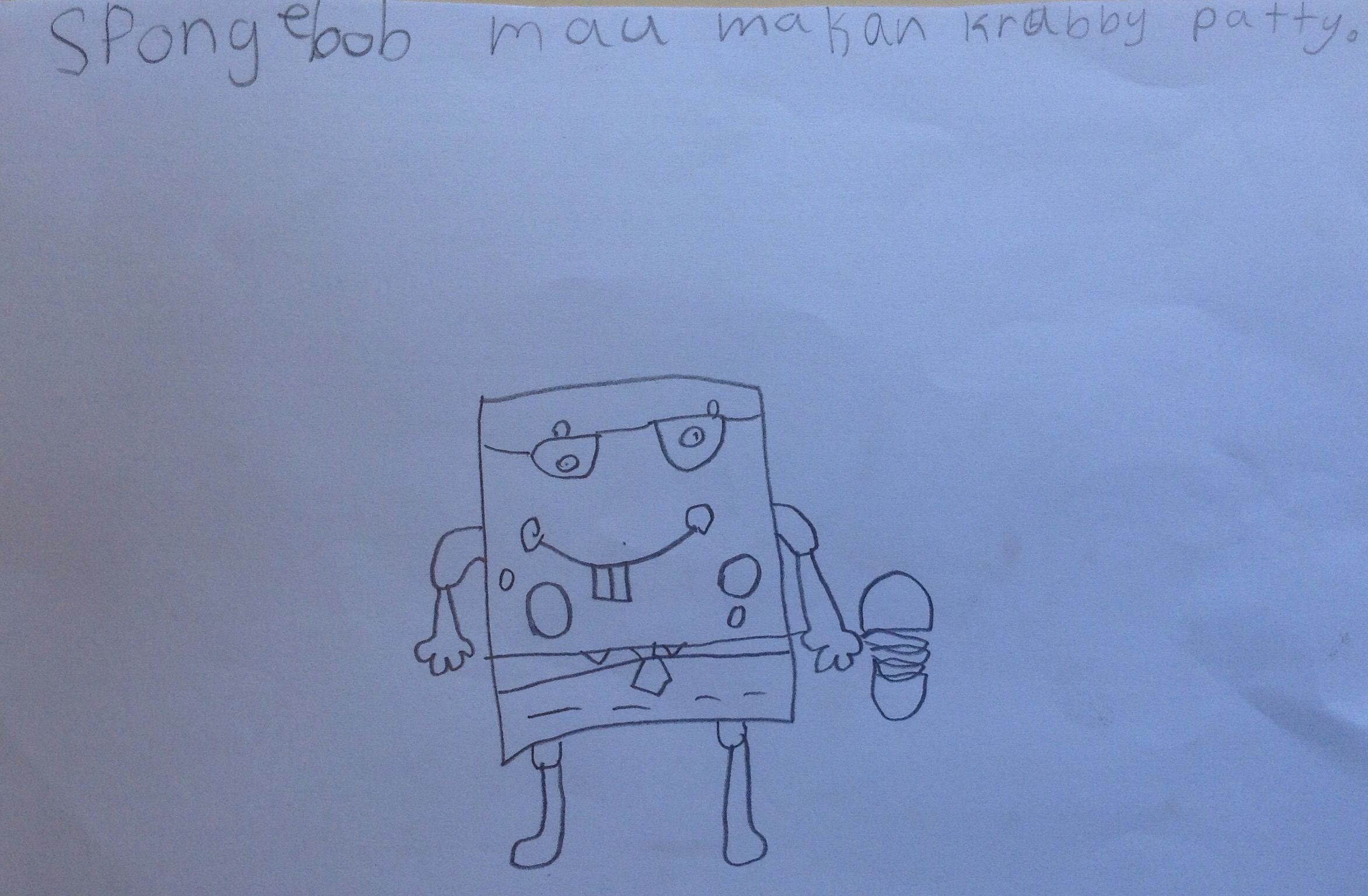
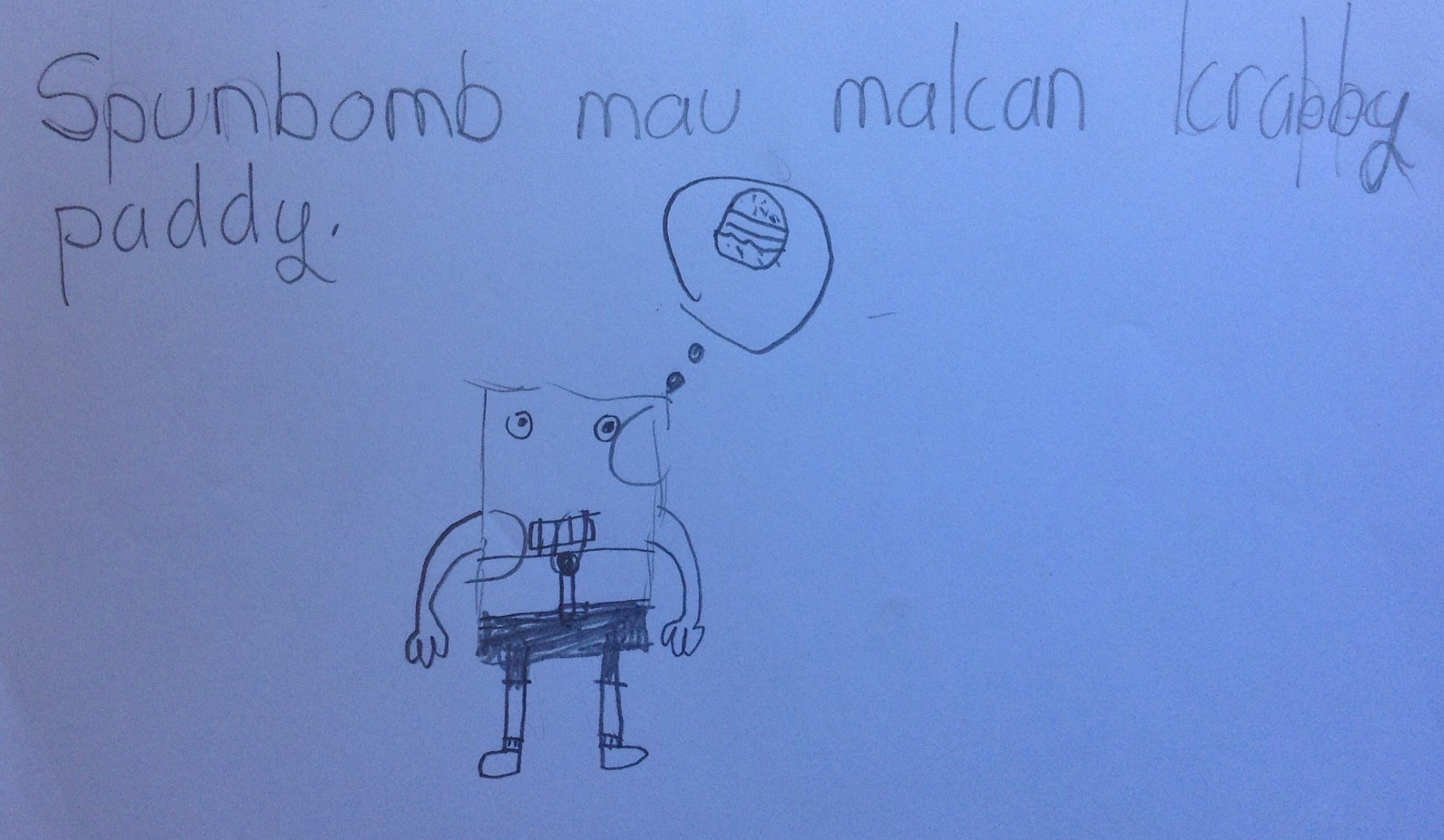
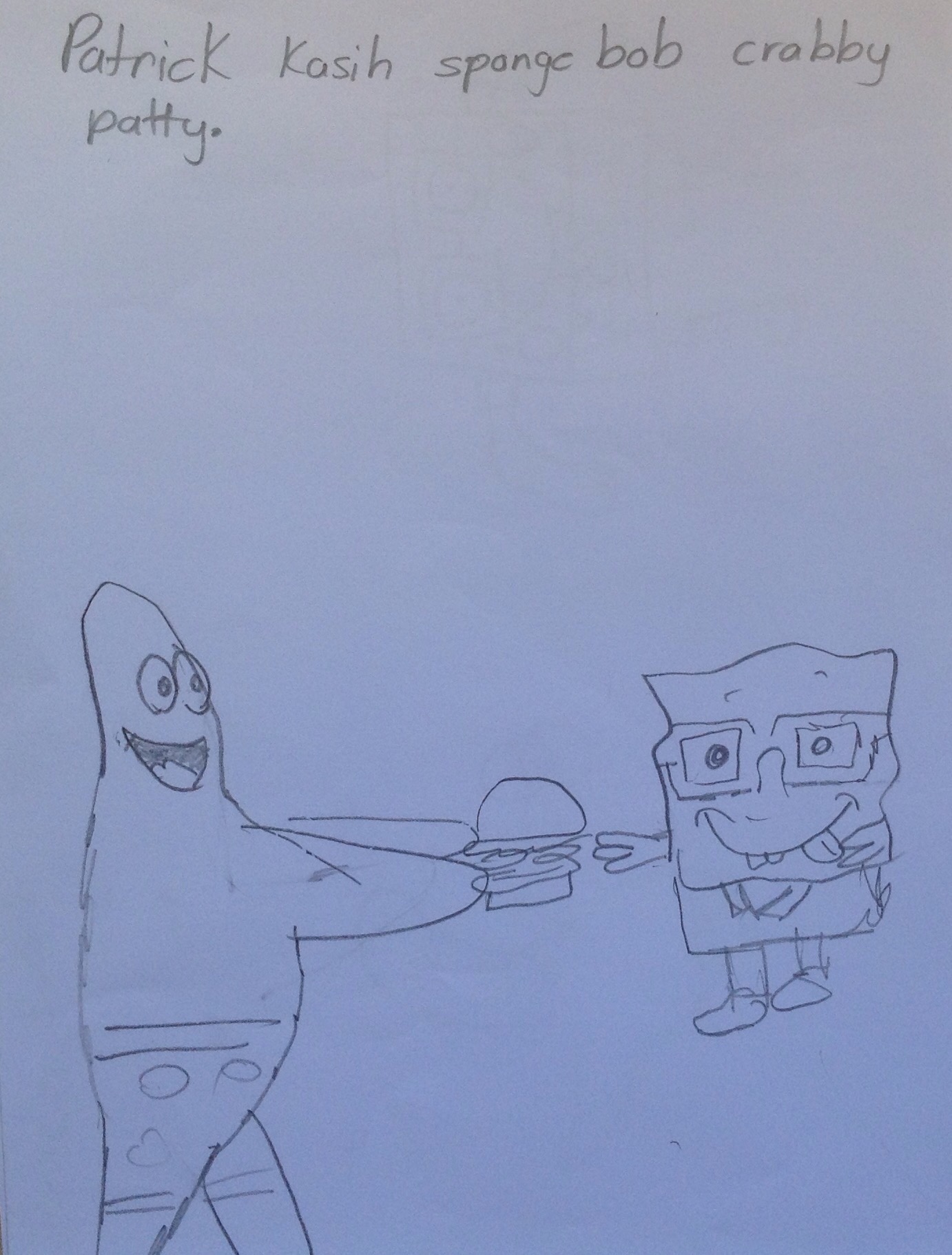
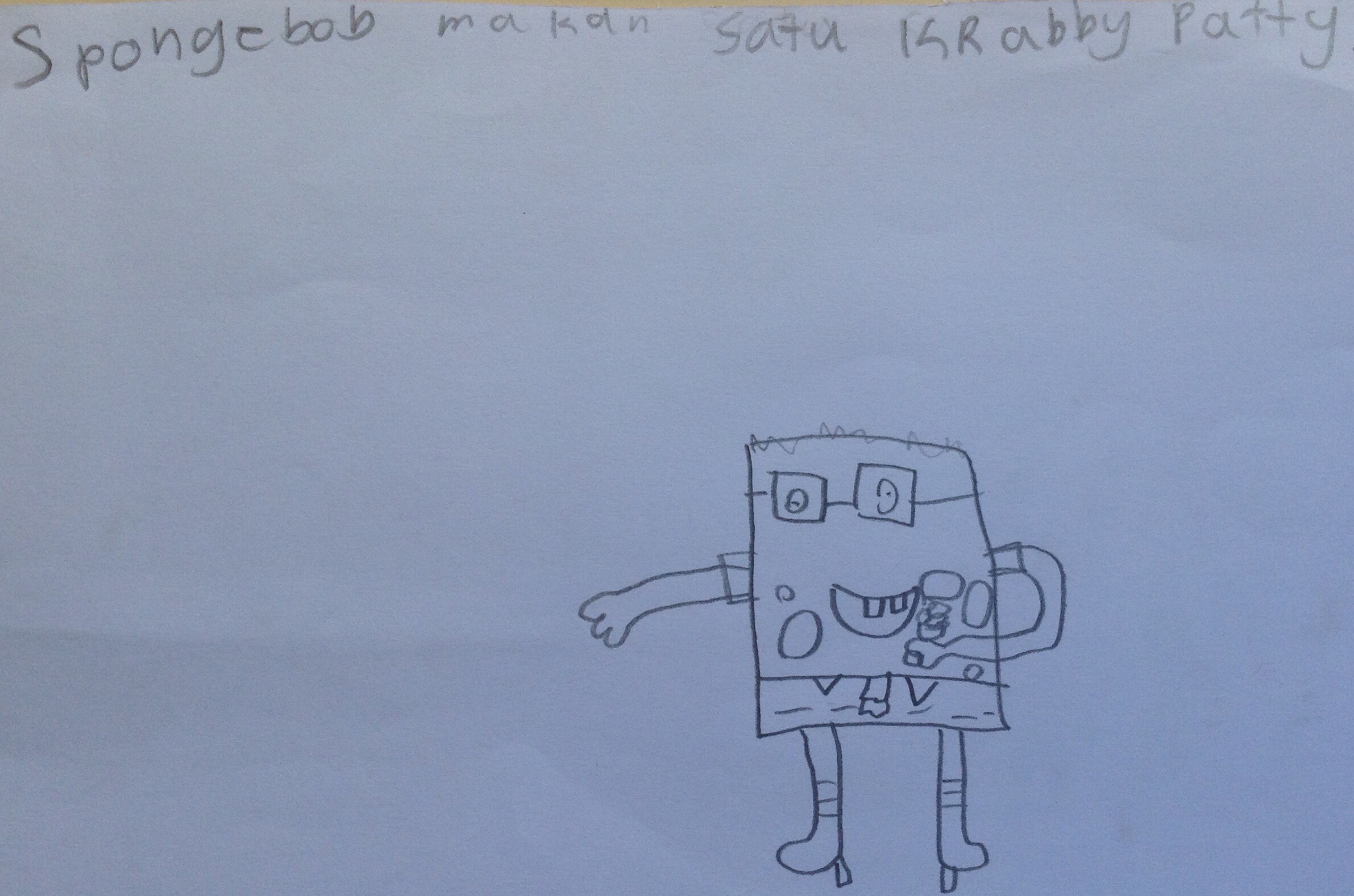
Spongebob mau makan krabby patty.
Patrick punya krabby patty.
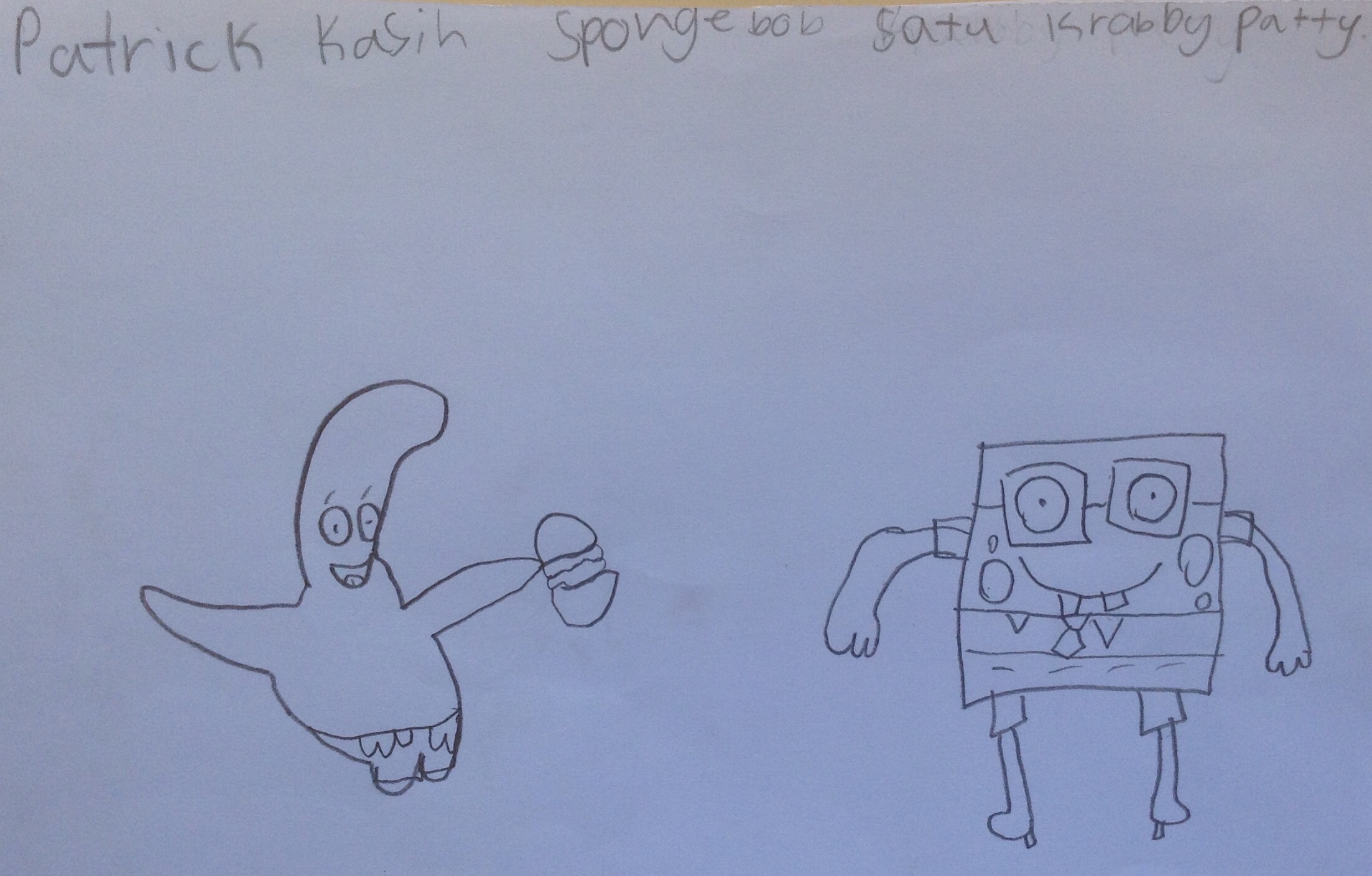
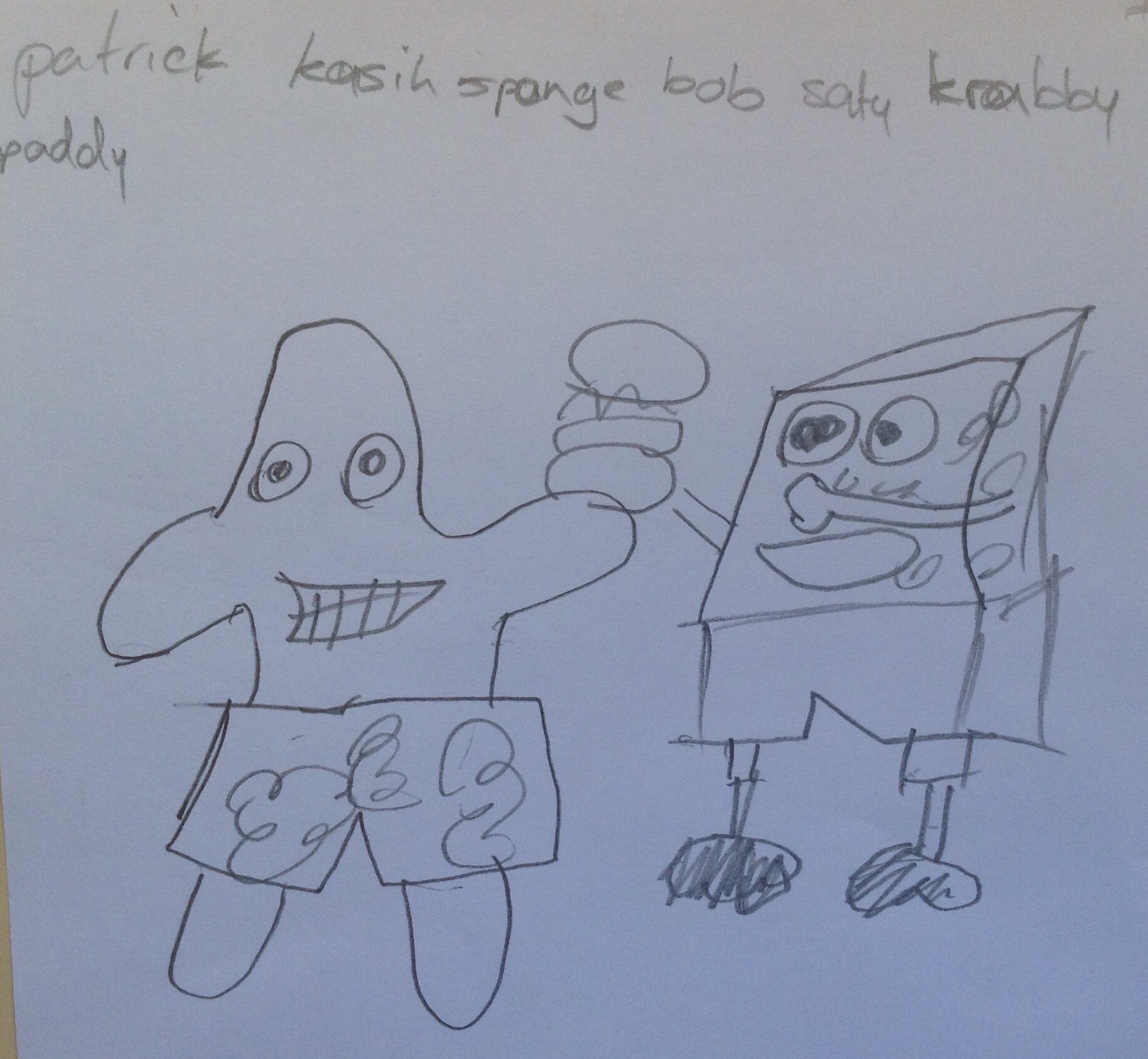
Patrick kasih Spongebob satu krabby patty.
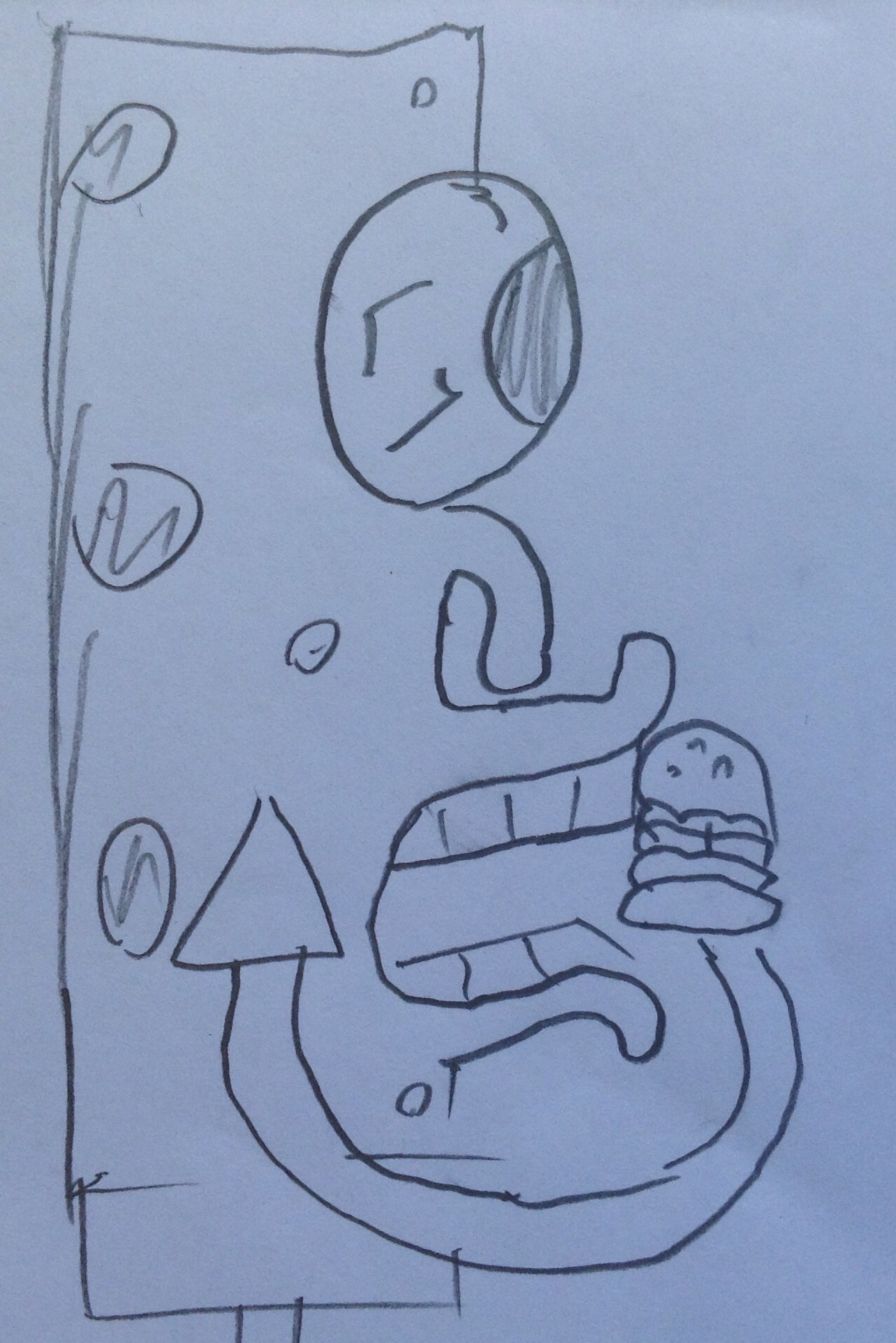
Spongebob makan satu krabby patty.
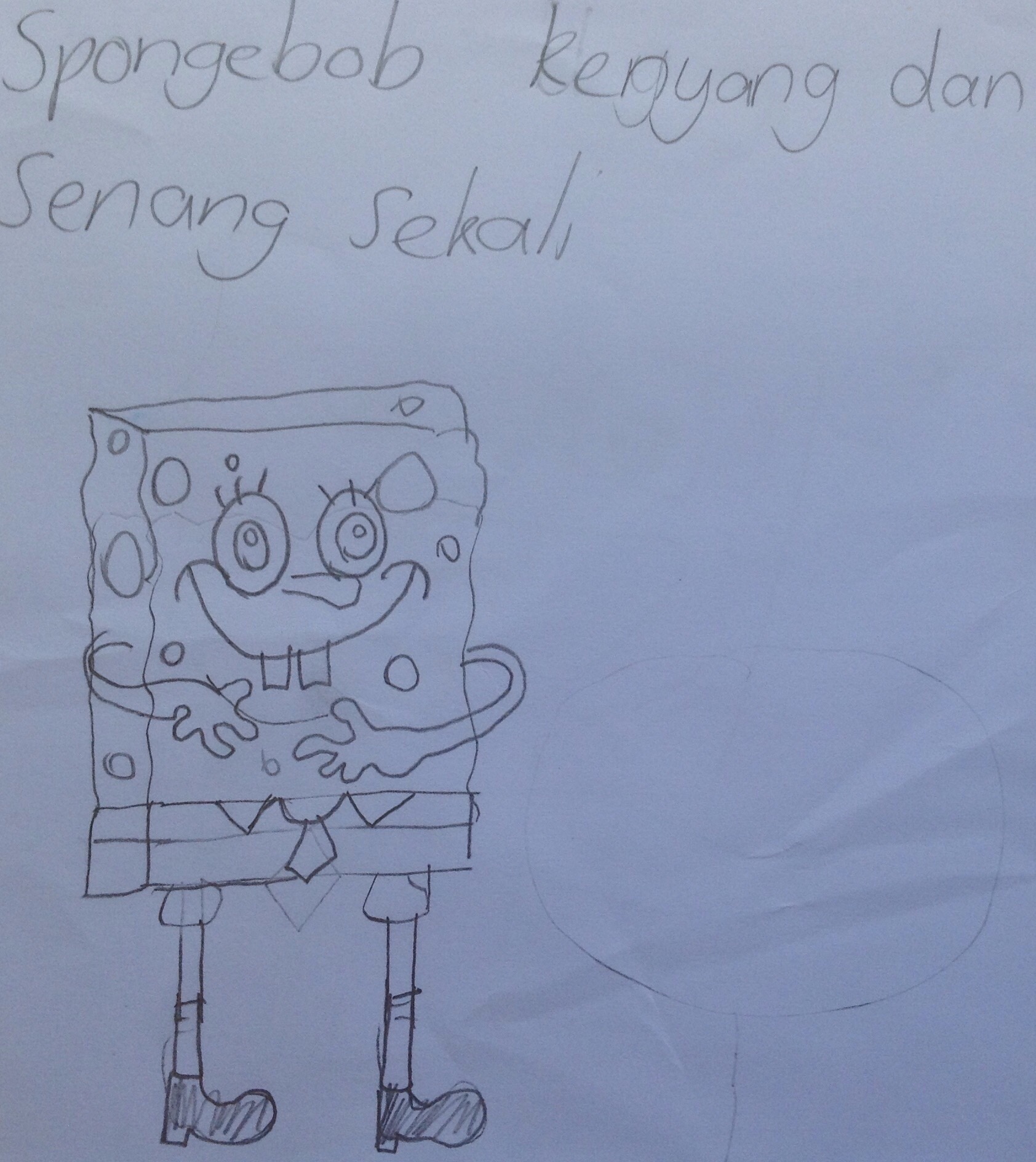
Spongebob kenyang dan senang sekali.

I wrote each sentence in very large font and then printed it onto A3 paper. I cut up the sentences into strips and then put each sentence in different spots around the room randomly. One was on the telephone bench, one on the computer desk, one on a back table, one on another back table and one on the table near my desk.

In groups of 3, students had to nominate
a reader – the fastest and most confident reader with a good memory,
a writer – the neatest and fastest writer who is also a good speller
an illustrator – the best drawer/illustrator.

Before we started, each group needed to organise 2 clipboards, 2 pencils and have 5 sheets of A5 white paper.

The reader had to, in any order, find a strip of the story, read it, memorise it, and then run back to his/her team and retell the writer the sentence. The writer then neatly wrote out the sentence onto one of the A5 pieces of paper, checking with the reader any spelling that they are unsure about. The writer then gives the page to the illustrator who illustrates the sentence.

When all 5 sentences are written and illustrated, the group then puts the 5 pages into the correct order and hands them in to me. I then checked that
a) the pages were in the correct order
b) the sentences were written correctly with no spelling errors
c) the illustrations matched the sentence and demonstrated comprehension.
If all the above were completed, I announced a winner.

It was a terrific and fun activity which consolidated beautifully our focus these past 4 weeks on this vocabulary. I loved the illustrator job which invariably was awarded to the group member with the weakest literacy skills. The look of relief on their faces when they discovered one of the jobs was, in their minds, not literacy based, was really lovely to see. The language that the students used was fantastic and it was truly a collaborative activity. The discussion about the sentences and illustrations was awesome.

My only beef was that as it was a race, the writing and the illustrations were largely rushed. I would love to repeat this again with no time restraints so that the final product could be turned into books which could then be added to the class library.

Here are a sample:
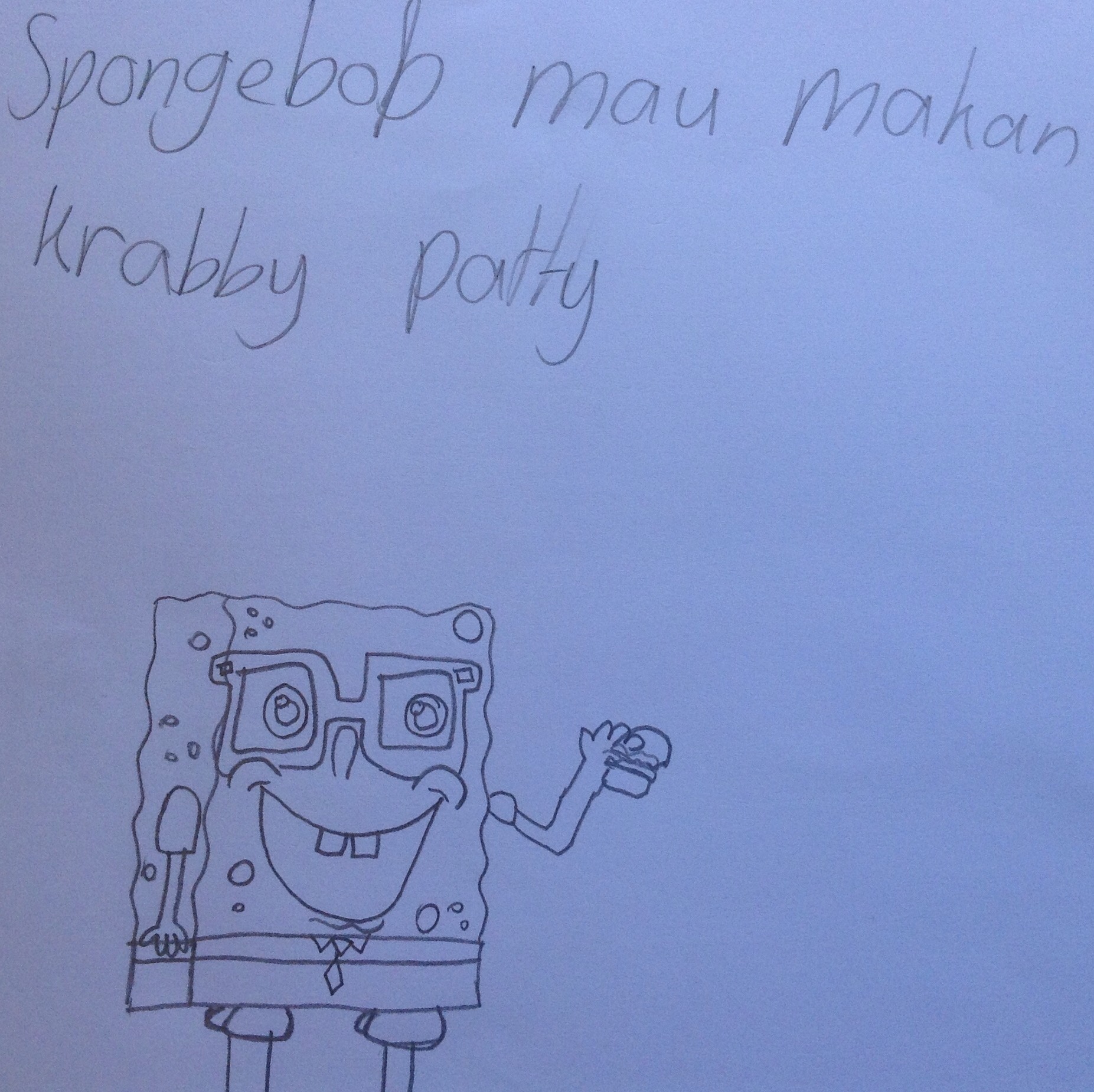
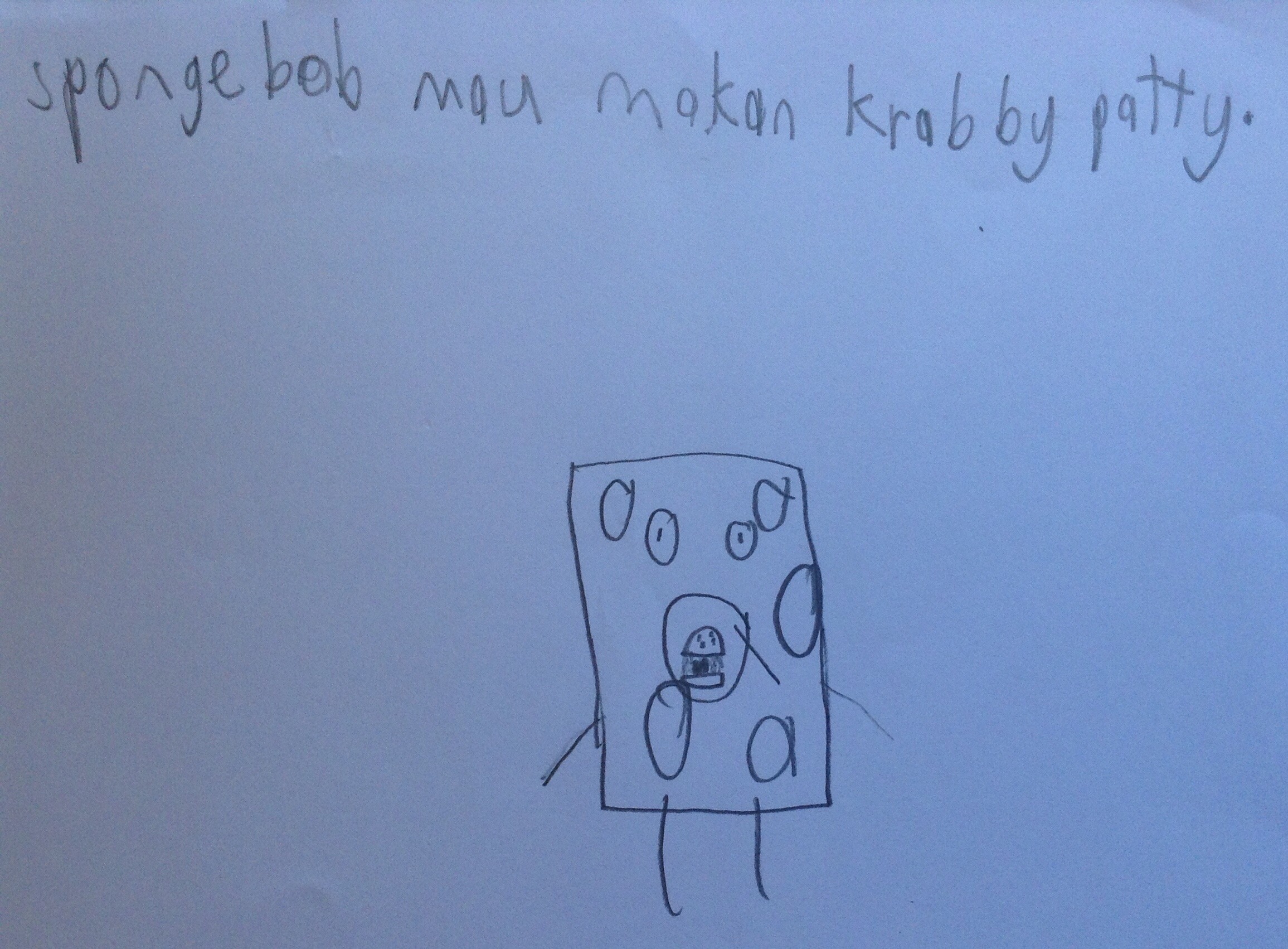
Spongebob mau makan krabby patty
Spongebob wants to eat krabby patties.

IMG_9835

IMG_9837

IMG_9840

IMG_9839

IMG_9842

IMG_9841

IMG_9843

IMG_9838

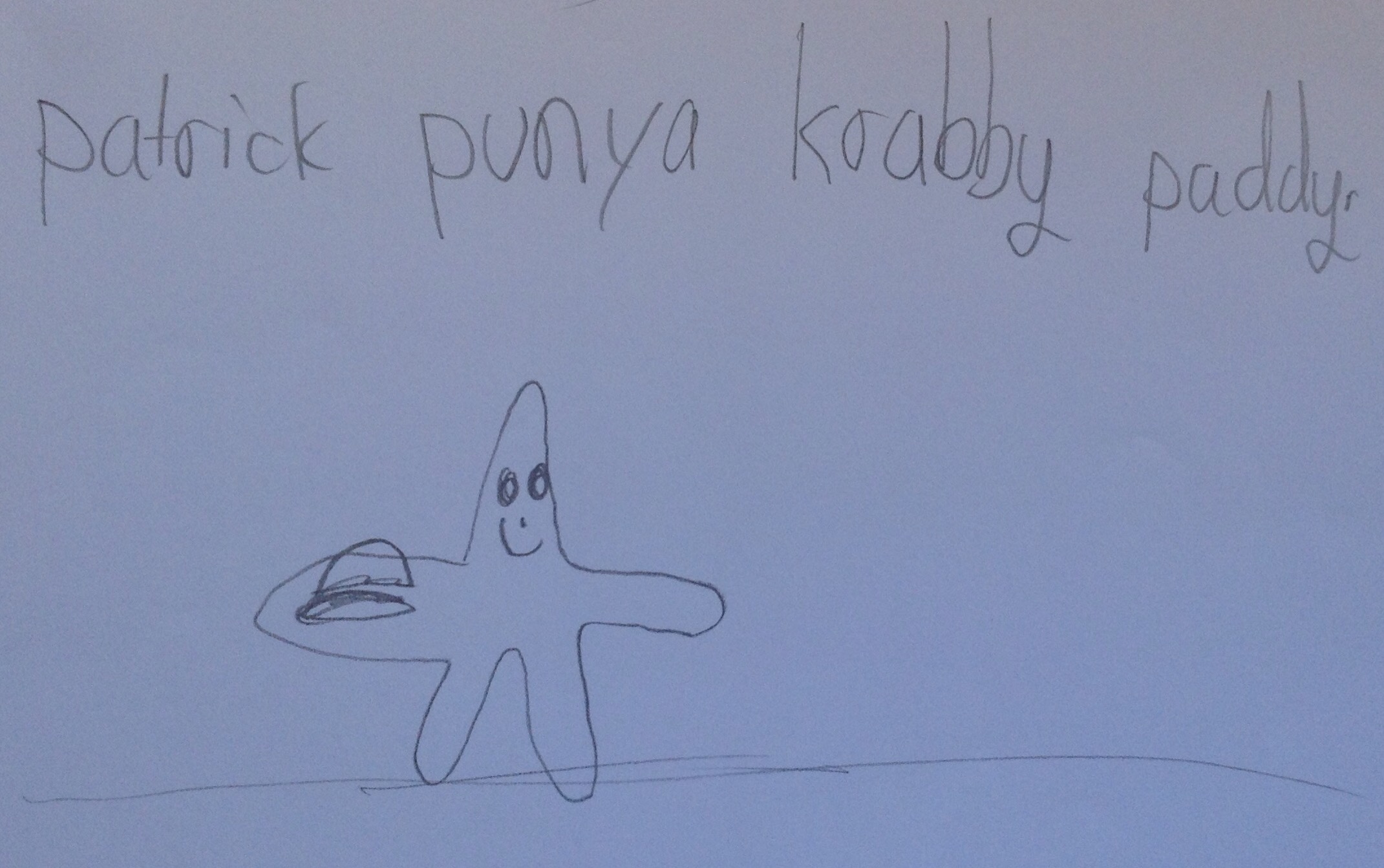
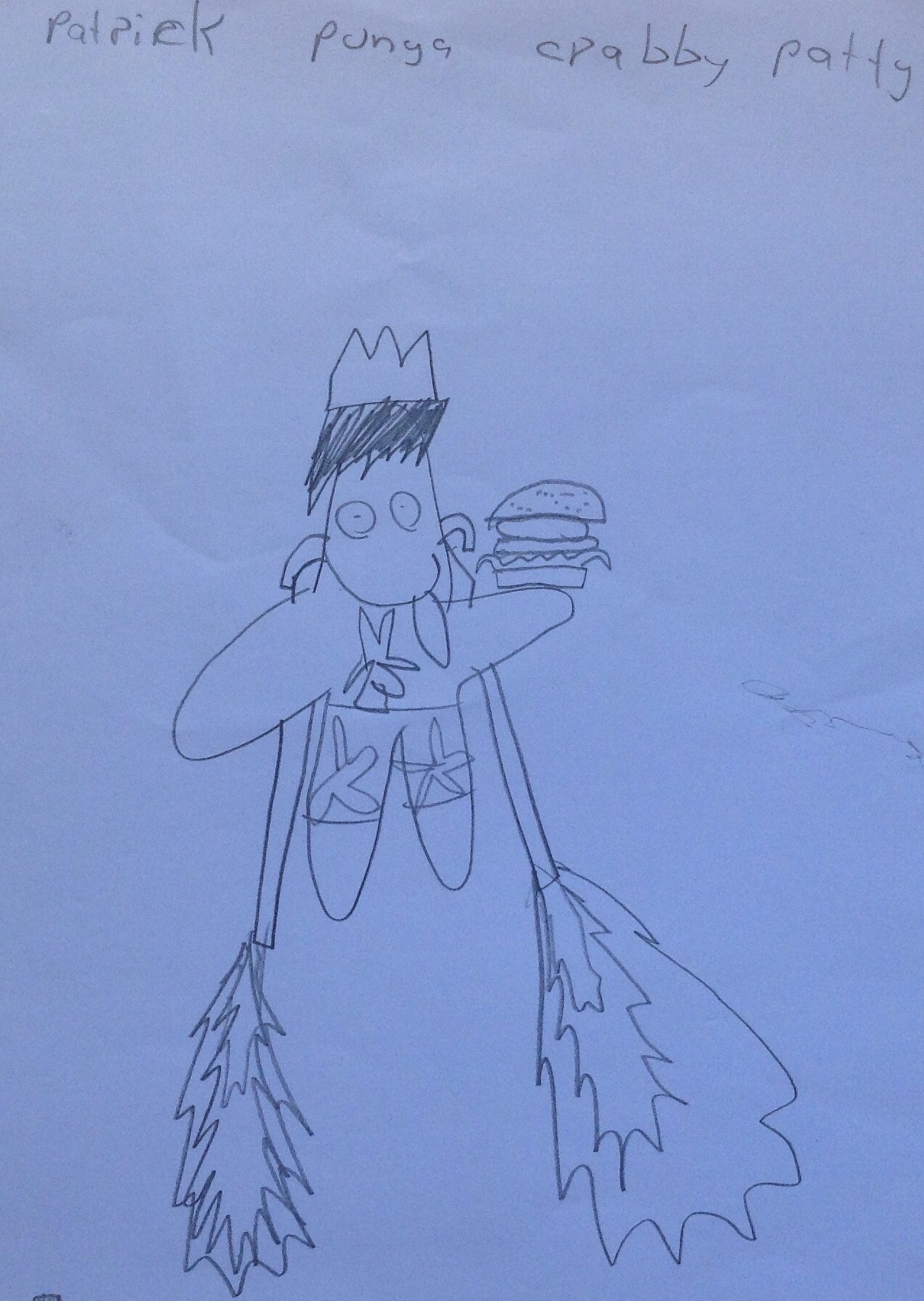
Patrick punya krabby patty
Patrick has krabby patties

IMG_9847

IMG_9844

IMG_9846

IMG_9849

IMG_9850

IMG_9848

IMG_9854

Patrick kasih Spongebob satu krabby patty
Patrick gave Spongebob one krabby patty.

IMG_9856

IMG_9857

IMG_9858

IMG_9855

Spongebob makan satu krabby patty.
Spongebob ate one krabby patty.

IMG_9861

IMG_9862

IMG_9864

IMG_9860

IMG_9859

IMG_9863

Spongebob kenyang dan senang sekali.
Spongebob is full and very happy.

IMG_9870

IMG_9868

IMG_9865

IMG_9867

IMG_9866

Can you just imagine the possibilities there are for taking this even further using these pictures!! Imagine a smart board notebook file with them all and the class matches the sentences to the illustrations, Putting the pictures into the correct order, Retelling the story, Embellishing the story….. the possibilities are endless…

Staying in the Language

One of emphases of TPRS/TCI is for the whole class, including the teacher, to stay in the TL (Target Language) and in the USA, there is a 90% target! We don’t have any such emphasis in the Australian Curriculum, in fact our curriculum appears to largely expect teachers will teach in English.
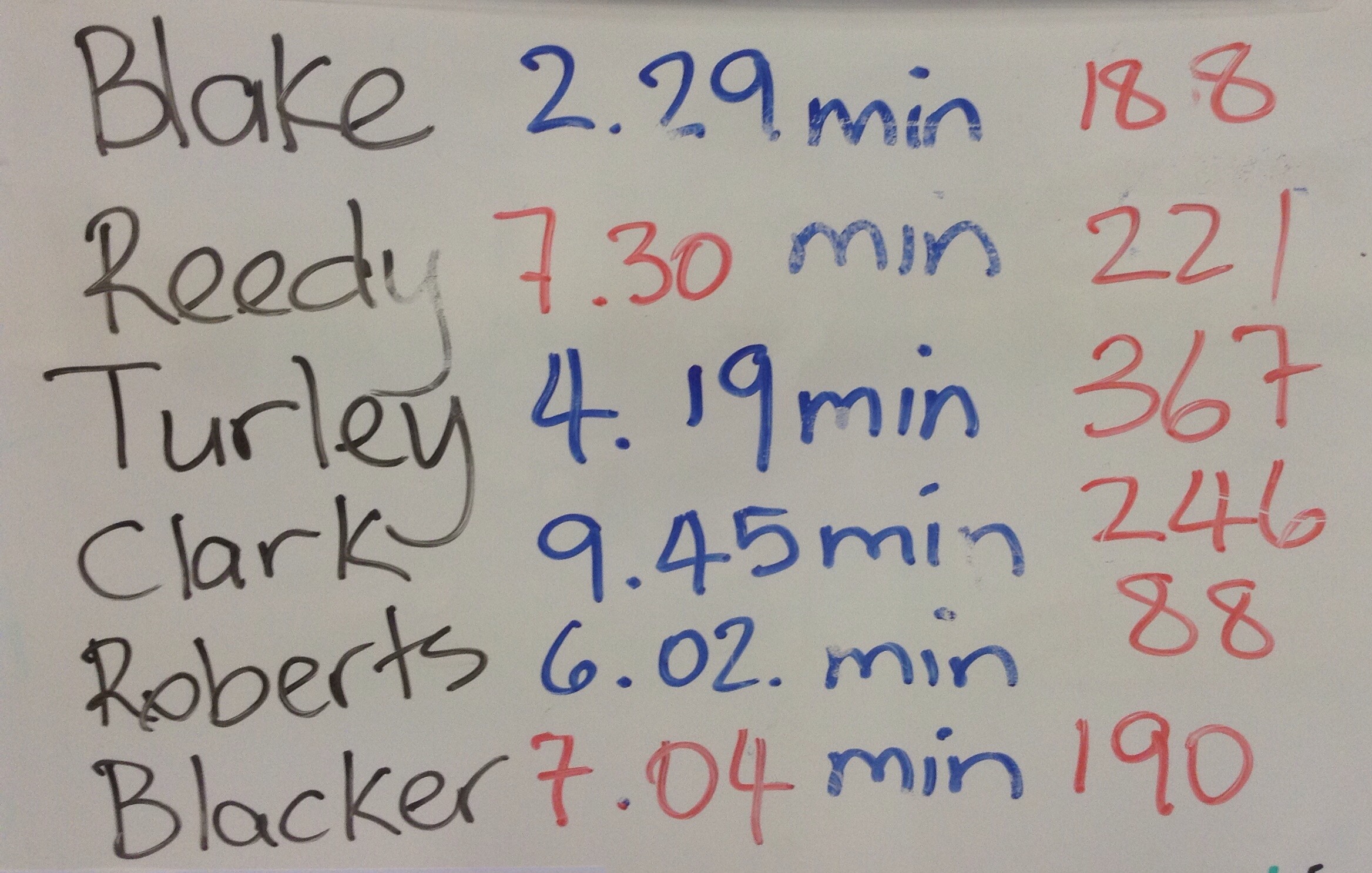
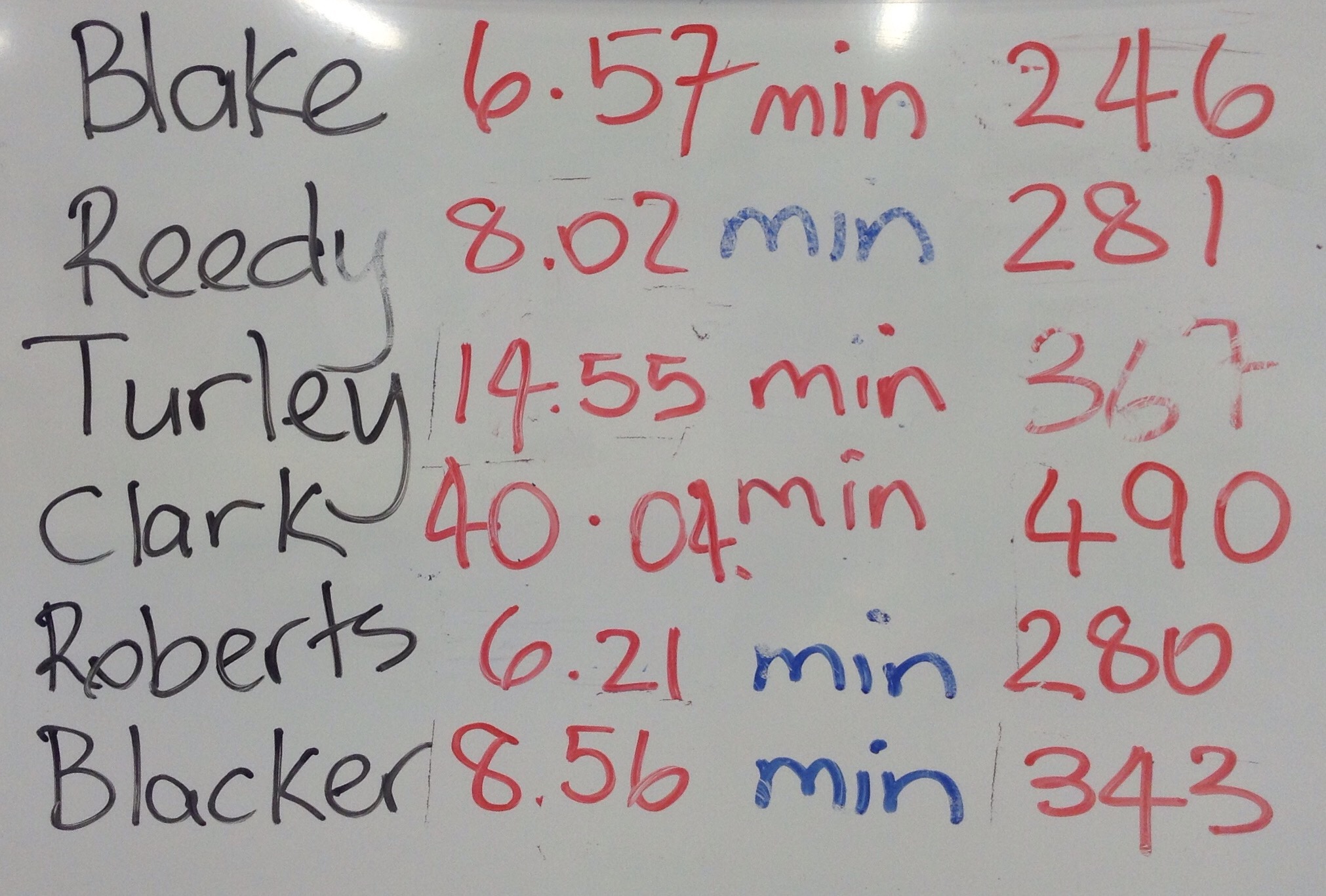
In order to not only record our progress of how many minutes each class stayed in Indonesian in each lesson without blurting (speaking in English) but also to add a level of competition between classes, I introduced the student job of timing just this. A student in most lessons now sits at the back of the room with an ipad, next to the Pembantu Guru, whose job it is to squeeze a plastic pig loudly each time any English is spoken. This is easily the most favourite job we have so far explored! Each time the pig is squeezed, the timer (Penghitung Waktu) stops the timer and records the time. At the end of the lesson, if a new record was achieved, it is added to the board. The second number alongside is the total number of repetitions we get in a lesson of the target structures.
Here is the first photo I took in week 4 with the very first scores:

IMG_9591
And here is week 5:

IMG_9622
Here is week 6:

IMG_9715
And finally last weeks:

IMG_9747The funny thing about this latest shot is that 6/7 Turley came in to class and were determined to beat their score. They agreed it was pathetic that the 6/7 class had the lowest time. They tried and tried and yet someone would blurt out in English after just a few minutes. Finally with 11 minutes to go, they all realised this was their final chance and it was so impressive how they all dug deep to keep a lid on their blurting. It was such an accomplishment for them. The very next class though, was the other 6/7 class. When they walked in and saw that they were the only class yet to beat their initial score, they all decided then and there to not only set a new PB, but to also totally thrash the other 6/7 class. And boy did they ever!! 33 minutes was far in excess of what I was expecting from any class in first term!! I had actually said to classes all I’d really hoped for was 10 minutes!! What made me smile though was that whenever a 6/7 student asked, ‘Boleh saya Bahasa Ingris?” The rest of the class would shout “Tidak boleh!”
So now there is a huge inter class competition between the two year 6/7 classes!! I don’t know who is more challenged by this determination of the two classes to only use Indonesian in class; them or me!! My challenge is that whatever I say has to be 100% comprehensible to each and every student!! No easy feat I can tell you! Today because 6/7 Clark wanted to reach the target of 40 minutes, we went into recess slightly and ensuring comprehension remained, I had to resort to a few quick written translations on the board so that I could continue without blurting myself!! Made me feel a little guilty but it is sooo hard when we have only been using TCI properly for barely 8 weeks!!

IMG_9801

Week One Bridge Program at PEPS

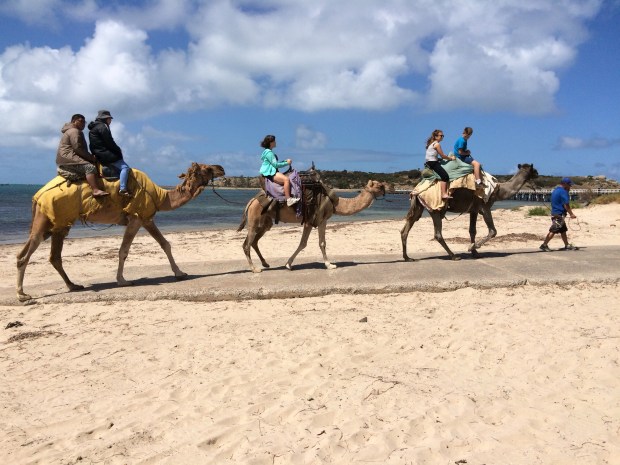
What a week! Our Bridge partners returned home with Marg & I Saturday night and after a good nights sleep, Sunday was spent catching up on washing and looking at a few of our local tourist attractions.

IMG_9725

IMG_9726

IMG_9727 I had hoped to grab some time to program but other than a quick look, it didn’t happen. Thankfully I had done some the week before I left. We all went to bed absolutely exhausted again Sunday night and would’ve preferred having one more day before heading back to school!

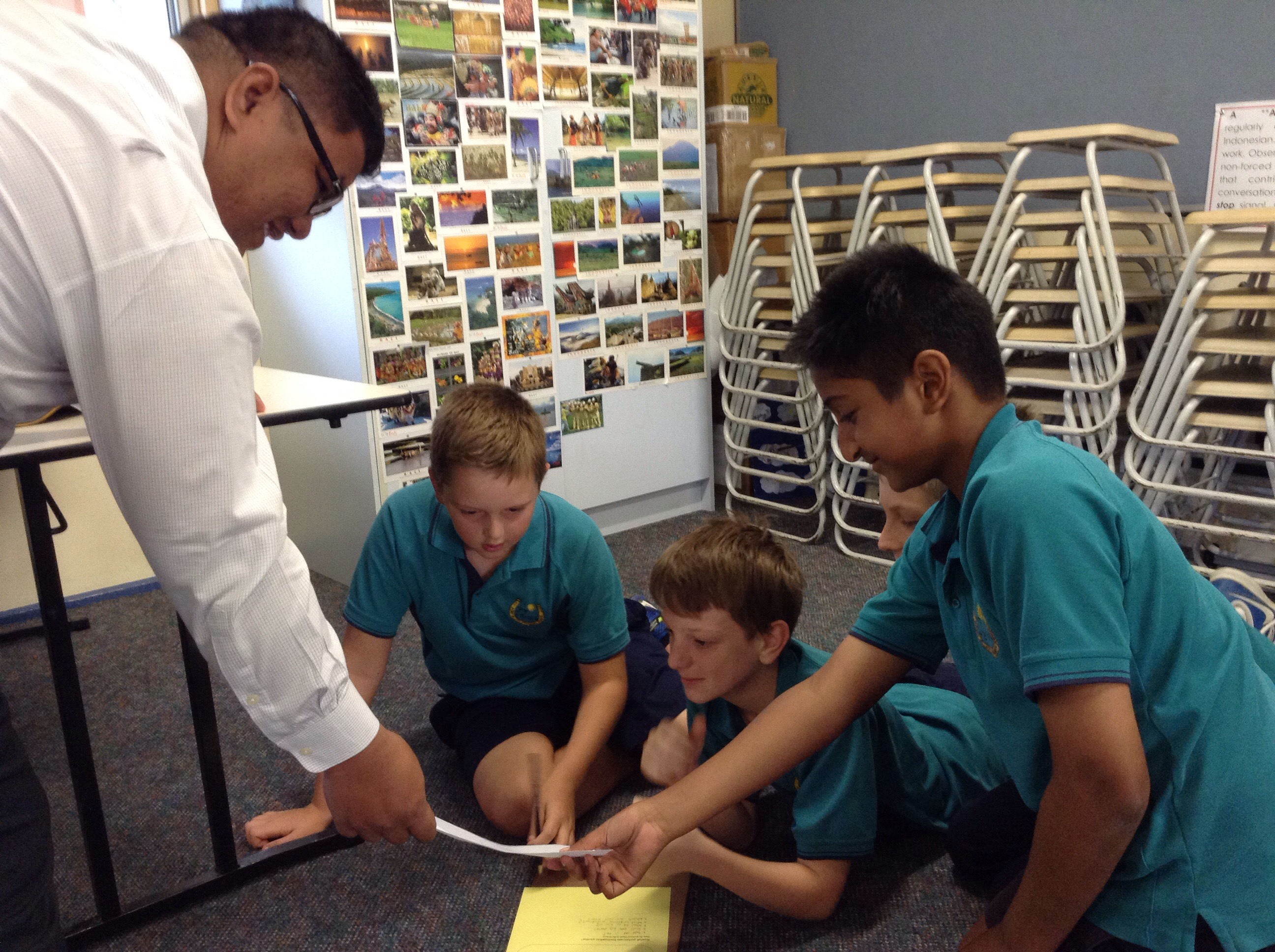
On Monday, I decided to teach as per usual to give Pak Pahot & Ibu Eliza the opportunity to observe TCI methodology in the Indonesian classroom. I didn’t say anything beforehand, other than to warn them that I don’t teach Indonesian the way other language teachers in Australia do, as I thought it would be easier to answer any questions afterwards. However, I was disappointed later when there were no questions or comments. I later realised that both Pak Pahot and Ibu Eliza are classroom teachers, not language teachers! After school we discussed the schedule for Tuesday. Both said they had lessons that they’d like to teach. Ibu Eliza had brought a lesson about the 7 presidents and Pak Pahot wanted to teach younger students about 10 native Indonesian fruits. This worked out perfectly with the timetable for Tuesday as the 2 year 6/7 classes were first and the last two lessons were firstly a year 1 class and then a year 2/3 class, so we headed to the SSO room to prepare for our lessons using the PC’s which was easier than getting them onto the school wifi.

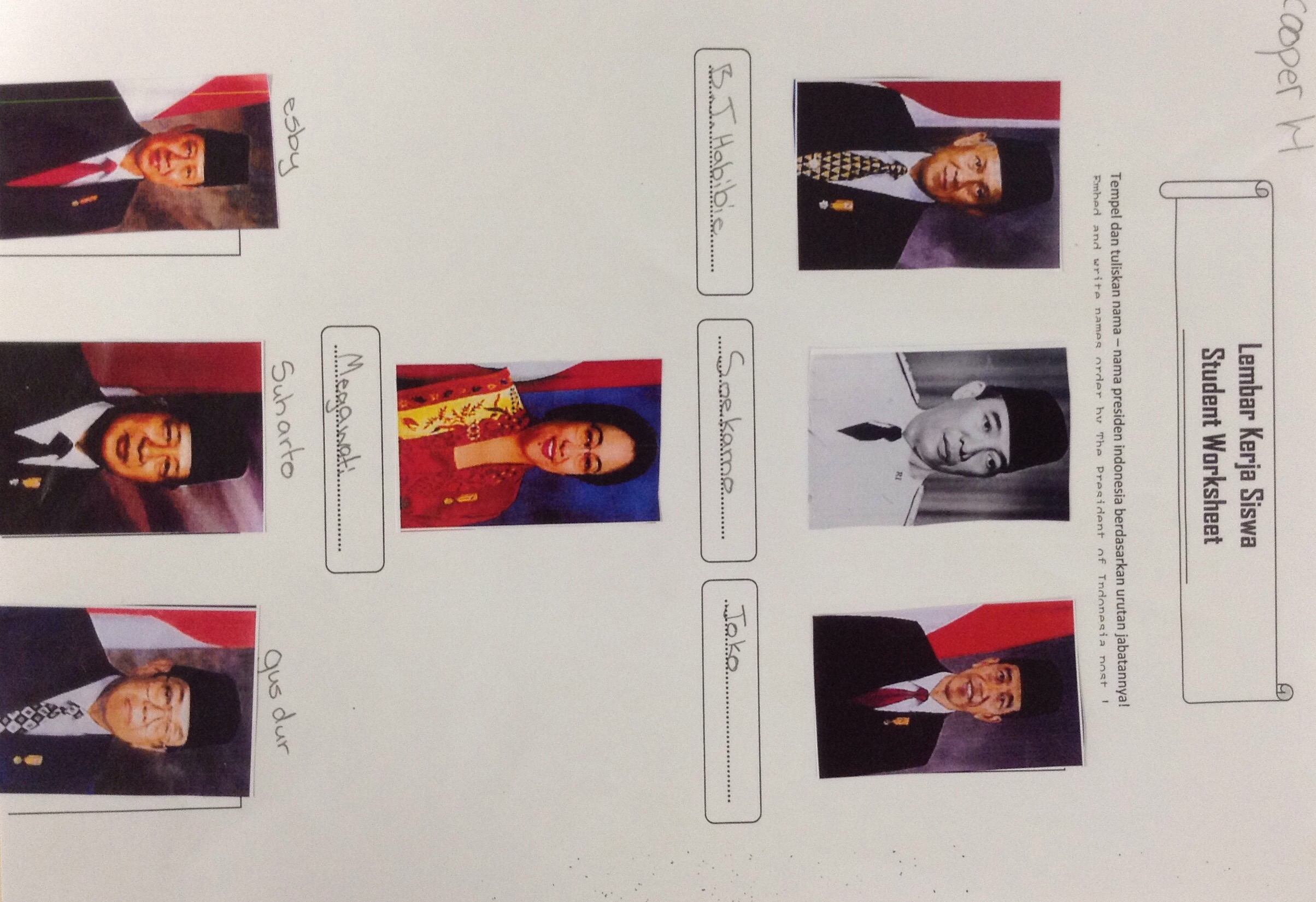
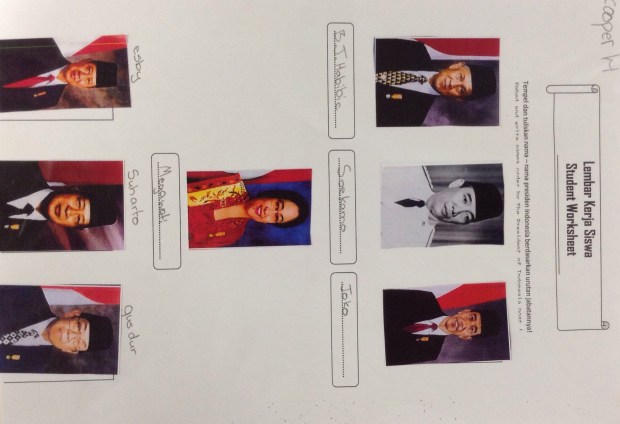
Consequently Tuesday was a lovely day for us all. I supported both teachers for 4 of the 5 lessons I usually teach on Tuesdays with translations and classroom management while students thoroughly enjoyed being taught bilingually. Ibu Eliza’s lesson had several components to it and in retrospect would have been less rushed if we had spread it over 2 lessons, yet because we had so much to get through in 50 minutes, they didn’t have any time to get distracted. Students were divided into 7 groups and then given a page with a small picture of one of Indonesia’s past or present presidents at the top. Under the picture, students had to write down 5 questions they would like to know about that president. The questions written by students were varied and ranged from what is his/her name? to: Was he/she a popular president? Each group then had to choose one of their questions and then they were given a paragraph of information about the president they were focusing on. Students had to read through the information to find the answer to their question. Any other information they discovered was written underneath a picture on another sheet handed out to groups. Had we enough time, Ibu Eliza had hoped that each group could share what they had learned about each president, however we were getting close to the end of the lesson, so we jumped straight into the next step which was to hand out another sheet with 7 boxes and 7 pictures of each of the 7 presidents and have students glue them on in order of presidency writing their names down underneath. By the 2nd lesson, Pak Pahot had simplified this for students by numbering each picture on the back! Students then had to ask each other for names of each president. The students responded well to this lesson and as the students needed to work quickly there was little time for off task behaviours. I did enjoy a quick discussion with one group who had Joko Widodo. They asked me to confirm if he was the current president who supported the death penalty. When I confirmed that it was, they then all had a really great discussion on their own opinions. I was so impressed with their comments and that they didn’t all agree yet respected each others opinions.
IMG_9687

IMG_9686

After recess, in my non contact time, Sandy, the year 3 teacher, Skyped us for a mystery Skype. The original plan had been to do the mystery Skype from Sydney but for many reasons, this didn’t happen. Because the aim of a mystery Skype is to guess the location of the other ‘school’, we couldn’t tell anyone at all where Pak Pahot and Ibu Eliza come from beforehand!! We sat in the Indonesian room while the Year 3’s remained in their room, each with maps of Indonesia in their laps. There first question was, “Do you live in the Northern Hemisphere?” which was a great one as it eliminated so much of Indonesia and didn’t take them long to hone in on Medan! It was lots of fun even though the poor students were confused when I asked them to look at us and in doing so turned their back on us as the webcam was on the PC yet we were projected up onto the smart board!! Sorry guys!!

IMG_9698
The students then asked a few questions including;
What are your houses made from? Cement and bricks
Do you have any pets? Pak Pahot has a dog called Whitefang and Ibu Eliza has fish and chooks.
What do you do in your spare time? Reading and cooking
What musical instruments do you play? Pak Pahot plays the guitar, the organ and angklung
Do you have any children? Pak Pahot has a 9 month old son named MIchael.
Who do you live with? Pak Pahot lives with his wife, his son and 3 younger brothers whereas Ibu Eliza lives with her husband and niece. Sandy has blogged about the Mystery Skype in more detail on her class blog. Read the post here and read what the students wrote about the experience!

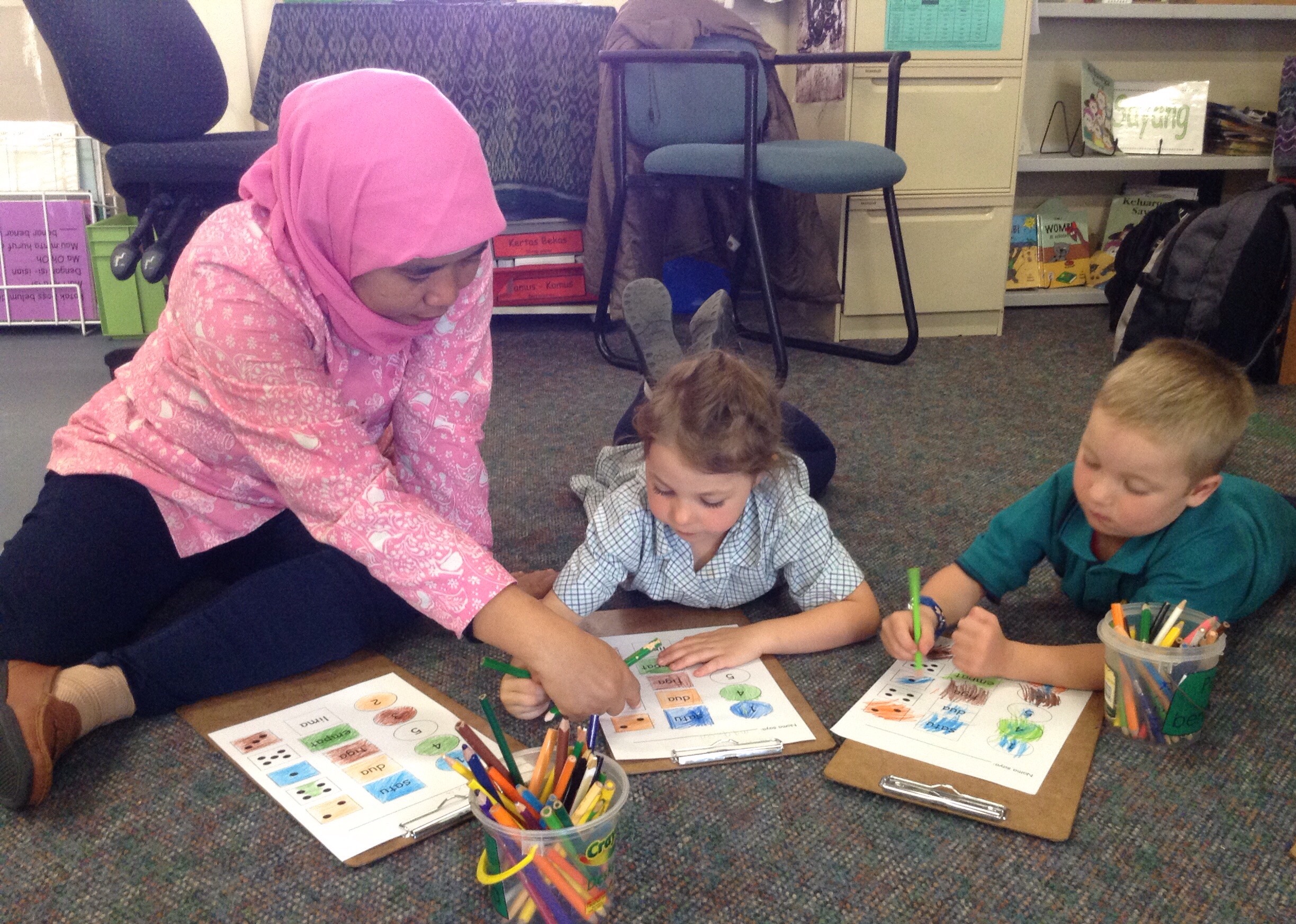
My one and only lesson I taught that day was introducing reception students to the numbers 1-5 and then it was lunch time.
IMG_9678

IMG_9681

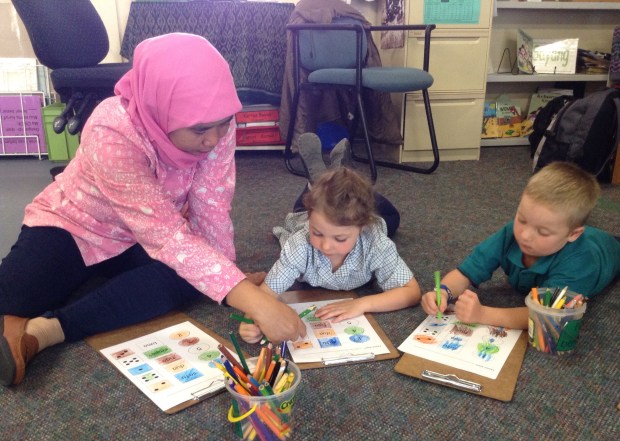
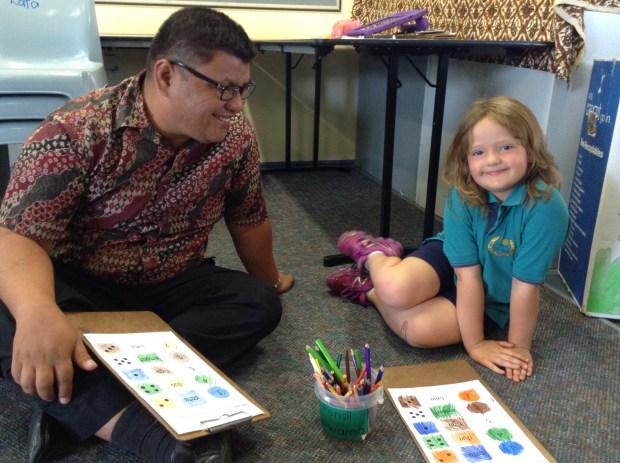
After lunch, Pak Pahot showed a powerpoint he had put together of the 10 fruits he wanted to focus on. He explained that there are over 400 different varieties of fruit in Indonesia and no matter where you are in Indonesia, you will come across a huge selection to enjoy We then looked at the powerpoint and learned what they are called in Indonesian and for many students, we also learned what they are called in English!! Fruits included banana, starfruit, soursop, durian, rambutan and mangosteen. Students then worked in groups to match 5 of the fruits to their Indonesian names using pencils. Each group was then asked to stand up. One student held the sheet while the second student pointed to each of the fruits and the third student said their name in Indonesian. Students were fascinated with the variety of fruit available and surprisingly quite a few have tasted them either here in Australia or on holidays in Indonesia.

IMG_9705

IMG_9706

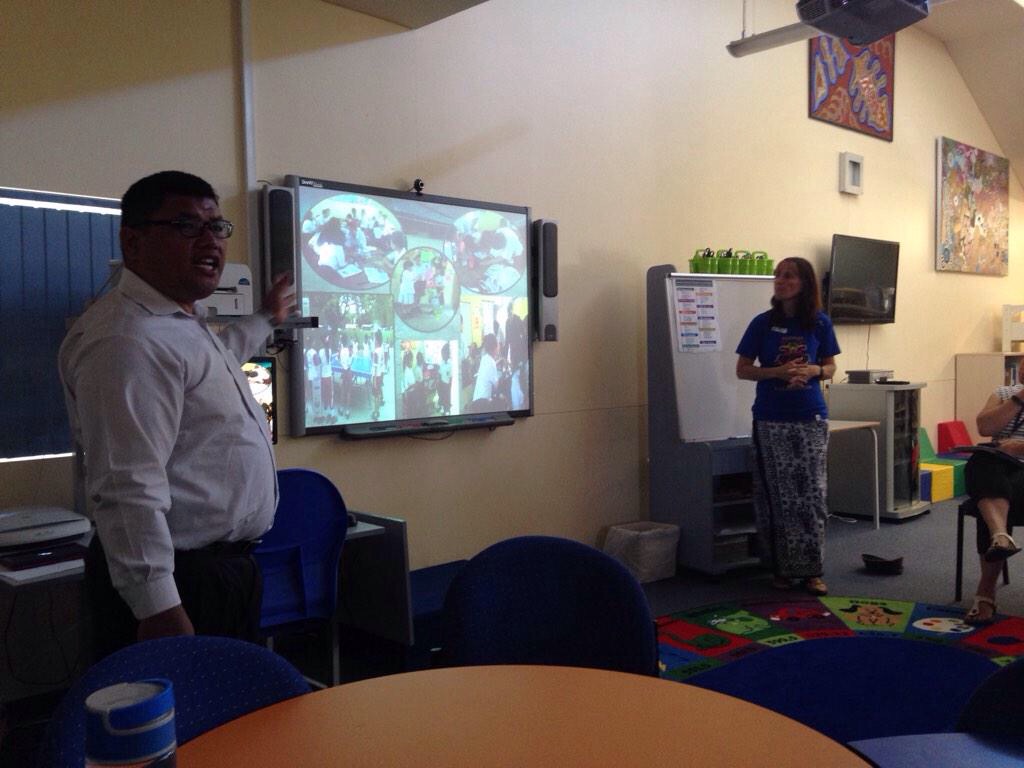
We then had just enough time to fill up our drink bottles before presenting at the staff meeting. I introduced both our visitors, explained about the Bridge Project and then Pak Pahot presented a powerpoint presentation about his school, his students and the various programs running at their school.
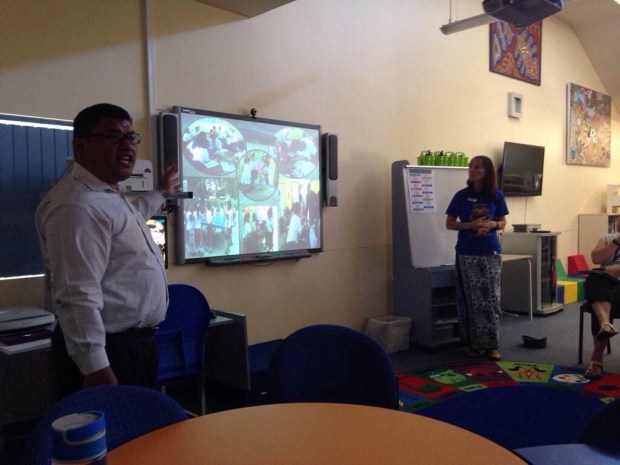
IMG_9723Afterwards there was a brief question and answer opportunity where teachers asked specifics about special education programs, how remedial students are catered for (after school), the school day, etc. I then briefly introduced staff to the AEF website which is an amazing resource for Asia & Australia’s Engagement with Asia. It’s about to be updated too!! I also circulated a timetable for teachers to nominate blocks where Pak Pahot and Ibu Eliza could come in and observe lessons.

The rest of the week was spent by visiting various classrooms which ranged from receptions to year 7’s and covered most subject areas, including PE!! The Sports Day warmup in particular was a huge hit!

IMG_9730The only subject Pak Pahot has yet to observe and is really keen to see is science, so a note in the daybook will hopefully tick that box for him.

Yesterday they spent quite a bit of time with the Year 5/6’s in Mrs Roberts class to work on ‘biodata’ letters for students in Ibu Elizawati’s class. We looked at one of the ones that Ibu Eliza had brought with her which was all in Indonesian and then looked at the various dot points our students would include in their own biodata.
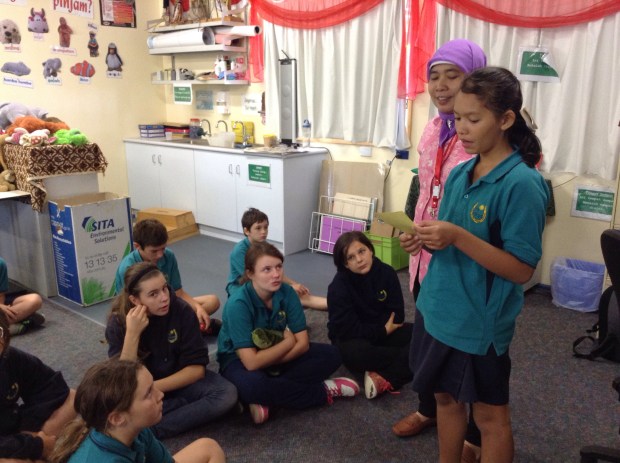
IMG_9714Interestingly, two culturally different aspects arose!! Our students want to add their beloved family pets as they are considered parts of our family and secondly most of the students in the year 5/6 class either don’t have a religion or did not know what religion they are!! What a contrast to Indonesian students!! When I asked Pak Pahot what students could write if they don’t have a religion he was at first confused!! Such a foreign concept for Indonesians!!

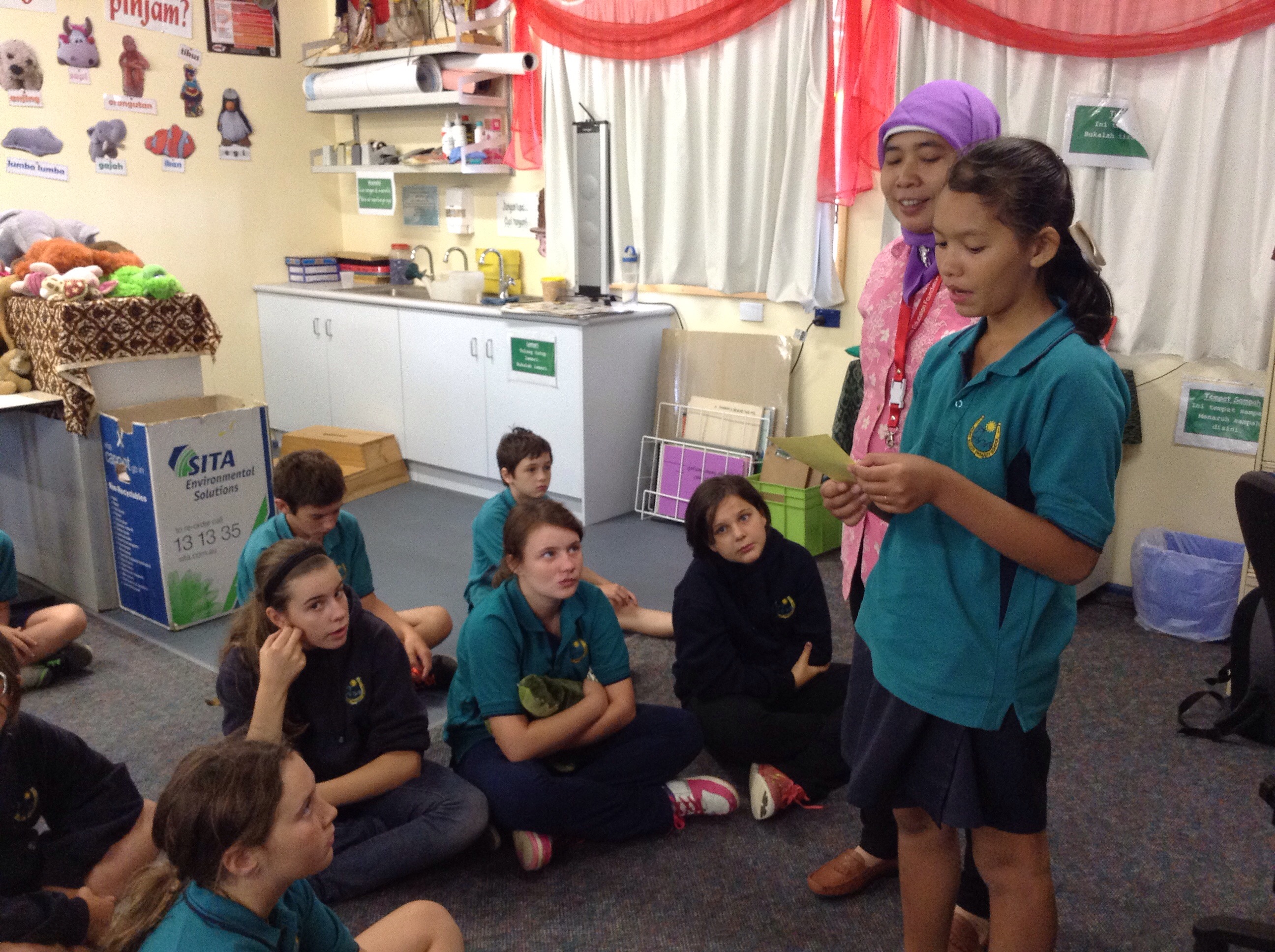
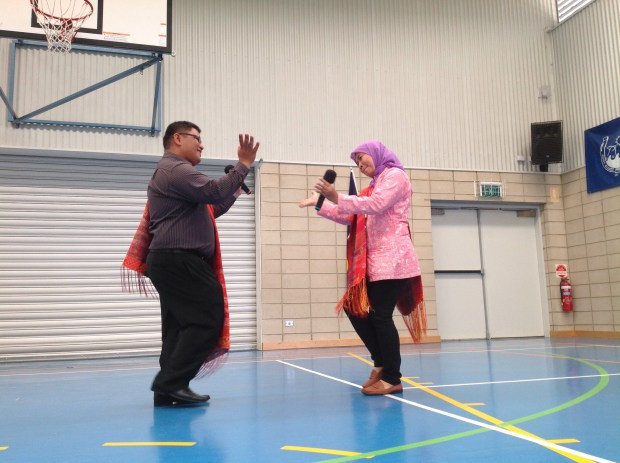
Thursday finished with a whole school assembly which was attended by a large number of parents as it was being run by the year 2/3 class. After welcome to country and the national anthem, Pak Pahot & Bu Eliza had everyone riveted with a Batak song and dance. The applause at the end was incredible and a true indication of how much we all thoroughly enjoyed the performance.

IMG_9732

IMG_9728

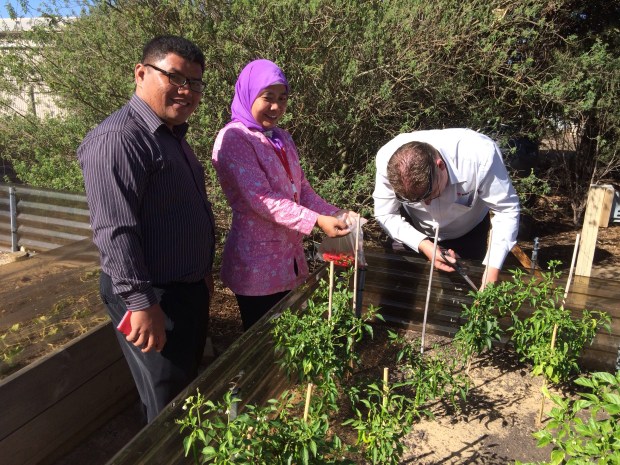
After school we were invited to drop in to Sandy’s house to get a tour of their chili garden. The look on Pak Pahot’s and Ibu Eliza’s face when they realised just how many chili bushes there were was priceless. I too was impressed and particularly enjoyed the delicious sambal Ibu Eliza made to go with our fish that night!
IMG_9717

IMG_9718

As I don’t work Fridays, today we are enjoying a lazy morning and then we will head in just before recess to join Marg and her year 5/6’s for a Skype call to Port Macquarie where the other 2 teachers from Medan are being hosted. The last lesson on the timetable is choir which I doubt wild horses couldn’t keep Pak Pahot from attending!!

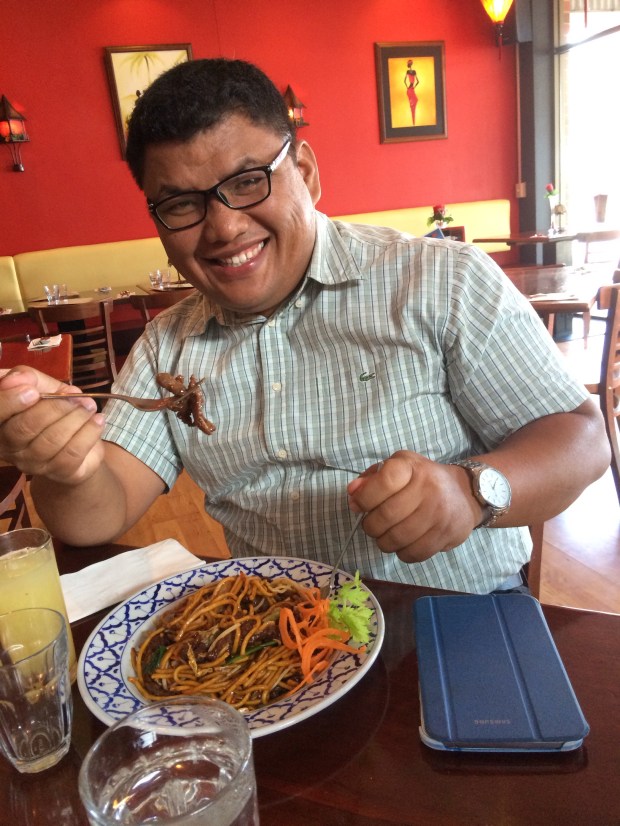
To round off the week, we went out to dinner and Pak Pahot enjoyed tasting kangaroo!
IMG_9722

Our Week In Sydney with The Bridge Project

What an amazing week we’ve just had here in Sydney for the Bridge Project. While we sit at the airport waiting for our flight, doing a last minute catch up with Erin and Mel who are also hosting 2 partner teachers from Medan, I’ll try to give you a brief picture of our full on 4 day training and development.
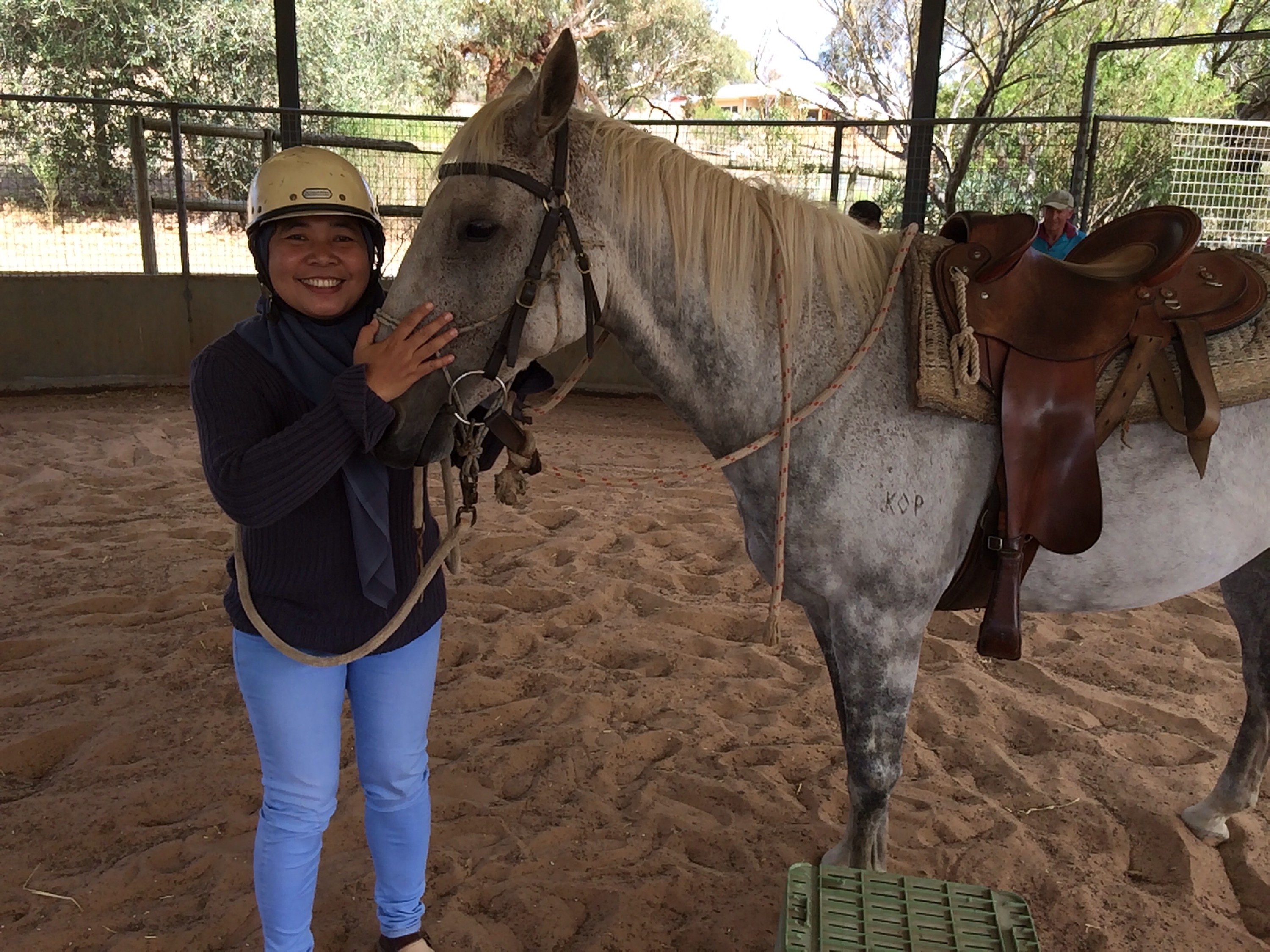
Marg & I first met our partner teachers, Pak Pahot & Bu Elizawati, in the breakfast queue at the Novatel. Pak Pahot is a year 2 teacher and Bu Elizawati is a year 6 teacher at a school called SDN 025443 Medan Barat which apparently is rated number 1 in Medan. Of the 400 odd students who apply to enrol each year, only 100 are selected!
IMG_9638-0

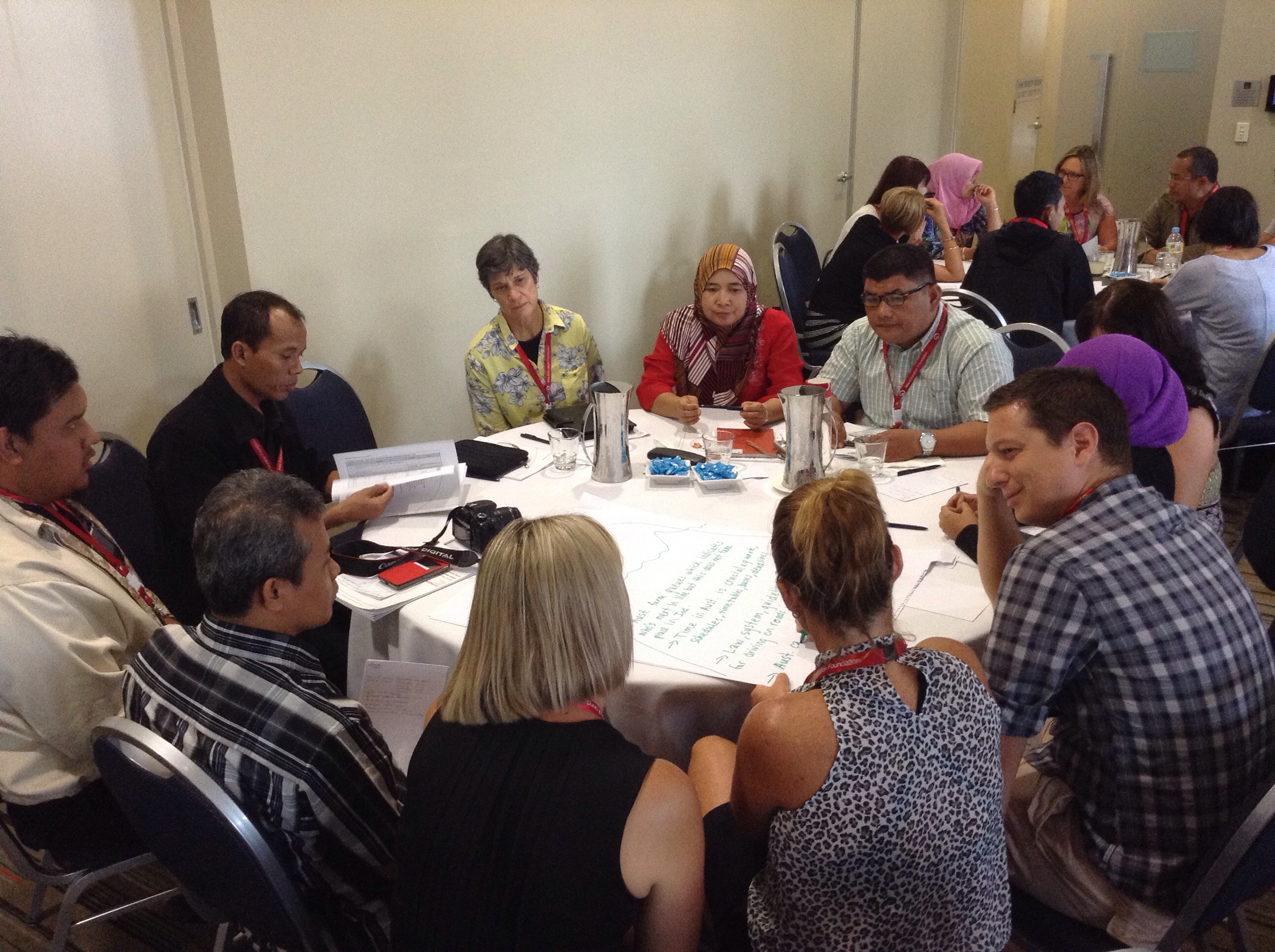
Over the past 4 days there has been a strong emphasis on collaboration, planning and communication. Presenters recommended a variety of ways in which we can achieve all 3 successfully with our partner schools and time was provided to not only make a start on them but also so that we could familiarise each other with our school calendars, so that any planned projects avoid school holidays, religious festivals and national exams.

IMG_9639We also spent time discussing cultural differences. Our partner teachers have already noticed differences with punctuality, environmental pride, traffic and the differences between Indonesia and Australia with the use of right hands to pass items.

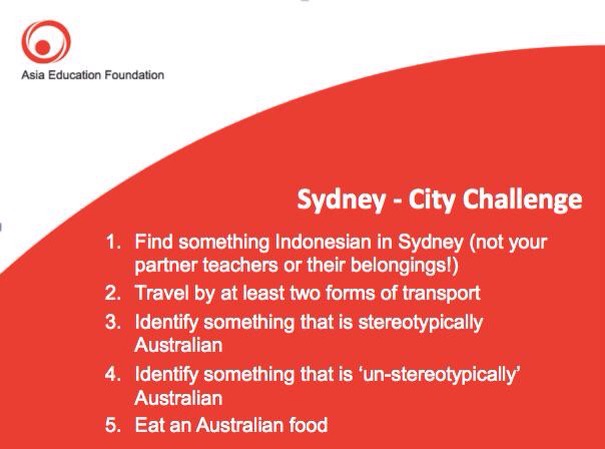
Thursday afternoon, we were given a challenge:

IMG_9675This was a brilliant and fun way for all of us to explore Sydney. The resulting photos on Twitter were varied and the shared experiences were vast. Check out #bridgeproject!!

IMG_9648

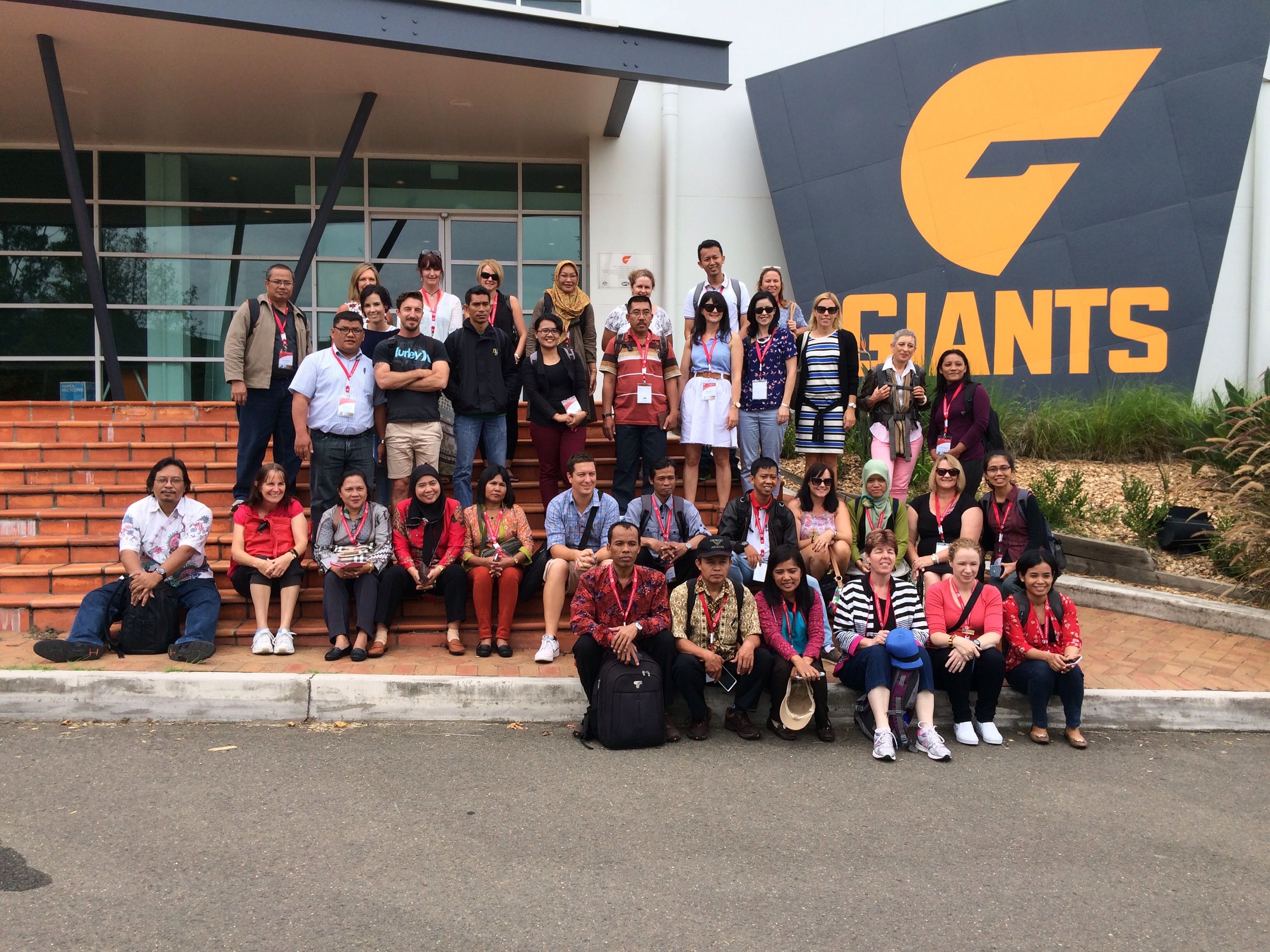
Another fun outing was lunch at the local Giants stadium.

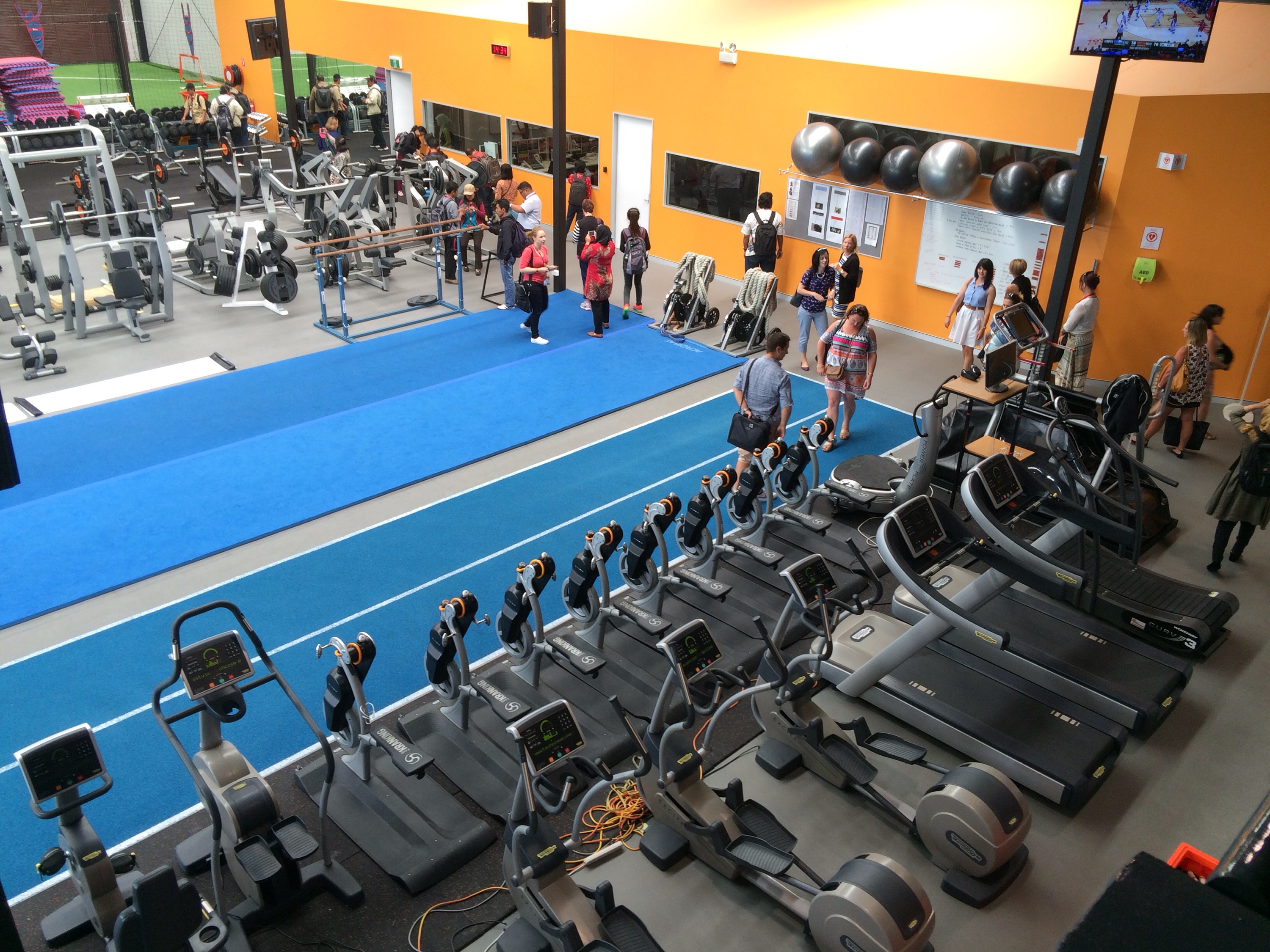
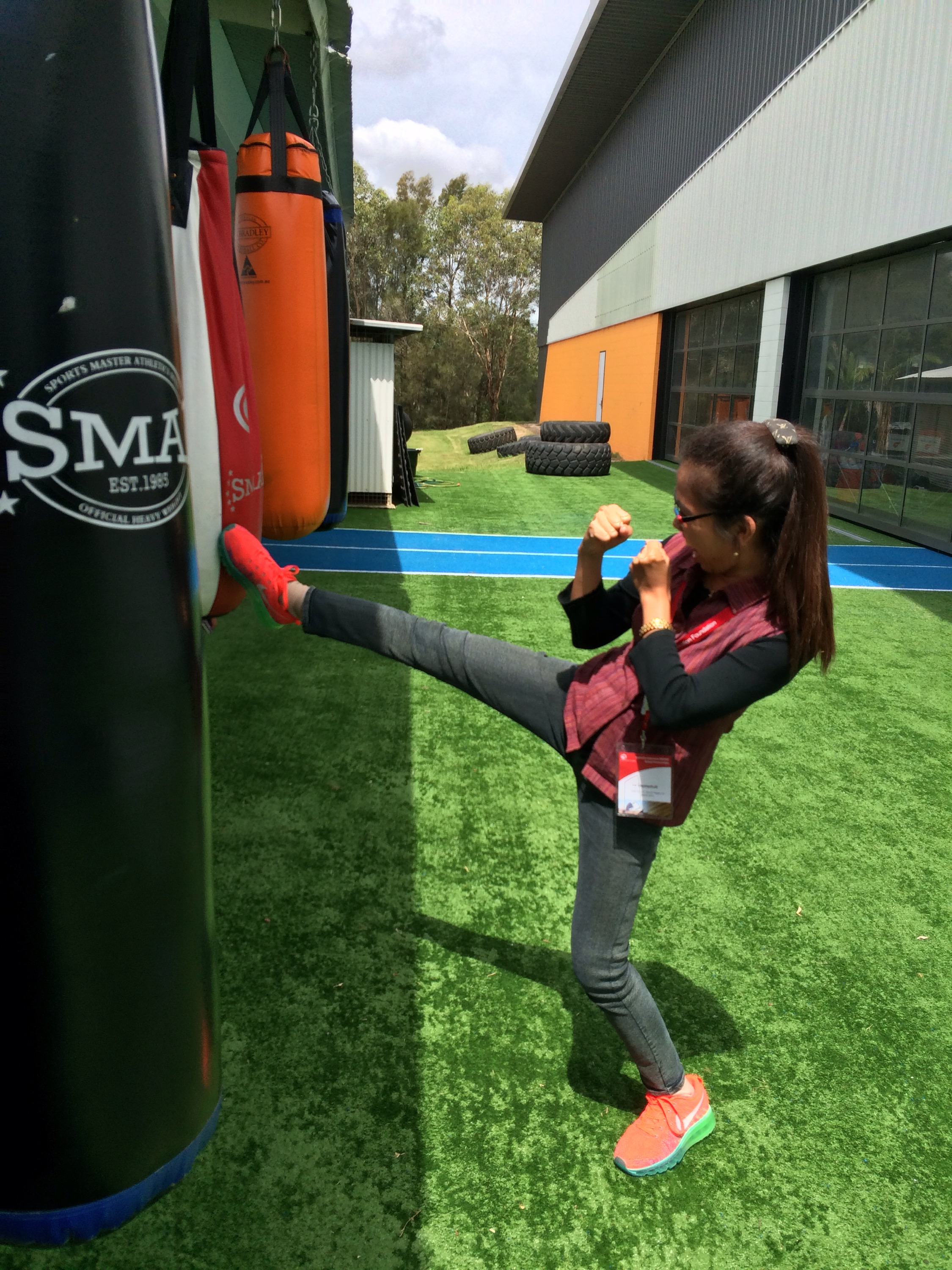
IMG_9662After lunch, 2 of the stalwarts (proud muslims) explained about the various programs they run which target disengaged youth and promote education. Very impressive. Afterwards, we enjoyed a tour through the facilities:

IMG_9664

IMG_9666

IMG_9667

Presenters over the 4 days included Mike Bartlett & Danielle Leggo, education officers from from Sydney Olympic Park (SOP). The program they run there is truly amazing and caters towards both local and distance students. It largely focuses on sport, agriculture & sustainability and can be accessed either face to face or by video conferencing. Thirty thousand students annually access the ranger led Australian curriculum aligned activities learning about the local wetlands and other local habitats and there is also an online Koori classroom! One great suggestion from Michael was to set up a collaborative project to study the migratory birds that fly from Siberia to Australia, transiting Indonesia! For further information about SOP, regardless where you are globally, check out their website and youtube channel. They are currently searching for non Australian classrooms interested in an international 2015 netball challenge.

Joedy Wallis from AEF, divided the group so that the Australian teachers and the Indonesian teachers could each focus on their own curriculums to identify areas compatible for collaboration as well as identifying goals and outcomes for student learning. She pointed out the areas of the curriculum covered by the bridge project include:
literacy
numeracy
ict capability
critical and creative thinking
personal and social capability
ethical understanding
ICL (Intercultural Understanding)
which together create successful learners, confident and creative individuals and active informed citizens.
Joedy outlined some history behind the inclusion of the ‘Asia and Australia’s Engagement with Asia’ priority in the new Australian curriculum. The global shift which has lead to policy changes and the Melbourne Declaration, first signed in 2008 (changes advocated by AEF) provided the impetuous behind our Bridge partnership meeting this week. This promotes student acquisition of 21st century skills. all beneficial for Australia; socially, culturally and economically.

IMG_9645
Joedy promoted twitter to all, encouraging all teachers to sign up and discover just how amazing it is for professional learning and sharing. She also promoted the AEF website (which is currently undergoing a huge update to become even bigger and better), the AEF newsletter and #AEFchat on twitter (details on the website) which currently run monthly but will happen more frequently if the number of teachers on twitter increases.

Julie Lindsay from Flat Connections presented on Thursday for 2/3 of our day focusing on the challenges connected with our partnership schools beyond face to face and how to sustain global connections and collaborations. She raised an important point about the need for deep global learning and the importance of constructing a legacy. Encouraging teachers to think deeply and creatively so that whatever project our students create, it will be their legacy.
Julie suggested a variety of online tools through which this could be achieved:
1. Ning.com (not free) which is a multimedia networking tool was recommended highly by Julie for asynchronis communication if both schools can not be online at the same time.
2. voicethread.com – highly recommended. students can record their voices along a given video/photo
3. Wikispacess – where students and teachers can collaborate on projects
4. blackboard collaborate – students present for 1-2 minutes about their learning to an international audience.
5. globalyouthdebates.com asynchronous global debates between classrooms
6. wevideo
7. Animoto
8. Edmodo – private; great tool for creating discussions)
9. Hangouts
10. Skype
11. Padlet – a private forum for groups to share

Before any actual planning, it is critical all teachers agree on a cyber safety policy and have in place an agreement to monitor all students.
Projects could be based on a range of activities:
interpersonal
research (joint?)
problem solving – kerja sama tentang kebanjiran?? find something in common and explore issues!! eg rivers, sea,
artifact and co-creating (eg making video alone or by collaborating with partner students)
connect
communicate
collaborate
create

Most of the suggested project ideas would be entirely undertaken in English which would create opportunities for deep ICL for classroom teachers. Julie suggested students take the learning home (al la flipped classroom style although she didn’t name it!) which gave me the idea of tasking students to record themselves teaching their parents ‘siapa nama’ & ‘nama saya”. Could create a funny yet educations video about specific target language!
Other flipped ideas that arose over the 4 days included a flat Stanley project whereby students make a puppet of themselves and then send it to their partner school who then takes it with them in their every day life photographing everything and creating a journal which is then returned to their partner school either digitally or by snail mail. Another idea I really love which would be perfect for a look and discuss activity is called, A View From Your Window. Tasking students to take a photo from a window at home and then writing a caption about it.
Julie’s presentation was chocker block full of suggestions with little time to fully explore and trouble shoot. Most teachers felt totally overwhelmed and this confirmed for me just how fortunate we are at PEPS to not only have had a ICT Coordinator for the past 3 years but to have someone of Kathy’s high expertise and dedication in the position. Teachers were also concerned about poor tech support on return to their schools, which again for Marg & I, is rarely an issue!! Our highly capable tech team of Darryn & Kathy is second to none! What they don’t know isn’t worth knowing!! One principal told us about a class set of computers still in boxes at their school because they only get 2 hours of tech support per week!!
The second part of Julie’s time with us was task based. We had to create a digital story with our partner teachers. I quickly wrote a script which I then typed up in Pages and emailed to Marg, Pak Pahot & Bu Eliza. Using Puppet Pals, we quickly made a film entirely in Indonesian about the transport we used in Sydney yesterday which Pak spiced up with some evil laughs!! We uploaded it to Youtube and then pasted the link on the Bridge Padlet to share with everyone.

IMG_9674

Pak Donny, the Indonesian translator and coordinator, constantly stressed in his translations, that the partnership is all about our students and should benefit them not the teachers and that all projects must keep that in mind! There was also a huge push to encourage Indonesian teachers to review their learning style (methodology) so as to adopt more western aspects. I can see that encouraging students to ask questions, to be more confident in exchanging opinions has benefits but it is a huge cultural shift and with it comes other aspects of western culture. Other factors which must be considered is that class sizes at our partner school are enormous. Classes range from 34 to 46, Class rooms too are not large and school furniture is also not conducive to more ‘creative’ styles of learning. I can see benefits in encouraging a methodology shift but would like to explore ways in which it can be done that are more sympathetic culturally. It makes me feel like a missionary rather than an educator.
It had been an amazing week, meeting teachers from almost every state. We have swapped email addresses and Skype handles as well as following each other on twitter so that we can keep in contact and help each other with any upcoming challenges this year as well as sharing our successes. Marg in particular was brilliant with this. She has already arranged a Skype call with Mel & Erin this coming Friday!! Another teacher has offered to set up a Facebook page for us all and Aaron will create another Padlet too. The September study tour will be a reunion for those of us who sign up for it!

Goodbye Sydney!

IMG_9673Thank You so much to everyone involved for such a memorable week and in particular to Pak Aaron, Ibu Bonnie & Pak Donni.

Lesson 3 & 4 Reflections

Overall, the lessons ( see previous post) this week were awesome. I had a brilliant week and thoroughly enjoyed telling the story, ‘Pleased To Meet You’ with my middle and upper primary classes. The junior primary classes though, focused purely on ‘nama saya’ and Siapa nama?’, so I could get photos of my reception students and also because unlike the older students, they only have one 50 minute lesson per week.

Storytelling Reflections:
As it was the same lesson repeated 8 times in all, I had to constantly remind myself to talk SLOWLY. While I was very comfortable with the story, students were encountering both the familiar and unfamiliar vocabulary for the first time ever in this context.
The stop sign came up many times and that everyone joined in, made it easier for both the students to initiate it and for me to see it. Really helped me remember to go slowly and ask for comprehension checks.
My 2015 timetable has worked out so well. I teach mostly middle primary classes on Monday which gives me the opportunity to iron out any potential kinks in it before facing the upper primary classes the following day. This week I was ready for them. I stayed upbeat and we all enjoyed a great lesson. So much so, that with the class before recess, when the bell rang, no one moved because we were mid way through acting out the story! They wanted to see it through to the final scene!
Student reactions to the story were hilarious! The responses ranged from incredulous (Taylor Swift/Will.i.am was at McDonalds yesterday?) to disbelief (It wouldn’t have been Taylor Swift fainting!!)
Acting out the story was very popular and there were many volunteers. I tried to avoid choosing students who usually hog the limelight and gave the quieter students a chance to shine a la Ben Slavic advice.
I introduced jobs this week during the first lesson with the upper prrimary classes mainly because I wanted to film each 6/7 lesson so that I had a record of the lesson. Had it gone haywire, I would be able to watch the video and pinpoint where I’d lost my students. I am also really curious to discover what I missed! So much happens with large classes, that I either miss things totally or suddenly realise that a student I believed to have been totally focused was successfully staying under my radar by timing his/her asides well. I haven’t had a chance to watch the films yet (partly because I am dreading watching myself in action/but mostly because I haven’t had the time!) but I did have a quick look at the photos. I had hoped to use the photos for lesson # 4 to help with retelling but unfortunately the photos were largely useless: out of focus and too far away from the action. The few that were in focus were not enough. Interesting assumption on my part that all older students know how to take photos with an ipad!
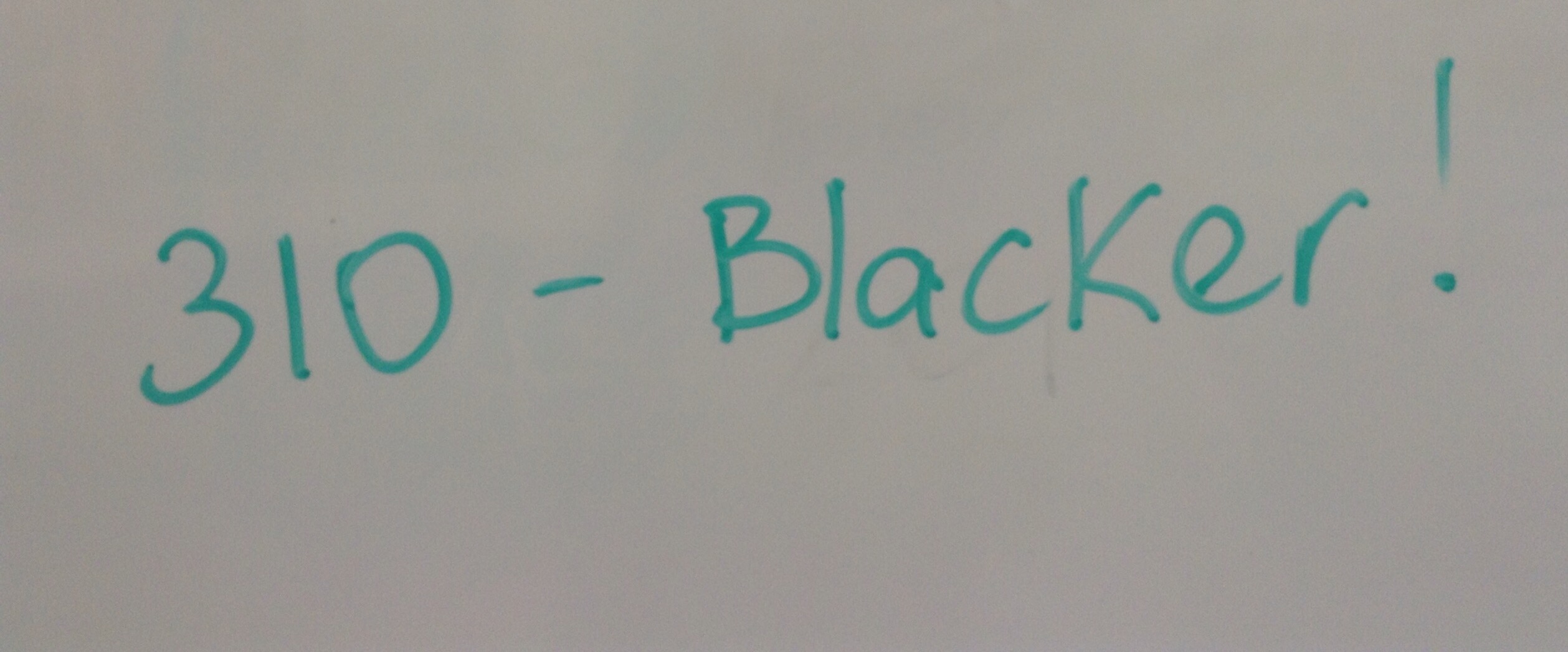
The filming of one 50 minute lesson filled up an ipad, so instead of having a ‘tukang film’ for the year 5’s and 5/6’s, I introduced ‘Penghitung’, the counter. Unfortunately I forgot to introduce the jobs until too late with the year 5/6 class and the poor counter barely made it into double digits, so with the year 5 class I made sure to do it first up! I asked Sienna to count each time someone said, “Nama saya” and the final count blew us all away! In 50 minutes, Sienna counted 310 reps!! I wrote it on the board for future reference:

IMG_9462

Story Retell Reflections:
-The look of panic on students faces when during the second lesson, I asked for the retell to be in Indonesian was in retrospect, to be expected. But once someone made a start, the panic evaporated and it all came together. I was delighted with how students collaborated to retell the story.
-I had 2 visitors during this segment of my lesson; Marg, the year 5/6 teacher (who incorporates Indonesian phrases into her classroom day where ever possible) & Brenton, PEPS principal (& in a past life, was a Spanish teacher). I haven’t had a chance yet to ask for feedback, but I will….
-I have several year 6/7 students who rarely engage with my lessons. I successfully targeted 2 of them this week and gave them each an opportunity to shine while learning the importance of staying focused during lessons. Jesse rarely looks up, so during bola kenalkan, I firstly reminded everyone that they need to constantly watch. I then threw the ball to Jesse while he was looking downwards. He fumbled, grabbed it, responded and then returned the ball to me. After a few more students, I noticed that Jesse was once again not focused, so I gently threw the ball to him again. He looked up puzzled, returned the ball to me and said, “But I have already had the ball!!” To which I responded, “You need to watch ALL the time!” and pointed towards the expectations. I returned it to him again and asked, “Siapa nama?” and this time he caught it and returned it answering my question. I then targeted other students and if I noticed Jesse was again unfocused, I again gently passed him the ball. He loved it!! It was so lovely to see a smile on his face as he reveled in the attention. The icing on the cake was when one of the sporty boys complained that it wasn’t fair, Jesse had had the ball 10 times and he’d only had it once!!
-The other student, Drae, is one of those students who pretends he doesn’t understand so that he doesn’t have to contribute. I’m sure you all have one of those students. We had just started retelling the story and I asked him what came next. He baulked and stated he had no idea, so I asked him to translate what we had written so far. Again he baulked, so I reminded him about the stop signal. I then returned right back to bola kenalkan and passed him the ball, while asking, “Siapa nama?” Of course he could answer, so I did a comprehension check and naturally he could tell me what both sentences meant. So returning to the story, I again asked him to translate. Again he balked, so once again, I grabbed the ball and repeated the whole process. By this time, it finally dawned on him that there was no escape! He took a deep breath and proceeded to translate everything. The loveliest thing was that when he’d finished, the class erupted into a genuine and spontaneous applause! With impeccable timing, Brenton then entered the Indonesian classroom, so Drae received even more kudos!
– I introduced the job of ‘reader leader’ with all classes. Luckily I have a sound field system in my room which incorporates a microphone. This makes the job of reader leader so much easier. The reader leader reads the story at a pace that we can all read along together. Great way to get extra repetitions of the story & target language. I did have one student who had difficulty with pronunciation. At first, I corrected him and then I stopped. I suddenly remembered a post on tprsquestionsandanswers. This post included research and information about just this! I need to acknowledge that not only does it take confidence to get up and read in front of the whole class, the last thing a student needs is to be embarrassed and have his/her confidence undermined. Speaking in the target language is the most anxiety provoking form of communication. Anyone who has attempted communicating in a foreign language can relate to that! Here too is a quote from Chris Stoltz from the moretprs yahoo group:

Since I started TPRS, I stopped both pronunciation and spelling instruction . This year, I didn’t say a single word about anything in Spanish– and I got the best spelling (and pronunciation) ever. If they hear/read it and they get it, their brains seem to soak up the rules and conventions. The same is broadly true of grammar.

Free Write Reflections
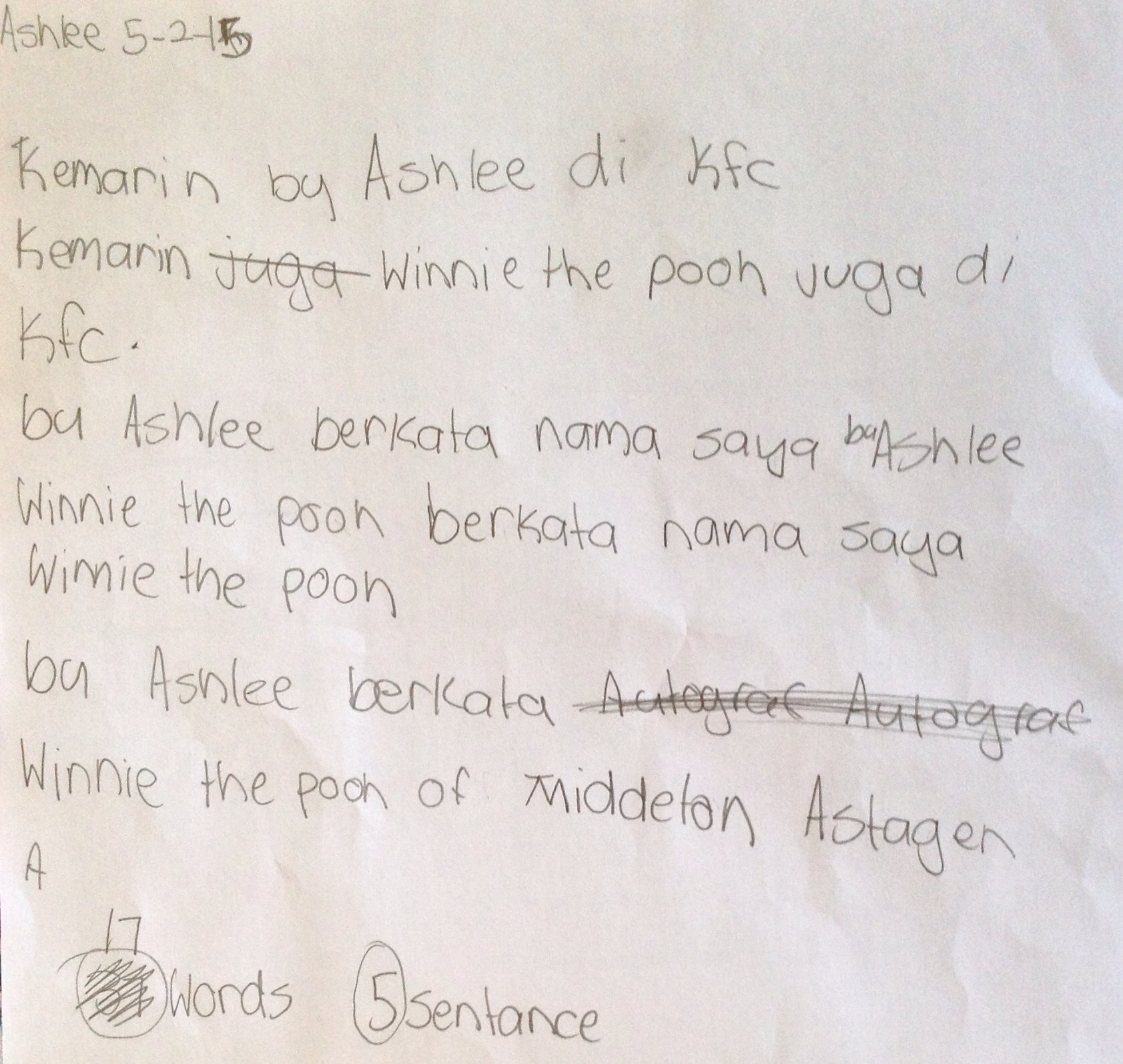
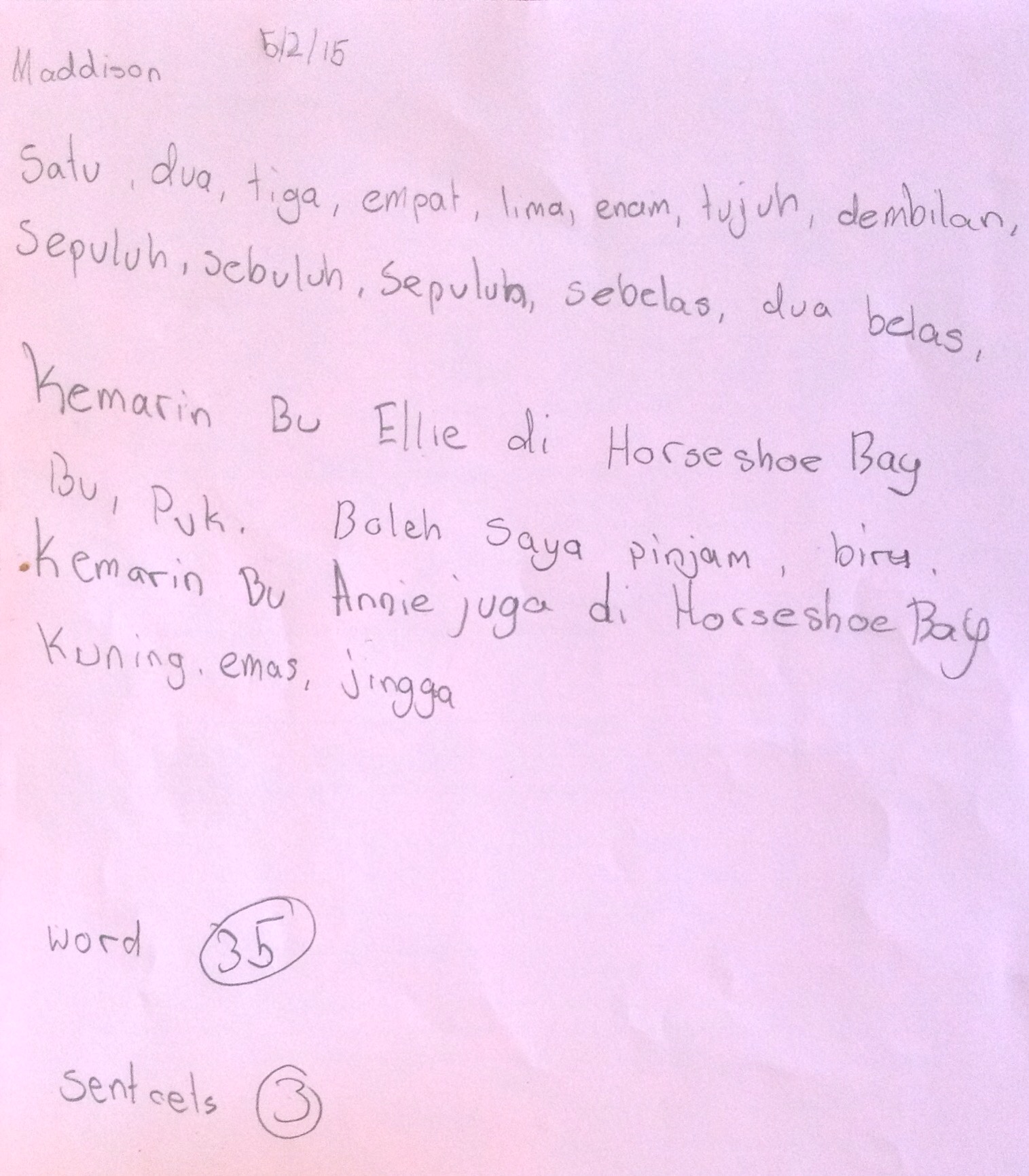
-What a range of writing abilities! I was blown away with the stories students wrote. Even one of the year 3 student wrote a few sentences amongst his word list!! (see below)
-I love the concept that students can write anything as long as it is in Indonesian and they understand it. It’s simplicity appealed to all students and is a great example of how TCI differentiates for all levels of ability and confidence. The more capable wrote stories while others were challenged finding words around the room they knew.
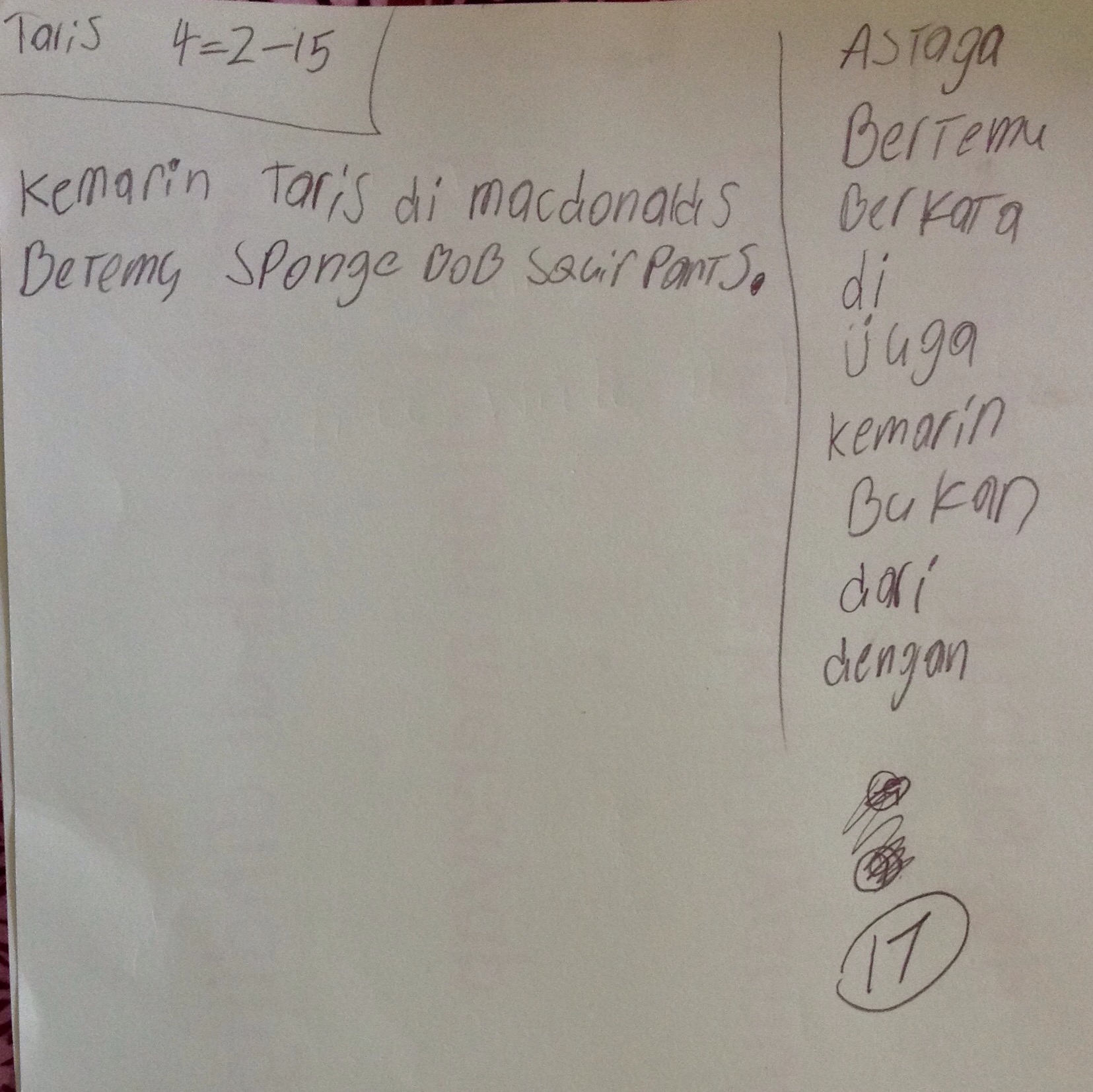
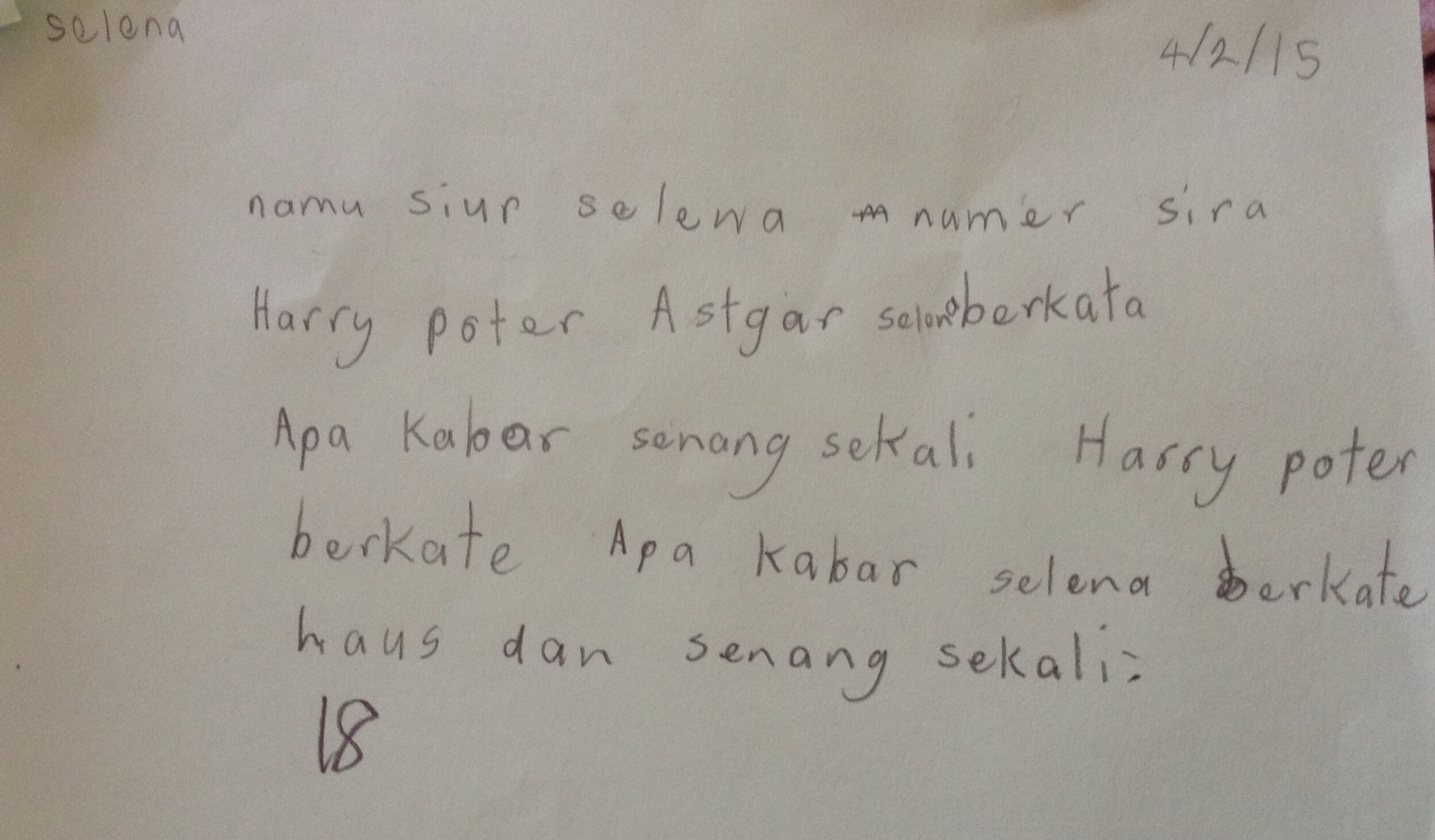
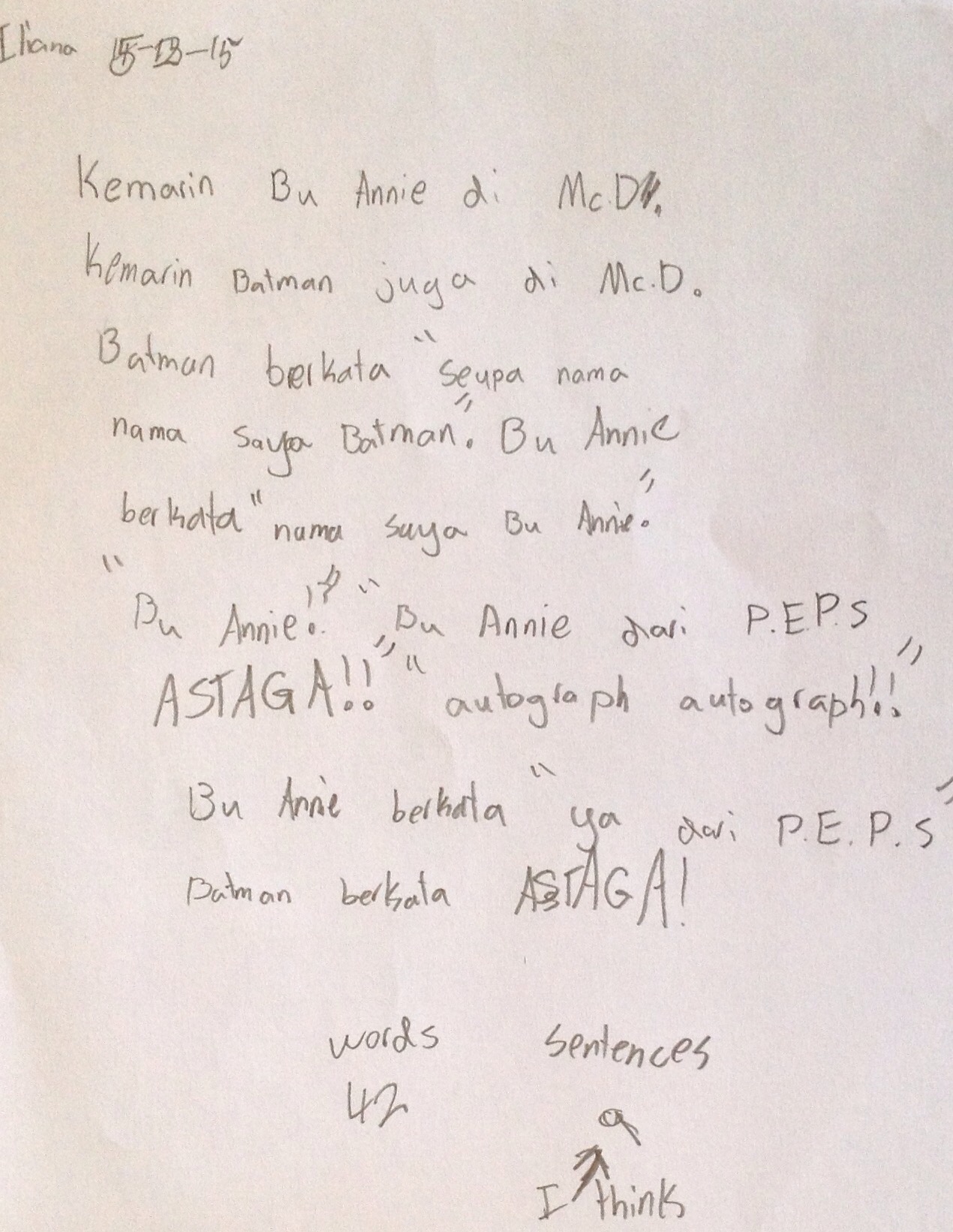
Here are a selection of free writes beginning with a year 3 and finishing with year 7’s:

IMG_9463

IMG_9472

IMG_9473

IMG_9476

IMG_9477I love the way the above student wrote a sentence structure and then focused on it! What great repetitions!

IMG_9479I love how Harriet incorporated kenalkan vocabulary from previous years into her story!

IMG_9482

IMG_9484
Look how Illiana (above) added to the end of the story! Not an ending rewrite as such but a great example of what others could do too.

IMG_9486

IMG_9490

IMG_9494
Miranda also took the structure and built on it using vocabulary from previous years! How awesome!

IMG_9498
Look how Eli used dengan and suka!! Brilliant!

IMG_9504Georgia has used the story structure to rewritte an entirely original story! In 5 minutes!

IMG_9514Winter has used this opportunity to experiment with all the sentences and phrases she has learned over the primary years! How great is that!!

IMG_9516Look how the above student has spent the entire 5 minutes writing solidly!!

Aren’t they amazing! Reading through them has given me an idea! How cool would it be to read them to classes and have students illustrate them as they are read??? The drawings then would make awesome ‘Look & Discuss’ pictures. I only read about L&D recently and this could be the springboard I need to give it a try!

Lessons 3 & 4: Pleased To Meet You

There are 3 steps for TPRS, according to a fantastic handout written by Susan Gross in 2007. They are:
Step 1= Establishing meaning
Step 2 = Story
Step 3 = Literacy
and this week I aimed to cover all three using the story Pleased To Meet You.

My years 3-7 lessons this week were based on a simple adaption of the Jim Tripp’s story, Pleased To Meet You. This adaption was suggested to me by my amazing mentor, Catharina. The beauty of her adaption is that the story is pared down to a level whereby it contained just a small amount of vocabulary with the fun twist at the end clearly understood.
While I did essentially the same lesson with all middle and upper primary classes, I did tweak it slightly for the older students. Here is an outline of the two 50 minute upper primary lessons.

Lesson # 1
Roll using class dojo

Introduce the jobs of ‘tukang foto” (photographer), “tukang film” (Filmer) (year 6/7’s) or ‘tukang foto” (photographer) & “penghitung” (counter) (yr 5/6’s)

Target Language focus – (1,2,3)
1,2,3 =
1. introduce the words
2. Say, repeat and discuss gesture to illustrate meaning
3. translate

siapa nama – what’s your name?
nama saya – My name is….
ya – yes
bukan – no
pak – Mr
bu – Mrs/Ms
senang sekali – very happy
dari – from
bertemu – to meet (right hand shake)
dengan – with (hands come together in a clasp)

Brain Break – piccadilly circus extension: as the ball is handed to another person, one student asks siapa nama & the other replies with nama saya (and their name). Time and record lowest score on board.

Storytelling
Before the story, point to and go through quickly, the extra vocabulary and their meaning: (helpful extra vocabulary)
kemarin – yesterday
juga – also
di – in,at,on (with at circled)
berkata – said

Kemarin Bu Turley (class teacher) di Macdonalds.
Kemarin Will.i.am di Macdonalds juga
Will.i.am berkata, “Halo. Nama saya Will.i.am. Siapa nama?”
Bu Turley berkata, “Nama saya Bu Turley.”
Will.i.am berkata, ” Bu Turley? Bu Turley dari PEPS? Astaga!! Senang sekali bertemu dengan Bu Turley! Autograf?”
(after accepting Bu Turley’s autograph, Will.i.am faints!)

Tell the story using monyet as the class teacher and the laminated picture of Will.i.am, hand gesturing/pointing to word list when using a word with the meaning on the board. Stopping for frequent comprehension checks and encourage students to use the stop sign.
Retell the story using actors who only act it out physically, following along with my retelling.

Lesson close – sampai jumpa murid murid/ sampai jumpa Bu Cathy.

Lesson # 2
Roll using class dojo

Target Language Review
Bola kenalkan – using a soft ball, throw to each student one by one asking, “Siapa nama?” as they return the ball to me, they answer with “Nama saya ….” encouraging complete answers and stopping for comprehension checks (What does ‘Siapa nama?’ mean?)

Storytelling
With a completely blank board except for the 4 extra words & their translations,
kemarin – yesterday
juga – also
di – in,at,on (with at circled)
berkata – said,
ask students to retell the story in Indonesian. Write it up on the board as they go, constantly checking for comprehension.

Kemarin Bu Turley (class teacher) di Macdonalds.
Kemarin Will.i.am di Macdonalds juga
Will.i.am berkata, “Halo. Nama saya Will.i.am. Siapa nama?”
Bu Turley berkata, “Nama saya Bu Turley.”
Will.i.am berkata, ” Bu Turley? Bu Turley dari PEPS? Astaga!! Senang sekali bertemu dengan Bu Turley! Autograf?”
(Will.i.am faints)

Reading
1. ‘Echo Read’ the story with me. I say a line at a time and students echo it.
2. I say a sentence in Indonesian and students repeat it in English. Bu Cathy Bahasa Indonesia, murid murid Bahasa Ingriss.
3. Introduce the reader leader job. Do several read throughs using the microphone.

Free Write
Rub out the story completely, but NOT the 4 extra words.
kemarin – yesterday
juga – also
di – in,at,on (with at circled)
berkata – said
Introduce the concept of Free Writes and explain that today’s free write is purely a practice to make sure students understand the procedure. Outline the aim is for students to write non-stop for 5 minutes and there will be 10 bonus points for each sentence written!
Choose a few helpers to distribute paper and lead pencils while everyone else finds somewhere to work. Set the timer on class dojo for 5 minutes. Name and date at top of page.
Afterwards students count both the number of words and the number of sentences, the totals of which I will collect and collate on the smart board.

Lesson close – sampai jumpa murid murid/ sampai jumpa Bu Cathy.

Reflections on my week will be in my next post! I am looking forward to getting some feedback on my two lesson plans!! What do you think of them? Would they work with your upper primary students? Have you taught Please to Meet You and do you have some ideas on how I can extend it further next week?

Salam dari,
Bu Cathy

First Week Reflections of Introducing TCI to all Classes

Wow, last week was a baptism of fire! I went home Thursday afternoon and it took Trixie till 7, before she could convince me that a dog walk would actually be a good thing! Thank goodness for daylight saving! Until that point, I was comatose on the sofa trying very hard not to fall asleep! Needless to say it was a very short dog walk and I crashed into bed an hour later! Boy, did I sleep well!

I learnt so much last week and here is my summary:

Week 1 – what did I learn?
1. Don’t try to cram too much into a lesson. It’s much better to go slowly and deeply than complete everything in the lesson plan. Keep it simple, short and engaging.
2. Be confident and failing that, pretend to be confident!
3. Be consistent across all classes. I had a few hiccups with my behaviour management plans when I came down heavily on disrespectful students in one of my classes. At the point of almost holding the phone to contact their parents, students in one class quickly reminded me that I had promised them a weeks grace! Be very interesting now to see if that close call makes any difference compared with the other class where 3 students parents were contacted! Another area of inconsistency was the new toilet routine. I only talked about it with the classes in which the need to go to the toilet came up. Maybe if I continue this way, it will avoid a focus on going to the toilet, which with the younger students, follows with a steady stream (oops) of students suddenly desperately needing the toilet.
4. The pictures of staff and pop celebrities were a huge hit – looking forward to adding photos of siblings and students!! I am still blown away with how effective the pictures were for getting in repetitions, although next week, I must focus on maximising the repetitions by speaking much more slowly and also throwing in a comprehension check!! eg what does ‘siapa nama?’ mean?
5. JP & MP students were far more receptive than UP. I have been thinking about this constantly and think it could have been for many reasons. Were the JP lessons more engaging or was my apprehension about the introduction of the new pedagogy with the older students coming through in the delivery? I also went too fast, covering too many new target structures in each lesson, when I should have heeded Catharina’s advice; deep and thorough! I should have stayed with nama saya/siapa nama saya for second lesson, not CWB (circling with balls). Students looked bewildered and then I stressed, overthinking the process. So next week, I will leave CWB, return to nama saya & siapa nama, leaving CWB for another week.
6. Following through with parent calls made a huge impact (3 from one class). It was the first thing students talked about when they returned to their class!! They couldn’t wait to tell Kathy, their class teacher!! I made the 3 phone calls during the last lesson to ensure I spoke to all parents before the students left school. All 3 parents were very grateful for the call, especially when I pointed out that I have taught these boys, the entire time they have been at PEPS. I explained that the call was about recognising patterns in their bahaviour and disrespect and wishing to work as a team to put a stop to it early in the year so that they are successful with their learning. The first parent was happy to deal with the issue himself whereas the other 2 parents have agreed to come in and meet with us all (class teacher, performing arts teacher & me) next week. Hopefully this gets around and the other students realise that I am going to be very tough this year with non compliant behaviour.
7. Personalising takes so much longer with our large classes. May need to revisit this briefly each lesson to ensure all students experience their time in the spotlight.
8. MP students used the stop sign very well; even when I was explaining in English!! How great is that! Wonder if the stop sign will be used in their own classrooms?
8. Monyet talking and gesturing was hugely popular with all classes!! I deliberated quite a bit about using him with UP classes considering he is a JP prop but they all thoroughly enjoyed his input and also enjoyed revisiting the JP siapa nama song.
9. Comprehension checks were fantastic! Asking “nama saya’ means ….. (puzzled look on my face) is a much more effective way of getting repetitions in than by just asking what does that mean?
10. One lesson of nama saya is not enough for reception students!! I will need to revisit it next week.
11. The first lesson for all classes included completing the sentence at the top of their front cover; nama saya……… Students throughly enjoyed this for several reasons. It was a familiar task ( we used to begin each and every term with this), it was an opportunity for students to catch up with each other while working and it got them moving after a long time seated on the floor (brain break).
12. Piccadilly circus (Play is The Way) was more successful with the second 6/7 class because
a) they were familiar with the game (Natalie also did this game with them!) &
b) they had a time to beat! Competition!! May be beneficial to repeat this brain break to see if scores improve further now that they have all played it at least twice!

What I had trouble with:
1. The reception class contained a number of students presenting a huge range of emotions. Some were confident, one boy was so terrified that he stood the entire lesson (luckily he has an older brother who was very similar so I confidently continued knowing that by next week he should be slightly more acclimatised to the overwhelming institution of school), while most looked only slightly shell shocked! It was their first day at big school; they’d just bonded with their teacher and then she accompanied them to the other end of the school and left them in a totally unfamiliar classroom with a largely unfamiliar adult! I knew a few of the students through their older siblings but on the whole, I don’t think they remembered who I was. Poor darlings! Once they relaxed and realised they were going to have fun, most of them got totally carried away and were extremely silly! I always forget just how silly they can get and it is so difficult to bring them down gently without terrifying the student still in flight mode! I hate to think about what they’ve told their parents about their first Indonesian lesson! The highlight for them and lowlight for me, was with the focus on nama saya. In anticipation of the many,many years of reception students being at first convinced that my name is Blue Cathy, I included many repetitions of saying nama saya Bu Cathy and then asking Siapa nama saya? (What’s my name). Together they decided that Bu Cathy was too boring and named me Bu underpants!! I just focused on repeating, nama saya BU CATHY and hope like heck that next week they have forgotten my ‘new’ name!!
2. Talking so much makes me thirsty! I really must make a much greater effort to stay hydrated. I only achieved this on Tuesday!
3. Beginning with a new pedagogy requires considerable energy and focus – I was exhausted by Thursday (my Friday). Consequently Thursday was not a good day to begin using an unfamiliar strategy (CWB) for the first time, especially with classes that I really needed to be on my toes with.
4. I only used my new laser pointer (huge thanks to Annie for organising this) once this week with one of middle primary classes. I felt uncomfortable and this was largely because I knew it would cause a sensation with students. I think I will be more comfortable when I need to point to something around the room rather than something on the white board!
5. Having ‘bukan’ & ‘tidak’ both written on the board was confusing. Would be considerably less confusing to just have the one word needed on that day.
6. I MUST remember to keep my pop up grammar brief. Pop up grammar is intended for the 4%ers and is not a mini lesson!
7. Not stopping to do comprehension checks when responses became automatonish. Stopping will get their focus back to the target structure by giving the meaning one more tweak.

What to incorporate into my week 2 lessons
1. I want to film one of the 6/7 lessons both for student and teacher evaluation.
2. MP & UP lessons on Wednesday & Thursdays need to take into account end of the week teacher & student tiredness, especially in the early weeks of term 1.
3. I need more practise with circling – will put up a poster on the back wall for handy reference when my mind becomes blank!
4. I need to move on, have a bail out activity up my sleeve or use other ways to get reps if something is not working.
5. I must revisit nama saya and siapa nama saya to ensure enough reps are achieved.
6. Maybe introduce the laser briefly to cut down on its novelty when it is eventually needed
6. Focus on the ‘Pleased to meet you” script. Mime first with monyet and me with monyet being the celebrity. Take photos using the ipad and discuss using ya/ bukan.
7. 5 min lesson chunks may help with all grades to keep it moving and engaging.
8. Having selected students sit in ‘first class’ (one of Catharina’s suggestions) on seats behind the students seated on the floor.
9. Reduce students seated for long times on floor. Look for active ways to include increasing reps.
10 Time to write daily student and teacher reflections!

How was your first week at school? Was your learning curve as steep as mine?

My First TCI Coaching Lesson Over Skype

Online TPRS/TCI blogs and websites are largely written by and for secondary teachers, so it has been brilliant discovering a forum on Ben Slavic’s website specifically for ‘elementary’ teachers. One of the contributors to this forum is Catharina, an early childhood French teacher who lives and teaches in the USA. Her knowledge and experience of teaching with comprehensible input (TCI) is impressive and I am truly fortunate that she is so willing to share and inspire particularly those of us just beginning our journey. My comments or questions about her posts are received so warmly and with each question/comment, I was further encouraged to ask again! Catharina is a guru in every sense of the word.

Shortly after my initial requests for further clarification on points that Catharina had raised on various threads, Ben asked everyone for details about the training members have had access to, I outlined how my training is limited to online blogs, his website and the moretprs listserve. This lead to the acknowledgement that those of us in countries where there is no training available are extremely isolated and disadvantaged. Those who have attended any TCI training speak highly of both the training and the presenters and most consider it absolutely essential to understanding the finer details of this pedagogy. Consequently I had been seriously wondering how I could get to the States for one of the major conferences. This is still a pipe dream but so far, it remains just that! One day…..

Taking up this point, Ben asked Catharina & myself if we’d be interested in trialling the concept of 1:1 online coaching! This would involve us each giving demonstrations of our lessons to each other as well as learning from any following discussions. Thus I would experience a TCI lesson given by a highly experienced practitioner of a language I do not speak as well as having the opportunity to demonstrate my understanding of TCI so far to gain valuable feedback on both the content and delivery of my lesson incorporating advice on how it could be improved. While the idea of demonstrating my embarrassingly basic grasp of TCI was nerve wracking, I was thrilled that Catharina happily agreed to be my coach and so it was with pleasure I also agreed to be involved.

The initial discussion happened just before Christmas; a short break for teachers in American schools but part of the larger summer break for Australian teachers. Once Catharina was ready, she emailed me and we arranged an initial Skype video call just to meet each other. This was brilliant. We were able to see each other for the first time and put a face to the online name!! We chatted about aspects of our teaching situations which will impact on our lessons, eg. class sizes, year levels, student ages, etc., Whereas I teach all the primary grades, Catharina teaches what we term, junior primary. My junior primary students have one weekly 50 minute lesson, whereas Catharina’s students have 2 weekly 30 minute lessons. We arranged the time & date for our initial coaching session in which I would teach my initial JP lesson to Catharina for the following day; 5:00pm Wednesday (USA) & 9:00am Thursday (Australia).

This initial contact has been so exciting. With the Australian school year just about to begin, 3 of us local primary Indonesian teachers (all equally keen to learn the skills of TCI) have been meeting weekly to share and plan for this. We are all at different stages of Ben’s book Stepping Stones to Stories thus each with different sections foremost in our memories! We all agree that our junior primary lessons are the ones that will be the most challenging and consequently have spent the majority of our meetings focused on this. We initially agreed to focus our very first lesson on ‘suka’ (likes) because we all love the circling with balls (CWB) lesson that Ben outlined in his book. However, later while mulling over this idea, I returned to Catharina’s post on Ben’s website about where to start with junior primary. Catharina firmly believes that it is best to begin with vocabulary useful for classroom organisation and instructions. As this is the part of the lesson I have the greatest difficulty staying in Indonesian and is language that is repeated in each and every lesson, I can truly appreciate the wisdom of this. So I wrote out a detailed lesson plan for “nama saya” (My name is) as an alternative and also to start thinking about the nuts and bolts of this lesson. My thinking behind this change was twofold. Firstly, I will need to introduce myself to the new receptions, who unless they have older siblings at the school, will find my name (Bu Cathy) unusual by comparison with other female school staff who mostly use “Mrs/Ms”. “Nama saya” is also a phrase which will come up frequently in future stories.

So, in our first Skype coaching session, I taught this lesson (very woodenly, I confess) to Catharina who willingly responded when required. During my delivery, Catharina checked for pronunciation (speech was slightly distorted in transmission) which allowed me to slow down and find my place in my lesson plan. While I felt like a total goose, presenting a lesson to an adult instead of a room full of active 5, 6 or 7 year olds, it highlighted for me just how overwhelmed past reception students must have been in their initial lesson where so much vocabulary was introduced quickly in an unfamiliar classroom by an unfamiliar teacher. All students at my school attend 3 specialist classes, so the first week must be quite intimidating for them meeting 4 new teachers with their 4 totally different subject areas (PE, Performing Arts, Geography & Indonesian) and teaching styles! . Another realisation also hit me. I am used to junior primary students sitting and listening passively during lessons; participating only when they are invited to e.g. during songs or when asked to echo. Catharina though, participated fully in my lesson; stopping me when I went too fast, when I went out of bounds or when my speech was unclear. I found this both unnerving and exhilarating! A weird combination! Unnerving because it was so alien and exhilarating because I love the idea of students having the confidence to stop me when I am going too fast so that they don’t become overwhelmed.

After the lesson, Catharina kindly complimented me and then proceeded to read through her notes. Her feedback was encouraging, practical and genuine. I took copious notes and later rewrote the lesson plan thoroughly incorporating them all. Her ideas were all brilliant (who’s surprised about that?) and demonstrated her deep understanding and vast experience. The advice that came through loud and strong was that I need to incorporate many more repetitions of ‘nama saya’ into the lesson. Ideas she gave me on achieving this included:
1. clapping – clap hands twice and then thighs twice while saying nama saya (insert name of student in class)
2. when introducing monyet (my cuddly offsider), instead of introducing him outright, make a game of it. E.g. nama saya Big Bird? Nama saya Elmo? Nama saya Biu Cathy?
3. Have pictures of celebrities, staff and students and hold them up asking, Nama saya Billy? Nama saya Bu _______ (their teachers name).
4. A great adaption of one of Jim Tripp’s stories called, “Pleased To Meet You.” 2 people meet. The first (a celebrity well known to students) says; Nama saya Lady Gaga. Siapa nama? The second says: Nama saya Billy. The celebrity then says with an amazed voice: Billy? Billy from (dari) ________________ (insert town/suburb or school)? Astaga!! (OMG) autograph?? (holding out their hand & miming holding a pen) then faints!

Other suggestions Catharina shared include:
1. including yes/no in this lesson while simultaneously getting more nama saya reps by using the pictures (of staff, students etc,) again. They are all handed out to students and then ask a question about each one; nama sama Lady Gaga? If yes, it is put in the ya pile and if no put in the bukan pile. (As I am focusing on names initially, we decided it was best to start with bukan rather than tidak) Catharina also suggested using the Indonesian flag – with the colours of red and white for the ya and bukan pile.
2. watching the circling with names youtube video by Dianne Neubauer which not only demonstrates a beautiful introduction for students to their first ever language lesson but also a explanation circling with the vocabulary similar to that which I used.
3. keeping activities limited to 5 minute chunks to ensure the very young students (receptions) stay engaged and focused.
4. When singing the song, stretch out each of the words.
5. Start the next lesson with learning ‘Dimana’ and make that the first question word to focus upon. Do this by pretending that monyet is missing. Make it playful and visual. Look in cupboards, behind curtains, under chairs etc constantly asking, “Dimana monyet?” Then when he is found, scold him, growl at him and make it as entertaining as possible!
6. Constantly check that students understand. A good way is asking: bukan means what?
7. Ask students to translate what the teacher says. The teacher says a sentence/phrase in Indonesian and the students choral answer the translation.
8. Have 3 small colourful boxes with lids. Put a 1 on one, a 2 on another and a 3 on the last. Put something into them and then use them to ask yes/no questions. eg shake the box and ask, monyet?, Bobby?, Bu Cathy? staying inbounds.

All up, the session went for an hour but we did not stop sharing the entire time! Had I not had another meeting to get to, I’m sure we could have continued for a lot longer. It was brilliant. We have set a date for our next Skype session and this one will be even better as not only will I be joined by my 2 local colleagues, but we get to experience our first ever TCI lesson as students! Fittingly, it is set for the final day of the SA school holidays! What a way to celebrate the end of school holidays and prepare for using TCI in 2015!

Preparing For the 2015 School Year

/home/wpcom/public_html/wp-content/blogs.dir/a1e/48203868/files/2015/01/img_9356.jpgWith the onset of the 2015 school year approaching, I have been preparing for my formal launch into TPRS. While I did put my toe in the water last term (2014), it was more like a young visitor on their first visit to Disneyland with only a limited amount of time; having to race around franticly trying as many attractions as possible before the time was up!
The 2015 school year by comparison, will be the start of an infinite time period and thus my approach will be entirely different. Instead of my frantic, ‘try anything and everything ‘ approach, I hope to take very small steps and enjoy having the time to savour each one, to thoroughly appreciate and grasp the skills of TPRS/CI.
I teach Indonesian to all students at my school – reception to year 7. Reception in South Australia is the year between kindergarten (preschool) and year 1. These year levels are broken down into 3 bands – junior primary (R-2), middle primary (3-5) & upper primary (6-7). Frustratingly, the Australian Curriculum regards the year 7 as middle school, i.e., secondary school, but in South Australia, most year 7’s are still located in primary schools and are thus considered upper primary, even though their curriculum differs significantly from the year 6 curriculum especially in areas of time allocation for subject areas. Still, that is another issue…
In 2014, my experimentation with TPRS/CI was with the middle and upper primary classes. This was for many reasons, the main one being that most TPRS/CI methodology is aimed at secondary students and teachers. Just about all of the pedagogy is applicable in the middle and upper primary setting which is why I am super excited about beginning TPRS/CI formally this year.
These holidays I have been reading voraciously about TPRS/CI. While time consuming, I totally recommend this to anyone interested in learning more about this pedagogy. Blogs and the yahoo group moretprs are a truly great place to start. If you are still keen to take it one step further, then without a doubt I recommend joining Ben Slavic’s WordPress website. It costs about AUD$5-$6 a month (depending on the value of the Australian dollar) which a paltry amount considering the breadth of resources this gives you access to. For me, so far, the most valuable thing has been ‘meeting’ Catharina, a junior primary French teacher. Her posts are insightful, practical and so encouraging. It is no wonder everyone speaks so highly of her. Already I have gleaned many useful pointers about how I will start off with my junior primary students. Probably the most useful advice she has given so far regards the vocabulary to focus on with these year levels initially. The vocabulary includes; yes/no, thank you, hello/goodbye, there is/there are (ada), as well as classroom management language eg. sit/ stand/ talk/ to name a few. While I do cover the initial list, it is the 2nd list that I am most excited about teaching because it includes language that is repeated over and over in all classrooms, so therefore it makes so much sense for it to be taught early on thoroughly.
While American teachers return to school tomorrow, Australian teachers have another 3 weeks of summer holidays. In this time I will;
1. Finish reading ‘Stepping Stones to Storytelling’
2. Finish setting up my classroom
3. Begin reading ‘PQA in a Wink’
4. Blogging – reading and writing
5. Set up Skype coaching workshops with experienced TPRS/CI teachers
6. Plan my first unit of work with all band levels
7. Fleurieu Indonesian Teachers Hub Group Meetings

What are your plans for the rest of the holidays?

WordPress Statistics for 2014

Yesterday, it seems, all WordPress bloggers received their statistics for 2014 for each of their blogs. As I have 3 blogs, I received 3 reports and all were just as I would have expected.

My 3 blogs are:
1. Indonesian Teacher Reflections – my professional journal
2. PEPS Indonesian Allstars – My class blog
3. Jalan Jalan With Bu Cathy – My 2013 Indonesian travel journal

Of my 3 blogs, the one I posted to most often this year was without doubt my professional blog. I thoroughly enjoy writing about what I have been doing in my classroom and hope that other Indonesian teachers will also be inspired to blog their teaching journeys. It’s the perfect way to keep a digital portfolio.
Here are the posts which received the most views:

/home/wpcom/public_html/wp-content/blogs.dir/a1e/48203868/files/2014/12/img_9366.png Great to see that 2 of my posts about TPRS pedagogy made the top 5!!
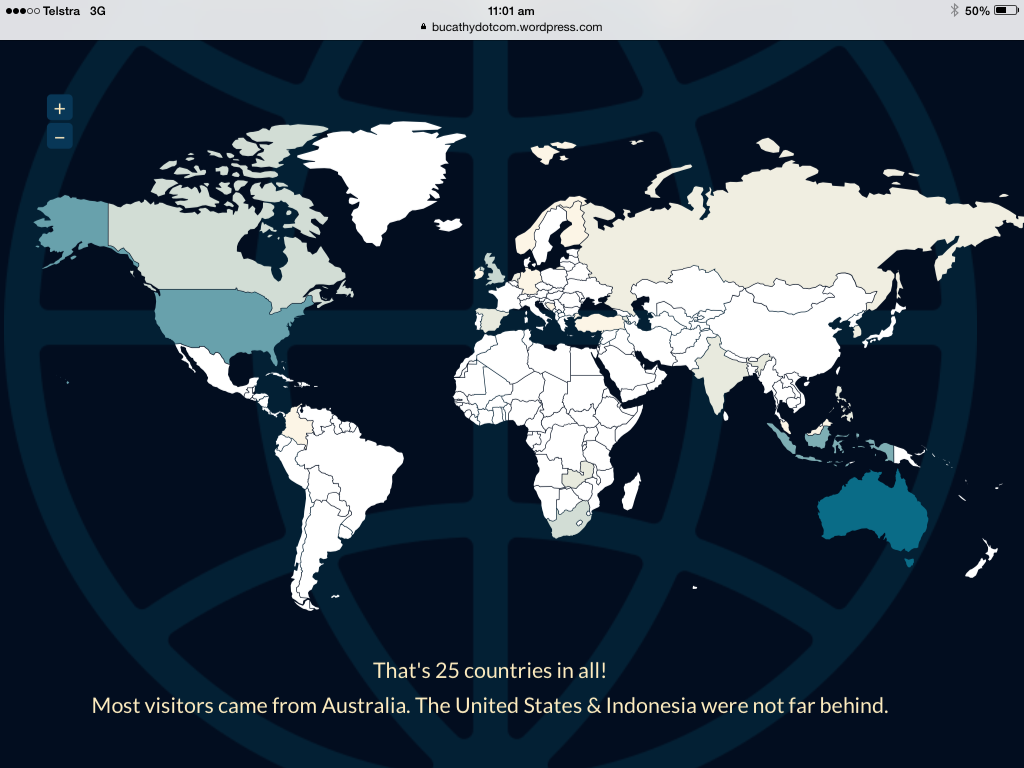
The traffic for my professional blog comes largely from Australia, USA and Indonesia

/home/wpcom/public_html/wp-content/blogs.dir/a1e/48203868/files/2014/12/img_9368.png which is exactly the same as my travel blog, however in reverse order. With my professional blog, I experimented with one of the ‘publicize’ (sic) options to utilise Twitter, so look out for that if you too are on Twitter!

Needless to say, my third and final blog was one I didn’t post to at all this year, yet it still received a steady stream of traffic in 2014. Interesting to see which posts are still popular 12 months on:

/home/wpcom/public_html/wp-content/blogs.dir/a1e/48203868/files/2014/12/img_9358.png
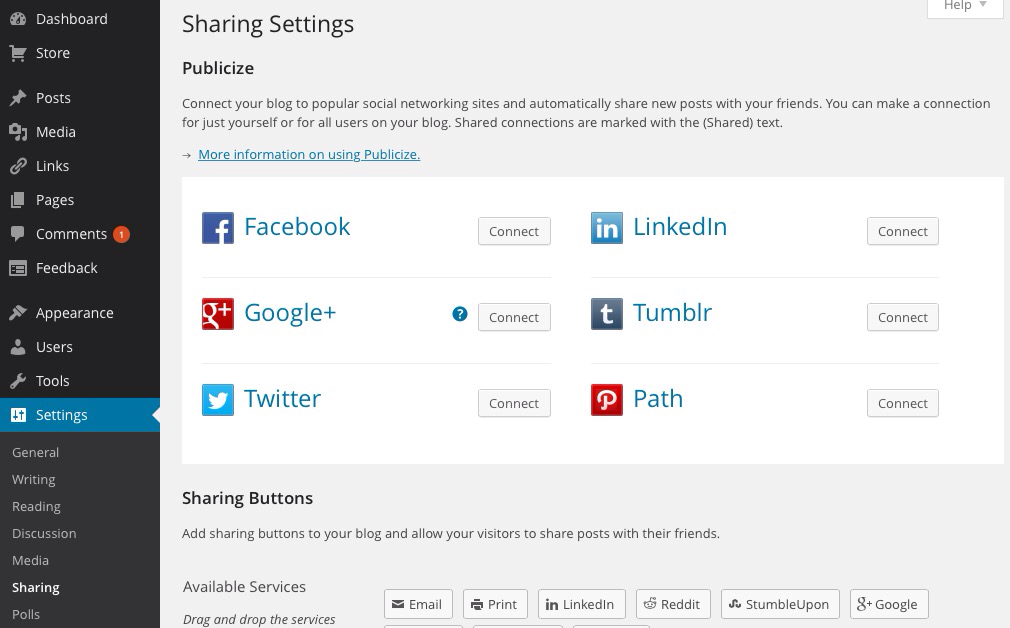
It was while scrolling through this report that I first saw the option to ‘publicize’, so I curiously followed it and this is where it took me:

/home/wpcom/public_html/wp-content/blogs.dir/a1e/48203868/files/2014/12/img_9370.png I am pretty sure at this point, I stopped. I am confident that I didn’t tap any buttons. So, I have no idea why suddenly my stats last night skyrocketed. It was so extraordinary that WordPress sent me a congratulatory notification! Have a look at yesterdays activity:

/home/wpcom/public_html/wp-content/blogs.dir/a1e/48203868/files/2014/12/img_9374.png
The following is the data outlining the origin of the traffic:

/home/wpcom/public_html/wp-content/blogs.dir/a1e/48203868/files/2014/12/img_9364.png I am still puzzled and look forward to learning about why my views spiked so dramatically yesterday. Did anyone else experience anything odd after viewing their statistical data?