After watching Carol Gaab, I tried something new with my junior primary students this week that I would like to share with you.
Last week with my younger students, I started the Carol Gaab story that Bu Anne posted about on her blog. I have tweaked it slightly to minimize the amount of new vocabulary. Instead of a harimau (tiger) I have a buaya (crocodile) because most students know buaya from our kancil and buaya unit last year. I also believe that tree, mountain (&?) are very low frequency nouns in a classroom, so I changed it to Horseshoe Bay, sekolah (school) & kelas (class).
My version goes like this:
Buaya lihat Elsa
Buaya lapar.
Buaya mau makan Elsa.
Elsa berlari ke Port Elliot.
Buaya berlari ke Port Elliot.
Elsa berlari ke sekolah.
Buaya berlari ke sekolah.
Elsa berlari ke kelas.
Buaya berlari ke kelas.
Buaya makan Elsa.
To support this story and its new target structures of ‘buaya’ (crocodile) & ‘berlari’ (run), I searched for a well known rhyme that I could adapt. Browsing on Pinterest I found the 5 Little Monkeys rhyme! This not only provided me with the perfect vehicle for ‘berlari’ & ‘buaya’ but also gave me the opportunity to introduce ‘jatuh’ (fall) & ‘menangis’ (cry). Here it is:
Lima buaya berlari di kelas.
Satu jatuh dan menangis.
Bu Cathy berkata, “Kasihan!”
Tidak pandai berlari di kelas.
Thinking back on our conversations with Catharina, the various posts I’ve read & my recent talks with Bu Anne, I liked the idea of introducing jatuh & menangis which we hear often in the junior primary classroom, especially after recess & lunch!
On Monday, I began introducing the rhyme but students weren’t particularly engaged and I considered disregarding the whole thing but yesterday morning as I turned on my computer at school, I remembered something I had seen Carol Gaab do. She had replaced the words of the story with illustrations. I immediately did the same using clipart images. Not only did it look more appealing to me, but it did for my students as well.


Then when I added acting into the equation, I was blown away with the increased level of student engagement. I firstly trialled the idea with a reception class, most of whom are pre-literate. They loved it and all read along with me! I then asked them to ‘cari empat teman dan duduk’ (find 4 friends & sit) doing a comprehension check firstly that they understood that you + four friends = groups of 5 and then they acted it out in their groups. Sharons ‘mata-mata’ (spotter) concept was brilliant here because invariably there were a few students above the multiple of 5. They went from feeling rejected to feeling very special when I asked them to be my mata mata! At the end of each acting of either the first half of the rhyme or the entire rhyme, each mata mata could choose a new mata mata and swap with that person.
One more point I’d like to add is that of hand gestures. Our PLC members work at schools that are not particularly far from each other and we have a few students moving between our schools for various reasons. We have discussed several times how much smoother the transition would be for those students if our had gestures were similar. One idea that appeals to us all is the use of AusLan or ASL. When looking for gestures for sekolah, kelas, menangis & jatuh, I investigated several websites. I believe that all gestures mustache be meaningful as they are clues which help students comprehend. The sekolah and kelas AUSLan & ASL signs were not useful at all.
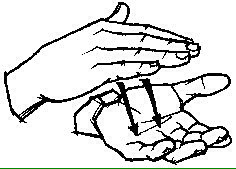
So I asked students and we made up our own for sekolah & kelas. However I found great ones for jatuh and menangis.