ASILE 2016 – Games & Activities for Language Classes

One of the workshops we attended on Sunday was led by Pak Irianto Ryan Tedya. It was a very enjoyable workshop with songs and games, 2 of which would be ideal as a brainbreak or for TPR.

The first game he shared was ‘dam dam sut’ which is his own variation of ‘suten’ (gajah, orang, semut). This game reinforces the target structures:

  1. Kita seri (we draw)
  2. Saya menang (I won)
  3. Saya kalah (I lost)

Each with their own hand gesture:

  1. Hands crossing left to right horizontally palms facing downwards
  2. Hands up in the air, fingers splayed
  3. Hands down wards, palms facing opponent.

The game is played in partners and together players say dam, dam together while clapping and then together say sut and on sut, players choose to either do:

gajah (elephant),

orang (person) or

semut (ant).

When first introducing the game, Pak Irianato recommends just focusing on;

  1. Gajah beats orang (elephant steps on person)
  2. Orang beats semut (person steps on ant)
  3. Semut beats elephant (ant gets into elephants ear and irritates the elephant – ant is small yet powerful)

Pak Irianto asked us to play 3 times with a partner and then swap partners choosing someone new. When he judged that we had mastered that, he asked the whole class to synconize our games; meaning that the entire class clapped & said dam, dam, sut at exactly the same time, starting very slowly and encouraging everyone to keep the rhythm.

Once this is mastered, I would introduce the above target structures yet Pak Irianto encouraged us all to use it right from the beginning. One participant suggested the following rhyme sung to Frere Jacques to consolidate vocabulary:

Saya menang

Saya menang

Saya kalah

Saya kalah

Kita seri

Kita seri

Marilah bermain!

Marilah bermain!

All up, it was a fun game and I loved the way that the game increases in complexity which makes it appealing to all ages of students.

The final activity he did with us was awesome and perfect for TPR. This song could be adapted to any verb. I love the idea of asking students for action suggestions!! I was thinking of how much fun ‘menangis’ (cry) or ‘jatuh’ (fall) would be. Pak Irianto first taught us the song and actions then suggested adding the jumping left, right & centre afterwards to add a further challenge.

I didn’t take any notes, just this video!!

Kursi Luar Biasa – Jawaban Benar atau Kreatif? (True or Creative Answers?)

Usually in Kursi Luar Biasa, (literally – the amazing chair [special student interviews]), I ask students personal questions about themselves (age, likes, pets etc) followed by a quiz. The quiz is a benar/salah style quiz. I began at first by asking students to stand if the statement I said about the ‘amazing student’ was true or sit if it was false, however I soon discovered that this became a sheep following exercise; if one stood/ sat then the majority followed suit without any thought. So the quiz became, stand if it is true for you and sit if it is false for you – as this requires greater focused listening & personal accountability. So if I say, ‘Susan tinggal di Victor Harbor’ (repeating one fact that Susan had told us about herself), the students who also live in Victor, stand. If I say, ‘Susan tidak tinggal di Mount Compass’, then all the students who don’t live in Mount Compass would stand, while those who do, sit!

As Kursi Luar Biasa (KLB) is largely a short one on one conversation with just the occasional questions addressing or about other students (to ensure comprehensibility and/or to encourage listening), engagement levels from the older students have decreased noticeably this semester. I have racked my brain for ways to ramp it up. I scoured Bryce Hedstrom’s Persona Especial posts for suggestions appropriate for this age level as well as being suitable for Bahasa Indonesia (the Indonesian language) and tried those that had potential (see past posts) but there were still students using this session as a zone out time. As they are generally quiet, I’ve accepted it because it has allowed me to focus on the ‘awesome’ person and to keep the spotlight right on the student who chose to sit in the chair! I also justify it to myself with the thought that while they are not listening with the intent to understand, they are still being exposed to Indonesian.

Yesterday, a year 7 boy, J, changed all that! He had us all following closely his hilarious answers and the entire class was 100% engaged and following the discussion closely! After The interview  had finished (stopped by the recess bell), I asked the class for a rating out of 5 (using their fingers) and 98%  rated it 5/5 while 2-3 rated it 4/5. I got exactly the same score for overall comprehension of the entire conversation!  J began by telling us where he lived and about the people in his family (great opportunity to revise one of the new target structures from the story that lesson) and then when I asked him about the sport he plays, we learned that he plays centre forward for Goolwa Hockey Club and is the leading goal scorer (dua juta gol!). A student who actually does play for Goolwa, was shaking her head and making it clear with body language that J does NOT play hockey for Goolwa!!  He started wildly embellishing (when asked what team he plays in, he stated the under 18’s – a grade that doesn’t exist in our local association), he had everyone’s attention.  We also learned that he plays in the AFL for Port Power and after pulang sekolah (another target structure from the earlier story – go home from school), he eats and then goes to Adelaide to train! He also claimed that he was a talented surfer, almost as good as Mal (a fellow student who is an extremely talented surfer and has participated at the national level). This last claim had his friends rolling on the floor with laughter!! He also made ridiculous claims about playing in the NBL! It was the most enjoyable KLB interview I’ve had in a long time and one I encouraged the students in that class try again!

Previously, I have discouraged students from stating fictitious information about themselves because I’ve always considered this part of the lesson as an awesome way for me to get to know my students better. However, my brain is generally on overload and I am finding, I’m embarrassed to admit, that unless a student tells me something really unusual or moving, my back to back lessons all merge into a vague hodgepopdge and I forget who said what. Yet I still see a value in beginning this way, especially with the middle primary year levels. It is a safe way in which to support students with repetitions of the vocabulary and language structures needed to answer personal questions or to talk about themselves to others. It provides them with a solid foundation upon which, when they are older, they can start being creative and quirky!!

I am so looking forward to next week when I can encourage the other year 67 classes to be wild and wacky.

Two Introductory TCI/TPRS Workshops -MLTASA & CLTSA

Over the weekend, Bu Annie, Ibu Sharon & I attended 2 conferences; 1. MLTASA (Modern Languages Teachers Association SA) in the morning and 2. CLTASA (Chinese Language Teachers Assoc) in the afternoon. When we first heard that both associations were holding their annual conference on the same day, we were incredibly disappointed as we were committed to present at MLTASA while Ian & Caitlin (2 TCI Chinese teachers from QLD) were presenting at CLTSA. Luckily our presentations did not clash and we were able to get from EDC to Napier House in good time. However the locked door into Napier House cut short our celebratory hand pumps and thankfully Ian had his phone on! 

The MLTASA conference began with a plenary by Sean Keenihan, who spoke about ‘the role and value of Languages education in schools – a business perspective’. Sean wears many hats and most relate to his Chinese proficiency, dating back to his high school days. When asked how to encourage students to learn a language he reflected with this: after graduation as one of hundreds of lawyers, he was the first from his year to be employed and this was entirely due to his bilingualism. His graphs illustrated recent growth figures in the SA tourism sector and he also talked about the growing state of global business. These two sectors are a just 2 of many that have a huge and growing demand for bilingual employees and thus being bilingual is giving many job seekers  an X factor, making them highly desirable in a competitive job market. Apparently only 30 of the 700 2015 SA lawyer  graduates were employed! I wonder what their X factor was? 

Our workshop, ‘Teaching Languages with TCI/TPRS’ was to be held in the larger room at EDC due to the large number of participants who had signed up for it. What an awesome way to begin!! We began by asking participants to bring their chairs to the front of the room and to sit in a semi circle facing the screen. As this was our first ever presentation and indeed our first ever attendance at MLTASA, we had no idea what to expect. One thing we were looking forward to was an audience of largely non Indonesian speaking teachers, who would experience our demo lesson from a student perspective and therefore hopefully feel the power of TCI even more dramatically than our Indonesian speaking colleagues. Our presentation began with introducing ourselves, outlining our TCI journey, and giving a brief explanaton of the acronyms TCI, TPRS & TPR. Due to the short amount  of time we had available and that we were a little late starting (domino effect of the 2nd plenary speaker running over time), our introduction was minimal. We felt that a demo would be more powerful than heaps of information. 

Our demo focused on the Pleased To Meet You (written by Jim Tripp) story. We began with establishing meaning of the target structures (siapa nama, nama saya, astaga, berkata – what’s your name, my name is, OMG, said), before giving a circling demo on siapa nama & nama saya. Sharon then established the ‘Stop – I don’t understand!’ gesture before telling the story. Afterwards she did a comprehension check and everyone gave her a thumbs up!! We had a little time for questions and we were very relieved that attending MLTASA was a high school French TPRS teacher!! It was awesome to connect with Zelda who has been working alone for 2 years – we take our hat off to you! Zelda was able to respond to questions that came from secondary language teachers – a cohort we have had the greatest difficulty connecting with as we have no secondary experience. Our promise to them that TPRS was designed initially for secondary students by a secondary language teacher rarely helps. Zelda’s contribution and support was invaluable.  

It wasn’t till much later, that Sharon realised that in our nervousness, the reduced workshop time and our determination to leave punctually, we forgot to mention anything about the unit of work we had created around this story to help participants trial a unit in their classrooms!! Oops. So if you were one of those participants and you would like a copy, contact me via my learn link address on the handout and I’ll happily forward it to you. 

We arrived at Napier House just before the post lunch conference sessions were about to begin, to our relief. Ian & Caitlin opened the locked doors which gave us time to quickly introduce ourselves to each other and chat briefly while heading upstairs to the auditorium. The entire afternoon schedule had been assigned to Ian & Caitlin! Imagine your only time constraint being getting to the airport in time for your flight home! We were slightly in awe and also a teeny (OK- a lot) envious!! Maybe next year, we need to ask for a double workshop session? 

Ian & Caitlin spent the first hour talking to a powerpoint which introduced TCI/TPRS to their audience of Chinese teachers. The powerpoint thoroughly explained TPRS, outlined how it differs from traditional/currrent language teaching methods, included several short videos of Ian teaching highly engaged year 7’s, year 10 free writes (290 words) , cold character reading , students talking positively about learning Chinese via TCI methodology, students reading unfamiliar texts fluently and a short yet highly engaging demo by Caitlin establishing meaning for ‘wants to eat’. As a student, I could immediately see the value of having the target structures clearly written on one side of the smartboard page and on the other side were other necessary vocabulary just as Diane Neubauer does.I hadn’t actually understood the beauty of this until that point! I also think I need to investigate buying a clicker gadget next year – it would be so convienent to turn the powerpoint pages from wherever I am in my class room!  

Ian & Caitlin stopped talking after an hour to give everyone a break and they were immediately swamped with people asking questions! The amount of interest was brilliant.  During their presentation, I could hear teachers around me commenting to each other quietly but unfortunately it was all in Chinese. 

During this break, it suddenly became clear, that the next session would have to be shortened significantly to prevent Ian & Caitlin missing their flight home to QLD. Particiapants were quickly called back into the auditiorium to answer any last minute questions. In no time at all, they were being presented with bottles of SA wine and the mad dash to the airport began. 

Thankfully we had offered to take them to the airport as this provided us all with a precious window for solid 2017 planning. We all acknowledge the need to arrange high quality training in Australia asap and are keen to collaborate on this by inviting a guest out to Australia next January to provide us all with much needed expert training before the 2017 school year begins! It would be awesome if the person  who comes out, is happy to travel as then we could offer training in a few states which will be much more affordable to participants! If this all happens, would you be interested in attending and how much would you be prepared to pay to participate? Considering our only option at the moment is a flight to either America or Europe ($$), it would be considerably cheaper and so much easier if this eventuates! Please comment below with any thoughts. We need your feedback! The more interest, the better! 
Brainbreaks

My most popular brainbreak video last semester was senam penguin which I mainly showed to junior primary students, but it turns out the older students enjoyed it too one day when I was absent!


However it is now time to give senam penguin a break so I started looking for a new senam brainbreak video and I think I’ve found it! This will be be perfect for all students especially those who have been enjoying Pokemon G!  What do you think?


Don’t forget you can purify these videos to remove any advertising!!


A terrific Brainbreak For All Year Levels

Students need constant brain breaks to help them both lower their affective filter and also to literally give their poor brain a break. I found the following YouTube clip and it translates beautifully into Indonesian and it is a great break which has been enjoyed by all ages. When I first introduced it to one of my year 7 classes, I tried to do the whole game – starting with introducing all the movements just as the fellow does in the clip:

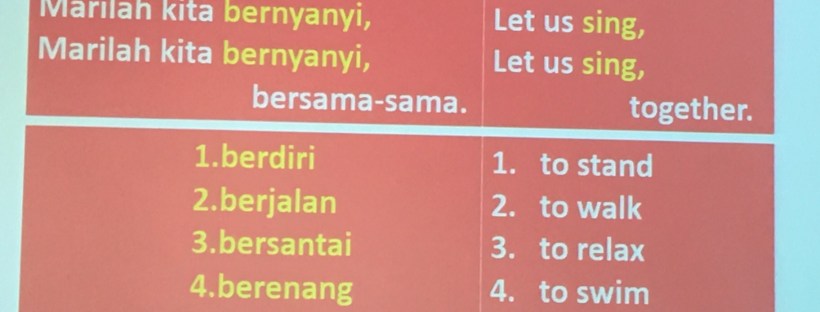
– berjalan kaki (walk) & stop

– berdansa (dance) & melompat (jump)

– nama (name) & tepuk tangan (clap)

These structures are all 100% familiar to my students through TPR (Total Physical Response) and TPRS (Teaching Proficiency through Reading & Storytelling), but to be honest, any verb you have focused on or even one you would like to focus on, could be used instead (although jatuh *fall over* may not work well haha) 

I then began to introduce reversing the word pairs. I began with reversing berjalan kaki & stop which was highly successful probably because one of the words is a cognate. It added a new level of fun & challenge which the older students really enjoyed but when I reversed the next pair, the brainbreak quickly became hard work & student engagement dropped instantly. I defintely recommend saving that aspect of the brainbreak until much later when students are familiar with the instructions and only introduce one reversal at a time and just with classes who know these structures inside out! 

It is so cool when a whole class calss out the name at the same time!!  

A great Brain Break from Bu Anne

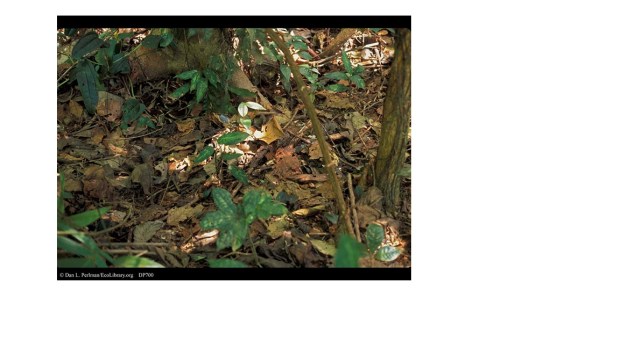
This term my junior primary students are learning target structures for Catherina’s snake story. This week we focused on ular (snake). After showing a PowerPoint of pictures of ular’s which included pictures of worms & cicak’s (geckos) all ways to get repetitions of the structure ular, I finished with a few pages of ular’s hiding in environments and asked the students, “Dimana ular? (Where is the snake)  They absolutely loved this although the touch TV screen was challenging!

Untitled

Afterwards I tried a fantastic TPR game that Bu Anne wrote about recently and it was a big hit. I asked the students to stand up and spread out around the room. We then revised the positions needed for the 3 words in the game. The 3 words this time are: sekolah (school), cicak (gecko) and ular (snake). If I said ular, the students lay on the ground like a snake, if I said sekolah, they stood tall with a roof over their head and if I said cicak, they got down on their hands and knees. It is good to choose 3 words that give you 3 levels of movement and also ensure that the only unfamiliar  word is the target structure and the other 2 are familiar from previous stories.

Once the students were familiar with the game, I added various levels of complexity. Firstly I said just 2 words (ular/cicak) about 3 times each and once they were in a rhythm, I tricked them by repeating the last word! eg ular, cicak, ular, cicak, ular, cicak, cicak! Another way to ramp it up was to say it again without any gestures and finally to really ramp up the listening, use the wrong gestures!! All classes absolutely loved this TPR brainbreak.

A Great Reading Activity For Pre-Literate Students

Have you seen the oral cloze retell idea by Eric Herman on my TCI/TPRS activities page which is found on my homepage up the top in the header?

Here it is:

On subsequent retells you can erase more and more words to give more advanced students a greater challenge and eventually erase the entire story and have superstars retell the entire story without any written support.

Example:

There is a boy. His name is Bob. He likes pizza.

There is ___ boy. His name __ Bob. He likes _____.

There __ ___ boy. ___ name __ Bob. He ____ ____.

There __ ___ ___. ___ name __ Bob. __ ____ _____.


I tried it today with a year 1/2 class as well as a reception class and it was awesome!

I began by asking 2 students to act out the story while I retold it. By now, I’ve lost count of the number of times they have heard it, but it never hurts to get in one more retell!! I then dragged over my mobile white board and asked the class to tell me the story again. It was brilliant how well they could retell the story! I wrote down the first 5 sentences on the board.

Buarlapar.

Buaya lihat Elsa.

Buaya mau makan Elsa.

Elsa berlari ke Horseshoe Bay.

We all then read the story together using hand gestures. At the end of the first reading, I rubbed out one word and in its place I drew a contrasting coloured line. We then read through it again together, however before we all read it, I explained that the next person to rub out a word would be someone who is both reading and gesturing beautifully. Boy – that ramped up the participation and engagement!!

We continued this until there was nothing left of the story and all that was there were red lines where the words used to be!! Both classes absolutely loved it and were so fluent by the time we rubbed out the last word!

IMG_1636[1]


IMG_1637[1]

IMG_1638[1]


Reading With Pre-literate Students

After watching Carol Gaab, I tried something new with my junior primary students this week that I would like to share with you.

Last week with my younger students, I started the Carol Gaab story that Bu Anne posted about on her blog. I have tweaked it slightly to minimize the amount of new vocabulary. Instead of a harimau (tiger) I have a buaya (crocodile) because most students know buaya from our kancil and buaya unit last year. I also believe that tree, mountain  (&?) are very low frequency nouns in a classroom, so I changed it to Horseshoe Bay, sekolah (school) & kelas (class).

My version goes like this:

Buaya lihat Elsa

Buaya lapar.

Buaya mau makan Elsa.

Elsa berlari ke Port Elliot.

Buaya berlari ke Port Elliot.

Elsa berlari ke sekolah.

Buaya berlari ke sekolah.

Elsa berlari ke kelas.

Buaya berlari ke kelas.

Buaya makan Elsa.

To support this story and its new target structures of ‘buaya’ (crocodile) & ‘berlari’ (run), I searched for a well known rhyme that I could adapt. Browsing on Pinterest I found the 5 Little Monkeys rhyme! This not only provided me with the perfect vehicle for ‘berlari’ & ‘buaya’ but also gave me the opportunity to introduce ‘jatuh’ (fall) & ‘menangis’ (cry). Here it is:

Lima buaya berlari di kelas.

Satu jatuh dan menangis.

Bu Cathy berkata, “Kasihan!”

Tidak pandai berlari di kelas.

Thinking back on our conversations with Catharina, the various posts I’ve read & my recent talks with Bu Anne, I liked the idea of introducing jatuh & menangis which we hear often in the junior primary classroom, especially after recess & lunch!

On Monday, I began introducing the rhyme but students weren’t particularly engaged and I considered disregarding the whole thing but yesterday morning as I turned on my computer at school, I remembered something I had seen Carol Gaab do. She had replaced the words of the story with illustrations. I immediately did the same using clipart images. Not only did it look more appealing to me, but it did for my students as well.

buaya 1

buaya 2

Then when I added acting into the equation, I was blown away with the increased level of student engagement. I firstly trialled the idea with a reception class, most of whom are pre-literate. They loved it and all read along with me! I then asked them to ‘cari empat teman dan duduk’ (find 4 friends & sit) doing a comprehension check firstly that they understood that you + four friends = groups of 5 and then they acted it out in their groups. Sharons ‘mata-mata’ (spotter) concept was brilliant here because invariably there were a few students above the multiple of 5. They went from feeling rejected to feeling very special when I asked them to be my mata mata! At the end of each acting of either the first half of the rhyme or the entire rhyme, each mata mata could choose a new mata mata and swap with that person.

One more point I’d like to add is that of hand gestures. Our PLC members work at schools that are not particularly far from each other and we have a few students moving between our schools for various reasons. We have discussed several times how much smoother the transition would be for those students if our had gestures were similar. One idea that appeals to us all is the use of AusLan or ASL. When looking for gestures for sekolah, kelas, menangis & jatuh, I investigated several websites. I believe that all gestures mustache  be meaningful as they are clues which help students comprehend. The sekolah and kelas AUSLan & ASL signs were not useful at all.


So I asked students and we made up our own for sekolah & kelas. However I found great ones for jatuh and menangis.

Observations of a TPRS Colleague

Teachers at my site are encouraged to observe colleagues. Working in a department of 1, there is no one at my school who I can observe meaningfully. Classroom teachers are given a morning for observation and an afternoon for discussion.

So with delight, I accompanied Ibu Anne to Victor Primary R-7,  via Kleinigs Hill,


to spend a day in Ibu Sharon’s classroom last Thursday for my yearly observation day. So brilliant watching a fellow TPRS practioner alongside another TPRS fellow practitioner! We sat side by side at the back of the room taking notes and then chatting about ideas as they came to us and then later during lesson breaks discussed our ideas with Sharon! I was in seventh heaven!!

Sharon began her day with a year 5/6 class. She called the roll by asking the students random Indonesian questions: Siapa nama, apa kabar, Selamat siang, etc to which they students had to reply/respond appropriately. Certainly kept them on their toes and it was inspiring to listen to the majority respond so smoothly.

Sharon is focusing on the Talks too Much story by Anna Matava this term with all her classes except Receptions. Sharon identified the unfamiliar vocabulary needed for the story and has spent the past 3 weeks of term focusing on them with JP’s and just this week with MP’s. After the students and Sharon had gone through them together she invited a student to come out the front and stand with their back to the projected words facing the class. Students and Sharon then one by one said a word from the list together with it’s gesture for the brave student to translate. Sharon did this activity with all classes and we were blown away with how solidly they have acquired them. It is such a great way to revise the structures and their gestures while checking on individual students and their progress. The students loved it.

With this class, Sharon trialled the Spelling Battleships pre story activity. The stuents had to choose 5 words from the list and hide them in their grid and then to find the words they had to say the coordinates in Indonesian. We all then circulated to observe and assist. We all discovered that most students were so engaged in the game, they weren’t using Indonesian and their was almost no repetition  of the target vocabulary.


So we brainstormed at recesss to create an improved version! Instead of letters across one axis, write in the top high frequency words. This could be the words that will appear in the story or words that classes have already acquired from previous stories. Then across the number axis, instead of the stock, standard numbers 1-12, include numbers that are appropriate for your classes. They could be in multiples of 10, just the teens, all the fifties etc. We then added the final rule, that each time students discover a letter,  they have to say a word from the list and the gesture to guess what it could be. What a fun way to get in repetitions!!

After recess, Sharon taught 2 junior primary classes. The first class was a year 1. Sharon had already introduced the first paragraph of the Talks Too Much story with the JP’s and for this lesson they revised the vocabulary (in exactly the same way that she did with the 5/6 class), reviewed the first paragraph and then introduced the 2nd paragraph. The first thing I noted during this lesson was the “Spotter”. Sharon chooses a student (alternately boy/girl) to stand out the front. Their job is to watch their classmates for the best gesturer. After 5-10 minutes, Sharon asks who they chose and that person gets a pandai (clever) sticker. I love this idea because it dovetails beautifully with my behaviour management strategy for my JP’s!

With all each class, Sharon demonstrated a different activity so that we could observe a variety of ideas in practise! How thoughtful!! I wish now to apologise to those who have observed my lessons and saw the same lessons over and over!! Anne and I really appreciated the variety of ideas we came home with! I will definitely incorporate this into my day when I am next observed!

The first activity Sharon demonstrated was Reverse Bingo. Each student was given a small rectangle of paper and they had to choose a blue word from the story which was up on the smartboard. (Red words were proper nouns – another cool idea!). When they had written their word down, they returned their pensil to the pot and then stood in front of Sharon. Sharon then read out random sentences from the story and students had to sit if their word was said. She then crossed out the sentences on the smartboard as she said them. The last standing student was the winner.


Students then swapped cards and the game was replayed with a different card! What a fun and active way to play bingo.

Sharon showed us her game “buzzer” with her next class. She put 2 buzzers on the bench out the front of the classroom under the smartboard, divided the class in half and then invited one student from each team to stand in front of their team buzzer. She then asked questions about the story, the vocabulary and the first team to push the buzzer and answer correctly got a point for the team. A student kept score on the mobile white board.  The level of competition between teams was intense!

The final class working on the Talks Too Much story was a year 4 and with this class, Sharon did a TPRS version of a findaword. Instead of students working independently on it, they had to listen to Sharon’s instructions which went like this: Cari bercakap cakap dan mewarnai merah. She then invited students to come out the front and with the magic wand, they put a line through the word on the findaword projected up on the smartboard.

The final class was a R/1 class and they have been working on the Sp0ngebob story.

Spongebob mau makan crabby patty.

Patrick punya crabby patty.

Patrick kasih Spongebob crabby patty.

Spongebob makan crabby patty.

The class read through the story with all students encouraged to do the gestures because the spotter was at work again! The activity for this class was dividing students into small groups who had to work together to arrange the mixed up words of the story into order. To finish the day, Sharon offered to demo “Dimana Bobo?” with this class.  She lay out on the floor different coloured leaves. Students then had to turn around while she hid a laminated monkey (Bobo) under one leaf. Students then vounteered to guess which leaf he was hiding under.

Again, the students loved this game. I loved that it gave repetitions of the question ‘dimana’ (where) as well as colours.

After school we stood around chatting & sharing more games with each other. Anne  had a few number games which we intend to use soon. One was writing a list of numbers on the board:

satu

dua

tiga

empat

lima

On the back of the board, ask the student to write the number if necessary and then ask the class to guess the number. If wrong, the student puts a cross next to the numbers which helps to record guesses.

Another number game that would fit in beautifully with the jacket story because it uses the structures terlalu besar, terlalu kecil dan pas!  Draw on the board a line. Each time a terlalu besar number is suggested, the student writes it above the line, each time a student guesses a number that is terlalu kecil, the number is written below the line and the right number is written on the line! A great way to record the numbers guessed!!

Thankyou so much Sharon for agreeing to host both myself and Ibu Anne last Thursday. It was truly brilliant having 3 TPRS colleagues brainstorming and discussing together best practice which will inevitably benefit not only us as teachers but ultimately our students too. I’ve learned some great ideas and I can’t wait to try them with my students!

I also must thank Ibu Anne for taking a week of her precious LSL to spend a week in SA with us all because from that decision, this awesome day eventuated! Ibu Anne’s visit though is another story!! Read about it on her blog.