Movietalk in the Primary (Elementary) Classroom

Most CI teachers rave about Movietalk. Movietalk is using a short video/film as an engaging method of sneaking in repetitions of specific target structures. Martina Bex has a very detailed explanation on her website. Catharina mentioned in our last Skype call that her students (junior primary) absolutely love movietalk and constantly ask for another one. It was a technique that I was both been very keen to try and yet was also apprehensive about trying it. While I knew students would enjoy watching and talking about a movie clip, I am aware that my students only have a very small pool (puddle) of acquired structures and also that I am still a real TPRS beginner!! Circling, PQA etc are TPRS techniques I am still developing and the idea of doing them all on the fly about a video was slightly intimidating. So, I read up about it, looked at  video clips recommended by other teachers and put it in the ‘maybe later’ basket. Then on the moretprs listserve, this Mr Bean video was posted as a good Movietalk option. As soon as I saw it, I was struck with how perfectly it supported:

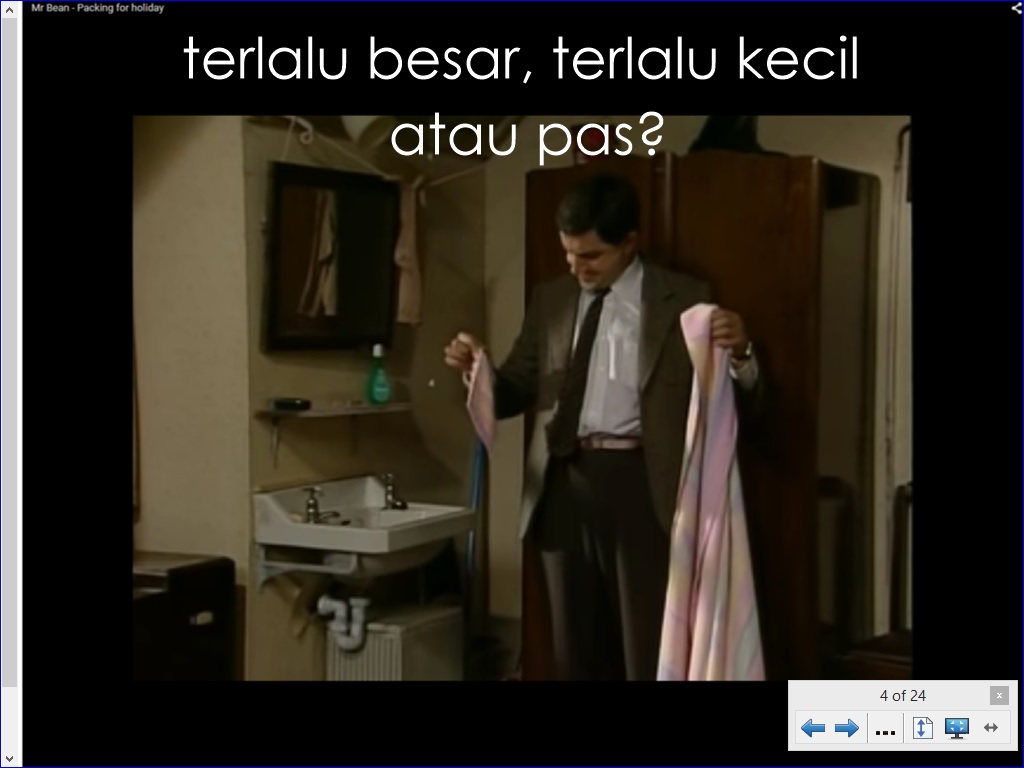
  • terlalu besar – too big
  • terlalu kecil – too small
  • pas – just right.

So on the weekend I watched the video and took some screen shots to make up a smart notebook file. This way unfamiliar vocabulary eg towels, bathers, shirts, toothbrush, toothpaste etc could be labeled and thus be easier for us to talk about them without needing to lapse into English.

terlalu besar, kecil atau pas

handuk

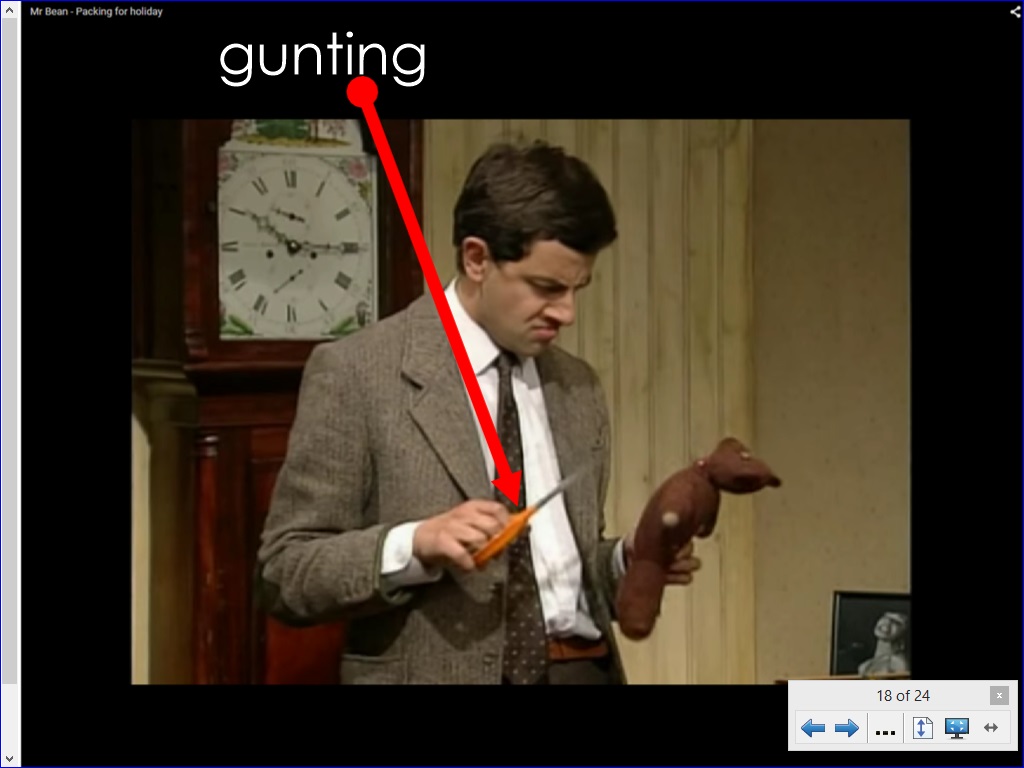
gunting


I also wrote up on the board some vocabulary that would help the discussion but is not a focus:

  • libur – holiday
  • tas – bag
  • mengepak – to pack

Finally I felt comfortable enough to dive in the deep end and attempt a Movietalk.

On Wednesday, the year 3’s were the first class to do a Movietalk with me. Together we went through the notebook file, talked about the screenshots and then watched the movie. Thank goodness it was the year 3’s who were my guinea pigs!! For various reasons, the notebook collection of screenshots was not that successful. Mostly because the quality  of the pictures was poor which together with a fading smart board bulb meant students had difficulty grasping what we were talking about! I realised towards the end of the lesson while we were actually watching the video, how much better and easier it would be to watch the video and just stop it when needed.

So with the year 5’s, I did just this and it was brilliant. Students really became involved in the discussion and the repetitions of the above structures were brilliant. The story line was much clearer and students got far more involved with the craziness of Pak Bean.

So if you too, are keen to have a go at Movietalk, read up about it on Martina Bex’s blog, watch a few YouTube clips of teachers demonstrating Movietalk (watch this or this) and then search for the perfect clip to try it with.  If you have trouble finding a clip for specific target structures, I recommend asking the moretprs listserve or joining Ben Slavic’s website. Both provide awesome TPRS support.

PEPS’ First Ever Bilingual Assembly

Last Friday,  year 5/6 Roberts ran the school assembly. It was amazing!

However before I explain in more detail why it was amazing, I have to explain a few things….

Their teacher, Margaret, has incorporated Indonesian wherever possible into her classroom routines. Displayed in her room are the classroom phrases students use and know well, including

  • Boleh saya ke w.c.
  • Boleh saya cari minuman
  • Jangan lupa, cuci tangan
  • Jangan lama lama
  • Sudah!
  • Sampai jumpa
  • Terima kasih
  • Apa kabar?
  • Boleh saya pinjam…

These phrases used to be the cornerstone of my language program before I discovered TPRS. These phrases were thus the limit of my student’s fluency because these were they only phrases that were repeated from lesson to lesson, term to term. (Other vocabulary was limited to ‘themes’ and once the theme was finished, the vocabulary was rarely used or covered again.) Margaret has always supported the Indonesian program where possible in her classroom yet lately she has taken it one huge step further. During her release time, she can often been found joining her students in their Indonesian lesson!! I am so touched and impressed for many reasons that she gives up her non face to face time to join us. I really appreciate her feedback on the many aspects of the lesson and love it when we run through the target structures that she has acquired later in the classroom.

So I really shouldn’t have been surprised when Margaret announced that she wanted to run a bilingual assembly!! She gave me a copy of the script and together with Ibu Mia, we were able to easily translate the dialogue using the target structures students have covered to date. This exercise in itself demonstrated just how powerful TPRS is when the initial structures are high frequency ones. Using the following target structures, the year 5/6 class were able to conduct PEPS’S first bilingual assembly:

  • berkata – to say
  • nama saya – my name is
  • mau – want
  • berdiri – stand
  • diam – quiet
  • duduk – sit
  • kasih – give
  • lihat – see
  • dengar- listen
  • sudah – already
  • sampai jumpa – goodbye

The assembly went so smoothly and I was immensely proud of the fact that students could conduct an assembly in two languages and that it was 100% comprehensible for all students in the audience. The very first sentence was “Murid-murid, berdiri dan diam untuk Advance Australia Fair.” Immediately the entire assembly of students stood quietly! Wow!! The class teachers, who had no idea of what had been said, were puzzled when the entire student body stood up.  Not realising why, class teachers immediately insisted that their students sit down! The students were confused! They had just been asked in Indonesian to stand and now they were being told to sit down!! The sight of the entire school getting to their feet en masse was very moving for me. The students who  had spoken the words had used no hand signals, yet the students fully understood it and immediately followed instructions!

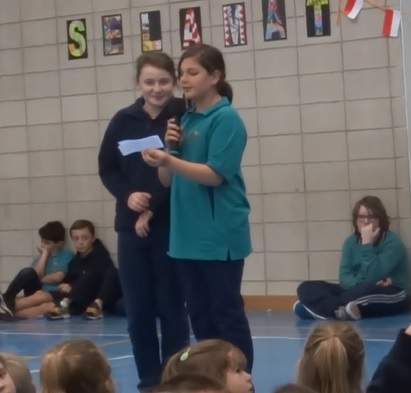
jessica & flick

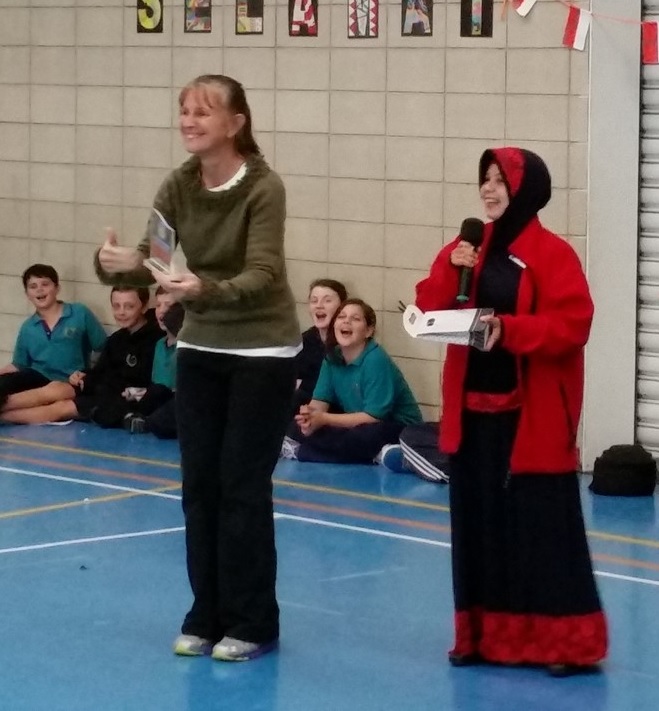
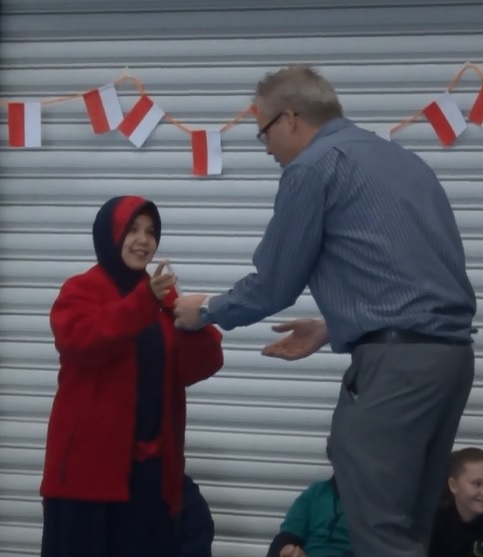
I also spoke at the assembly to formally welcome Ibu Mia to our school. Once again I was blown away by their comprehension and was so incredibly proud. I spoke in Indonesian and when I asked them all, “Paham?” they answered en masse, “Paham!” Ibu MIa then presented a trophy to our principal that her students had made especially for our school. When I held it up to show the students they all agreed: “Astaga!” It blew Ibu Mia away!

astaga

recieving presentation

What an amazing assembly! To think that our students now know enough Indonesian to conduct an entire assembly is pretty cool! Congratulations to the year 5/6 class. You have certainly set the standard now and I really hope that the next class who runs the assembly is also keen to conduct it bilingually!

Ibu Mia From Batam, Kepulauan Riau

This week my students are enjoying a chance to interact with and learn from Ibu Mia, an Indonesian high school English teacher from Batam, Kepulauan Riau. She will be in our area for 3 weeks, spending a week at each of our schools. Her visit has been entirely coordinated by Pak Nyoman from APBIPA and we are so, so fortunate to able to particiapte in this program. Through APBIPA, we have hosted teachers from Sumbawa, Bali, Sumatra, Jakarta, Kalimantan, Bandung and now Batam. What a fantastic way for my students to experience the diversity of Indonesia. 

We learned many interesting facts about Batam. Some of which are:

  • Even though it is a tiny island, the population is roughly similar to Adelaide; 1 million. 
  • It is only 35 minutes from Singapore by ferry and Ibu Mia has often taken her sons to Singapore for a day trip!
  • There are 1500 students and 90 teachers at her school, SMK 1 Batam.
  • Batam was only founded in the 70’s and then developed in the 80’s as a centre for free trade.
  • Batam has a good selection of high class hotels, one of which is a restored cruise ship!
  • There are 7 domestic harbors and 2 international harbors in Batam.
  • Batam has beautiful beaches.
  • Batam has a huge industrial sector.
  • Ibu Mia lives in Batam Centre.
  • There is a ‘Welcome to Batam” sign which is exactly like the Hollywood sign in California.
  • Batam’s skyline resembles any develped city’s skyline. Multi-story buildings and freeways. 

This visit has been so enjoyable for me for a variety of reasons. Usually I teach as per usual and my visitor co-teaches i.e., assists with modeling pronunciation, extra facts etc. However this time, the focus of the lessons this week has been Ibu Mia, thus being a cultural brain break for all of us. While lessons largely reverted back to the 90% English/10% Indonesian ratio, it was so interesting and informative that it wasn’t an issue and we still managed to where possible incorporate the target structures for this term and students enjoyed plenty of opportunity to demonstrate their growing ability to speak in Indonesian with many classestotally impressing Ibu Mia! So exciting!! I couldn’t help pointing out to the older classes, that the level of communication we used with Ibu Mia was far above that which we have used with any previous visitor. 

Our recent acquisition of pakai was very useful and we enjoyed the opportunity for many repetitions with all the classes due to discussions about why students thought Ibu Mia was Indonesian (as opposed to be being Korean, American, Spanish etc). They all said that had they seen her in the street, they would guess she was Indonesian because of the clothes she was wearing which led beautifully back to our circling:

  • Ibu Mia pakai topi? bukan
  • Ibu Mia pakai jaket? bukan
  • Ibu Mia pakai sepatu? ya
  • Ibu Mia pakai apa?

This then led to a discussion about her clothing. Students learned the word for her Muslim dress (gamis) and her  head scarf (jilbab). I have a selection of jilbabs from Kalimantan, so we dragged them out which led to many questions from students about jilbabs. The questions were hysterical and I wish I could have recorded them all. It was so hard keeping a straight face! Questions included:

  • How do you put on a jilbab?
  • Do you sleep in your jilbab?
  • How do you get your hair cut if you can’t take it off in public? 
  • What is that thing under your jilbab? (ciput)
  • What happens if someone comes to your door that is not family and you are not wearing your jilbab?


    The most amazing thing about all the questions was that they were all respectful! Not one student made a negative comments about any aspect of Islam. I am so proud of my students. Ibu Mia was so relieved. She showed me an article from her local paper for which the headline which roughly means: Ibu Mia is a ittle bit worried about visiting Australia On The Heels of The Bali NIne Executions.

      
    Her friends all warned her that Australians would harrass her because of the executions and that it was a terrible time to visit Australia. Many also suggested she reconsider wearing a jilbab in Australia or at least wear a smaller one. Thankfully she did not listen to their advice!! At our school and in our local community she experienced exactly what I experienced while traveling in Indonesia amidst the telephone spying scandal: most of  the hullaballoo is political and hyped up by the media. The general public are largely cynical consequently and thus when a visiting national from that country is polite and personable (as Ibu Ma definitely is), it dissolves any animosity one may have for their nation and is brilliant for breaking down the stereotypes that events such as these perpetuate. 

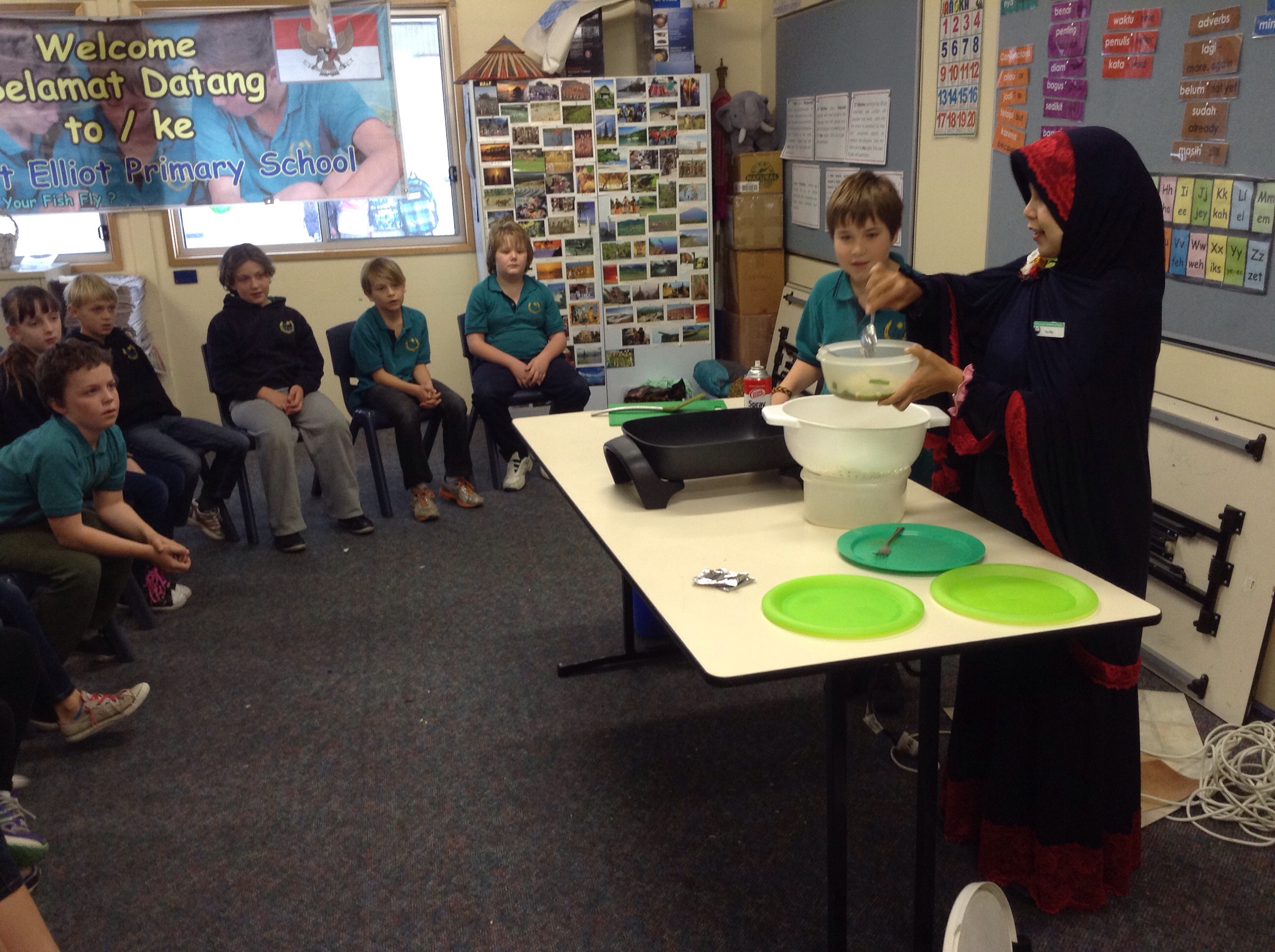
    The classes that have 2 lessons a week, were treated to a cooking demonstration for their second lesson. Ibu Mia, not only loves cooking but she is an awesome cook. We brainstormed one evening after school for recipes that are quick, easy and will surely be popular with students. Ibu Mia suggested her own recipe of Mie Goreng Telur A La Ibu Mia which is a popular snack she makes for her sons when they are hungry. We found all the ingredients at our local grocery shop and she was especially delighted that we could buy the extra spicy chilli sauce made by ABC!! Needless to say the small noodle pancakes were a huge success. Students could choose to have theirs with saus tomat, sambal atau tidak pakai saus. The entire cooking lesson was a double bonus because where possible Ibu Mia used the target structures that students have learned this year. It was awesome that Ibu Mia understood the power of TPRS/TCI so quickly. Her circling required that all students to listen, look & respond! It was so cool. Her language to the students included:

    • Kasih Ibi Mia gunting
    • Siapa mau menjadi assistan Ibu Mia?
    • Apa ini? 
    • Kasih Ibu Mia telur. Apa telur? Ya, telur egg!! Jade, kasih Ibu Mia dua telur. Berapa telur?
    • Berapa murid di kelas ini?
    • Ayo, Menghitung! They would then count with her while she tricked them by going fast sometimes and slow sometimes.
    • Garamnya (apa garam? Ya, garam salt) Garamnya terlalu besar, terlalu  kecil atau pas?
    • Siapa mau makan mie goreng telur pakai saus?

    Terima kasih IIbu Mia. PEPS will miss you!

      Ayo, Menghitung!

        PQA & Direct Instruction in the TCI Classroom

        Last week, 2 important aspects of TCI gelled for me. The first was the true understanding of the Personalised aspect of PQA (Personalised Questions & Answers), and then experiencing how it transforms discussion. Read this and/or this to learn more about PQA. Ben Slavic also has published a book called PQA In A Wink which I am reading at the moment and can highly recommend. 

        Over the holidays, I created a notebook file full of quirky pictures to support the acquisition of 

        ‘terlalu’ besar’ (too big)
        ‘terlalu kecil’ (too small) &
        pas (just right/perfect).

        As the class was looking at the pictures on the smart board during the first day of school, it became clear that once the novelty of the pictures wore off, I lost the students. I puzzled over this during my evening dog walk that evening. I revisited in my mind all that I had done in the lessons, trying to pinpoint where I had stumbled. It suddenly dawned on me that PQA was not asking about the colour of the jacket nor whether the bike was big or small. That was incredibly boring because, honestly, who cares if the bike is red or green! Ho Hum… PQA is asking questions that relate directly to the students.  I was so excited to finally get this that I couldn’t wait for school the next day to give it a go! 

        The following day I had great success and students were thrilled that I was asking them questions about their own personal lives, their likes/dislikes etc. For example, one of my pictures was a pictures of a man in a pink tutu riding a tiny bike with the word ‘sepeda’ typed and an arrow pointing to the bike. I asked questions such as:

        1. Siapa punya sepeda? (while pointing at the word sepeda with my magic laser pointer) then asking the student who had responded:
        2. John punya berapa sepeda? and then asking: 
        3. Sepeda John terlalu besar, terlalu kecil atau pas? I then moved on to asking about the bikes of their siblings which also apparently, is mesmorising! 

        Another picture was of a tiny turtle dwarfed by a strawberry with the turtle labeled kura kura & the strawberry labelled arbei. For this picture I asked:

        1. Siapa suka arbei? ( One year 4 boy answered, saya suka makan arbei dan kura kura! It was pure gold!) 
        2. Siapa tidak suka arbei?
        3. Siapa allergi dengan arbei?
        4. Siapa suka makan arbei dengan es krim?

        I am still amazed at just how much questions such as these are engaging for our students. My only concern was that general questions to the class evoked an incredibly enthusiastic response which was at times deafening. Awesome that everyone is so engaged but so hard to manage and keep students focussed without lapsing into English.

        Then after school Wednesday, I watched a webinar from the TPRS Publishing website which led to my second realisation thanks to Carol Gaab. The beauty of this webinar is that it is specifically for elementary language teachers. I have seen it several times and each time I watch it I learn something incredibly useful. I was delighted this time when Carol outlined several techniques she uses to minimise students calling out during PQA. She recommends asking students to do a given action if they agreed/disagree with a statement, eg berdiri kalau suka arbei, angkat tangan kalau tidak punya anjing. Once again, I couldn’t wait to try this idea and again, it worked so well and made such a difference. 

        So this week (week 2) I combined asking personal questions together with asking the students to reply to questions by standing/ sitting/ raising their hand etc and it was brilliant. One of my year 6/7 classes today arrived to class in an unusually unfocused fashion. They fussed around getting jobs allocated and with the delay became even further unsettled. Yet as soon as I started PQAing the pictures on the smartboard, they were suddenly quiet and hanging off every word. At one point I asked whoever had 3 dogs to stand up, I then asked each of the students standing what their dogs names were. This produced some  hilarious names which had the students in stitches. However when I tried to move on to another question, the students quickly reminded me that I had yet to ask Winter about her dogs, who was not fussed at all that she didn’t get to share!!! We also had a giggle when Connor told me that he had 13 dogs but he couldn’t keep a straight face and then quickly confessed that he actually only had one! 

        A truly terrific week due to finally experiencing the power of the ‘P’ in PQA and learning techniques which help to keep us all in Indonesian!! My next personal goal is to learn how to incorporate awesome student contributions into our class stories! Imagine the story we could have created involving a turtle  hamburger!


        Written by the Penulis Twitter


        Global Workshop via Skype

        Last Friday, Sharon, Annie & I were again fortunate to have the opportunity to workshop with the marvellous Catharina, an experienced junior primary TCI  practitioner. Due to South Australia leaving summer time and the USA beginning summertime, we met at 9am Friday morning (Aust) and 7:30pm Thursday evening (USA). Catharina’s school year is coming to an end, just4 weeks left of the school year, so we doubly appreciated the time Catharina gave us! Such an exhausting time. Last Friday, we were also joined by Rosslyn from INTAN. Rosslyn is the 2015 (and inaugural) INTAN hub group liaison officer and joined us to see what our hub group gets up to!! 

          
        As always our skype workshop with Catharina left us buzzing. We began by bringing Catharina up to date with recent lesson plans and being the end of week 1, we filled her in with what we had each done in preparation for our new story:

        Ada perempuan.
        Nama perempuan Lucy.
        Lucy dingin.
        Lucy mau pakai jaket.
        Jaket Pak Hudson terlalu besar.
        Jaket bayi terlalu kecil.
        Jaket Bu Cathy pas.
        Lucy berkata, “Terima kasih Bu Cathy.”
        Bu Cathy berkata, “Sama sama.”


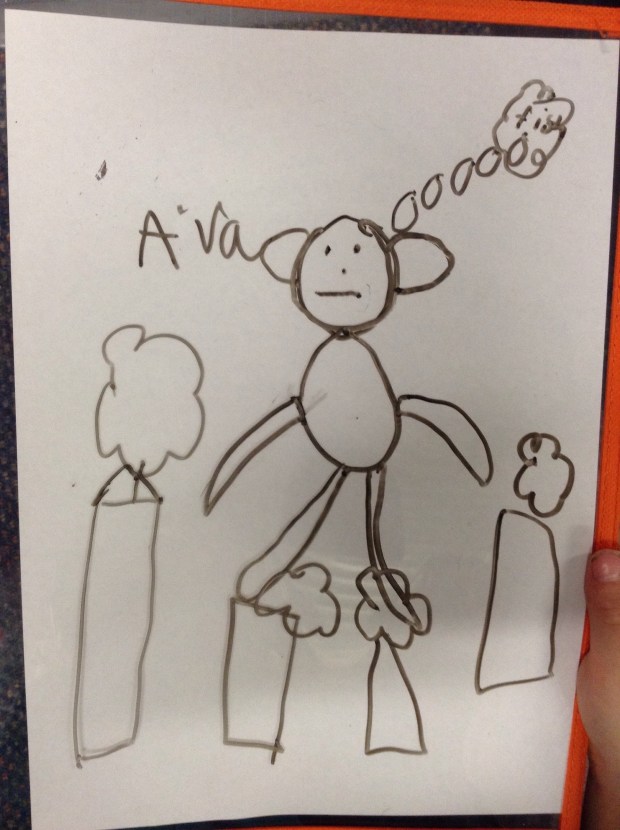
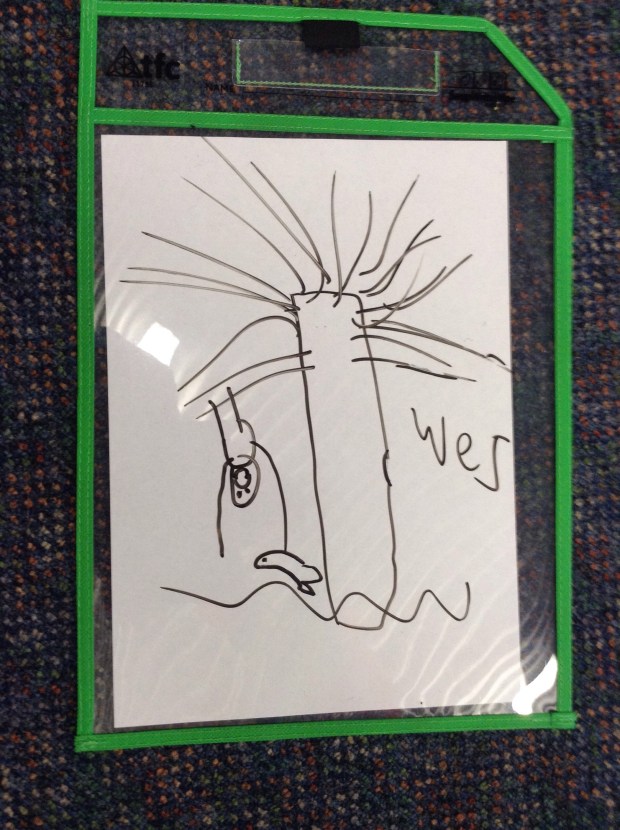
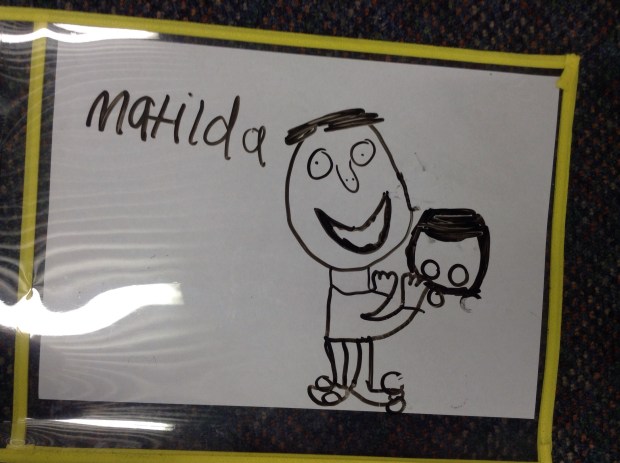
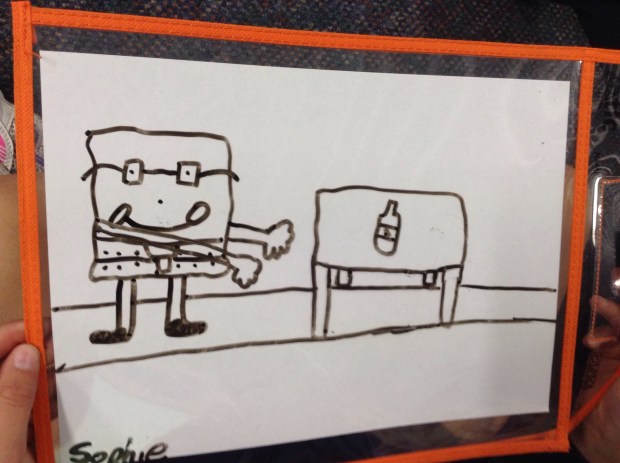
        In  my case, I had focussed on the target structures of perempuan & laki laki with my junior primary classes. I once gain used the laminated PQA cards recommended by Catharina during our very first skype workshop. These A4 laminated cards include 2014 school staff photos as well as a few well known identifites like Batman, Spongebob & Harry Potter. I revisited ‘Siapa nama’ as well as asking, “Batman laki laki atau perempuan?” At the end of the lesson, I did a quick listen and draw using the brilliant clear folders. I also incorporated some TPR into the lesson because one of my term goals is to increase student acquisition of classroom instructional vocabulary (sit down, stand up, turn off the lights, sit in a chair etc). We began with duduk, berdiri dan putar and the instructions included sentences such as, “Laki laki duduk’ & “Perempuan berdiri dan putar.” If time, we played a quick game of Simon says (Bu Cathy Berkata) which they all adore and constantly beg for!


        Once we had all finished talking about our week, we began asking Catharina specific questions about using TPRS with junior primary students. Our lessons are much longer than Catharina’s and our class sizes are also double, yet the basic principles remain the same. Catharina stresses that variety is the key when teaching junior primary students. Here are some of the great ideas Catharina shared with us:

        1. Duplo – Have a big pile in the middle of the student circle. Retell the story the class has been working on, sentence by sentence. If the sentence given by the teacher is correct, students may take one piece of duplo from the centre pile. As they collect and listen, they can start building something using their peices of duplo. If the sentence given by the teacher is incorrect and the student took a piece of duplo from the pile, they not only have to return the piece they just took but also get a penalty and have to surrender one of their other pieces too! 
        2. When retelling a story, have the whole class join in with the acting. All students are allotted one of the characters in the story and they each act their part during the retelling. 
        3. TPR – When playing Simon says, give students lives so that they remain involved and continue to respond to the directions rather than sitting out. Don’t forget to trick students by purposely doing the wrong action! 
        4. Throwing & catching a soft ball when asking specific students questions. Allows teacher to differentiate. 
        5. Take photos of students acting to be used later for revision, discussion and retelling!  
        6. Look at the Youtube video Valentines Day – perfect for movie talk. 
        7. Great brain break is to act out the alphabet! Students using their whole body stand up and make each letter of the alphabet while saying each letter. This would be great for familiarising students with the different sounds made by the Indonesian alphabet. 
        8. Catharina presents to each student at the end of each school year, a 1/4 sized A4 book which she has put together herself containing all the stories they have covered through the year! The stories are illustrated with student drawings that she has collected throughpout the year. What a great way to encourage students to read and continue having contact with the language over the holidays. 

        While our skype workshop was only for 50 minutes, we got so much from it. We then moved to a spare classroom to talk to Rosslyn. We gave her some basic information about TPRS/TCI as well as outlining our other collaborative projects. We look forward now to reading her article which will be published in the next INTAN newsletter! My hope is that we can tweak teachers interest in TCI! 

        If you too are interested in learning more about TCI, see this previous post.

        An interesting Experiment Using Class Dojo

        Last week, which was our first week back after a 2 week break, the 2 year 6/7 classes completed a task from the previous term while the other classes made a start on learning target structures for our new story, one  recommended to us by our amazing mentor, Catharina. More on all of that in my next post.  

        In week 10 & 11 last term, year 6/7 students in small groups had to choose one of the stories we had written over the term and then tweak it to create an original version and finally publish a small book of their work which will be read to their buddy class. This task took a lot longer than I had planned for many reasons and consequently spilled over into term 2. While supervising the very end of the publishing progress last week, it dawned on me that these lessons were reminiscent of my old style of teaching. All that was required of me was to wander around the room troubleshooting any last minute issues and keeping people focused. It occured to me while listening to the conversations happening within groups that not one student was using Indonesian. So I thought I would record this and show the results to students at the end of the lesson. 

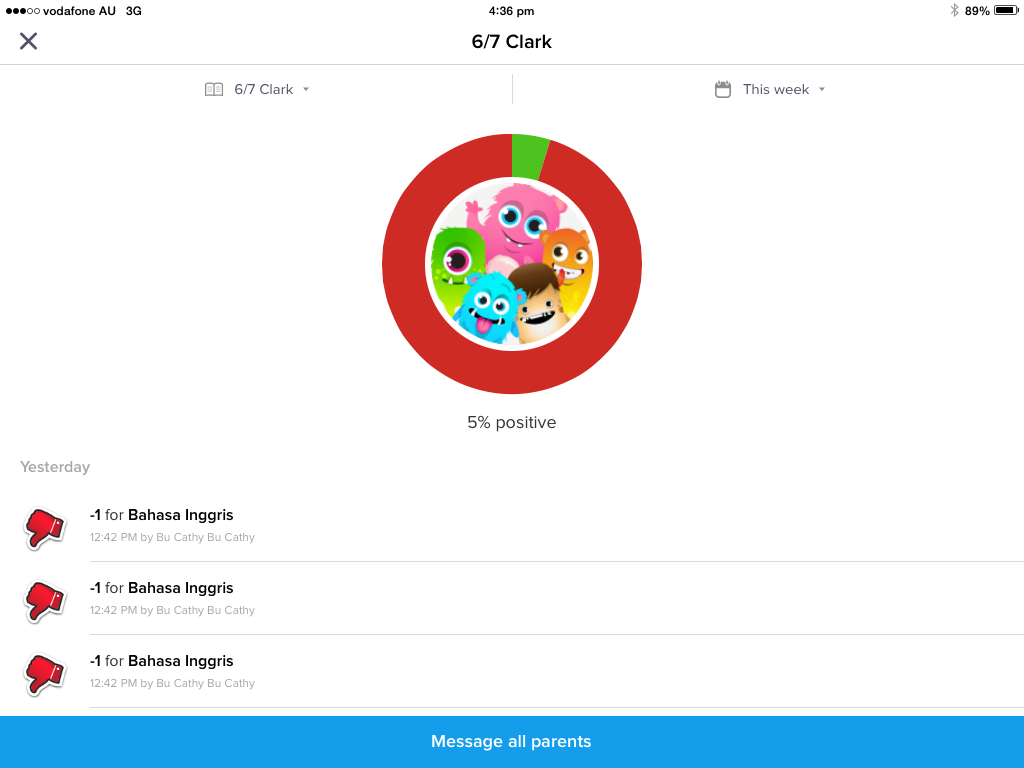
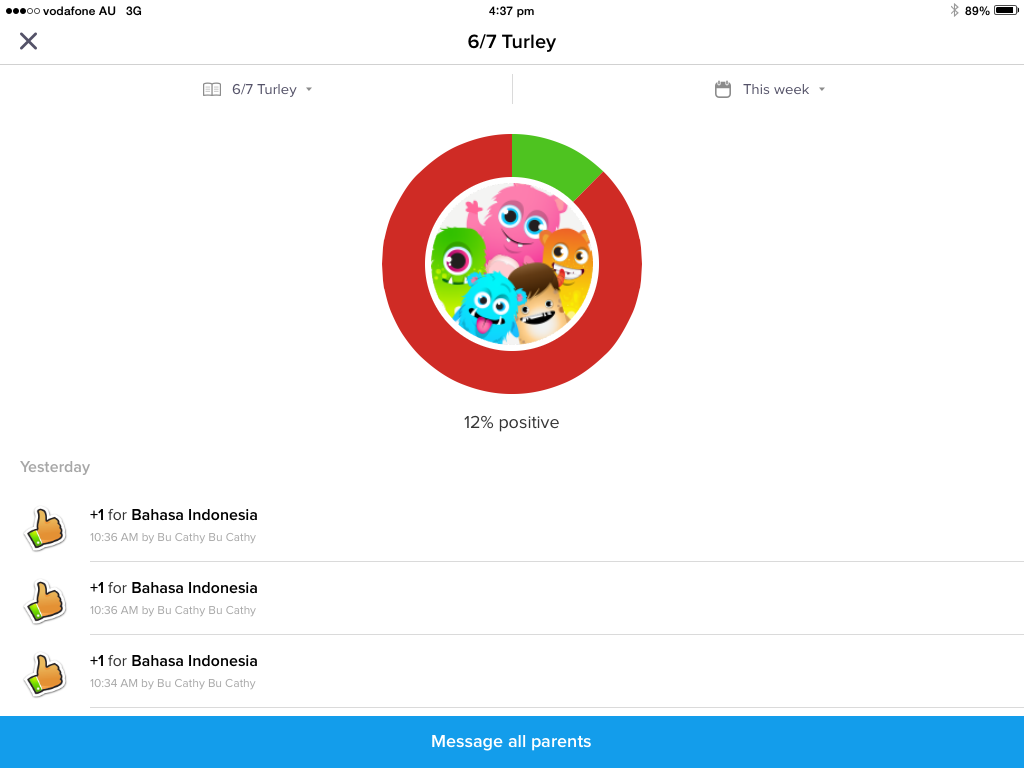
        I used class dojo and copied an idea I read on a language teachers blog and as soon as I remember whose it was, I will add a link to the post. My only positive was Bahasa Indonesia and my only negative was Bahasa Inggris. I then circled the room and when all I heard was English, I awarded all students a negative. I turned off the volume because I didn’t want to distract students with the conspicuous negative/postive tones however did not turn off the smart board. As the negatives mounted, a few students started noticing and were indignant that they had so many negatives even though they had been on task. I invited them to the smart board where I showed them exactly how they had earned the negatives. A few groups were immediately inspired to begin speaking in Indonesian as I passed however overall, it wasn’t enough. Sadly, a lot of the on task English used was language they could have easily said in Indonesian. I heard Cooper say, “What does this mean?” Why didn’t he state, “Saya tidak paham ‘Spongebob kenyang’.”??? 

        At the end of both lessons, I showed each class their class dojo ‘donut’ and explained that these results demonstrate to me so clearly why I love teaching using Comprehensible Input pedagogy!  

          12% & 5% ‘positive’ refers to the overall percentage of Indonesian language that was spoken in each lesson. Amazing too because when I am teaching using Comprehensible Input, the results are the exact opposite which is as they should be if the aim of my lessons is for students to be able to communicate in Indonesian! 


        Listen & Draw

        At the end of last term when both myself and the students were worn out, I tried ‘Listen & Draw’ using the fantastic clear folders I bought at the end of last year. Inside each folder I put a sheet of A4 paper. I bought a packet of large green wipes which I cut into quarters and one is stored inside the folder while the pen slips into the elastisized pen holder at the top. Very compact.

        As an end of term activity, I can totally recommend this as it was so peaceful and enjoyable. It gave me a chance to rest my voice while giving me the opportunity to assess the acquisition of all students with the target structures we focused on last term ;- 

        mau – want
        kasih – give
        punya – has  &
        makan/minum – eat/drink. 

        Here’s how I did it. I firstly showed students a notebook file containing clipart pictures of vocabulary such as bus (grammar pop up opportunity for Indonesian pronunciation) to not only help students turn their language switches back on but to also give them ideas on how to draw certain objects. I then said a sentence that included one of the target structures, a familiar character and cognates and asked students to illustrate it while repeating it several times. Perfect for getting in more repetitions! The students absolutely loved this activity and I can see how easy it would be to overuse this as it was just so enjoyable for everyone. 

        For more information, I recommend watching this series of youtube videos by Dianne Neubauer, a Chinese TPRS teacher.

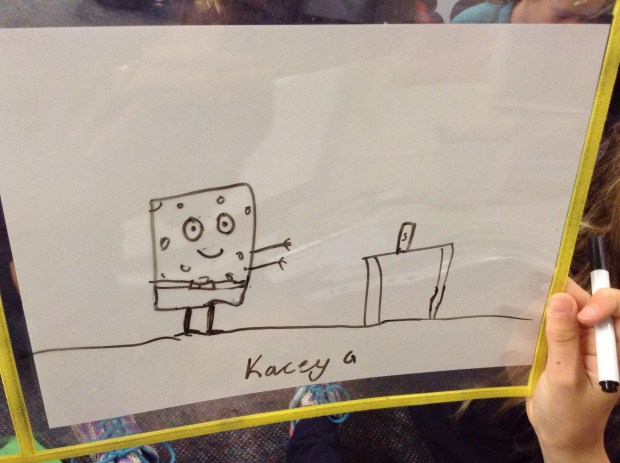
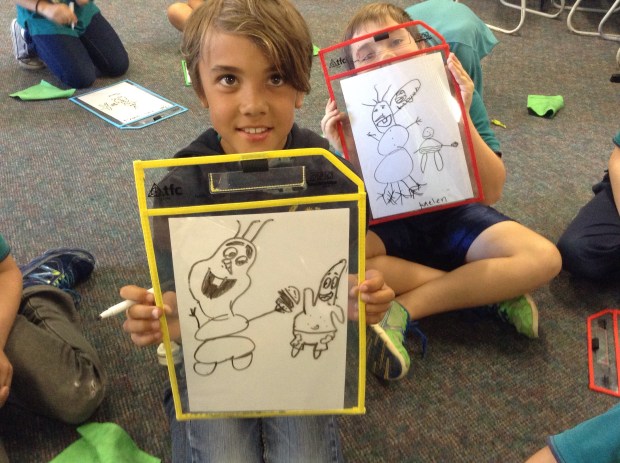
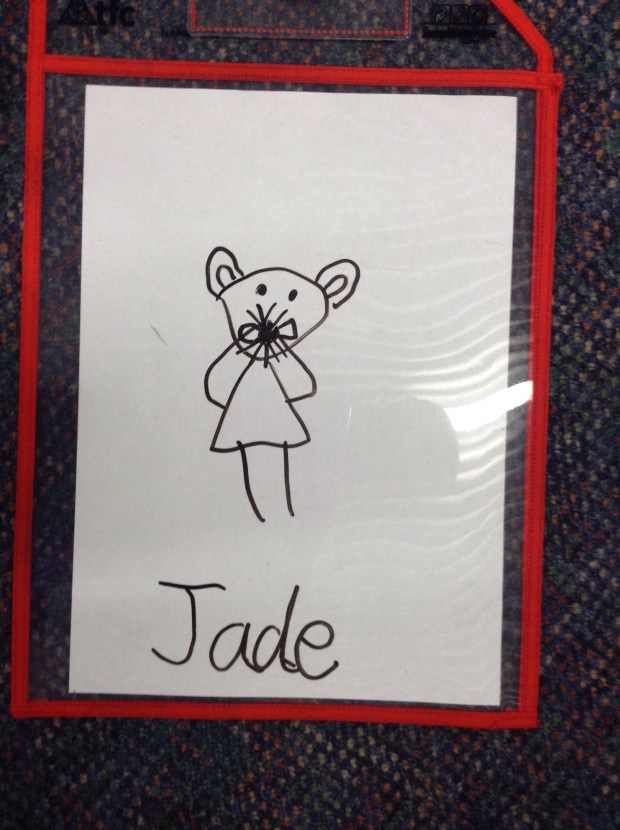
        Here are a few of the illustrations from students in years 1 – 4:

        Batman mau pizza.


        Patrick mau sprite


        Monyet mau ikan   


        Patrick kasih Spongebob sprite  


        Pak Hudson punya bus      


        Spongebob mau sprite     


        Unikitty mau pizza


        Olaf kasih Patrick krabby patty      


        Monyet makan ikan       

        Such a pity in some ways that all illustrations were erased as they were sooooo good! 

        Term 1 Reflections

        As term 1 draws to a finish, I have been looking back over my first dedicated block of teaching Indonesian using TCI . It has been a steep learning curve yet at the same time deeply satisfying. I have learned just as much as the students!! Here are the major gems that I would like to share with you from my short journey thus far:

        1. Props – Don’t ever underestimate the power of props. When I copied Sharon’s brilliant idea of using a bottle of Sprite to tell the story: 

        Jessie haus
        Jessie mau minum Sprite
        Ella punya Sprite
        Ella kasih Jessie Sprite
        Jessie minum Sprite.

        I was blown away with the total and utterly mesmorised attention of the classes from year 2 right up to year 7! Even when the Sprite finished, students insisted I refill the bottle with water, so we could continue. Even with water, students were still highly engaged and following the dialogue closely. It not only hooked the actors, but hooked the other students too as they decided whether Ella would give Jessie a drink of Sprite and if not Jessie, then who would be given a small drink of Sprite. It is definitely worth taking the time to organise props for lessons with all year levels. Not only do students beg for repetitions, but it is so much more fun too for everyone. I have never laughed so much with students!! 

            2. Public Holiday Pitfalls  –  Usually I begin my week with the year 4’s and they are a great bunch of students to ‘trial’ my middle/upper lessons with. They give me the opportunity to fine tune my plan before facing the year 6/7’s the following day. While I enjoyed my first Easter long weekend in many years (our Ed Dept usually cleverly incorporates them into our mid semester break), I forgot to keep this in mind and consequently yesterday’s lesson with one of the year 6/7 classes was a disaster. With this class I need to be one step ahead of them. Maybe Trashball or something similar would have been a better plan for a challenging class in week 11.. 

          3. Trial by Error – A exhausting yet necessary aspect of teaching and a fact that I (and any learner) needs to philosphically and practically accept. I’ve read that it can take up to 2-3 years for a teacher to acquire competency using TCI methodology. This is what keeps me going! There are many fantastic blogs and websites full of TCI brilliant ideas and suggestions. Gleaning through them all to find ideas suitable for teaching primary students and then trialling it requires a huge step out of my comfort zone and so much energy. Yet each step is an important and integral aspect of the entire journey.  I must keep reminding myself to continue plodding steadily along the TCI path and not to expect too much too soon! 

        4. Dehydration – TCI requires so much teacher talk and I have discovered that I am so much more dehydrated at the end of my days than I was ever before. I have tried to keep up my fluids over the day but haven’t been successful consistently with this yet. I get so engrossed in the lesson that I totally forget to stay hydrated. The most successful stategy I had was finishing my 750ml drink bottle at the beginning of recess and lunch on my way to the staff room but lately even that has fallen by the wayside. Any suggestions gratefully accepted! 

        5. The Importance of Developing A Personal Learning Networks (PLN) –  The core of my PLN consists of Annie & Sharon, my Indonesian colleagues who teach in nearby schools, together with Catharina, our mentor who teaches French in New Jersey. The middle layer of my PLN consists of teachers who teach Indonesian and have been following this blog or my tweets. Their input has been invaluable and I have truly appreciated their comments and  feedback. While there are common aspects between different languages, there are also certain aspects that are unique and therefore those who teach and  speak Indonesian have that special eye through which to  understand my reflections and experiences. They too are are coming to grips with our new Indonesian Curriculum to be implemented fully in 2016, another valuable persepctive. The outer layer of my PLN consists of all the TCI language teachers who post on their own blogs or on websites like Ben Slavic’s. There is definitely a gap for me between the middle and outer layers purely because most of the teachers in the outer layer are secondary teachers and none of them teach Indonesian. Yet, they are still a major and important part of my PLN as they have such a wealth of knoweldge and experience that I am truly in awe of them. Without this special group of people, my first term of TCI could have finished so differently. Whenever I felt like I had hit a brick wall and I couldn’t see where to go next, someone would be there to encourage and help. Annie and Sharon have been awesome and once again I am so fortunate to work so closely with 2 teachers who readily joined me on this journey. Our frequent Friday meetings were invaluable opportunities to share lessons that worked well and thus give us each the inspiration and encouragement to continue. Our Skype sessions too, with Catharina have been incredible. Each time we all  took copious notes. It is so amazing to have the opportunity to speak with a junior primary teacher about TCI and how to apply it with very young students. Now that term 1 has almost finished, we are really looking forward to our next Skype call with Catharina. While we usually only speak for an hour, each call is jam packed full of awesome suggestions and information. She truly is an amazing and inspirational teacher  to have in my PLN and a huge thankyou must go to Ben Slavic for initially suggesting it! 

        6. Lesson Planning – On looking back through my lesson plans, I have definitely learned that while it is good to have a few brain breaks up my sleeve, it is also important to keep my planning simple. My initial lesson plans from the first weeks were very long and were a great example of over plannning which is a good way to start! I tried to cover everything at first and then realised that it was not only unrealistic but also pushing the students too quickly. Narrow and deep is the TCI catch cry for a very good reason and this is what underpins the success of TCI over the methodologies I used previously. 

        7. Patience is a Virtue – When reading blog posts written by other teachers who also use TCI, I have to keep reminding myself that comparing my students (or their lesson outcomes) with theirs is pointless. My students & i have only just started so it is natural that we can’t yet have impromptu detailed conversation that are 100% comprehensible. It is of greater importance that we start with the Indonesian version of the super list of verbs sourced from frequency lists and accept that initial discussions will be be very basic. 

        8. Humour – At a point about mid-term, I reached a point where everything gelled. Suddenly I relaxed and started to enjoy myself with the students. At that point I realised that it was the first time I have ever laughed so much WITH  my year 7 students. Previously, any hilarity got out of hand and ended with me having great difficulty bringing them back on track without loosing that sense of connection. Yet with TCI, we laugh together at the ridiculous  scenarios the students suggest and then act out. Not only do students have fun, call out and be totally silly, but because it is all in Indonesian, it is amazing and all students are totally mesmorised and engaged thus keeping it manageable!  

        9. Tight Timelines have Vanished – Previously, my term outline was tightly planned and in order for me to achieve my term outcomes, every lesson was precious and heaven help anyone who interfered with my schedule!! Taking sick leave was avoided and any additional offered non contact time was reluctantly refused because my planning didn’t have much flexibility. This has all blown away with TCI as everything is based upon student aquisition which is a  huge unknown. Once we know what the target structures will be, out planning will focus on that until we, the teacher, deem the students ready to progress to the next step. Consequently, with our upcomiing APBIPA visitor, Bu Mia, I feel far more relaxed and am really looking forward to her time in our school. Students will be able to experience a cultural lesson with her and this will also give them impromptu and authentic opportunities to practise and demonstrate their acquired Indonesian to date.

        I am so looking forward to term 2 and having the opportunity to apply all that I have discovered. I also hope that my reflections give other Indonesian teachers the encouragement to consider trialing aspects of TCI in their classrooms. Last year, I dabbled just by experimenting with a few activities that sounded interesting and that is how I urge you to start too. While I am nowhere close to TCI mastery, I am nontheless, very happy to help any Indonesian language teacher if you would like to discover more about TCI. Ask away and if I don’t know the answer,, someone from my amazing PLN will certainly help!!

        Indonesian early readers captivate kids and teachers

        Reena Balding's avatarAyo! Let's go!

        Michelle Dudley, the Australian author of the Our Jakarta Series that was reviewed in an earlier post, graciously agreed to answer my questions about how her series of 30 books came about.

        What inspired you to write the Our Jakarta Series? Had you written other books before (or since)?

        Michelle Dudley, Yangon, February 2015 Michelle Dudley, Yangon, February 2015

        Our Jakarta Series bilingual box setI taught at the British International School Jakarta (BIS) in their very first pre-school in 1993 and 1994 and again from 2003 to 2007, initially part time, then full time in Reception and in Pre-School. The school has a strong focus on early literacy and as a teacher of young children I was always trying to find ways to inspire, challenge and connect real life experiences and the printed word with the young children from many nationalities in my class. The school also had a policy whereby the classroom teacher had to listen to each child read every…

        View original post 1,951 more words

        How Did I Learn Indonesian?

        This is a question I am often asked by Indonesian and English speakers alike. After reading a recent post by Keth Toda about being one of the 4%ers of language learners, I’ve decided it is time that I try to remember exactly how I learned Indonesian so that I can determine once and for all if I too was/am one of the 4%ers in the Indonesian Language classroom. 

        My first contact with the language was when I was a toddler in about 1963/4. My father was learning Indonesian in Victoria and each night would bring homework home. In those days, the current language methodology was audio lingualism which  required students to listen and repeat drills. Dad had records (vinyl) that he would play and my sister and I would also listen and repeat along with him. To this day we still remember one of the phrases we parroted alongside Dad and funnily enough, I have never used it in conversation!! (Baik baik saja seperti biasa dan bagaimana kabarnya Sri) Looking at it now, I can see how it would be used (asking of someone about Sri) but when I parrot it again now, the intonation is strange. The intontation should lift at the end to indicate a question being asked instead of staying flat as in making a statement. Fascinating that for all those years I have remembered that sentence but only now have I realised why it sounded odd!! Anyhoooo, as a result of listening to those many records with Dad and my younger sister, my father claims that we both could count to 10 in Indonesian before we could in English. 

        Once Dad finished his course, we moved to Darwin and my nightly contact with Indonesian ceased. Dad then worked as an Indonesian translator and instructor and many of the people who dropped in after work those days were his (adult) students. I have no memory of any of the conversations, which in retrospect would have been fascinating, but it purely provided them with opportunities to not only practise their spoken Indonesian but also to discuss current Indonesian events (1965, Sukarno, Suharto etc) 

        In 1975, I began my formal Indonesian lessons at Casuarina High School. My first teacher was Marie Nicholson and according to the grapevine, CHS was her first teaching placement. She was the first of many teachers I had who quickly realised that my father’s knowledge of Indonesian language and culture far exceeded theirs. It must have been very intimidating as I was by no means the model student. Lessons were very easy and at no time challenging. I grasped Indonesian language grammar naturally even though I generally didn’t pay much attention to the explanation given by the teacher. It was the time of here is the rule, now open your text book and do the 20 practice sentences on page 50 to demonstrate you understand it. I also had the added advantage of being able to ask Dad for extra help when something didn’t gel. I remember too checking with Dad about aspects in the text that I thought sounded incorrect and then returning to school the next day to inform the teacher of what I had learnt. I must have been a horrible student!! 

        Also about this time, Dad started befriending many of the Indonesian people now living  in Darwin. They would often drop in and I especially remember Djaffa; a warm hearted and all round lovely fellow from Surabaya. Another lovely Indonesian Chinese person I remember, stayed with us for about a fortnight. By this time, Dad had a fruit and vegetable shop in town. One day he was chatting in the shop with (probably) Djaffa. Linda (the Indonesian Chinese lady) had been in Darwin for several days and was feeling very lonely and homesick. She walked past our shop and was gobsmacked to hear Indonesian being spoken. Apparently she came inside and burst into tears she was so delighted to find someone to talk to. All the Indonesian people that we had contact with in those days only spoke Indonesian when visiting, so I had lots of opportunity to hear Indonesian. I rarely spoke Indonesian in front of my father as I didn’t want to be criticized, but I did commmunicate very basically in Indonesian with them if they dropped by when Dad was out. 

        My first visit to Indonesia was in 1976 with my brother and sister and my parents. We visited Bali & Surabaya for 2 weeks with most of our time spent in Surabaya. I have many memories from this trip. My first was going with a relation of Djaffa’s to their family house with just my sister. We were led through many narrow ‘gang’s’ (alleys) and as we walked we were followed by an increasing throng of people. We finally reached a house and were escorted into the kitchen and given chairs to sit on. The room we were in was not very big and it quickly filled up with curious onlookers until it was standing room only. No one talked to us, everyone just gawked and laughed at us. It was extremely confronting and after about 5 mins (felt like 5 hours) we stood up and fled back to the hotel! My other memory is learning the word ‘pelacur’. I remember standing up on the 2nd or third floor, looking out at the ‘kupu kupu malam’ (prostitutes) and asking Dad loudly, “Are they ‘pelacurs’?’ He was mortified!! 

        My formal learning of Indonesian continued to year 12 with Indonesian being the only subject that my father showed any interest in. As long as I was getting A’s for Indonesian, my Cs and D’s for geography, maths, biology were totally disregarded. As my matriculation present, my father paid for me to join him in Indonesia. I went with the sum total of $45 which needless to say, didn’t last long. I ended up staying about 3 months and had Dad been slightly more generous with funds, I could have been tempted to stay longer. My spoken Indonesian improved phenonomally at this point. Dad lived in a losmen and his pembantu, Bu Badung, was instructed to only speak Indonesian to me. Her English was rudimentary and had been learned on the beach selling massages, so it was considerably easier to speak to her in Indonesian. While cooking (she is an amazing cook) I would sit with her in the kitchen and listen to her stories. As time passed I began understanding more and more of what she was saying. Many of her stories were repeated, so each time I heard them, I would pick up a little bit more. If I was totally puzzled, Bu Badung would explain a word to me in Indonesian and then continue on with the story again.  Dad too, credits Bu Badung largely for his proficiency. 

        After my 3 months of  immersion, I had very little opportunity to use Indonesian again in Australia untii teachers college. I chose Salisbury CAE purely because it offered Indonesian. There I met the indomitable Ani Be, a true legend, who was and still is, a force to be reconed with. I studied Indonesian for 2 years and when the going got tough, I quit. In 3rd year, the work load for Indonesian trippled and suddenly we were expected to do as much for Indonesian as we were doing for all our other subjects combined! In retrospect, this was largely because we were suddenly expected to exponentially increase our vocabulary. Gone were the text books which had been so easy for me and in their place were newspaper articles where every other word was unfamiliar. This was pre google translate unfortunately!! Would have been such a different outcome had I had access to an online dictionary! 

        I have since lived in Indonesia and traveled widely throughout Indonesia, both of which have kindled my love for all things Indonesian and have provided me with many opportunities to further improve proficiency. 

        Wow, I definitely was not a 4%-er! Grammar rules did not help me at all as they were boring and mindless tasks that in no way helped me with my proficiency. What did help was listening to people talking! That was how i formulated my understanding of language and grammar.  I knew what the rules were, I just could not articulate the how or why. Rules were acquired instinctively, and having the opportunity to listen to the rules being modelled repeatedly together with opportunities to speak and have a go myself, was and still is, the way I learn best. Listening and speaking therefore have been the major 2 strategies I have benefited from. The fact that I can still parrot ,”Baik  baik saja seperti biasa dan bagaimana kabarnya Sri.” is testament to that!  

        No wonder TCI struck a chord with me!!


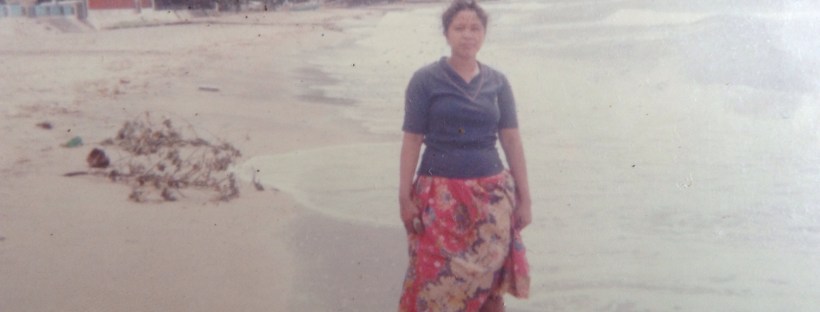
        Photo in header : Bu Badung in 1980 at Pasir Putih, Java