Have a look at this absolutely beautiful video. Be lovely having this video playing while students enter the classroom! Not only lovely music but the visuals are great too.
http://youtu.be/N261M2xOZ48

Have a look at this absolutely beautiful video. Be lovely having this video playing while students enter the classroom! Not only lovely music but the visuals are great too.
http://youtu.be/N261M2xOZ48
While traveling in Indonesia last year, I caught many buses. Throughout Java and Bali, I frequently had buskers jump on board and serenade us before handing out the lolly bag to collect donations. Read my post here. What a fascinating topic for a film and one I really hope to get a chance to see it one day!
https://theconversation.com/jalanan-busking-and-dreaming-in-the-city

Have a look at this Youtube promo:
http://youtu.be/TtIOFyNyF6U
Jalanan: Busking and dreaming in the city
AUTHOR – Eric Sasono
By telling the stories of Boni, Titi and Ho, Jalanan brings to the screen the hardships and precarious lives of marginalised people in one of the most economically promising Asian countries. Courtesy of Jalanan Movie Team
Daniel Ziv’s documentary feature Jalanan (Streetside), currently screening at the Melbourne International Film Festival, is a film that seeks to move its audience.
Documentaries sometimes invite viewers to social and political engagement. To do this, they might put viewers into uncomfortable situations. Jalanan, the story of three Jakarta buskers, Boni, Titi and Ho, is this kind of film.
Ziv, an Indonesia-based Canadian filmmaker, filmed the three street singers for six years. He pointed his camera at their reality and homed in on the social and political forces that shaped it.
By telling the stories of Boni, Titi and Ho, Jalanan brings to the screen the hardships and precarious lives of marginalised people in one of the most economically promising Asian countries. Jalanan presents the three as aspiring individuals with self-actualisation needs amid the hardship they encounter on a day-to-day basis.
Everyone is looking for something
Boni, an illiterate “singer-songwriter”, has been living in a canal tunnel with his wife, Rita for ten years. He dreams of a proper home yet all he can do is paint the word “Hyatt” on the tunnel wall.
Titi is a mother of three. Her children are scattered in three different cities. She sends money for her sickly father’s medication and for her child’s education in the village. Titi stresses how important it is that her children “not be a busker” as she is, signifying the importance of making the leap in social class.
The other busker, Ho, sings his political songs with a rugged voice, suggesting that his listeners “hang the corruptors”. He lives alone and tries to find true love.
Jalanan is screening at this year’s Melbourne International Film Festival.
With these aspirations, the documentary subjects qualify as protagonists in a neo-classic Hollywood story: an individual tries to achieve something and faces obstacles in the process. Jalanan benefits from this model of storytelling. It avoids didactic forms and, rather, asserts some kind of audience self-identification. Wanting a better place to live, improving social status and finding true love are universal aspirations.
Just like in Hollywood, Jalanan also brings closure to the protagonists’ venture, keeping the audience from seriously questioning what happens to them after the screening.
Beyond the film, the filmmakers have started a crowd-funding initiative to provide houses for the buskers.
Watching poverty in luxurious malls
Viewers in Indonesia won’t escape the irony when they go to cinemas in luxurious shopping malls to watch Jalanan. But filmmakers have no choice but to screen their work in this way if they want their films to reach a larger audience in Indonesia. Gentrification of Indonesian movie theatres since the 1990s has seen small cinemas fold and mega-cinemas thrive.
Jalanan provides enlightenment and entertainment, of some sort, for the middle and upper class of Jakartans who are willing to spend their money on a diverting spectacle. In Indonesia, it has a limited distribution in 21 Cinepelex, the cinema chain that dominates the country’s film distribution.
From the screen to public policy
Despite its limited distribution, Jalanan has benefited from its status as a documentary film. Audiences often perceive arguments presented in a documentary as undeniable truths. Sometimes, the documentary form can prompt viewers’ social and political engagement.
Jalanan managed to do this when acting Jakarta governor Basuki “Ahok” Tjahaja Purnama watched the film with his staff (the governor, Joko Widodo, now president-elect, was taking leave for his presidential election campaign). Ahok saw many things that fell under his responsibility go wrong in the documentary. Seeing the “jail”, which is actually a social rehabilitation institution where Ho was locked up, disturbed Ahok. In the film, Jakarta public order officers arrested Ho for busking and for not having his identification card.
According to Rolling Stone Indonesia, Ahok immediately discussed with his staff what he saw in the documentary. He instructed them to close down the “jail”, expedite the development of apartments for the poor and ease regulations for newcomers to get their Jakarta ID card. He also ordered his staff to eradicate corruption in public offices, especially the religious affairs agency responsible for providing marriage certificate.
Jalanan’s influence on public policy in Jakarta might be a one-off. It’s hardly a typical outcome for a documentary, after all. Documentary films work hard to promote social or political engagement – or at least an awareness – with their subject. For the next level of engagement, it helps to have “reformist” public officials in the audience.
The Melbourne International Film Festival 2014 runs until Sunday August 17.

Last term, the middle primary classes continued their focus on our school with the aim of creating a digital book about PEPS for our sister school. After listening to recommendations from other teachers about the best app to use, I settled on Book Creator for several reasons. A main one being that one of the teachers who recommended it was also using it, so it made sense that we explored it together.
Each of the 4 classes had specific areas of our school to focus on, to ensure that each area was covered. Then, from those, students could chose one for their own writing. Each class then brainstormed for ways in which to incorporate a verb in a very simple sentence about school areas. I wrote them all down and then as a class, we translated each of the sentences. Most classes ended up with a sentence similar to, “I like playing in the gym” which translates nicely: ‘Saya suka bermain di aula’. Each class then voted on the sentence they preferred and they then had to write a sentence about their area using the model that they had both chosen & translated! This worked very well because it gave the more capable students scope for imagination and creativity and for those struggling with aspects of literacy, provided them with a sentence they could either use entirely or change very slightly.
I then introduced the iPads that I had bought with my grant monies. With the first class, I walked them through the basics of Book Creator, but luckily the following day we had a student free ICT focus day where we discussed how students can develop 21st Century skills by working it out by all themselves. So with the next class, I gave out the iPads and the only heads up I gave them was the name of the app and what had to be included in their book – a front cover, their sentence written in English & Indonesian and a recording of them saying their sentences. I encouraged them to firstly try themselves, if that failed, then to try 2 more things before asking a friend. I was the absolute last option – mainly because I was also learning how to use it. For the first Book Creator lesson with each class, I finished the lesson with the students all sitting on the floor in a circle with the iPads. This allowed those still working to continue working while listening. In this forum, students who either were still stumped on an aspect had the opportunity to ask publicly or even better, for students who had discovered something really cool, to share it with the others. I remember vividly one class where a student had worked out how to enlarge the text, change the font and change the colour of a page and as that student shared, everyone was following along and experimenting with their own ‘book’! It was so exciting.
Students very quickly grasped the finer points of Book Creator. Students originally were in teams of 2-4 as there are only 5 iPads in the Indonesian classroom. I did this mainly to encourage collaboration, but with a task such as this was, more than 2 students to an iPad meant that the waiting time was too for some of them, so I ended up borrowing the recently purchased bank of 8 which improved the student/iPad ratio significantly.
It wasn’t till the holidays that I had a chance to look at the final products. I then learned that one of the features available in Book Creator is that the books can be combined, so I had this great idea where I could amalgamate all the books into one large book, but this great idea was disbanded very quickly when I discovered that to combine books, all books had to have the same page format and be on the same iPad. I also discovered that to combine, the first book has to include the front cover for them all as all subsequent front covers are not included.Still, it is a great idea and one that could be very useful.
Following are some of the things I love about using Book Creator in the classroom:
– If project has sound, it can be exported entirely to ibooks, the camera roll or even emailed (the quality deteriorates with this last option)
– airdropping to another iPad’s camera roll is possible & very easy
– If exported as a PDF, sound is lost
– Not only can students record their voices, they can also video themselves and import that into a project!
-Students can import photos or draw pictures
– to add to a blog, upload straight to Youtube!
If I could change aspects of Book Creator, all I would do is:
-To export projects from iPad to iPad so that projects can be combined
Finally here is a note to self for the next time I use Book Creator in the Indonesian Classroom:
1. Remind students not to use their surnames
2. Have students using the same iPad to use the same page for each project, so the combine pages is an option.
3. The title of a book must reflect the content of the book and the title and author names also need to be written underneath each project.
4. Each project would look finished with a back cover – maybe incorporating a kenalkan!
Have you used Book Creator in the Indonesian classroom successfully? My students all absolutely loved it and have repeatedly asked when we are next using iPads again!
My head is still spinning after a fantastic day full of pedagogically challenging ideas. Congratulations and kudos to Kathy Turley, Sandy Warner, Brenton Hudson & Jodie Allsop for their efforts and organisation.

The day was divided up into 3 sessions. Selena Woodward led the first 2 sessions which left me totally exhausted physically and mentally! She began with a prezi presentation which I especially enjoyed as it is the first time I have seen one ‘in action’. The main focus of the first session was Google Earth and how to use it in the classroom to support the Geography and History curriculums. We learned how to create a tour, how to tweak the available properties, how to save it and then enjoyed sitting back and looking at the tours made by others. Writing it down like that makes it sound so straight forward and easy, yet I was totally washed out at lunch and could barely summon the energy to enjoy the delicious wraps provided!
During the 2nd session, we had planned to explore timelines, yet all agreed it was better to use the time to better master Google Earth. Right at the end of her session, Selena introduced us to AR Media Player which gave most of us our first ever opportunity to explore ‘augmented reality’. It was soooo cool. Using the ARPlayer app, we viewed this graphic

and suddenly on top of the graphic, a beautiful alfa romeo appeared.
Here is a photo of Sandy holding it!
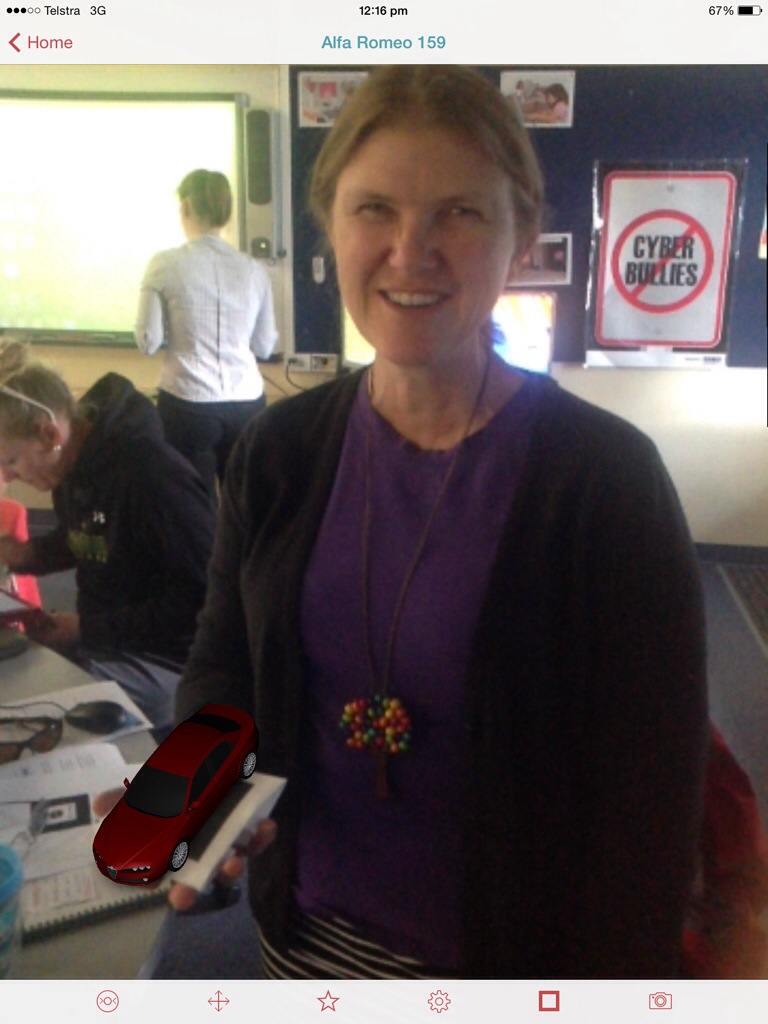
Turns out there are a variety of options available, yet sadly none are directly authentically Indonesian however there is also an option to create your own, so that would have to be the next obvious direction worth exploring! The shark one was awesome and we discovered that once the shark image is on the screen, you can rotate the image using your fingers!
The afternoon session was led by our PEPS team fresh back from the EduTech conference and all bursting with wonderful experiences to share with us all. We began with a drawing exercise which demonstrated very well how teacher can sometimes unwittingly stiffle creativity. Next we watched a Sugata Mitra video from TedTalk (totally recommend that you google this) about his computer hole in the wall experiment which naturally would be fascinating to replicate in Indonesia! We were also given the opportunity to think about our classroom spaces and how we could improve them to further foster creativity & collaboration.
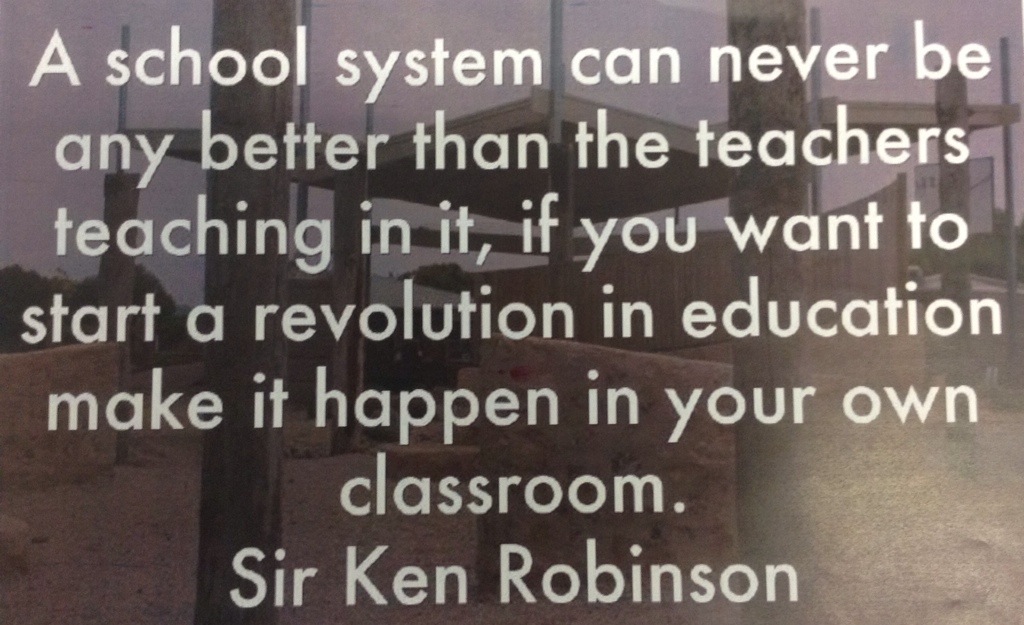
However it was the session run by our principal which really hit the spot for me. He posted a quote in last weeks staff bulletin:

which really challenged me as a language teacher. How can a language teacher not teach content? How do we develop student proficiency without teaching content? He then introduced the concept that teaching today is not about imparting information, it is all about teaching 21st Century skills.
We were then invited to look at the General Capabilities, focusing on the Key Processes. We underlined all the key processes and I ended up with a list of words like:
reproduce
recognise
develop
understand
observe,
imitating
describing
predicting
comparing
translating
connecting
experimenting
reflecting
monitoring
performing.
Focusing on these words, it became clearer for all of us that any program based on these skills would be incredibly engaging and far more relevant for todays students than purely focusing on the content. It also ties in beautifully with globalisation and creating world citizens which is what underpins the entire Australian Curriculum.
What a fantastic day and perfect timing for me, with our time spent with Andrea only a few weeks ago!

Last weekend I posted on the Indonesian class blog about the vocabulary students have been focusing on this term. One of my colleagues commented that she too would like to learn some of this vocabulary which immediately set me thinking about the ways in which I could achieve that.
I am very impressed with my brainwave, as were the students who were only too happy to assist me with my plan.
Here it is:
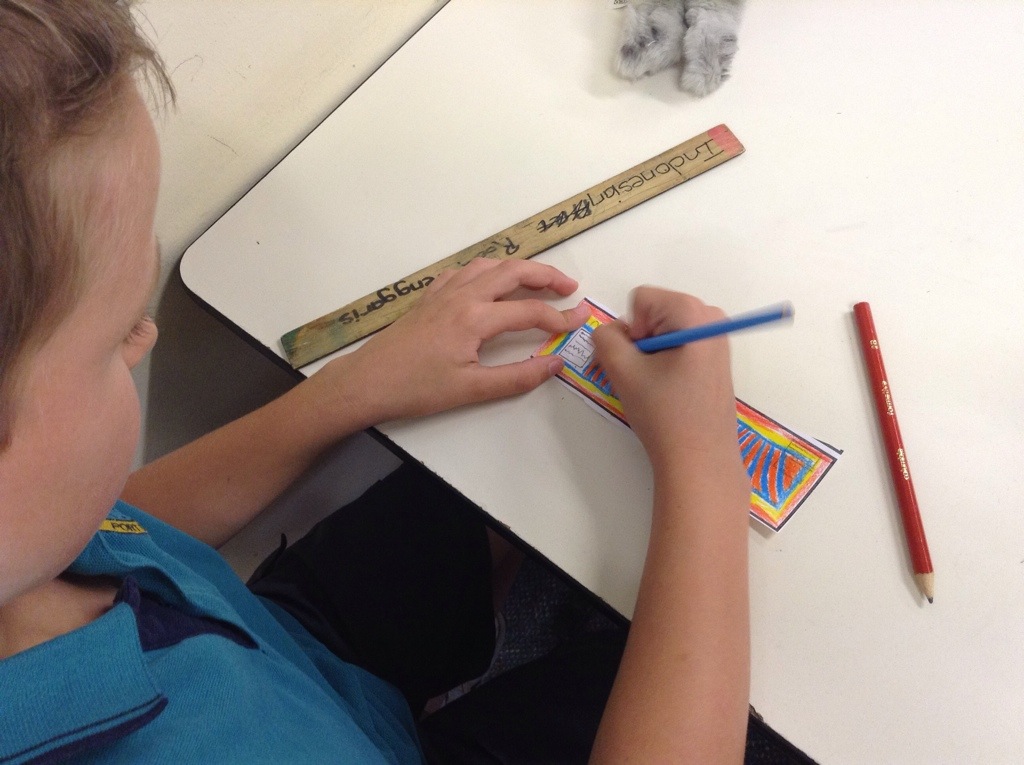
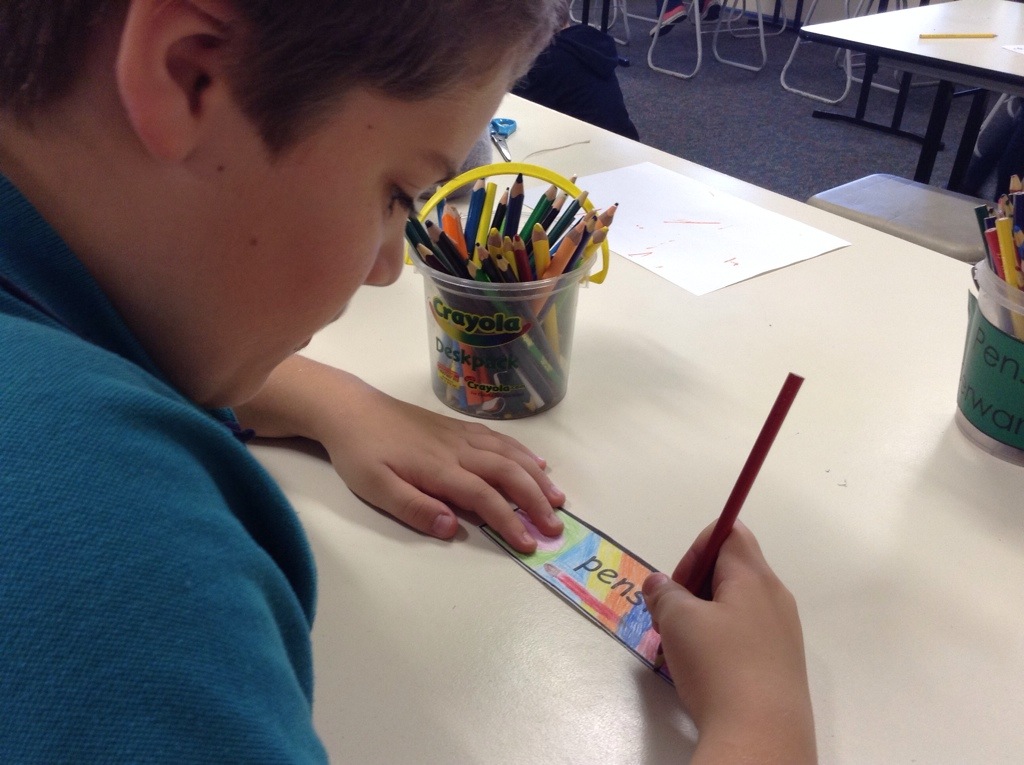
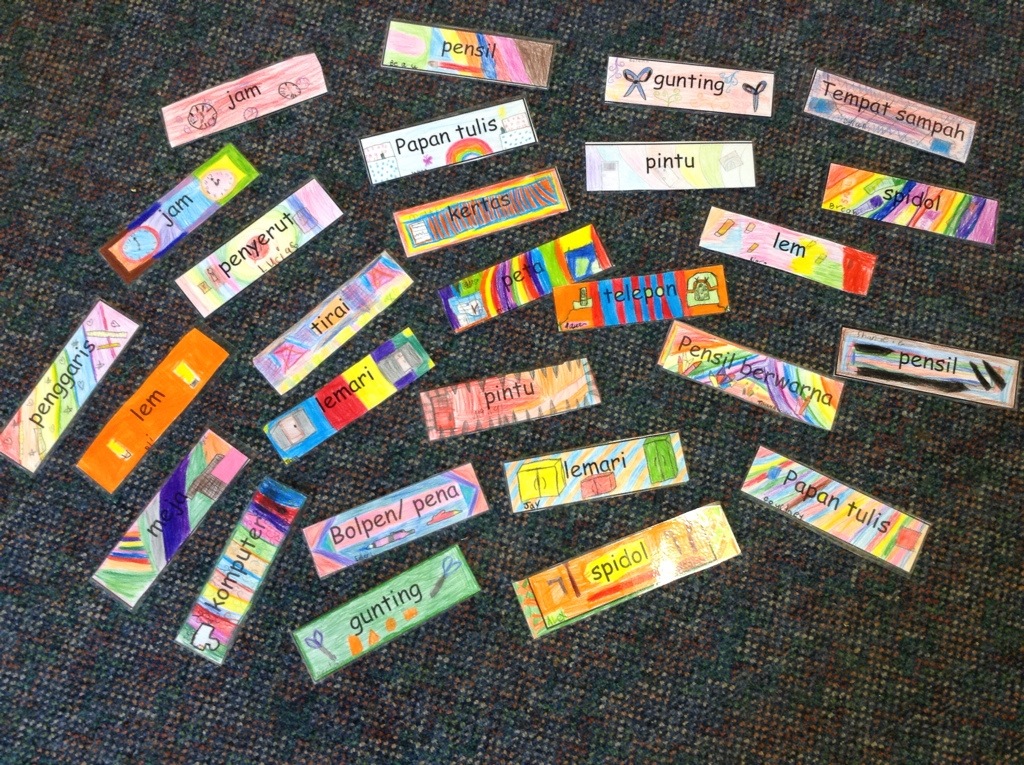
I ran off a black and white copy of certain flashcards and then handed them out to students. Their task was to illustrate one of the words clearly so that their classroom teacher could ‘translate’ them immediately on sight. Students did a brilliant job and when they were laminated, the colours became even more vibrant.
I had great pleasure delivering the first set to Sandy W. on Thursday with a packet of blutack so that she can now label classroom objects around her room eg, the clock, the door, the white board, etc.
I now look forward to hearing the feedback from students about Sandy’s efforts of using and understanding these words in her classroom!
Last term, the junior primary classes looked at the text, “Sayang” as part of their study about keluarga. The book is one of books in the Seri Mari Membaca, a series which I believe is out of print now.
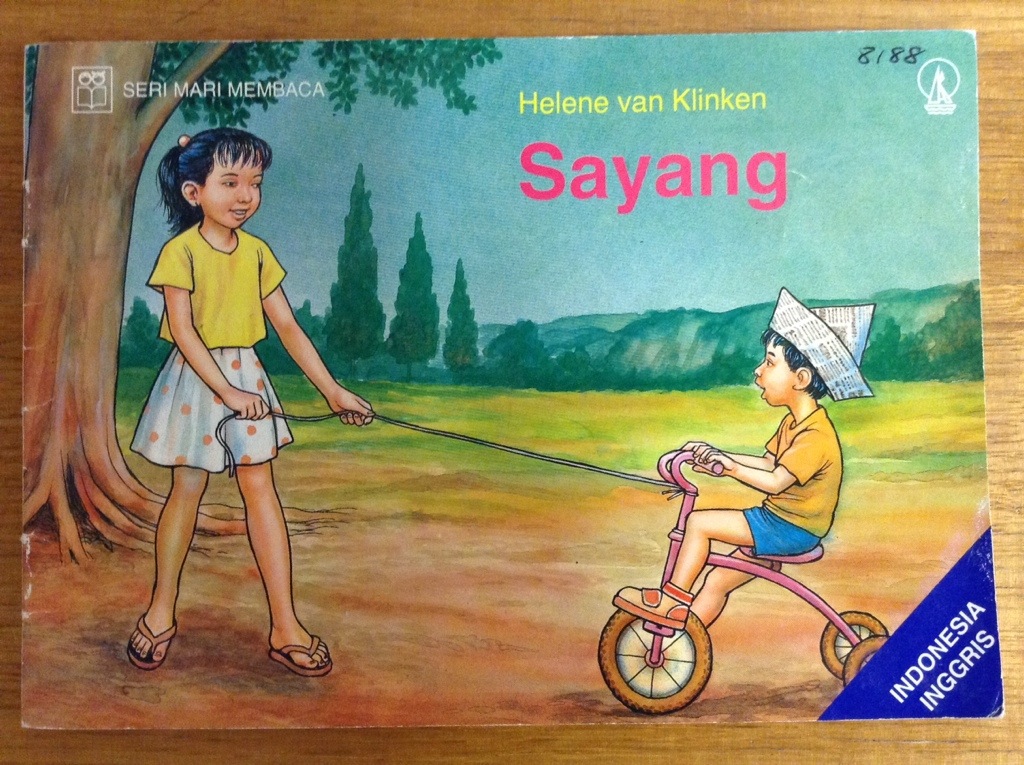
The illustrator of “Sayang” is Sutarno and it is the illustrations that I love most about this book.
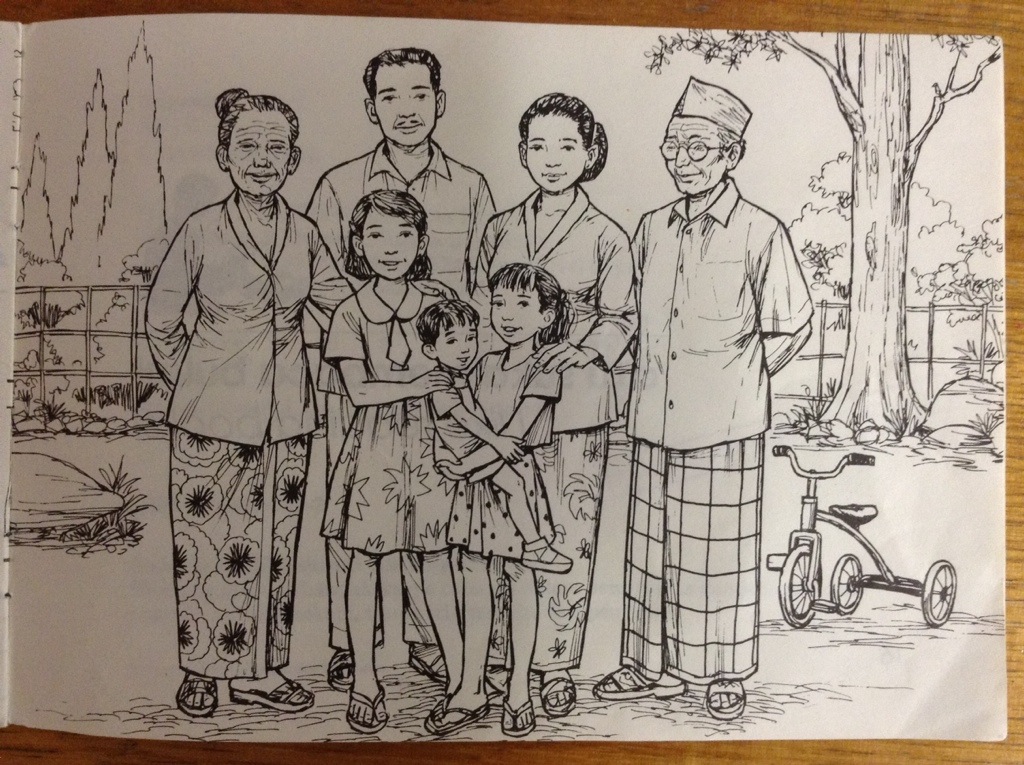 I love that the illustrations are of Indonesian people in an Indonesian setting and they are not westernised. I acknowledge that they are a bit stereotyped however, as it is not a negative stereotyping, it should provide a good opportunity for discussion.
The text in my copy has been altered by a previous Indonesian teacher who seemingly wasn’t comfortable introducing the word “aku”!

As these books are tiny (21cm x15cm), I decided to create a notebook file of the story for my students to make it more appealing. I photographed each illustration and then wrote my own text as I wanted to utilise the opportunity to introduce verbs, names and keluarga vocabulary. As Helene van Klinken has done in all her books, I kept the text repetitive to make the text as comprehensible as possible. For example, for the page about her mother, I wrote;
Ini Ibu saya.
Namanya Setia.
Ibu memasak di dapur.
Saya sayang Ibu.
I then asked an Indonesian friend to read the story while I recorded her doing so and attached each segment to the relevant page. This was a brilliant idea on so many levels. Firstly, my students were able to listen to a native speaker, which they absolutely loved. Secondly, Bu Mei read the last sentence of each page by putting stress on “sayang” (just as we would say, I loooove my mum) which fortunately emphasised the very word that was the point of the story! Thirdly, it was brilliant because it saved my voice! I could sit back for each of the 6 classes and just click on the picture and Bu Mei’s voice would fill the room and had us all spell bound!
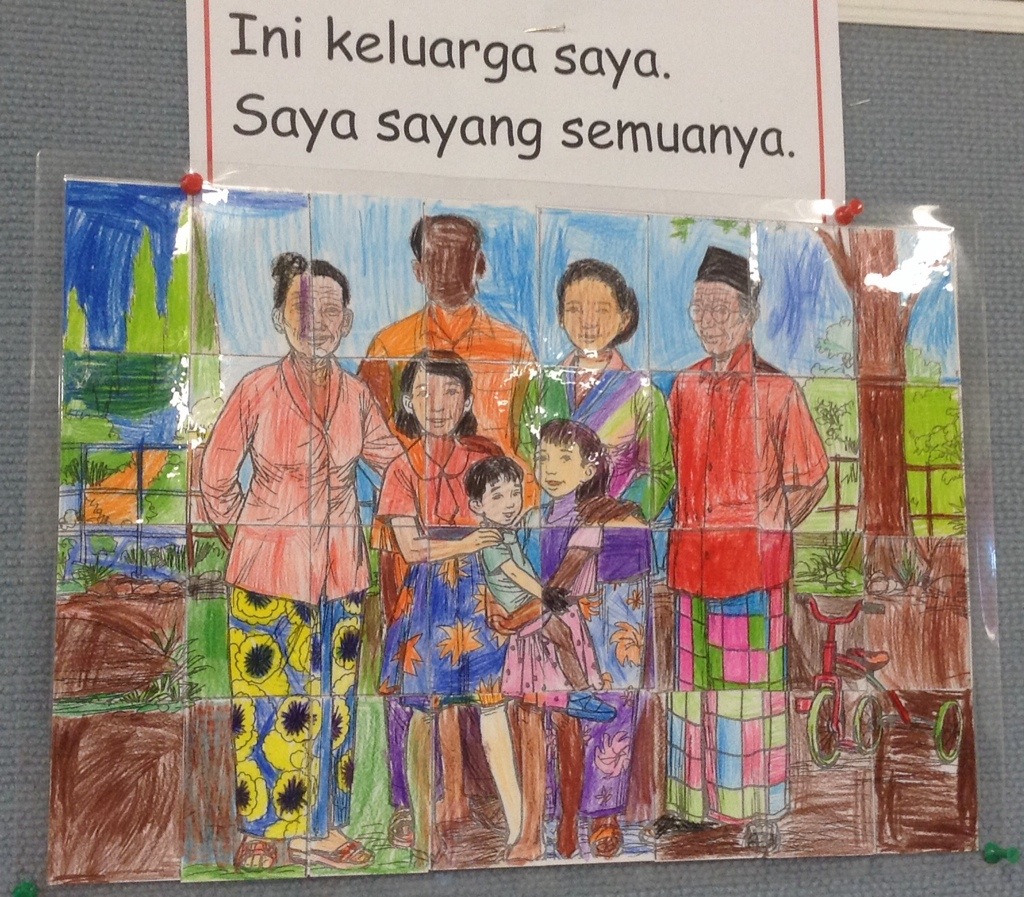
Each time we focused on this story, students commented on the lack of colour in the pictures, so during week 10, I photocopied each illustration and enlarged it to A3. I then drew an 8×4 grid over each one and this was photocopied again as the master. Each class was assigned one of the picture grids, which was cut up into 32 rectangles. Each student was given one of the rectangles to colour in. The first class to complete this task provided me with the best example of why it is important to sit with others who are working on the same part of the picture!! Some of the following classes did an excellent effort and worked so cooperatively together. The pictures have all been laminated and are now up on a display board above a table where I often heard students discussing them while working on their work last week.

Last Sunday I collected Pak Yasa from the airport. He is the first and last teacher visiting the Fleurieu primary government schools in 2013 because I am about to head off on LSL travelling around Indonesia. (Follow my travel blog Jalan Jalan with Bu Cathy!)
Pak Yasa is from Bali and is the 6th teacher we have hosted through this program. APBIPA is a business run largely by Pak Nyoman in Bali which among man things, targets teacher quality as well as teaching English programs. Through the teacher quality arm of his business, he coordinates Indonesian teachers who are from schools which value their teachers experiencing western teacher methodology.
For our Indonesian language programs here on the south coast, this program is perfect for many reasons. We have an Indonesian visitor in our schools for 2 weeks who becomes a film star legend whom all students want to talk to and this provides students with real authentic reasons for using Indonesian over that fortnight. We also get the opportunity to talk to Indonesian people face to face and as most are muslim, it has been a brilliant way to demystify any previously held stereotypes. The most obvious example is the jilbab. At first it was what students noticed first about our visitors and wanted to ask about however now we find that students barely comment on jilbabs at all!
In 2012 we hosted 5 teachers: Pak Usman from Sumbawa, Bu Indra from Sumatra and Pak Agus from Bali in Semester 1 and then in Semester 2 we hosted Pak Asep and Bu Valentina from Jakarta. The best thing for our schools about this program is that Pak Nyoman does all the organising. After our experiences with the BSALC grant which involved us organising times, flights, visa, passports; basically every aspect of the teacher visits, ourselves, joining the APBIPA program has been a dream. He does it all. All we have to do is meet the teachers at the airport, provide accommodation (hosted), plan their visit across 3 sites, organise a weekend of sightseeing which always incorporates a visit to Urrumbirra Wildlife Park where they can hand feed kangaroos and have their photo taken with koalas, then return them to the airport for their flight home. It is a full on fortnight for us all but is always highly enjoyable and chokkerblock full of amazing memories. We usually try to fit in an evening of Indonesian cooking where we all get together with the Indonesian teachers who do all the cooking and us westerners being the kitchen hands! Always delicious and fun!
As the other 2 primary schools have ongoing language programs (multiliteracy currently) which although highly engaging and worthwhile, involve high levels of teacher preparation and energy, I willingly do the organisation for the visiting teachers. This involves keeping an eye on my emails so that I can respond quickly when Pak Nyoman contacts Australian schools seeking willing participants. We then, via email, find a mutually suitable date which is compatible with both the Australian and Indonesian school calendar. For us it mainly ensures they visit during term time and for the Indonesian schools, it mainly ensures they are avoiding exam and reporting commitments. Once dates are set, Pak Nyoman emails me information about the teachers (biodata) which I forward on to Annie & Sharon. I then write a timetable for their stay so that we all have equal access to the teachers on the various days we work and for the days none of us are working, we offer the teachers to classroom teachers or if that is not an option, I contact the highschool to see if they can accommodate them for a day preferably with a teacher who teaches a similar subject.
We usually share the hosting commitments over our 3 sites. This is to give us time with the teacher beforehand so we can plan together our upcoming days and it also helps with transportation to and from school. Occasionally staff from school have hosted our visitors but generally we host the ourselves. In some ways it is a fantastic opportunity for staff and families to come face to face with our visitors and interact with them in their own homes, but it is also a valuable time for us with our preparations, so hopefully with our upcoming sister school agreement we will be able to do both!
Overall it is a fantastic program and one we all throughly enjoy being a part of. Our students have gained so much from our many visitors. For a full on 2 weeks with innumerable benefits to the language classroom, I highly recommend it to all and find it is worth all the organisation.
In 2011, year 6/7 students spent a term focusing on the song Lupa Lupa Ingat by Kuburan, . The aim of the term was to make our own song video. Students were divided into committees, each with their own area of expertise, eg., backup singers, filming, musicians, makeup/costumes, etc. The finale was a whole school performance.
The filming was done with flip cameras and then edited in Windows Movie Maker.
Have just had fun exploring Carolina’s blog called rightly “Fun For Spanish Teachers”. It was very inspiring for many reasons but for this time i enjoyed reading her games page. It made me realise that i could share some of the games i use in the Indonesian classroom successfully.
Charades- all ages
One of the games she explained reminded me of a game we played at the IALF (Bali). A student is shown a phrase written on a card and then has to act it out to a small group or to the class who then has to guess exactly what the phrase is. The winner is the one who can say it aloud. Another variation we played was in teams – Chinese whispers. The first team members read a phrase shown to them by the teacher and then they whispered it to the next person in their team and so on. The final person had to go the board and write down the phrase they heard. The winning team is the one that repeated the phrase exactly or closest to.
Flyswatter – JP
Flashcards with illustrations of the vocabulary being studied are laid face up on the floor with students sitting in a circle. 4 students hold a fly swat (4 different colours) and gently swat the picture that correlates to the vocabulary i say.
Dimana Monyet? – JP
students sitting in a cicle. All but one cover their eyes or put thei face down. One student stands and taps a 2nd student on the shoulder who hides monyet either up their shirt or behind their back. We all say together, “Dimana Monyet?” The students then take it in turns to guess who is hiding him.
Bola Kenalkan – MP & UP
in my room i have a soft squishy ball which is perfect for this. Students sit spaced out on the floor. I throw the ball to one at a time and ask them either:
Siapa nama
Tinggal dimana?
Umur berapa?
Apa kabar?
Ada berapa orang di keluarga (name)?
Even though it is only one student at a time answering my questions, my students adore this game and are totally miffed if they don’t all get a turn! I begin with expecting one word answers and build up to complete sentences. If the student is perplexed and needs a clue, i repeat the question and then answer it in Indonesian for myself. There is no English at all in this game.
Siapa nama Saya? JP & UP
One student sits in the hot seat while another student stands behind them and writes the name of one student in the room on the board behind them. The student in the hot seat has to ask questions in Indonesian eg. Umur saya berapa? When they know who it is, they say their name.
Bingo – MP & UP
This can be either the assessment task for a whole terms work to produce a bingo grid or students quickly draw up a 3×3 or 4×4 grid on a scrap piece of paper. In each square, students write the english or draw a picture of whatever vocabulary we have been learning and i call it out in Indonesian. Winner gets an Indonesian fruit or chili lolly!
The Twin Game – MP & UP
Each student is given a card which has information about:
Nama
Umur
Tinggal
Altogether students work their way round the class asking umur berapa and tinggal dimana of each other. When they find their “twin” they sit down. The winner is the first set of twins to find each other!
Evolution – MP
Each student is given a set of 4 cards, each with a different picture of an animal. I use the animals from my room as we are all familiar with their names. One card has an orangutan (top of the evolution ladder), then a beruang (next in line), then a babi (third in line) and finally at the bottom of the evolutionary ladder is ikan. Students make sure their cards are in order: ikan, babi, beruang, orangutan with ikan on top facing upwards. They then move around asking each other questions in Indonesian. They can only talk to someone on the same evolutionary step as themselves. If they could each question and answer correctly, they play rock paper scissors. The winner of rock paper scissors moves up the evolution ladder by moving the ikan card to the bottom of their pile while the looser remains at that level to hopefully win their next confrontation. On orangutan, they must come and converse with me. I put myself in mainly to check that the winner has been saying the vocabulary correctly and not cheating.
The four levels of questions are up to the teacher. For ikan, students ask each other siapa nama? For babi, they ask this and tinggal dimana? For the beruang level, they ask both about nama and tempat tinggal and also ask umur berapa? For orangutan, they add in apa kabar to me. Technically if the person they ask the question to makes a mistake, they should either start again or choose a new partner. The element of luck means it is not always the same person who wins!
Variation: mistakes in word order/answer student drops down an evolutionary step.
Just a few of the ones i can remember. Will add more when i think of them! Have you played any of these successfully in your language classroom? Do you have some you’d like to share?
Today I accompanie Annie Bernauer & Marg Roberts’ year 5 class to the Central Market in Adelaide to explore both Chinese and Indonesian culture and language.
Marg earlier this term spent some time talking to her students about Chinese New Year and I have always wanted to take a class to central market to do an Indonesian trail, so we collaborated and today was the result. Marg did all the transport organising as well as notifying the CM that we would be there whereas I did the trail.
Brent Bloffwitch, the INTAN president, kindly sent out a group email to all members for me asking if anyone had a trail that I could use. I had 2 replies and both were great. One of which was from Kaye McGeever who told me about a folder put together by the White lotus group. It is amazing although a little out of date, and included detailed sections on different shops. Using the folder as a basis, I headed to Central Market last Thursday to research the trail.
I began with the Chinese Entrance and then instead of the restaurant that used to be just inside the entrance that had brownish pekin ducks hanging up in the window for sale which is now a fancy modern restaurant I included the Taiwanese Bubble Tea place directly opposite. I bought a papaya bubble tea with soy milk & pearly tapioca which was delicious. I then went to the Bali Corner Restaurant stall in the Food Plaza and booked our meals. Abdul gave me an invoice for 28 nasi campur and 6 gado gado! He also gave me a potato pegedel to try which is easily the yummiest I have ever eaten! I then headed off to see if the Chinese Medicine place still existed. It did while it had moved around the corner but unfortunately it was too small inside and also it was more like a doctors clinic, so it didn’t feel right to have groups of students walking in and looking around. So that too was crossed off. I then headed to the Food Court which was air conditioned thankfully and after tallying what nationalities were represented there, found unsurprisingly that the Chinese food out numbered all other significantly! I then finished up with a visit to Kim Wang Supermarket to find the buddhist shrine that used to be at the back of the shop. Unfortunately I couldn’t find it anywhere, so instead I wrote some questions are kecap manis which all students know and love and then a question about the pigs trotters and chicken feet in the front freezer. I then finished up by asking them to find something in the shop that was unfamiliar and came from Indonesia.
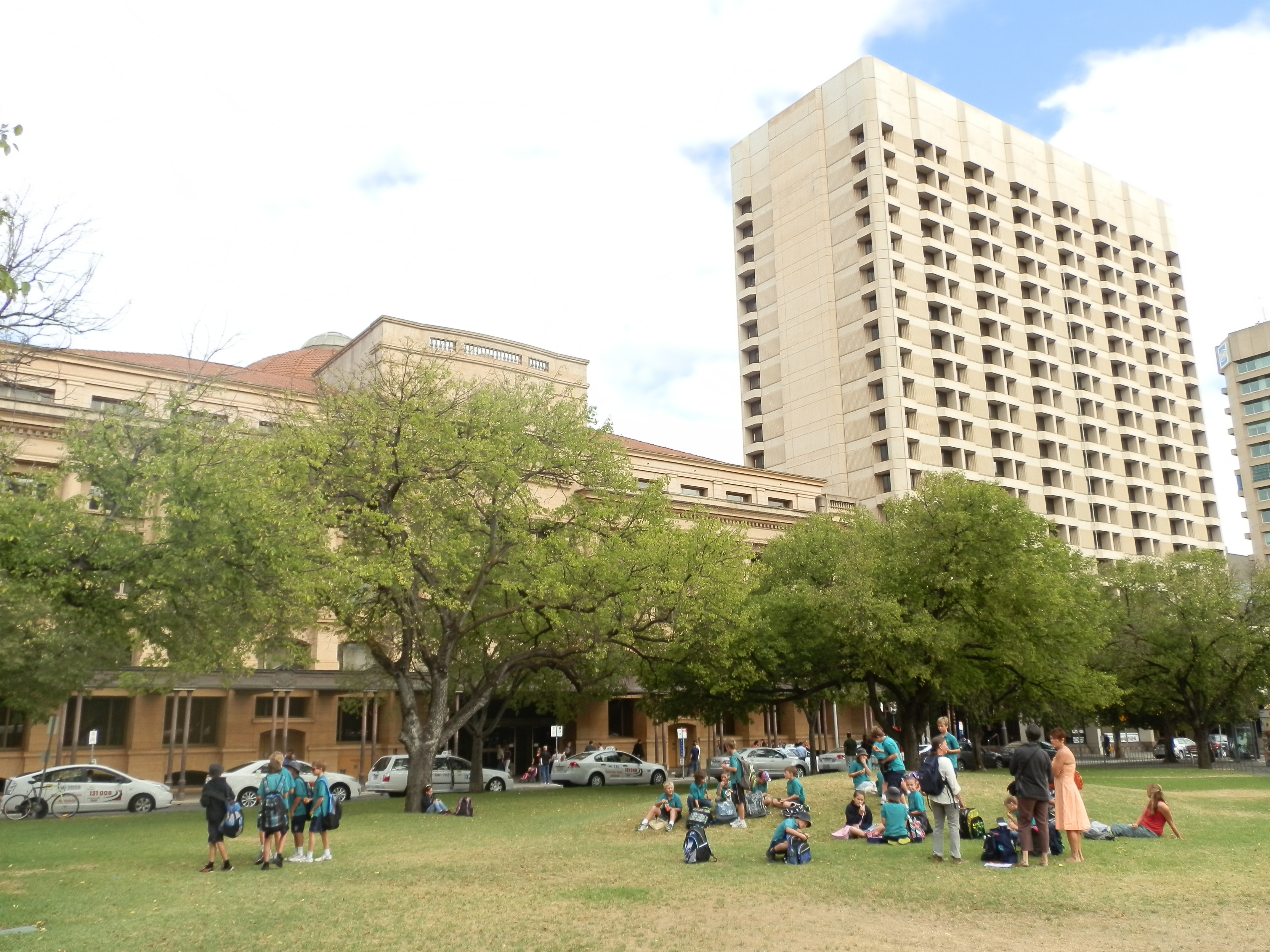 eating recess in Victoria Square
Our excursion today was fantastic. It was so well worth all the preparation and effort not to mention doing it on a day I don’t work! There were so many aspects I loved.
Firstly I loved the fact that my group grasped each and every opportunity to speak to Indonesian speakers. They were so excited about getting the chance to use their Indonesian with Abdul at Bali Corner, that they could barely contain themselves to get it out and were all speaking over each other! Abdul was awesome, very patient and very encouraging. Even when the students had mental blocks or made mistakes they persevered and thoroughly enjoyed communicating with him. It really impressed me but when I thought about it further, I realised that this is the result of our many Indonesian visitors. PEPS students are generally relaxed and eager to communicate with Indonesians because they have had many opportunities to do this. Firstly in 2003 with Bi Anas and Bu Siska (Flores) then again with Bu Anas in 2005. Our next visitors were Bu Febi (Lombok) in 20009 & 2010 and Bu Arfa (Kalimantan) in 2010 and then in 2011 we had several visitors from all over Indonesia: Pak Agus (Bali), Bu Indra (Sumatra), Pak Usman (Sumbawa) and finally Pak Asep & Bu Valentina (Jakarta). How EXCITING!
Another thing I absolutely loved was spending a lot of time out of the classroom with a small group of students and having the opportunity to get to know them better. I had a terrific bunch of students and the best thing was that they had chosen to be in my group! How Cool! I had time to joke around with them, talk to them about non school things, and point out interesting things in the market that would have been really difficult with a whole class.
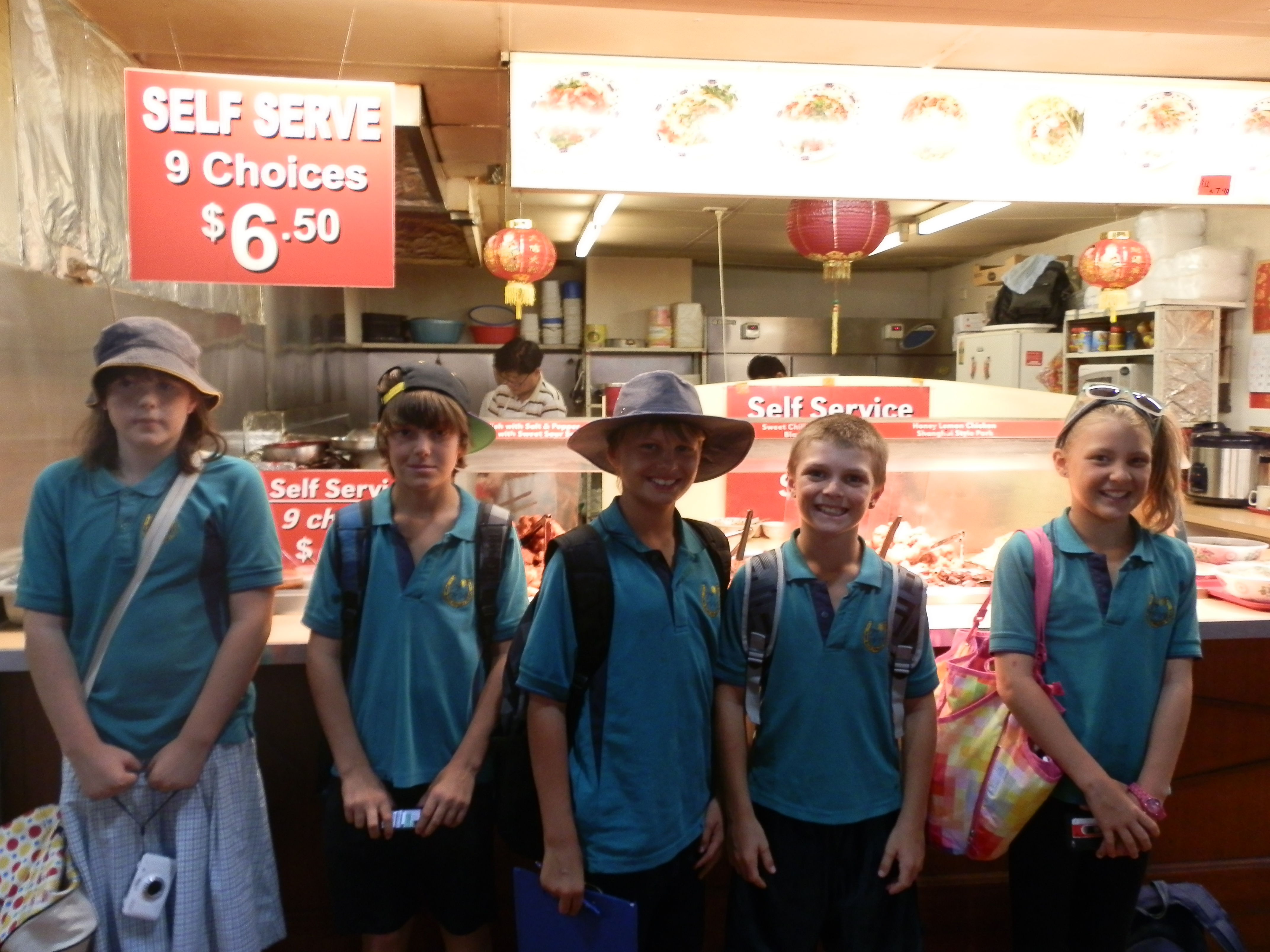 drooling over Chinese food!
 drinking bubble tea!
Our lunch from Bali Corner in the Food Plaza was amazing . The students that ordered nasi campur were delighted with their food. Apparently the opor ayam and the rendang were fantastic. My gado gado took me right back to Indonesia even though the vegies were all Aussie ones: bean sprouts, cabbage, carrot & potato! The staff at Bali Corner were just so friendly and so encouraging of all students to use their Indonesian as much as possible! Students were all asked ‘ayam’ or ‘sapi’? All communication was in Indonesian and for students who lacked the confidence, it was repeated in English and then followed up with encouragement to answer in Indonesian! Just loved their manner with our students.

What a fantastic day and one I am sure all students enjoyed and hopefully they take home many great memories.
To finish up: walking back to the bus, Brayden and Cooper both said they want to go back just so they can say Hi to Abdul!
 Indonesian Teacher Reflections