Kursi Luar Biasa Update…

A few posts ago, I shared with you my adaptation of Bryce Hedstroms special person idea. Here is an update on how this has been going so far this term:

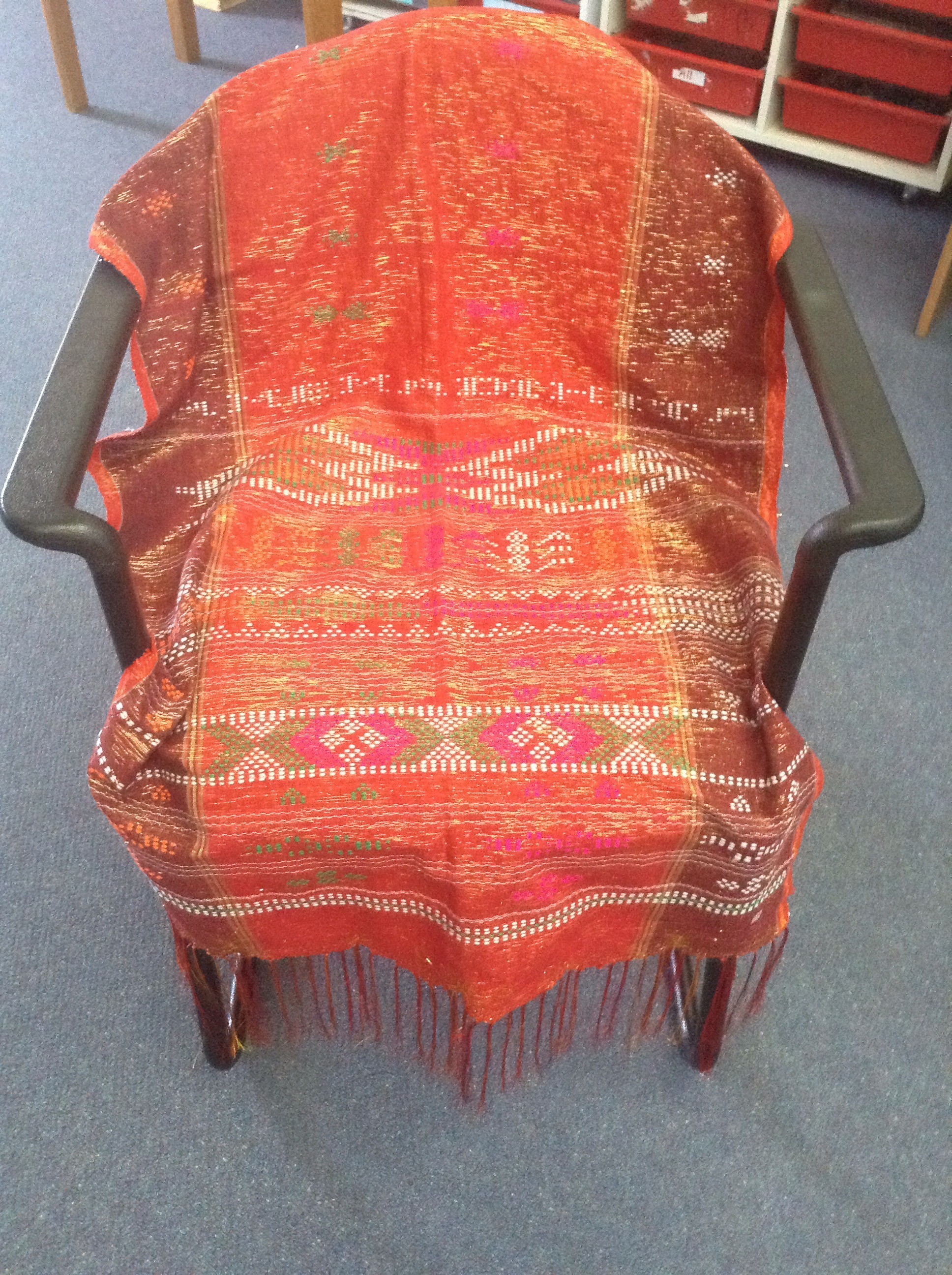
The kursi luar biasa (special chair) is definitely the most popular chair in my room! Students make a bee line to it when they arrive. They sit their expectantly, waiting for the spot light to shine on them and the 2 times I got carried away with other things and didn’t get around to interviewing them, they were soooo disappointed! However their frowns turned upside down when I promised them in front of the class that they would have first choice of sitting in the kursi next lesson!  

This week my questions finally began to gell and my peseverence is beginning to pay off. While the students in the kursi luar biasa love the attention, it remains tricky trying to keep the others engaged. Occasionally we get a student who has quirky answers to which we all listen avidly and intently but this doesn’t happen often mainly because I am still learning how to ask the right questions in the way that facilitates this! Then this week, I discovered that asking students to raise their arm instead of stand up keeps the discussion moving a lot smoother. Some students enjoy zoning out and regard it as passive defiance when I ask a question like, berdiri kalau tinggal di Port Elliot (stand if you live in PE) and then remain seated enjoying the quizzical looks of classmates. However asking questions like; angkat tangan kalau tinggal di Port Elliot, angkat tangan kalau tinggal di Goolwa etc (raaise your hand if you live in PE), has increased student focus while getting in multiple repetitions on key structures and has more students responding. Is this because I am trying something different or is it because it requires less effort from the students? For me too, it just flows so much better.  Try it!! 

Another positive has come with the introduction of the word ‘tahun’. This week I decided to have a subtle focus on the word tahun during kursi luar biasa when asking the student how old they were. I put it up on the board, and after asking the question, berapa umur? (How old are you) I repeated what the student said adding the word tahun. Using ‘tahun’ wasn’t a requirement for the student, I just wanted to put the word out there in case it came up in future coversations with Indonesian  (native speaker) visitors. Then I had a brain wave! With the word tahun, I could ask students a follow up question to tinggal dimana? (Where do you live?) with “Sudah berapa tahun tinggal di _______?” (How many years have you lived in ____)  With the older students, these questions that are a bit more challenging really keep them all focused. You  can almost hear the cogs turning in their heads and the satisfaction that comes with comprehension. 

I just love the way that kursi luar biasa covers so much of the Australian Curriulum requirements regarding student interests, family, pets, hobbies, etc.  It is such a great way to cover those topics in a personlised and meaningful way for students and also in a way that is narrow and deep! When I think of all the years I used to teach “kenalkan” (let me introduce myself) as my term 1 theme and then feel disheartened with how little my students retained from year to year,  it confirms for me the benefits made from making the switch to TPRS in my classroom.  

PQA, My Way; By Alina Filepescu

maxresdefault

Here is an amazing post and video by Alina Filipescu. While the post is specifically talking about how she does PQA in her classrooms, there is actually sooo much more in it that we Indonesian teachers here in the southern hemisphere can learn about. Not only has she included an amazing video of herself brilliantly and seamlessly PQA-ing with a primary aged class but she has also included an explanation of what she does to cue her students when she wants them to respond. It is a truly amazing video and post and I highly recommend that you read/watch it to appreciate where we are all heading with our TPRS skills!! I look forward to the day when  my students participate to that extent and are so engaged in my lessons!

Kata Sandi – Passwords

Bryce Hedstrom has been updating frequently his blog post about secret class passwords and I’m curious! Would it work in the primary school? Would it work with large classes? 

  
The idea is that the teacher meets the  students at the classroom door before each lesson and like entering a secret clubhouse, students say the class password before entering. Passwords can either just be a fun word, a phrase or a response to a set teacher question (eg siapa nama?). The password can be changed as frequently as is necessary and this would depend on how often the teacher sees each class per week. For me, I teach some classes once a week and some twice, so I would start with a weekly password.  The passwords that Bryce has used cover a huge range of words/phrases and his latest additions includes morals like ‘slow and steady wins the race’. 

  
For my students, though, I can see the benefits of this idea with:

  1. Kenalkan questions eg siapa nama, tinggal dimana, berapa umur, suka warna apa etc
  2. Slang exclamations which would be useful/cute during story asking eg NGP (gay-en-peh –  gue nggak peduli)
  3. Repetition opportunity for target structures

  
Go to Bryce’s website and read what he has written so far and then enjoy fossicking around all the other fantastic resources and suggestions he has shared. 

IFLT/NTPRS/CI Teaching- How To Involve The Whole Class When Storytelling

A great thread appeared overnight on the iFLT/NTPRS/CI Teaching Facebook page Have you joined yet? If not, I highly recommend it. It is a global  community totally dedicated to all levels and aspects of TCI. Your own personal PLC where you can comment on other posts or ask questions about teaching with Comprehensible Input and TPRS. For those of us here in Australia, where TCI is only just taking off, this group is awesome. Whether you prefer to be a lurker or a contributor makes no difference because the other teachers here bring a wide variety of experiences and the knowledge they share is impressive. They too cover the spectrum of experience and once you take the first step and. join, you will discover what a warm and generous community it is. My only word of caution though is: go with your gut feeling. Remember that we Australians aren’t the only ones frustrated by the lack of training available here and thus interpretations of TCI vary. If a suggestion sounds a little off centre, don’t worry or stress; it is most likely because of a different understanding of what TCI actually is. If you need clarification, ask openly on the page and no doubt an experienced practioner will chime in and clarify. There are certain names to look out for and you’ll recognise them from all your readings. 

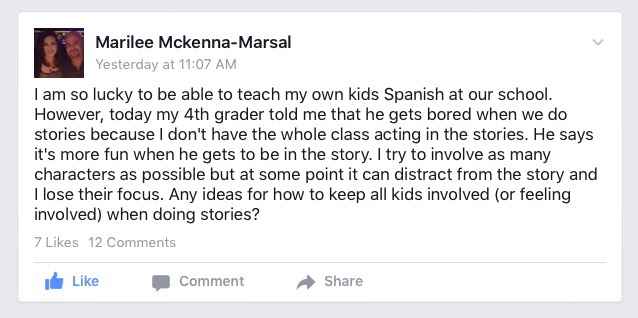
The thread I enjoyed reading this morning asked how to involve more students when reviewing a story. It was posted by a parent/teacher who has a child in one of her classes.  I remember the pros and cons of teaching my own children and this was definitely one of the pros. I totally appreciated the insights into both my teaching and the students in the classes. 

Here is her question: 

 
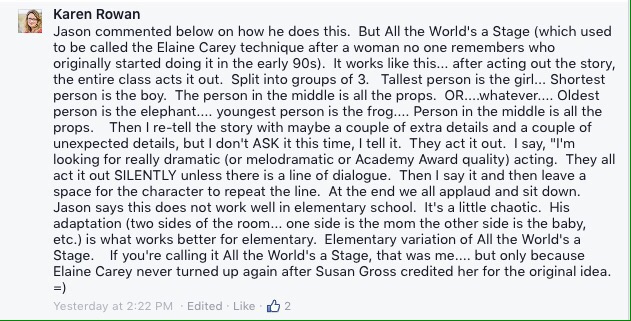
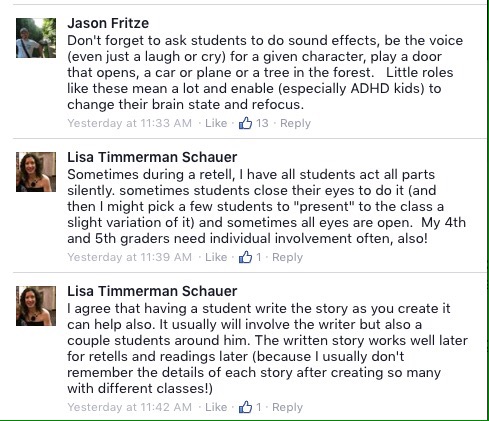
The answers to the question were awesome and most of them are worth sharing becausse they would work very well in our primary classrooms. Interestingly though, is that secondary teachers have also shared here!  

   
The answer below by Karen Rowan actually fits in after Grants initial comment above.


So many great ideas here to not only gets heaps of repetitions but also to keep our students engaged in the story.

Kursi Luar Biasa

I read of an idea in which individual students enjoy being interviewed just before Sharon pointed out that we haven’t fully covered aspects of the 3-4 & 5-6 curriculum regarding student personal information.  To me the idea of a special star student seemed a terrific way to not only cover this aspect of our curriculum but would also give middle and upper primary students the chance to shine and enjoy the limelight answering questions about themselves to a captive audience.

I have also been toying with the idea of how to widen student knowledge of Indonesian exclamations, so I decided to combine both together with ‘murid luar biasa’ and translated it to students as ‘the awesome student’ however this didn’t feel right, so in the second week I changed it to kursi luar biasa and for some reason, it felt better. Luar biasa is now the new Indonesian catch phrase and has been used constantly – to my delight!

I took the secretary chair and covered it with the beautiful Batak shawl Pak Pahot gave me in February and transformed it into the kursi luar biasa.

  I explained to students that anyone can sit in the chair with ‘first in, best dressed’ (rewards students who get to class on time) however once they’ve had a turn, they can not sit in it again util everyone who wants a go has done so.
While I only trialled the kursi luar biasa for 2 weeks, it was hugely successful. I began with our stock kenalkan questions and was pleasantly relieved just how much students have remembered even though we haven’t had a ‘kenalkan’ focus since term 1 2014!! This reaffirms my belief in the power of TCI/TPRS.  Next I started thinking of other questions I could ask students and that proved challenging. Questions that incorporated language structures they were familiar with and ones that students could answer using just the language they have acquired so far.

While I had thought my questions were largely lame, all students who have chosen to sit in the kursi luar biasa chair must disagree with this because there has been no shortage of volunteers. What I have enjoyed in particular is the opportunity to talk to  just one student and learn something surprising about them. I learned that one of my families has a pet snake, which was compelling for the class as well as for me!! It was pure gold because I could circle this information to include other students by asking if they too owned a snake, who was scared of snakes, have you seen a snake, are there snakes at school etc. E.g. Jodie sudah lihat ular di sekolah or  Jamie mau lihat ular di sekolah? Another student told us using ‘gado gado’ that her budgie had died that morning because her grandmothers dog had killed it. I’d never have known if not for her choosing to sit in the chair that day. But the most heart warming part of this was when the entire class said with compassion, “kasihan” that I knew the kursi luar biasa is well worth continuing with.

The session goes for as long as I feel that I  have whole class engagement and once I run out of questions or the class starts getting restless, we stop and move on. It is the perfect way to ask students personal questions in context and get repetitions of this language. I am looking forward to honing my questioning  techniques next year as well as developing a bank of questions which not only rely on known language structures but also lend themselves to open-ended answers.

Questions I have used so far include:

Tinggal dimana?

Umur berapa?

Siapa nama?

Kelas berapa?

Punya adik?

Punya kakak?

Siapa nama adik/ kakak/ ibu/bapak?

Punya anjing/kucing/tikus/burung?

Suka warna apa?

Suka makan apa?

Kemarin kemana?

Mau punya apa?
Feel free to add suggestions!!

Dadar Gulung

Traditionally in term 4, my year 7 classes study a cooking recipe before cooking it in groups because, lets face it, anything to do with cooking is popular and it’s a positive note for them to finish on after 8 years of learning Indonesian at primary school. This year, the challenge for me was adapting such a unit of work to be compatible with TCI methodology.
As usual, I began the term by asking the students in each class to vote for the food their class woud like to cook. Each class narrowed their wishlist down to 2; a savoury and a sweet recipe. Previously I split the 9 week term in half, with classes studying recipe #1 for the first 4 weeks, before focusing on recipe #2 over the final 4 weeks. The final week is always a right-off with graduation, class  parties etc and it’s nice to have a week up my sleeve just in case! I quickly discovered though that attempting two recipes was one recipe too many. Thus for the majority of the term we focused on the one recipe that both classes had chosen: Dadar Gulung.


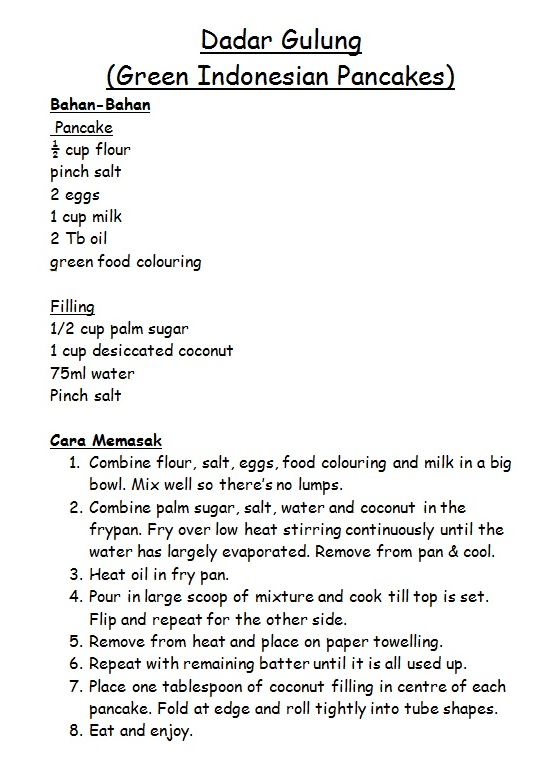
In adapting this unit of work, my first task was to simplify the ‘authentic’ recipe drastically to reduce the large amount of unfamiliar and unnecessary vocabulary. This turned out to be even easier than I imagined. Yet, what I couldn’t avoid was the long list of ingredients, mostly low frequency vocabulary except for maybe water. Here is my recipe  in English and following it is the CI version.

Here is my simplified recipe:dadar gulung recipe

Here’s my adapted version of the method:

  1. Campurkan gula dan kelapa. Goreng dan aduk. Angkat.
  2. Campurkan tepung, gula, garam, telur, pandan dan susu di mangkok besar. Aduk.
  3. Panaskan minyak.
  4. Kasih satu sendok besar campuran dadar dan goreng dua menit.
  5. Balik dadar dan goreng satu menit lagi.
  6. Angkat.
  7. Ulangi.
  8. Taruh campuran kelapa/gula di dadar. Lipat dan gulung.
  9. Selamat makan!

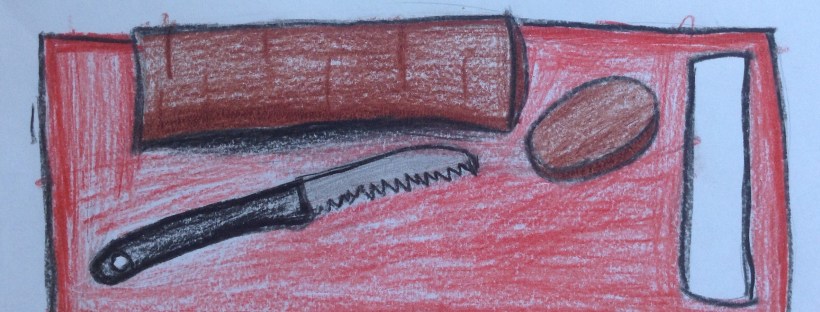
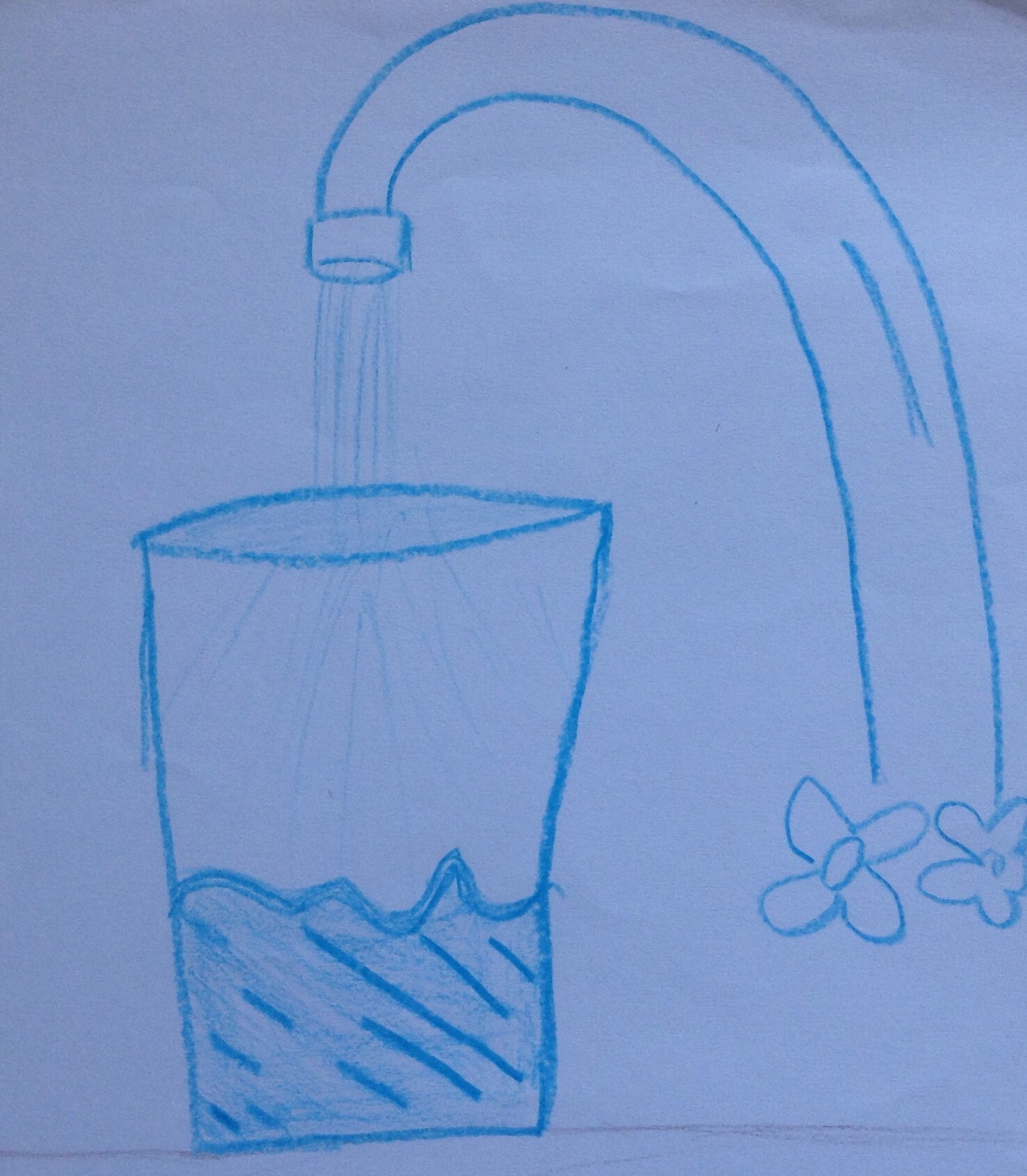
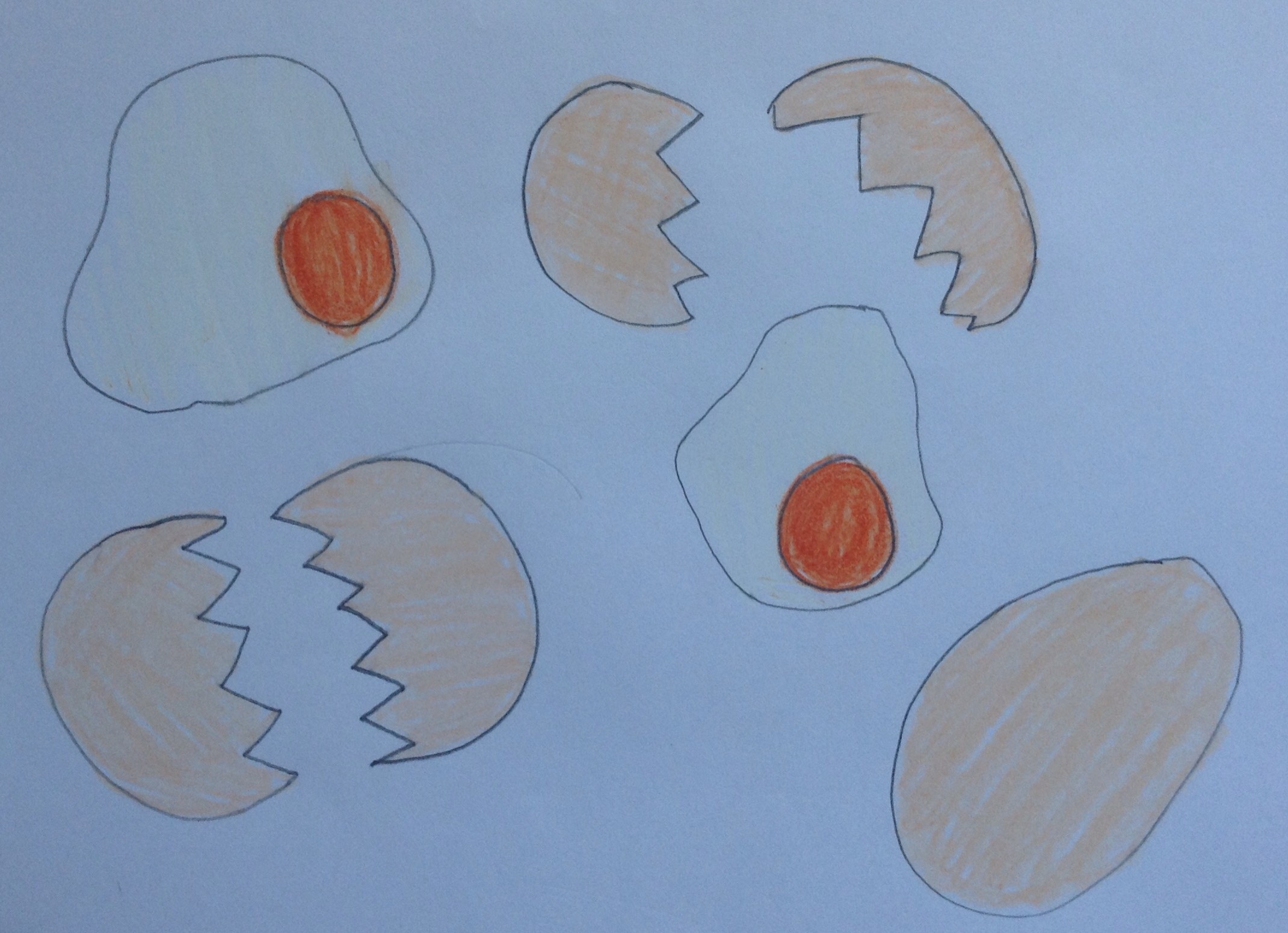
I decided to tackle the ingredients first with the thought that as soon as they were acquired,  the method would be largely (although still not i+1) comprehensible. I began with a google search for images and found a large image of each ingredient. I then printed an A4 copy of each and laminated them. I didn’t label (ie write the Indonesian on) the pictures which at times was useful and other times frustrating. Probably should have though to assist with acquisition. I began by introducing this new vocabulary and encouraging students to come up with ways they could remember each. Both classes suggested remembering ‘minyak’ (oil) is  easy because it is yuck (yak)!! Next students got into 6 groups (the number of trestle tables in my room). Each group was given 11 sheets of A5 paper & 11 laminated cards, each with one of the ingredient words on it. As a team, each ingredient had to illustrated, one per piece of paper. Here are just a few of them:


We then played a game to get as many repetitions of this new vocabulary  as possible: all picture sheets and cards were turned upside down and mixed together in the centre of the table. On go, teams had to turn everything over and then match up the illustration with the word card. When groups had played this several times with their own pictures, they were asked to stand and rotate to another table and we replayed with the pictures from another team. This was hilarious because some of the pictures were left field. You can imagine what some teams thought of some of the gula merah pics!! When the teams were at the final table, I then added a further variation to the game by asking the teams to nominate their best 2 players to play off against the other teams and after that round asked the groups to nominate the 2 players who had participated the least for a final competition. In each team there were passive team members, some were lacking in confidence while others were over ruled by more dominant team members, so this gave them a chance to participate and shine. My instruction to the non-players insisted that their hands remain under the table and to only speak in Indonesian! This worked beautifully! More repetitions!! From me and their fellow students!

From that lesson onwards, I began lessons with a vocabulary review by asking students to tell me what the ingredients are for dadar gulung. (Dadar gulung pakain apa?)The only word which stumped them right to the end was kelapa parut!! Considering most of the language used in this unit is low frequency, it will be interesting to see how much is retained long term.

The next lesson I planned to teach included a cooking demo so that the students could both watch the method and listen to the recipe in context while completing a listen and draw however it was precisely that week I fell sick. Such a bummer. Unfortunately by the time I was well again, end of year interruptions and severe depletion of energies resulted in this not happening. Instead students did the listen and draw without the demo, cloze and a ‘unjumble the sentences’ type of activity. It was very rushed towards the end due to the loss of time which was such a shame.

I also had to squeeze in a very quick introduction to the 2nd recipe the classes were each cooking. One class chose Mie Goreng Telur Ala Ibu MIa (which was perfect because I coud recycle most of the dadar gulung method vocabulary) and the other class had chosen mie goreng. In those lessons, we also had to finalise groups  (students choose their own) and determine the equipment needed to cook the recipes. It was very rushed but thankfully it all finished well.

When classes cook, I provide the ingredients and students have to bring in the equipment as they will be cooking the recipes by themselves in their group. I do it this way for several reasons – the main reason being that I firmly believe students should take equal responsibility in preparing for this. It also weeds out the apathetic students who have in the past sabotaged the experience for the others in their group.  These non contributing students are divided out amongst the junior primary classes to ‘help’. This year though, for the first time ever, every student cooked!! The one student who didn’t bring anything in had spoken to me privately explaining how difficult this would be for him, and he was fortunately in a group being supervised by one of their Mums who knew him and his circumstances well.  Phew, because this was the only thing we did all year that he showed any interest in and it was great for him to finish up on a positive note. A final bonus for doing it this way is that students take home all the dirty dishes and I don’t get left with the washing up!

I encourage groups to invite a ‘supervisor’ for several reasons. The supervisor can be a parent, an older brother or sister (lovely opportunity to catch up with ex students who themselves get a kick out of revisiting an Indonesian cooking lesson) or a responsible family member/friend. Having community members is great for PR but more importantly, the electricity board in my room cannot support more than 4 electric frypans at any one time.  Thus a supervisor enables groups to cook elsewhere in the school, either in our canteen, the staffroom or even in their own classroom. The added bonus of this is that I usually end up with only 1 or 2 groups cooking in the Indonesian classroom!!  Bliss.

I begin the cooking lesson by handing out copies of the recipes and then standing back as the groups organise their ingredients.
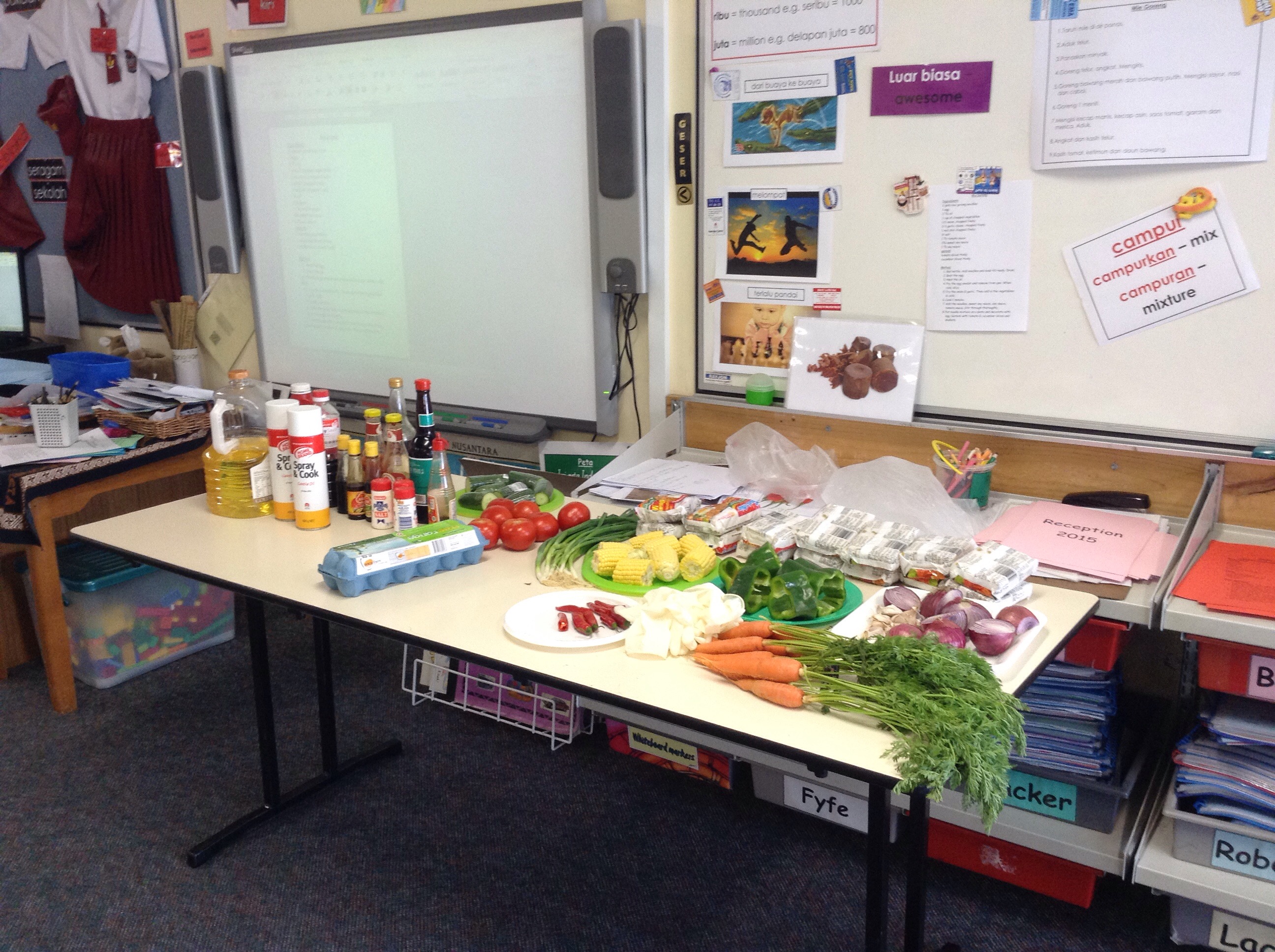
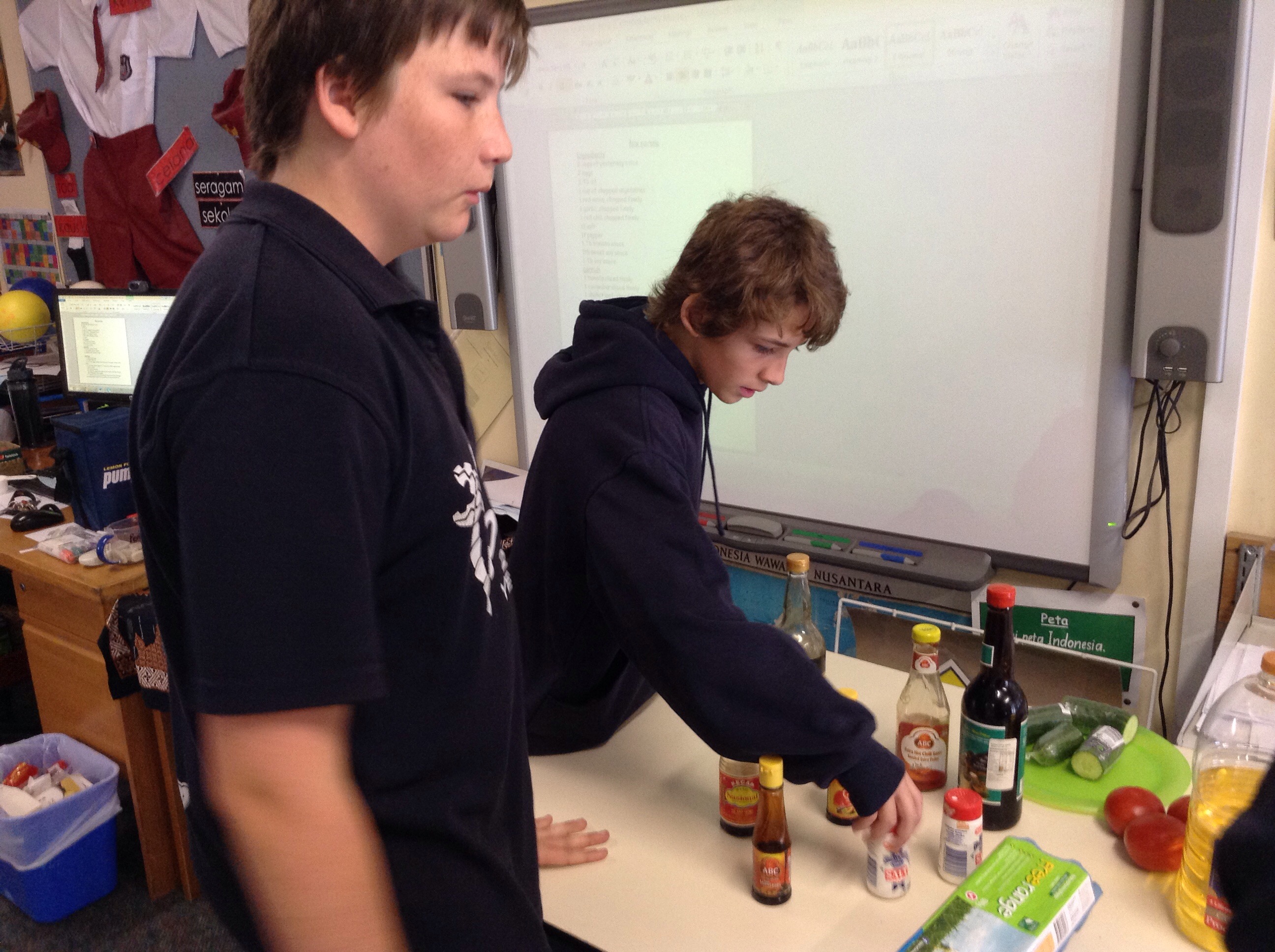
Here are a few photos taken from one of the classes:

Firstly, the ingredients as I set them out. Some are portioned already and some aren’t.

Students helping themselves to the ingredients

Students cooking:


The unit of work was finished with a Kahoot! challenge.  What an amazing and engaging way to complete the unit. As I said in my previous post, I had issues with lagging which we still haven’t been able to trouble shoot even with Kahoot! support. Quite a shame really because it has so much potential. I intend to investigate it further next year in the computer room and see if by eliminating the ipads, the lagging stops. It was such a fun way to wrap up the unit with a concentration on structures. Even kelapa parut was learned by the end!

Overall, in reflection, I feel that this topic was more of a ‘bail out’ and whether this was due to insufficient time or that it still needs a lot of tweaking, I’m not quite sure. Also at this time of the year, it is more important to do what is manageable because of the sheer number of balls teachers juggle with end of year requirements.  Another issue is that the year 7’s in term 4 are challenging and the sooner the  SA government moves them to high school in line with other states and our national curriculum the better, but that’s a whole different topic!

End of Term 4 Reflections

Fourth term is just about to finish; just one more week to go. It has flown by so quickly! As I’ve written several times, this term I focused on the traditional tale, Kancil & Buaya. During the last holidays our hub group met to adapt the story so that the vocabulary in the story was largely comprehensible for our students as well as introducing a few new structures. I think we did a great job with it and although much longer than any of our previous stories, was enjoyed by my year R – 6 students. 

My tweaked adapted version: 

Kancil berjalan kaki ke sungai.

Kancil lihat mangga di sebelah sungai.

Kancil lapar dan mau makan mangga.

Kancil tidak bisa berenang.

Kancil lihat banyak buaya di sungai.

Kancil lihat banyak buaya lapar di sungai.

Bagaimana kancil bisa makan mangga?

Kancil berkata, “Halo Buaya! Ada berapa buaya di sungai?”

Buaya berkata, “Tidak tahu!”

Kancil berkata, “Saya manu menghitung. Ayo buaya, antri.”

Buaya antri.

Kancil melompat dari buaya ke buaya dan menghitung.

Satu, dua, tiga, empat, lima, enam, tujuh, delapan, sembilan, sepuluh.

Kancil berlari dan tertawa.

Kancil makan mangga.

Buaya marah.

Kancil terlalu pandai.

Isn’t that an awesome adaptation? The vocabulary for the original story was so complicated! It is so rewarding to turn an incomprehensible story into a comprehensible story! 

I then parred  the story down even further for junior primary students. Their simplified version looked like this:

Kancil berjalan kaki.

Kancil lihat mangga.

Kancil mau makan mangga.

Kancil lihat buaya.

Kancil berkata, “Saya mau menghitung buaya. Ayo buaya, antri.”

Buaya antri.

Kancil melompat dari buaya ke buaya dan mengitung.

Satu, dua, tiga, empat, lima, enam, tujuh, delapan, sembilan, sepuluh.

Kancil makan mangga.

Kancil senang sekali.

Each week, I focused on a new structure from the above story and incorporated it into the JP story. It became an embedded reading! The most useful structure was undoubtedly ‘tidak tahu’. What a great phrase! I love how students have acquired ‘tidak tahu’ so thoroughly and use it appropirately in conversations!

My major reflection regarding this story is that it would be a great story for first term when we have 11 weeks rather than fourth term which is more like an 8 week term! There is so much potential for this story. I feel like we barely skimmed the surface of its potential.

To finish up the terms work, students did a free write and played the word chunk game last week and then this week I am going to experiment with Kahoot! using my 6 ipads. I have created a 20 question game to review the story. Feel free to open Kahoot! and search for Kancil dan Buaya. While there, have a look at the Dadar Gulung review game I made for my 6/7’s. It was such a success! It turned a group of year 7’s who are too cool for school, around last week. They begged to play it 3 times!! The amount of repetition was awesome. I did have a few connectivity issues which I emailed Kahoot! about. They have replied already, so I will discuss their comments with our IT guru tomorrow to see what needs to be done before Tuesdays lessons. 

Week 3 Reflections

Week 2 is always a disappointing week for me. Students are usually amazing in week 1 when they are so thrilled and excited to be back at school which is always delightful. However I then plan lesson plans for those enthusiastic students only to discover that by week 2 they did a ‘Jekyl and Hyde’ over the weekend and my lessons do not turn out quite the way I had envisaged. 

Week 3, thus is a great week by comparison! I am prepared, in fact usually over prepared, but at least this time it is strategic over planning unlike week 2 where it was head in the clouds over planning. I can’t believe I tried to do a movie talk last week with the combined year 6/7 left overs that focused on entirely unfamiliar structures! What was I thinking?? Not surprisingly it was a huge flop. Still, I learned a huge lesson from it – doesn’t matter how engaging the video  is, if it’s not comprehensible, it will not be engaging.

This week with another group of year 6/7 left overs, I showed Laskar Pelangi which was far more successful for several reasons.  

 Firstly, it was purely an English culture break and considering the film went for 3 lessons and students were engrossed right up to the end, I was happy with that. I also have to confess that it was my first time watching the movie so maybe in future years I may consider using it as a MT now that I can see the potential. The lessons progressed well in that we began with a single lesson and then 2 days later had a double. I said very little before the movie started yet before continuing with the movie in the double lesson, I talked about several aspects including a little Belitong history and providing a bit more information about the main characters. Yet it was the discussion about the symbolism that students enjoyed the most and then commented on during the movie. I spoke about the symbolism of fences (dividing communities), crocodiles (obstructions) and rainbows (happiness, togetherness and positive hopes for the future).  

This term with the other classes (ie all but the year 6/7’s), we are looking at the kancil & Buaya story. At the end of term 3, our hub group met and we simplified the story to ensure the story only incorporated a few unfamiliar structures as well as revised many of our known structures. Last week I introduced the word ‘kancil’ and largely in English we talked about their body shape, their diet and where they are found globally. Naturally it was only their diet that lent itself to circling! Kancil makan apa? This week I introduced the word ‘buaya’ using both a picture of a buaya, a soft teddy buaya and a hilarious crocodile hat I found at Savers last Sunday. As usual, using Annie’s voices, I introduced the word encouraging the students to repeat buaya over and over in a variety of ways including singing, syllablising, weird voices and generally having fun. I then held up the buaya soft teddy and circled buaya.  
 

Buaya! 

Buaya? Ya buaya. 

Kancil? 

Bukan. Buaya. 

Kancil atau buaya? Buaya.

I then opened a bag of soft teddy animals including the crocodile hat. I held the buaya soft teddy in one hand and with the other dug into the bag. I pulled out random animals and asked, ‘Buaya?’ The students loved the suspense of not knowing what was coming out of the bag and all screamed with delight when I finally pulled out the crocodile hat!  

 The hat is great because of its large mouth and which allowed me to revise makan. Buaya makan sepatu? I walked around amongst the students stating sentences like that and then having the crocodile mouth the shoe. Or I would point at my nose and say a couple of times ‘hidung’ before saying buaya mau makan hidung Joey. They just loved it and were all begging to be eaten!! It was chaotic and loud with lots of laughing. I actually had a parent looking for their child, knock and put their head in the door while I was bent over a student ‘makan sepatu’ and I’d love to know what she made of what she saw! Hopefully she asks her son! It was strange though because I felt guilty that I was having too much fun! That I should have been more serious! Oh well…. 

I did a ‘kindergarten reading’ with the story with the year 4’s where I had them sitting on the floor in front of me and I read a big book version with large colourful pictures. They were totally engrossed yet when I asked afterwards whether they preferred acting out the story or listening to it, the majority said they much preferred acting it out!! Didn’t see that coming. 

This story incorporates the numbers 1 – 10 which has been a great. Early in the week I suddenly remembered a counting song from Languages Online. Unfortunately it goes way too quickly for my younger classes, but then I had a brain wave! Instead of singing satu, dua, tiga bunga (not a familiar word), I changed it to satu, dua, tiga buaya!! Then I got even more creative and sang about kancils, penguins, orangutans and finished with murid murid! The more repetitions I can get with this song the better to cement number acquisition. 

And speaking of songs, I also ‘wrote’ this song on the weekend for later in the term:

Kancil, kancil di hutan

Tidak bisa berenang

Datang banyak buaya

Hap! Tidak ditangkap!

Can you pick the tune? Lifted from cicak cicak di dinding!

Hope you had a great week too.

Learning how To Circle

At our (Indonesian Teachers Hub Group) last meeting, Annie mentioned that she is focusing on the skill of circling at the moment. Circling is an integral skill in TCI and I suddenly realized that it had not been a focus lately in my recent lessons. I then decided that I too needed to hone my circling skills and so determined to incorporate more circling into my lesson plans.

I refreshed my understanding of it by reading various sites and as always, I started with Martina Bex’s website. There she has a link to a pdf she created about circling. Here are 2 great sentences from the pdf to clarify the definition and purpose of circling:

DEFINITION
Circling is the instructional practice of asking a series of prescribed questions in the target language about a statement in the target language.

PURPOSE
Circling is used to provide students with contextualized repetitions of target structures.

Circling has a recommended format yet it is not set in stone. It must be driven by the students so that teacher input is compelling (i.e. truly interesting) and thus relevant to the students. Here is a recent moretprs post from Dr Krashen about ‘compelling’ and ‘relevance’:
krashen pic

Circling is a powerful TCI strategy which ensures students are engaged and acquire language totally without realising!

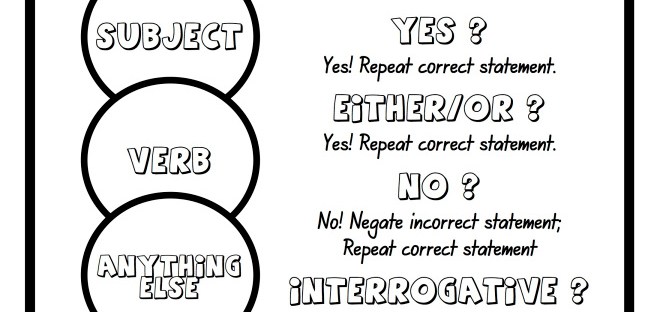
The circling format includes the following:
Statement
Question
Either/or
Negative
3 for 1
Ask a detail
[Optional are:
Who, What, When, Where, Why]
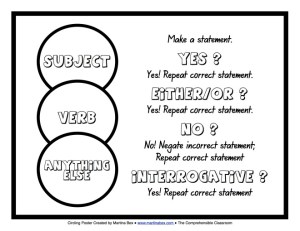
circling

courtesy Martina Bex’s Website


Using this format, I wrote circling questions into my lesson plans focusing on each of the above steps to prompt my memory and help develop my circling proficiency. I tend to find that when I am in front of a class, my mind goes blank whenever improvisation is needed!! Hopefully this is something that will reduce as I gain confidence and experience with TCI methodology.
I initially had the above poster up on the back wall but it didn’t help. For example I would see the word ‘interrogative’ and just freeze like a rabbit in the spotlight! So instead I incorporated a circling mini block into each lesson:

Circling # 1 –

Junior Primary

a) Indie perempuan. (statement)
b) Indie pakai sepatu? (ya) Ya, Indie pakai sepatu.
c) Indie pakai sepatu atau Indie pakai jaket? (either/or) Indie pakai sepatu.
d) Indie pakai topi? (ya/tidak) Bukan. Indie pakai sepatu.
e) Indie minum/makan sepatu? (3 for 1) Bukan! Indie pakai sepatu, Indie tidak minum sepatu!

Middle Primary & Upper Primary
1. Flick berkata. (statement)
2. Flick berkata? (ya) Ya, Flick berkata.
3. Flick berkata kepada Ella. (ya/tidak) Ya. Flick berkata kepada Ella.
4. Flick berkata kepada Ella atau Flick berkata kepada Thomas? (either/or) Flick berkata kepada Ella.
5. Kenapa Flick berkata kepada Ella? (extra detail) Flick berkata kepada Ella karena ? (mau ke McD, dingin,)
6. Circle new detail.
This amount of detail was so helpful. I could refer to my notes at any point to ensure I covered all aspects when/if necessary. Writing it too helped clarify in my mind so that my response should always be either the initial sentence or include the initial sentence!
I felt that at last I was getting a handle on circling! Then with brilliant timing, several TCI teachers wrote blogs posts specifically about circling. Keith Toda posted on his blog, Todally Comprehensible Latin, Circling – The Art of Questioning and Chris Stoltz posted on TPRS Q & A his post  ‘What is Circling and How Do I Do it?’ Both are great and I highly recommend you read them to grasp the finer details of circling.
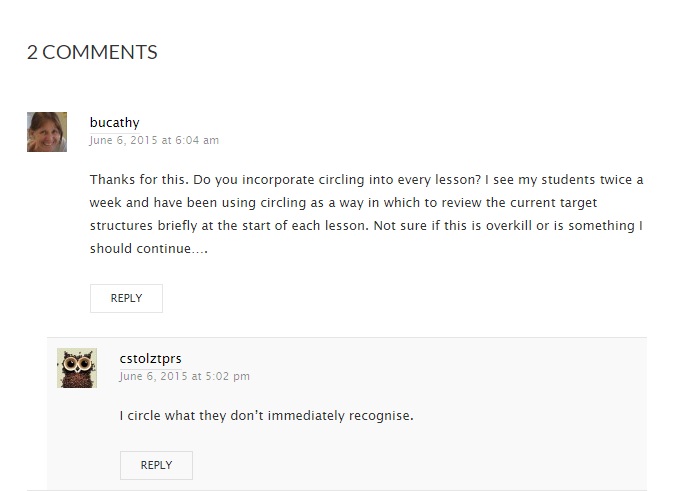
After reading Chris Stoltz’s post I asked him a question and he replied:
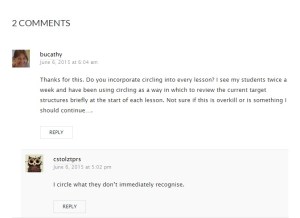
tprs q a

When I first read his reply, I was taken aback by its brevity and once I had recovered,  I started to think about his point. If I was to circle only what students didn’t understand, then I was going about “circling” the wrong way.
The next thing that happened was again by coincidence. I had emailed Ben Slavic about micro stories suitable for primary (elementary) students. He replied with an attachment of his draft chapter called Super Mini Stories. In this chapter, Ben focuses in great detail on the skills needed to tell a story. Reading this with my trusty highlighter was illuminating. Chris’ statement ‘Circle what the students don’t understand” suddenly gelled.
Circling has to be done in context and more importantly, stories must have input from students. This is what makes TCI compelling.

Last week I trialed it and discovered the truth of the above statement. This is how I did it:

With the classes 3-7, I arranged the chairs into a circle and in the middle of the circle I put a pile of clothes for this story: (underlined words signify where I asked for student input.)

Bobby dingin. Bobby berkata kepada Ibu,”Saya dingin.”
Ibu kasih Bobby satu jaket.
Bobby pakai jaket di kaki.

Bobby masih dingin. Bobby berkata kepada Bapak, “Saya dingin.”
Bapak kasih Bobby satu baju.
Bobby pakai baju di kepala.

Bobby masih dingin. Bobby berkata kepada Kakek, “Saya dingin.”
Kakek kasih Bobby dua sepatu.
Bobby pakai sepatu di tangan.
Bobby tidak dingin lagi.

Prior to last week, I’d told the story with actors and the other students just watched and listened. However, this week, I used circling to ask for student input and it was highly compelling. Here is why:
I began with:
Siapa mau menjadi assistan Bu Cathy? (Who wants to be Bu Cathy’s assistant?)
I looked around the circle and chose someone who would be a good actor, someone who could be a ham if necessary and not get embarrassed. I then asked them to ‘berdiri’ (stand.)
Next I asked the class, “Caden perempuan atau Caden laki laki?” The class invariably answered “Caden perempuan.” To which I checked in with my actor, “Caden laki laki atau Liam perempuan?” If he answered, “Caden perempuan”, I would then confirm, “Caden perempuan!” Next I asked students, “Siapa nama Caden? ‘Caden’ nama laki laki!” Sometime, classes came up with a hilarious female version of the name (Luke became Lukette, Kody became Kodella) and sometimes they would come up with a name that has been bandied around lately. For some reason Jeff and Bob are hilarious names!! Go figure!
I then began the story:
Ada perempuan. Nama perempuan Delilah.(students decided that Caden would become his twin sister!)  Delilah dingin. Delilah berkata kepada???? Delilah berkata kepada siapa? (laser pointer to ‘siapa’ poster up above the whiteboard) If students suggested the name of a fellow student, I would answer, “Bukan nama murid di kelas ini.” Because I wanted them to come up with some quirky suggestions. I would settle on the suggestion that got the most catcalls!! Justin Bieber and Tony Abbott were up there!! I next asked, “Siapa mau….. Justin Bieber?” That actor was also asked to ‘berdiri’.
I would then recommence my story from the start to throw in some sneaky repetitions.
Ada perempuan. Nama perempuan Delilah. Delilah dingin. Delilah berkata kepada… Delilah berkata kepada Justin Bieber, “Saya dingin.” Justin Bieber kasi Delilah???? At this point I rummaged through the pile of clothes on the floor and repeated the sentence several times adding the word for the article of clothing I held up, looking at ‘Justin Bieber’ to gauge both his/her reaction and the class’. “Justin Bieber kasi Delilah jaket? Justin Bieber kasi Delilah sarong? Justin Bieber kasi Delilah topi? Justin Bieber kasi Delilah jilbab?” OOnce the class agreed on the item of clothing (majority rules), I then handed the item of clothing to “Justin Bieber” and then turned to the class and asked, “Justin Bieber kasi Delilah satu jilbab atau Justin Bieber kasi Delilah dua jilbab?” Depending on their collective answer (if too noisy, I asked ‘Angkat tangan kalau Justin Bieber kasi Delilah dua jilbab”, repeated sentence again or satu jilbab, while counting in Indonesian the number of hands) then we continued the story:
Justin Bieber kasi Delilah satu jilbab.
I then stopped the acting, asked Justin Bieber to ‘duduk’ then turned around to face the class again and asked, “Delilah pakai jilbab di kaki (pointing to my foot)? Delilah pakai jilbab di tangan (pointing to my hand)? Delilah pakai jilbab di leher (pointing to my neck)?” etc until I got a popular consensus. I then repeated the sentence and the actor acted out the story. In this case it was:
Delilah pakai jilbab di kepala. Delilah masih dingin.
We continued till the end of the story this way. It was hilarious and totally compelling!! I love that TCI provides me with ways in which I can laugh with my students while teaching!!
During the day on Monday, I wrote a few notes in my notebook that I keep handy to record my reflections and this is what I wrote:
1. Circle what they don’t know!!
2. Don’t forget to ask quantity of clothing! E.g. dua sepatu!!
3. Go SLOW!! Don’t rush!! Slow and steady is how students comprehend and acquire the target structures. Make the most of each repeititon.
4. Try to make circling sound like natural speech using familiar vocabulary while incorporating all the facets of circling. E.g. negative, either/or, 3 for 1, asking for extra detail.