An interesting Experiment Using Class Dojo

Last week, which was our first week back after a 2 week break, the 2 year 6/7 classes completed a task from the previous term while the other classes made a start on learning target structures for our new story, one  recommended to us by our amazing mentor, Catharina. More on all of that in my next post.  
In week 10 & 11 last term, year 6/7 students in small groups had to choose one of the stories we had written over the term and then tweak it to create an original version and finally publish a small book of their work which will be read to their buddy class. This task took a lot longer than I had planned for many reasons and consequently spilled over into term 2. While supervising the very end of the publishing progress last week, it dawned on me that these lessons were reminiscent of my old style of teaching. All that was required of me was to wander around the room troubleshooting any last minute issues and keeping people focused. It occured to me while listening to the conversations happening within groups that not one student was using Indonesian. So I thought I would record this and show the results to students at the end of the lesson. 

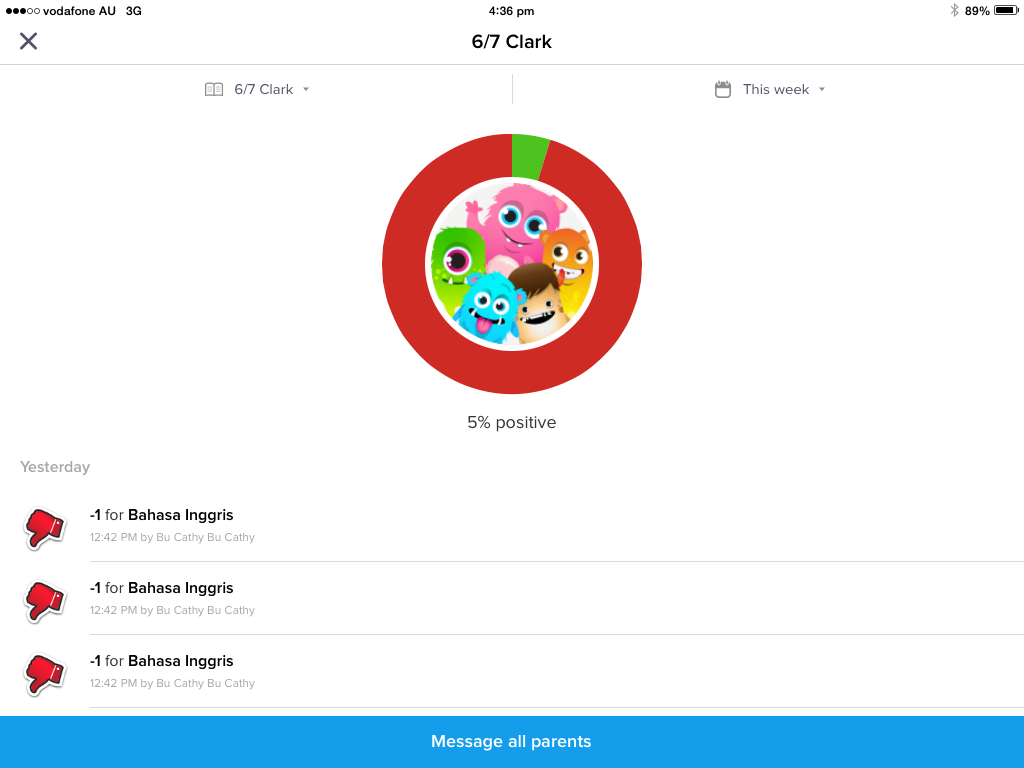
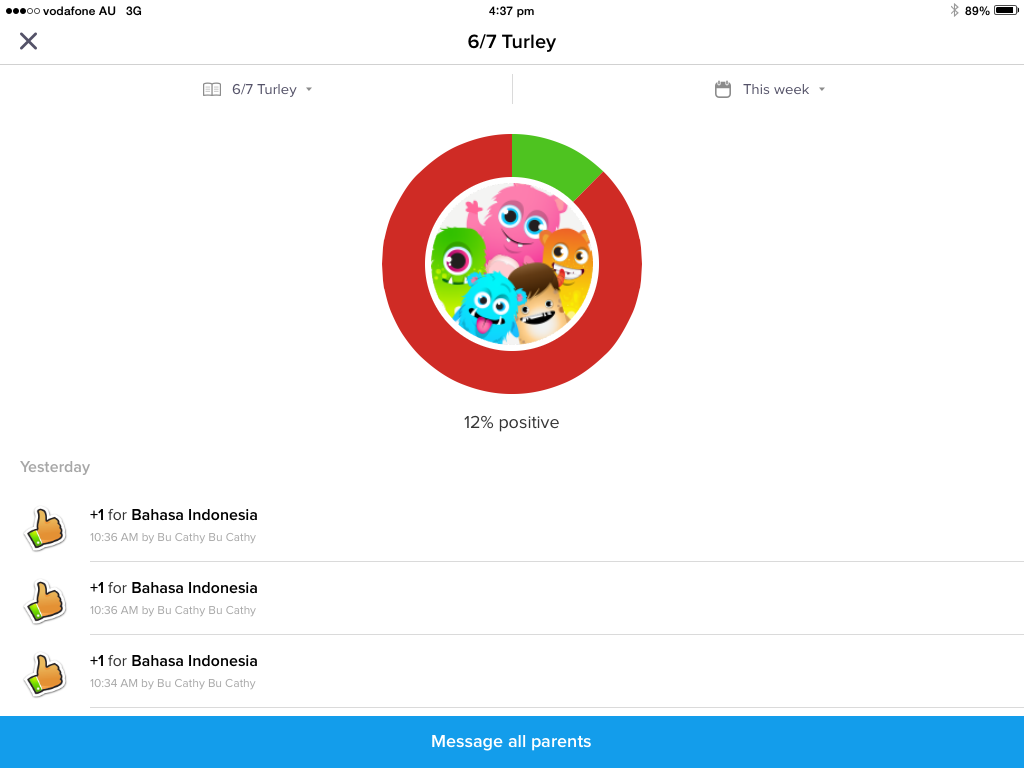
I used class dojo and copied an idea I read on a language teachers blog and as soon as I remember whose it was, I will add a link to the post. My only positive was Bahasa Indonesia and my only negative was Bahasa Inggris. I then circled the room and when all I heard was English, I awarded all students a negative. I turned off the volume because I didn’t want to distract students with the conspicuous negative/postive tones however did not turn off the smart board. As the negatives mounted, a few students started noticing and were indignant that they had so many negatives even though they had been on task. I invited them to the smart board where I showed them exactly how they had earned the negatives. A few groups were immediately inspired to begin speaking in Indonesian as I passed however overall, it wasn’t enough. Sadly, a lot of the on task English used was language they could have easily said in Indonesian. I heard Cooper say, “What does this mean?” Why didn’t he state, “Saya tidak paham ‘Spongebob kenyang’.”??? 

At the end of both lessons, I showed each class their class dojo ‘donut’ and explained that these results demonstrate to me so clearly why I love teaching using Comprehensible Input pedagogy!  

  12% & 5% ‘positive’ refers to the overall percentage of Indonesian language that was spoken in each lesson. Amazing too because when I am teaching using Comprehensible Input, the results are the exact opposite which is as they should be if the aim of my lessons is for students to be able to communicate in Indonesian! 


Listen & Draw

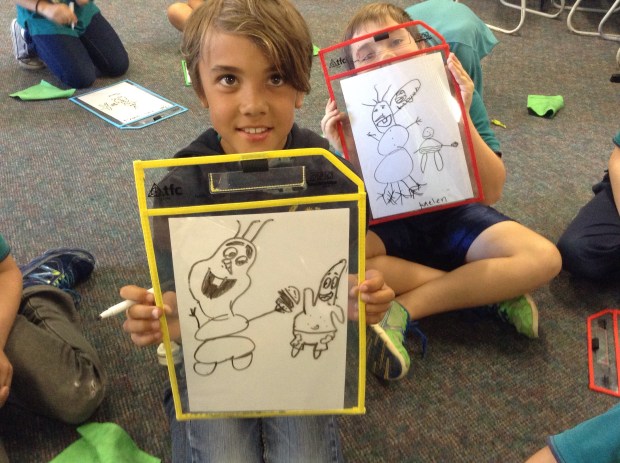
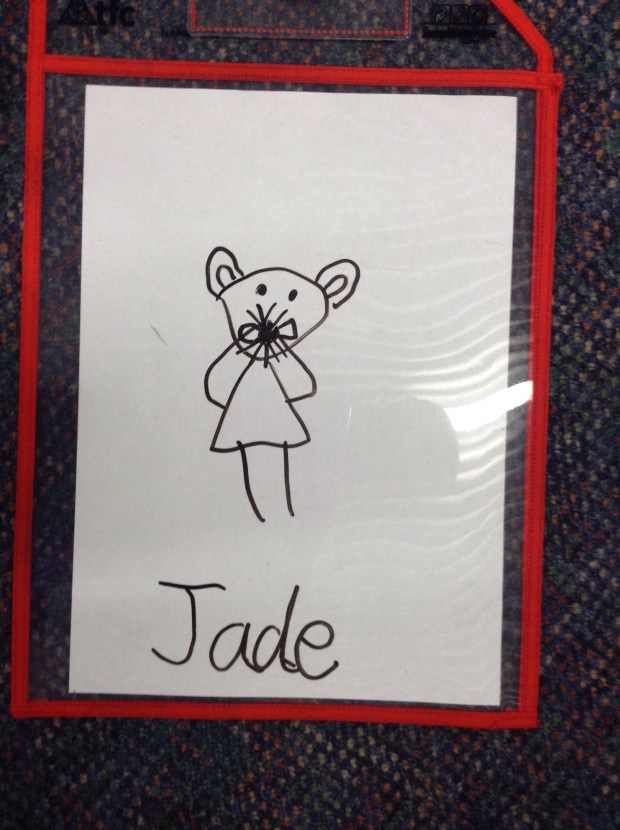
At the end of last term when both myself and the students were worn out, I tried ‘Listen & Draw’ using the fantastic clear folders I bought at the end of last year. Inside each folder I put a sheet of A4 paper. I bought a packet of large green wipes which I cut into quarters and one is stored inside the folder while the pen slips into the elastisized pen holder at the top. Very compact.

As an end of term activity, I can totally recommend this as it was so peaceful and enjoyable. It gave me a chance to rest my voice while giving me the opportunity to assess the acquisition of all students with the target structures we focused on last term ;- 

mau – want
kasih – give
punya – has  &
makan/minum – eat/drink. 

Here’s how I did it. I firstly showed students a notebook file containing clipart pictures of vocabulary such as bus (grammar pop up opportunity for Indonesian pronunciation) to not only help students turn their language switches back on but to also give them ideas on how to draw certain objects. I then said a sentence that included one of the target structures, a familiar character and cognates and asked students to illustrate it while repeating it several times. Perfect for getting in more repetitions! The students absolutely loved this activity and I can see how easy it would be to overuse this as it was just so enjoyable for everyone. 

For more information, I recommend watching this series of youtube videos by Dianne Neubauer, a Chinese TPRS teacher.

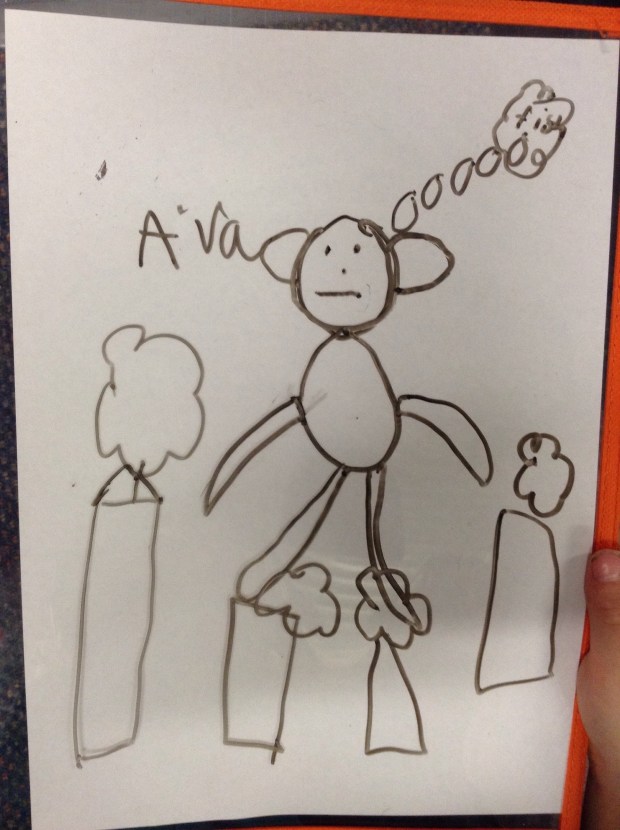
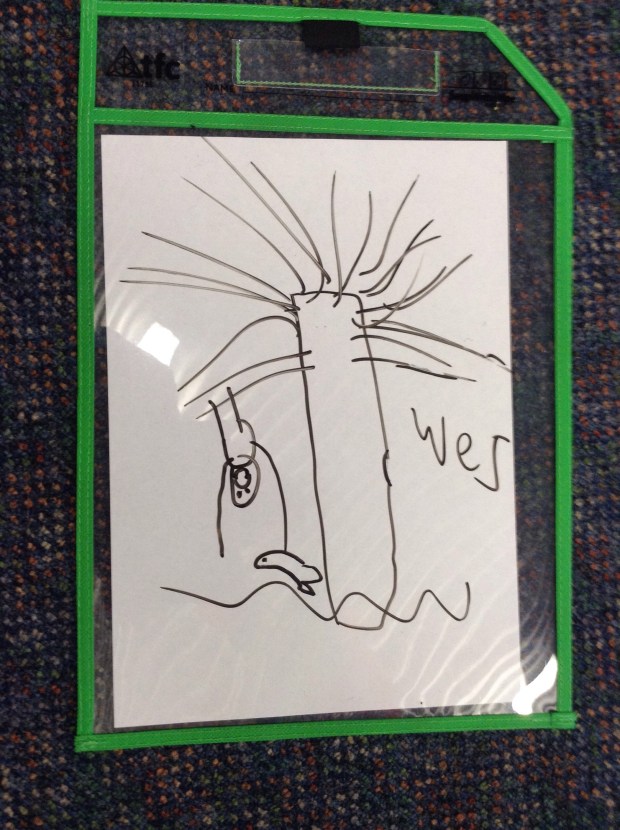
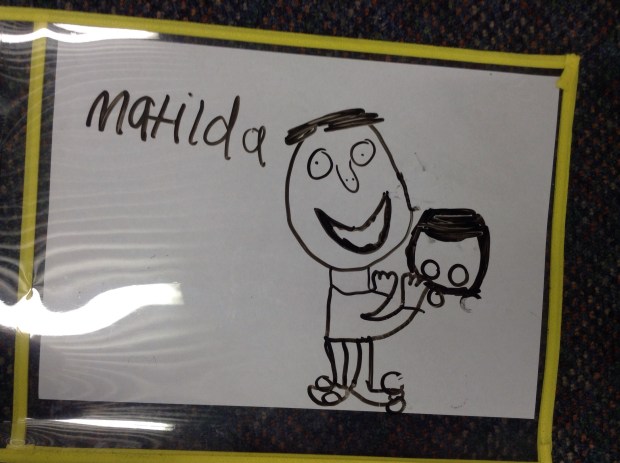
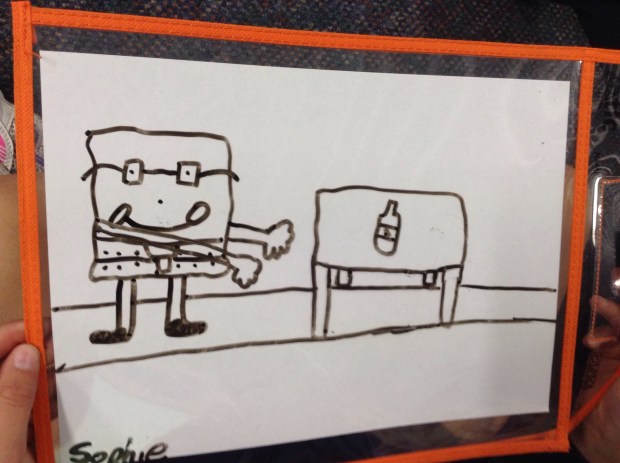
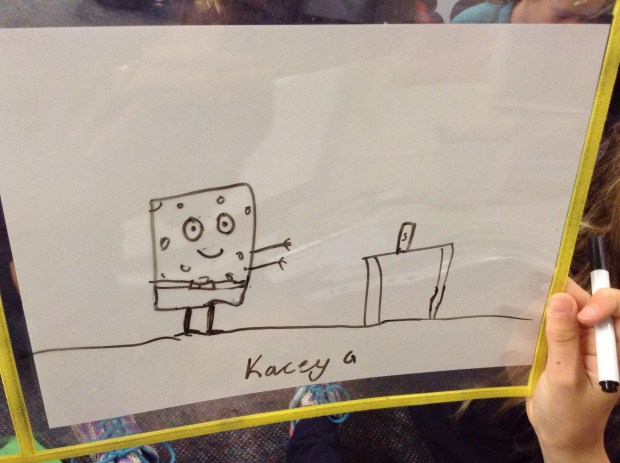
Here are a few of the illustrations from students in years 1 – 4:

Batman mau pizza.


Patrick mau sprite


Monyet mau ikan   


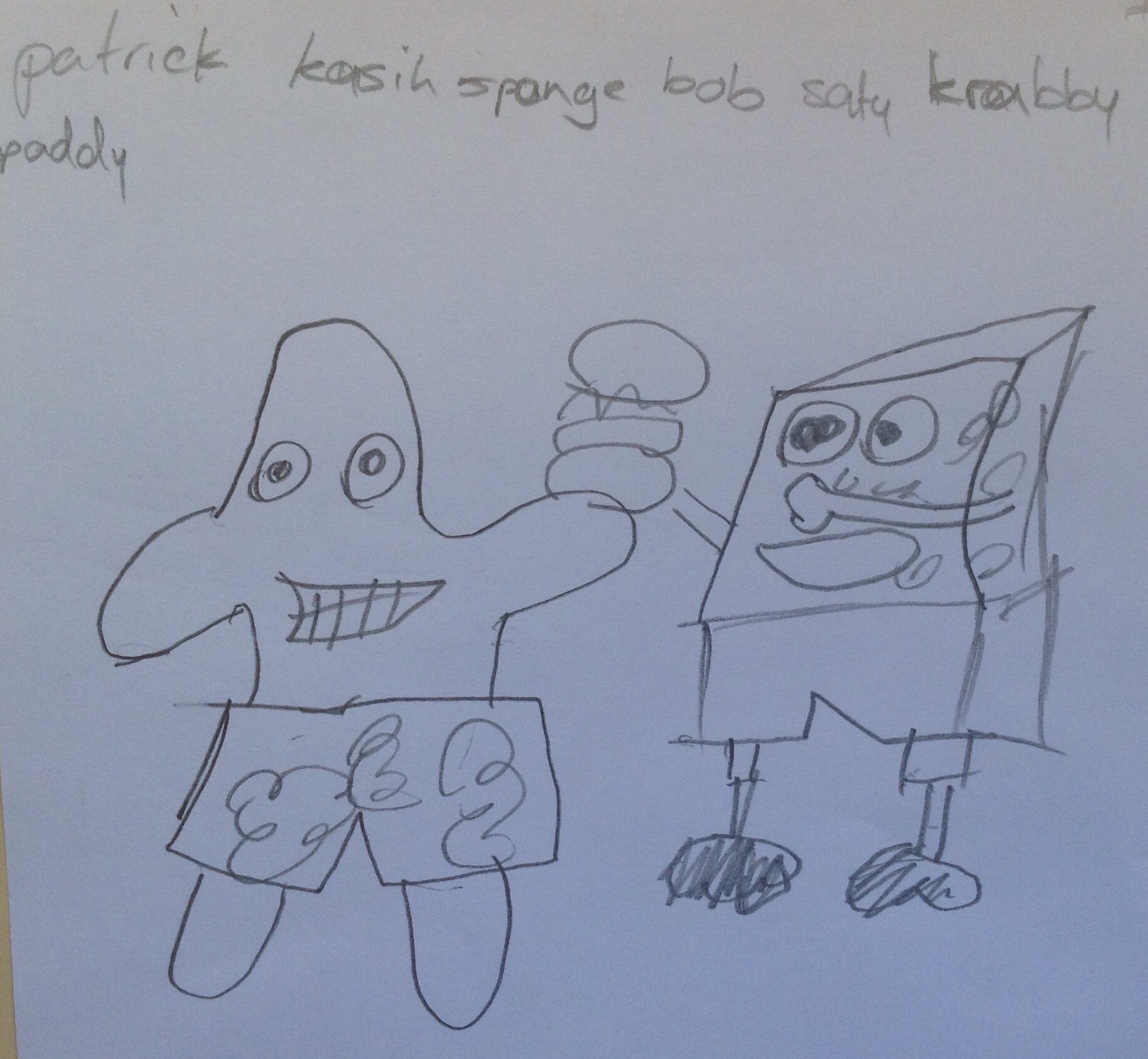
Patrick kasih Spongebob sprite  


Pak Hudson punya bus      


Spongebob mau sprite     


Unikitty mau pizza


Olaf kasih Patrick krabby patty      


Monyet makan ikan       

Such a pity in some ways that all illustrations were erased as they were sooooo good! 

Where To Find Comprehensible Input Inspiration & Information 

I love reading other peoples blogs and get so much inspiration from them all and it is time to both acknowledge and share with you a selection of the blogs I follow and in doing so recommend that you start following them too!! 

The top two that are always my first ‘go-to’, are Ben Slavic’s and Martina Bex’s. They are both so comprehensive and up to date. It is so easy to get lost following threads linked to threads collecting inspiration and information along the way.

Ben Slavic’s WordPress Blog requires the payment of a minimal monthly fee – money well spent in my opinion. It is both a forum and a collection of resources where both newbie TCI teachers and highly experienced TCI teachers ‘meet’ to discuss aspects of CI. The conversations on this blog are fascinating and the support I have received has been awesome. It was here that I met Catharina, my incredible mentor.  


Martina Bex’s The Comprehensible Classroom is a comprehesive collection of all things related to TCI. It is an amazing blog/website with a vast range of ideas and activities and even though there is a Spanish and largely secondary focus, it is easy to search for lessons and activities which are suited or can be adapted for primary Indonesian. Martina can also be followed on Twitter and Facebook where she uploads recent and archived posts.   


There are also many other CI blogs that I follow. The below blogs are ones that supplemented and provided another perspective along my TCI journey and will hopefully be helpful for you too. I recommend you look through them and find a few to follow yourself. You can either have their latest posts emailed to you or add them to your reader in WordPress.

  1. Kristin Duncan is a Canadian years 5-12 teacher. Her blog/website is TPRSteacher. Here you can find a great selection of resources for a wide range of languages.   
  2. Another real gem is the Latin Best Practices: Comprehensible Input Resources wordpress blog.  While it states that it is for Latin Teachers, I can reasssure you that like all the others, this is a treasure trove of resources and research. 
  3.  Crystal Barragan is a secondary Spanish teacher and while she doesn’t post that often (her most recent post was Nov 2014), when she does, they are well worth reading. Her blog roll is awesome and includes many TCI legends. Well worth fossicking around here.   
  4. Bryce Hedstrom has a website and it too is well worth exploring.  
  5. Senor Fernie  is a kindegarten to year 8 Spanish teacher who made the transition to TCI this school year too, so his blog is relevant and compelling for many reasons. 
  6. Haiyun’s blog Ignite Chinese is also an amazing place to while away a few hours!! It is refreshing to read posts written by a CI teacher who also teaches an Asian language even though the Chinese and Indonesian languages have little in common! 
  7. Michel Baker’s TPRS & Beyond is another I follow as Michel is also an elementary Languages teacher. 

While perusing the above sites, I highly recommend you look carefully at their blog rolls and search through the blogs they also follow. Occasionally I have discovered a terrific blog that somehow escaped my notice up till then! Finding your own blog in the blog roll is a blast! 


Term 1 Reflections

As term 1 draws to a finish, I have been looking back over my first dedicated block of teaching Indonesian using TCI . It has been a steep learning curve yet at the same time deeply satisfying. I have learned just as much as the students!! Here are the major gems that I would like to share with you from my short journey thus far:

  1. Props – Don’t ever underestimate the power of props. When I copied Sharon’s brilliant idea of using a bottle of Sprite to tell the story: 

Jessie haus
Jessie mau minum Sprite
Ella punya Sprite
Ella kasih Jessie Sprite
Jessie minum Sprite.

I was blown away with the total and utterly mesmorised attention of the classes from year 2 right up to year 7! Even when the Sprite finished, students insisted I refill the bottle with water, so we could continue. Even with water, students were still highly engaged and following the dialogue closely. It not only hooked the actors, but hooked the other students too as they decided whether Ella would give Jessie a drink of Sprite and if not Jessie, then who would be given a small drink of Sprite. It is definitely worth taking the time to organise props for lessons with all year levels. Not only do students beg for repetitions, but it is so much more fun too for everyone. I have never laughed so much with students!! 

    2. Public Holiday Pitfalls  –  Usually I begin my week with the year 4’s and they are a great bunch of students to ‘trial’ my middle/upper lessons with. They give me the opportunity to fine tune my plan before facing the year 6/7’s the following day. While I enjoyed my first Easter long weekend in many years (our Ed Dept usually cleverly incorporates them into our mid semester break), I forgot to keep this in mind and consequently yesterday’s lesson with one of the year 6/7 classes was a disaster. With this class I need to be one step ahead of them. Maybe Trashball or something similar would have been a better plan for a challenging class in week 11.. 

  3. Trial by Error – A exhausting yet necessary aspect of teaching and a fact that I (and any learner) needs to philosphically and practically accept. I’ve read that it can take up to 2-3 years for a teacher to acquire competency using TCI methodology. This is what keeps me going! There are many fantastic blogs and websites full of TCI brilliant ideas and suggestions. Gleaning through them all to find ideas suitable for teaching primary students and then trialling it requires a huge step out of my comfort zone and so much energy. Yet each step is an important and integral aspect of the entire journey.  I must keep reminding myself to continue plodding steadily along the TCI path and not to expect too much too soon! 

4. Dehydration – TCI requires so much teacher talk and I have discovered that I am so much more dehydrated at the end of my days than I was ever before. I have tried to keep up my fluids over the day but haven’t been successful consistently with this yet. I get so engrossed in the lesson that I totally forget to stay hydrated. The most successful stategy I had was finishing my 750ml drink bottle at the beginning of recess and lunch on my way to the staff room but lately even that has fallen by the wayside. Any suggestions gratefully accepted! 

5. The Importance of Developing A Personal Learning Networks (PLN) –  The core of my PLN consists of Annie & Sharon, my Indonesian colleagues who teach in nearby schools, together with Catharina, our mentor who teaches French in New Jersey. The middle layer of my PLN consists of teachers who teach Indonesian and have been following this blog or my tweets. Their input has been invaluable and I have truly appreciated their comments and  feedback. While there are common aspects between different languages, there are also certain aspects that are unique and therefore those who teach and  speak Indonesian have that special eye through which to  understand my reflections and experiences. They too are are coming to grips with our new Indonesian Curriculum to be implemented fully in 2016, another valuable persepctive. The outer layer of my PLN consists of all the TCI language teachers who post on their own blogs or on websites like Ben Slavic’s. There is definitely a gap for me between the middle and outer layers purely because most of the teachers in the outer layer are secondary teachers and none of them teach Indonesian. Yet, they are still a major and important part of my PLN as they have such a wealth of knoweldge and experience that I am truly in awe of them. Without this special group of people, my first term of TCI could have finished so differently. Whenever I felt like I had hit a brick wall and I couldn’t see where to go next, someone would be there to encourage and help. Annie and Sharon have been awesome and once again I am so fortunate to work so closely with 2 teachers who readily joined me on this journey. Our frequent Friday meetings were invaluable opportunities to share lessons that worked well and thus give us each the inspiration and encouragement to continue. Our Skype sessions too, with Catharina have been incredible. Each time we all  took copious notes. It is so amazing to have the opportunity to speak with a junior primary teacher about TCI and how to apply it with very young students. Now that term 1 has almost finished, we are really looking forward to our next Skype call with Catharina. While we usually only speak for an hour, each call is jam packed full of awesome suggestions and information. She truly is an amazing and inspirational teacher  to have in my PLN and a huge thankyou must go to Ben Slavic for initially suggesting it! 

6. Lesson Planning – On looking back through my lesson plans, I have definitely learned that while it is good to have a few brain breaks up my sleeve, it is also important to keep my planning simple. My initial lesson plans from the first weeks were very long and were a great example of over plannning which is a good way to start! I tried to cover everything at first and then realised that it was not only unrealistic but also pushing the students too quickly. Narrow and deep is the TCI catch cry for a very good reason and this is what underpins the success of TCI over the methodologies I used previously. 

7. Patience is a Virtue – When reading blog posts written by other teachers who also use TCI, I have to keep reminding myself that comparing my students (or their lesson outcomes) with theirs is pointless. My students & i have only just started so it is natural that we can’t yet have impromptu detailed conversation that are 100% comprehensible. It is of greater importance that we start with the Indonesian version of the super list of verbs sourced from frequency lists and accept that initial discussions will be be very basic. 

8. Humour – At a point about mid-term, I reached a point where everything gelled. Suddenly I relaxed and started to enjoy myself with the students. At that point I realised that it was the first time I have ever laughed so much WITH  my year 7 students. Previously, any hilarity got out of hand and ended with me having great difficulty bringing them back on track without loosing that sense of connection. Yet with TCI, we laugh together at the ridiculous  scenarios the students suggest and then act out. Not only do students have fun, call out and be totally silly, but because it is all in Indonesian, it is amazing and all students are totally mesmorised and engaged thus keeping it manageable!  

9. Tight Timelines have Vanished – Previously, my term outline was tightly planned and in order for me to achieve my term outcomes, every lesson was precious and heaven help anyone who interfered with my schedule!! Taking sick leave was avoided and any additional offered non contact time was reluctantly refused because my planning didn’t have much flexibility. This has all blown away with TCI as everything is based upon student aquisition which is a  huge unknown. Once we know what the target structures will be, out planning will focus on that until we, the teacher, deem the students ready to progress to the next step. Consequently, with our upcomiing APBIPA visitor, Bu Mia, I feel far more relaxed and am really looking forward to her time in our school. Students will be able to experience a cultural lesson with her and this will also give them impromptu and authentic opportunities to practise and demonstrate their acquired Indonesian to date.

I am so looking forward to term 2 and having the opportunity to apply all that I have discovered. I also hope that my reflections give other Indonesian teachers the encouragement to consider trialing aspects of TCI in their classrooms. Last year, I dabbled just by experimenting with a few activities that sounded interesting and that is how I urge you to start too. While I am nowhere close to TCI mastery, I am nontheless, very happy to help any Indonesian language teacher if you would like to discover more about TCI. Ask away and if I don’t know the answer,, someone from my amazing PLN will certainly help!!

Indonesian early readers captivate kids and teachers

Reena Balding's avatarAyo! Let's go!

Michelle Dudley, the Australian author of the Our Jakarta Series that was reviewed in an earlier post, graciously agreed to answer my questions about how her series of 30 books came about.

What inspired you to write the Our Jakarta Series? Had you written other books before (or since)?

Michelle Dudley, Yangon, February 2015 Michelle Dudley, Yangon, February 2015

Our Jakarta Series bilingual box setI taught at the British International School Jakarta (BIS) in their very first pre-school in 1993 and 1994 and again from 2003 to 2007, initially part time, then full time in Reception and in Pre-School. The school has a strong focus on early literacy and as a teacher of young children I was always trying to find ways to inspire, challenge and connect real life experiences and the printed word with the young children from many nationalities in my class. The school also had a policy whereby the classroom teacher had to listen to each child read every…

View original post 1,951 more words

How Did I Learn Indonesian?

This is a question I am often asked by Indonesian and English speakers alike. After reading a recent post by Keth Toda about being one of the 4%ers of language learners, I’ve decided it is time that I try to remember exactly how I learned Indonesian so that I can determine once and for all if I too was/am one of the 4%ers in the Indonesian Language classroom. 

My first contact with the language was when I was a toddler in about 1963/4. My father was learning Indonesian in Victoria and each night would bring homework home. In those days, the current language methodology was audio lingualism which  required students to listen and repeat drills. Dad had records (vinyl) that he would play and my sister and I would also listen and repeat along with him. To this day we still remember one of the phrases we parroted alongside Dad and funnily enough, I have never used it in conversation!! (Baik baik saja seperti biasa dan bagaimana kabarnya Sri) Looking at it now, I can see how it would be used (asking of someone about Sri) but when I parrot it again now, the intonation is strange. The intontation should lift at the end to indicate a question being asked instead of staying flat as in making a statement. Fascinating that for all those years I have remembered that sentence but only now have I realised why it sounded odd!! Anyhoooo, as a result of listening to those many records with Dad and my younger sister, my father claims that we both could count to 10 in Indonesian before we could in English. 

Once Dad finished his course, we moved to Darwin and my nightly contact with Indonesian ceased. Dad then worked as an Indonesian translator and instructor and many of the people who dropped in after work those days were his (adult) students. I have no memory of any of the conversations, which in retrospect would have been fascinating, but it purely provided them with opportunities to not only practise their spoken Indonesian but also to discuss current Indonesian events (1965, Sukarno, Suharto etc) 

In 1975, I began my formal Indonesian lessons at Casuarina High School. My first teacher was Marie Nicholson and according to the grapevine, CHS was her first teaching placement. She was the first of many teachers I had who quickly realised that my father’s knowledge of Indonesian language and culture far exceeded theirs. It must have been very intimidating as I was by no means the model student. Lessons were very easy and at no time challenging. I grasped Indonesian language grammar naturally even though I generally didn’t pay much attention to the explanation given by the teacher. It was the time of here is the rule, now open your text book and do the 20 practice sentences on page 50 to demonstrate you understand it. I also had the added advantage of being able to ask Dad for extra help when something didn’t gel. I remember too checking with Dad about aspects in the text that I thought sounded incorrect and then returning to school the next day to inform the teacher of what I had learnt. I must have been a horrible student!! 

Also about this time, Dad started befriending many of the Indonesian people now living  in Darwin. They would often drop in and I especially remember Djaffa; a warm hearted and all round lovely fellow from Surabaya. Another lovely Indonesian Chinese person I remember, stayed with us for about a fortnight. By this time, Dad had a fruit and vegetable shop in town. One day he was chatting in the shop with (probably) Djaffa. Linda (the Indonesian Chinese lady) had been in Darwin for several days and was feeling very lonely and homesick. She walked past our shop and was gobsmacked to hear Indonesian being spoken. Apparently she came inside and burst into tears she was so delighted to find someone to talk to. All the Indonesian people that we had contact with in those days only spoke Indonesian when visiting, so I had lots of opportunity to hear Indonesian. I rarely spoke Indonesian in front of my father as I didn’t want to be criticized, but I did commmunicate very basically in Indonesian with them if they dropped by when Dad was out. 

My first visit to Indonesia was in 1976 with my brother and sister and my parents. We visited Bali & Surabaya for 2 weeks with most of our time spent in Surabaya. I have many memories from this trip. My first was going with a relation of Djaffa’s to their family house with just my sister. We were led through many narrow ‘gang’s’ (alleys) and as we walked we were followed by an increasing throng of people. We finally reached a house and were escorted into the kitchen and given chairs to sit on. The room we were in was not very big and it quickly filled up with curious onlookers until it was standing room only. No one talked to us, everyone just gawked and laughed at us. It was extremely confronting and after about 5 mins (felt like 5 hours) we stood up and fled back to the hotel! My other memory is learning the word ‘pelacur’. I remember standing up on the 2nd or third floor, looking out at the ‘kupu kupu malam’ (prostitutes) and asking Dad loudly, “Are they ‘pelacurs’?’ He was mortified!! 

My formal learning of Indonesian continued to year 12 with Indonesian being the only subject that my father showed any interest in. As long as I was getting A’s for Indonesian, my Cs and D’s for geography, maths, biology were totally disregarded. As my matriculation present, my father paid for me to join him in Indonesia. I went with the sum total of $45 which needless to say, didn’t last long. I ended up staying about 3 months and had Dad been slightly more generous with funds, I could have been tempted to stay longer. My spoken Indonesian improved phenonomally at this point. Dad lived in a losmen and his pembantu, Bu Badung, was instructed to only speak Indonesian to me. Her English was rudimentary and had been learned on the beach selling massages, so it was considerably easier to speak to her in Indonesian. While cooking (she is an amazing cook) I would sit with her in the kitchen and listen to her stories. As time passed I began understanding more and more of what she was saying. Many of her stories were repeated, so each time I heard them, I would pick up a little bit more. If I was totally puzzled, Bu Badung would explain a word to me in Indonesian and then continue on with the story again.  Dad too, credits Bu Badung largely for his proficiency. 

After my 3 months of  immersion, I had very little opportunity to use Indonesian again in Australia untii teachers college. I chose Salisbury CAE purely because it offered Indonesian. There I met the indomitable Ani Be, a true legend, who was and still is, a force to be reconed with. I studied Indonesian for 2 years and when the going got tough, I quit. In 3rd year, the work load for Indonesian trippled and suddenly we were expected to do as much for Indonesian as we were doing for all our other subjects combined! In retrospect, this was largely because we were suddenly expected to exponentially increase our vocabulary. Gone were the text books which had been so easy for me and in their place were newspaper articles where every other word was unfamiliar. This was pre google translate unfortunately!! Would have been such a different outcome had I had access to an online dictionary! 

I have since lived in Indonesia and traveled widely throughout Indonesia, both of which have kindled my love for all things Indonesian and have provided me with many opportunities to further improve proficiency. 

Wow, I definitely was not a 4%-er! Grammar rules did not help me at all as they were boring and mindless tasks that in no way helped me with my proficiency. What did help was listening to people talking! That was how i formulated my understanding of language and grammar.  I knew what the rules were, I just could not articulate the how or why. Rules were acquired instinctively, and having the opportunity to listen to the rules being modelled repeatedly together with opportunities to speak and have a go myself, was and still is, the way I learn best. Listening and speaking therefore have been the major 2 strategies I have benefited from. The fact that I can still parrot ,”Baik  baik saja seperti biasa dan bagaimana kabarnya Sri.” is testament to that!  

No wonder TCI struck a chord with me!!


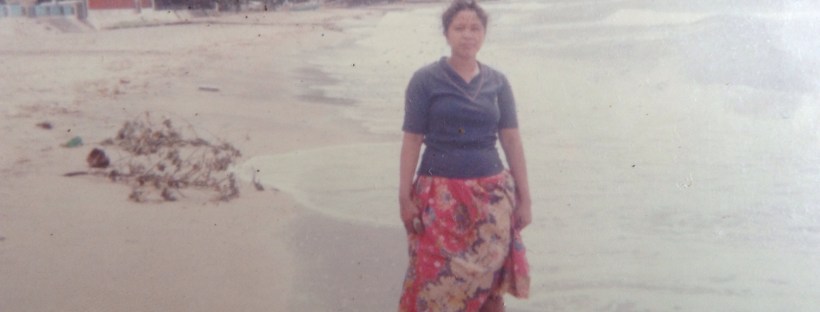
Photo in header : Bu Badung in 1980 at Pasir Putih, Java

Running Dictation

A couple of weeks ago, I tried Running Dictation with my students using a recommended twist I read about on one of the many amazing TCI blogs I follow.

All year 3-7 students have been focusing on the following target Language this term:
mau – want
kasih – gives
punya – has
minum/makan – drinks/eats

Using a familiar mini story about Spongebob and Patrick, (who are without doubt the most popular celebrities I have discovered for all year levels), I pared down one of our stories down to:
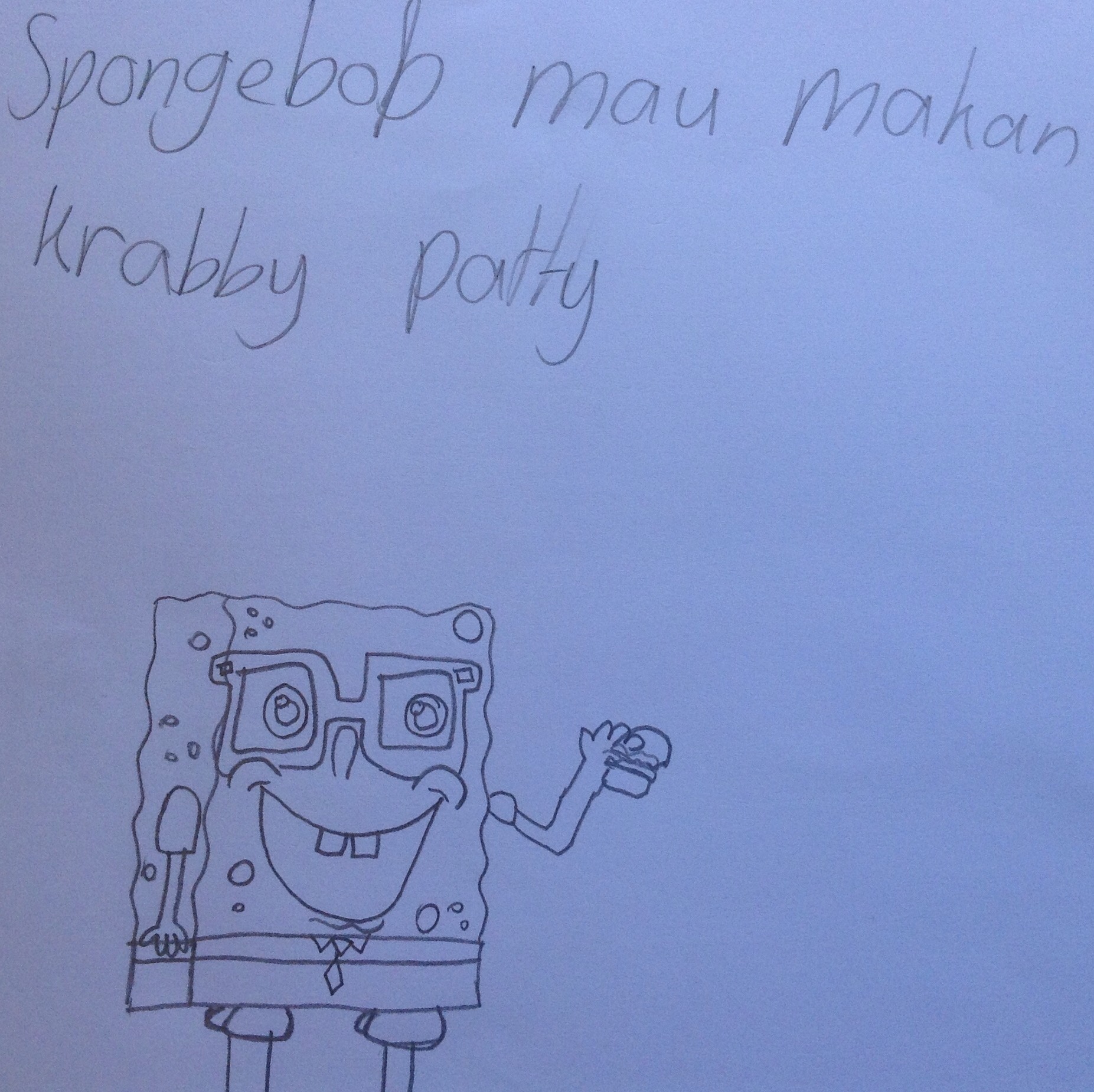
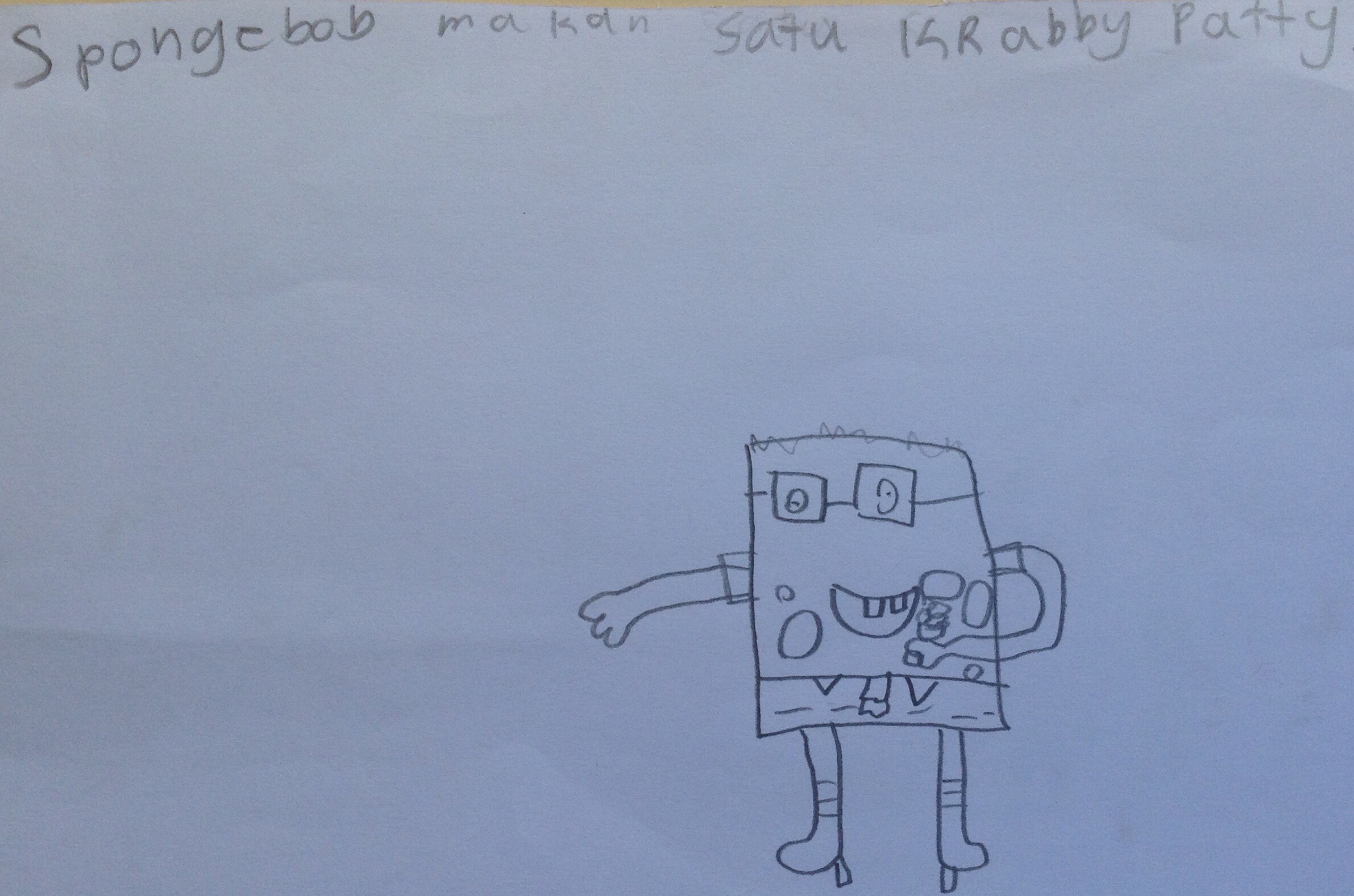
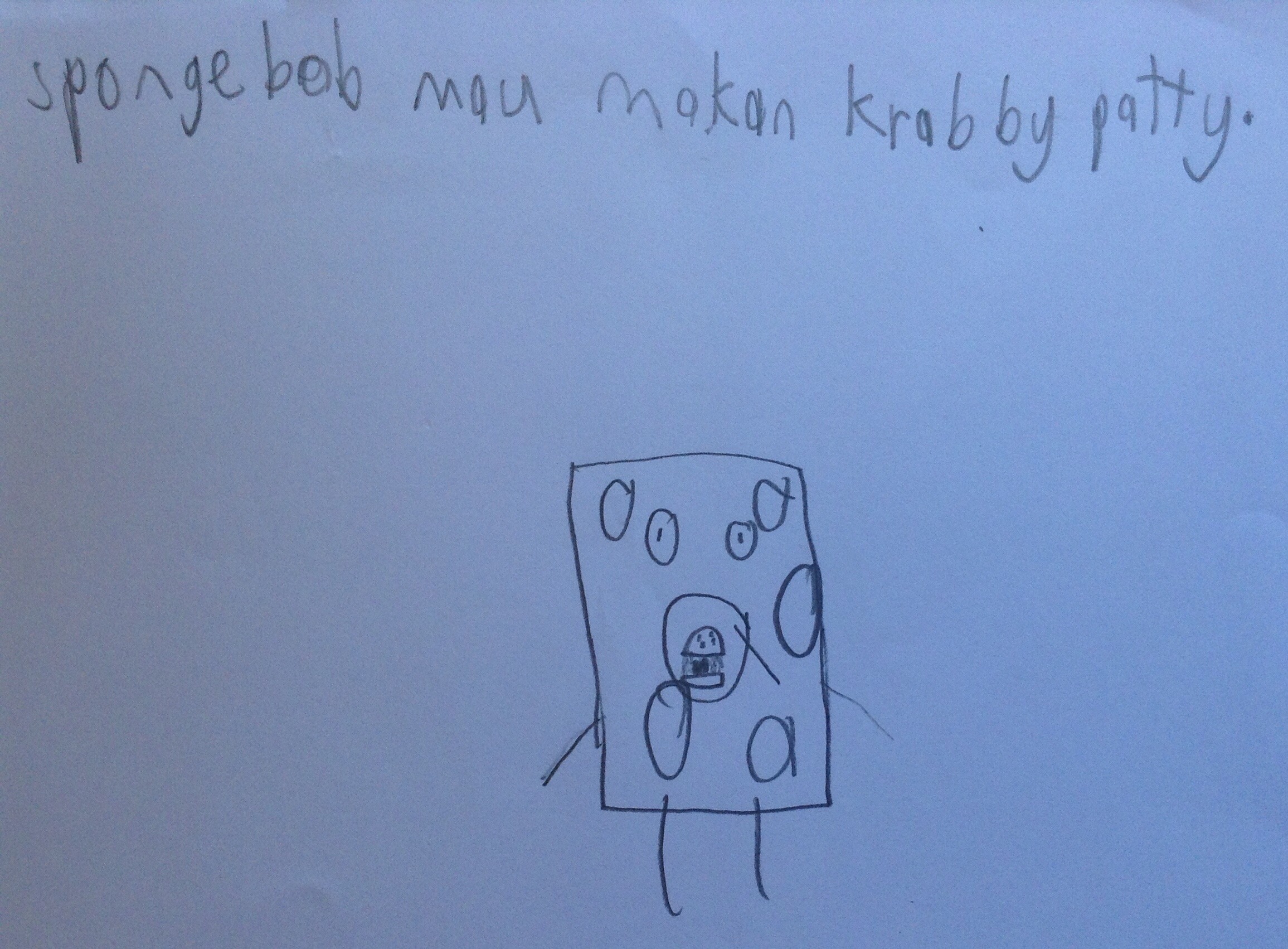
Spongebob mau makan krabby patty.
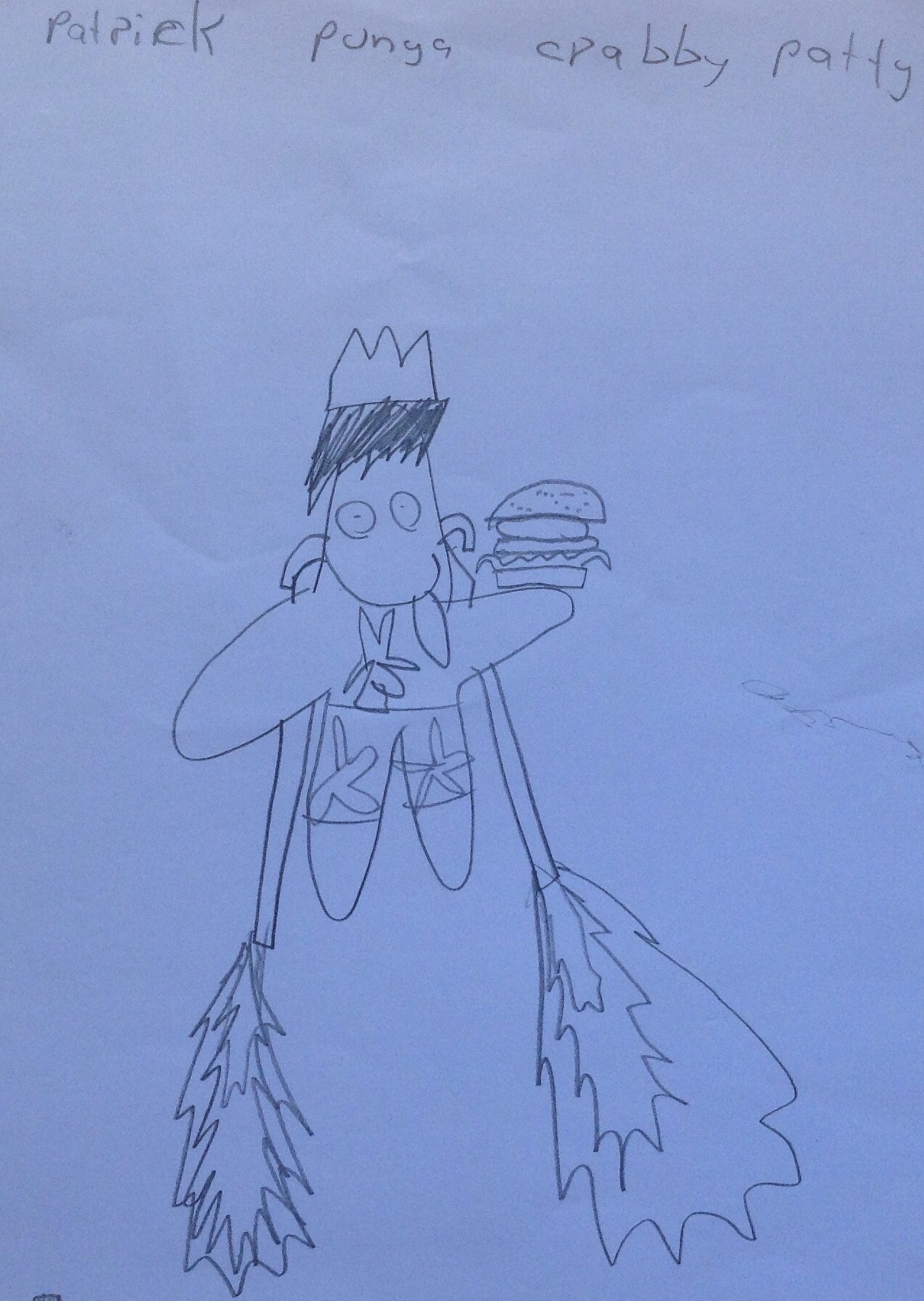
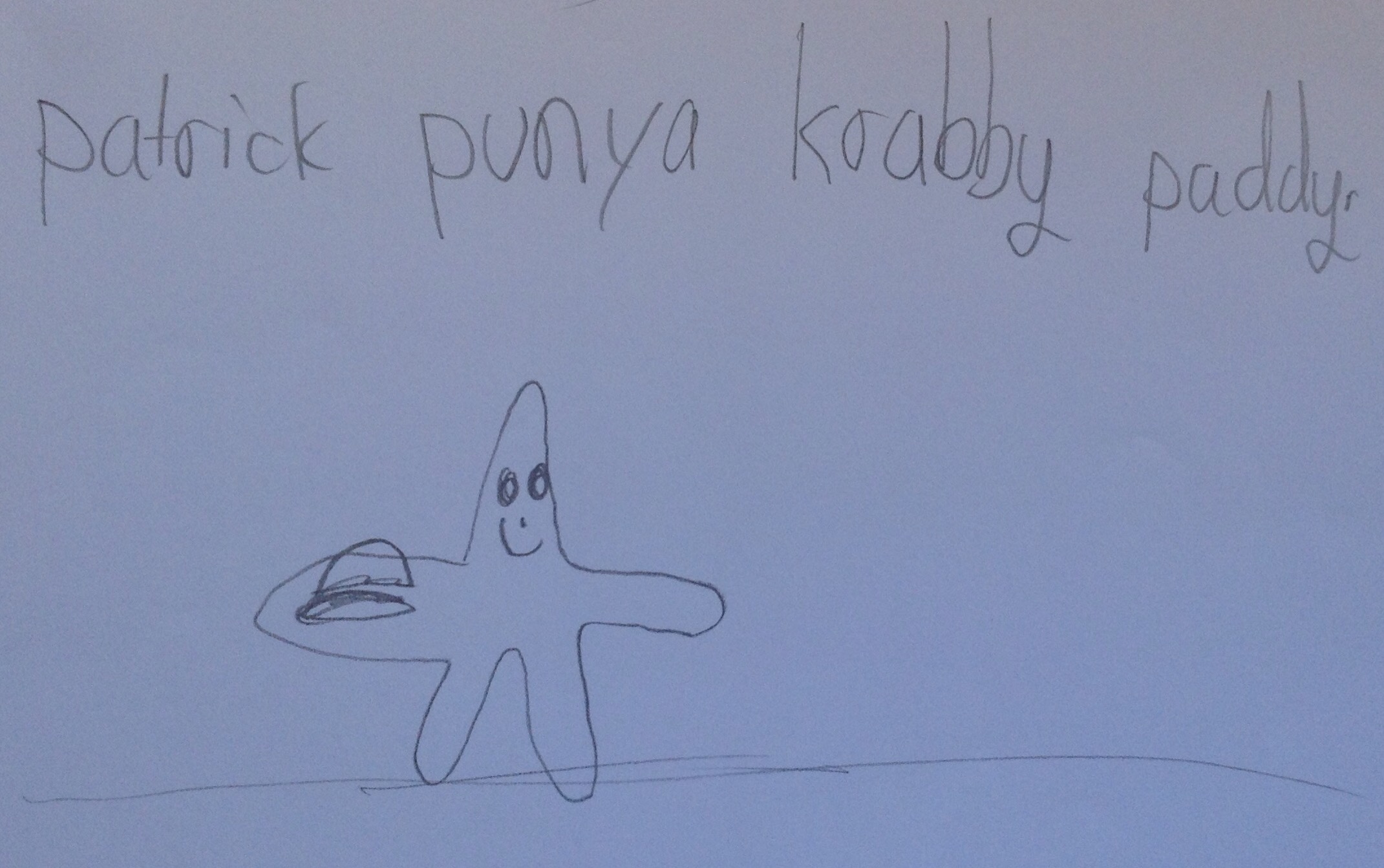
Patrick punya krabby patty.
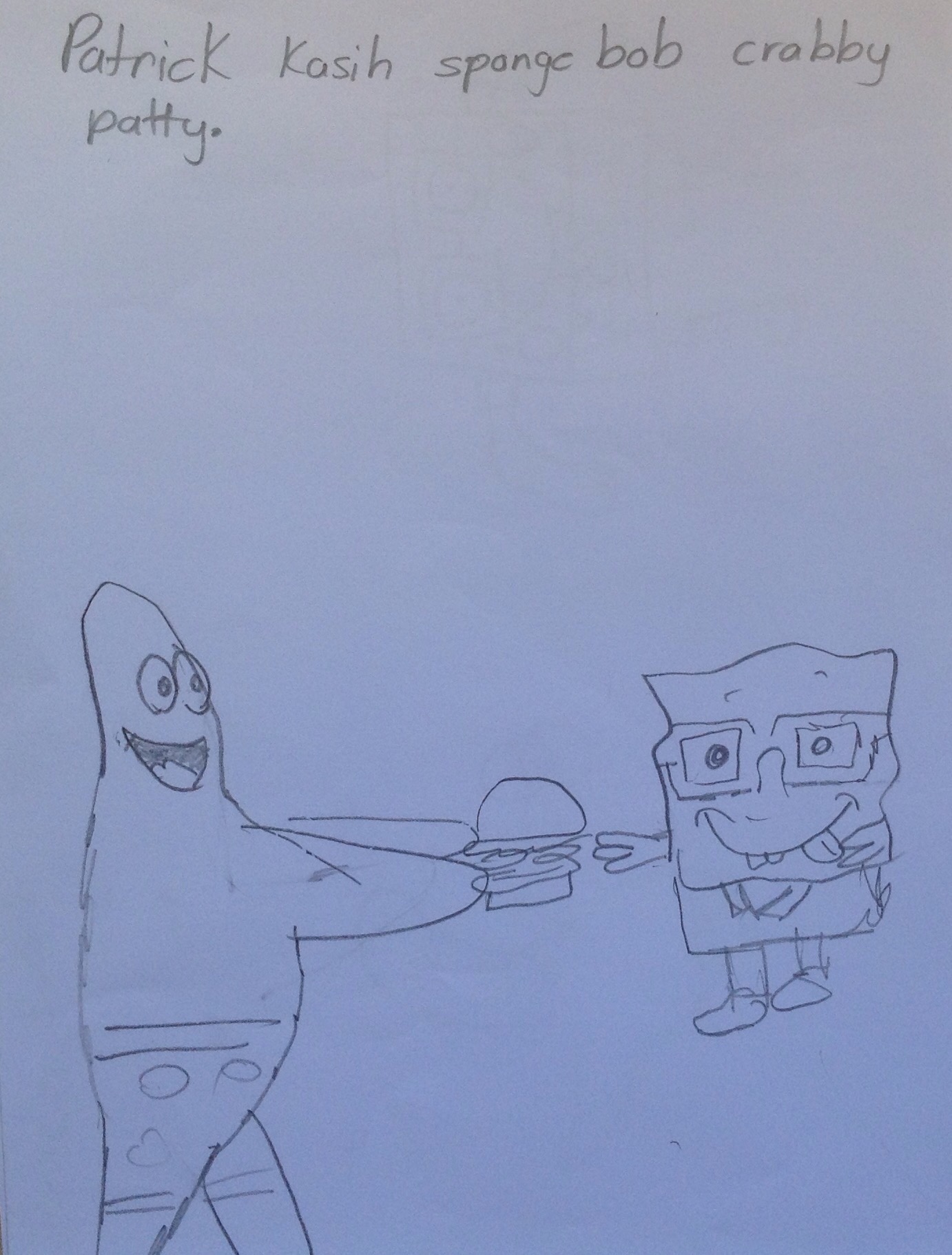
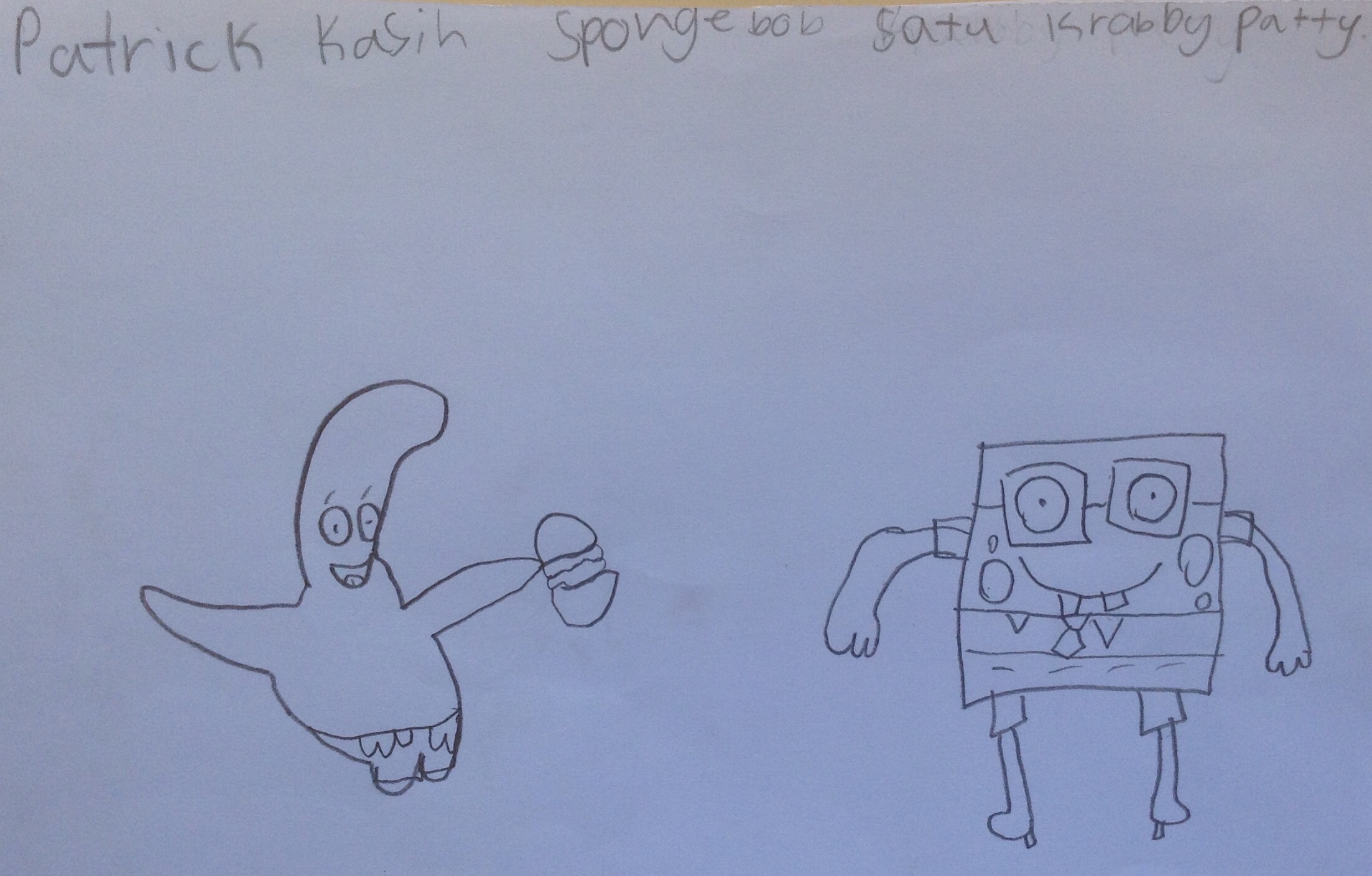
Patrick kasih Spongebob satu krabby patty.
Spongebob makan satu krabby patty.
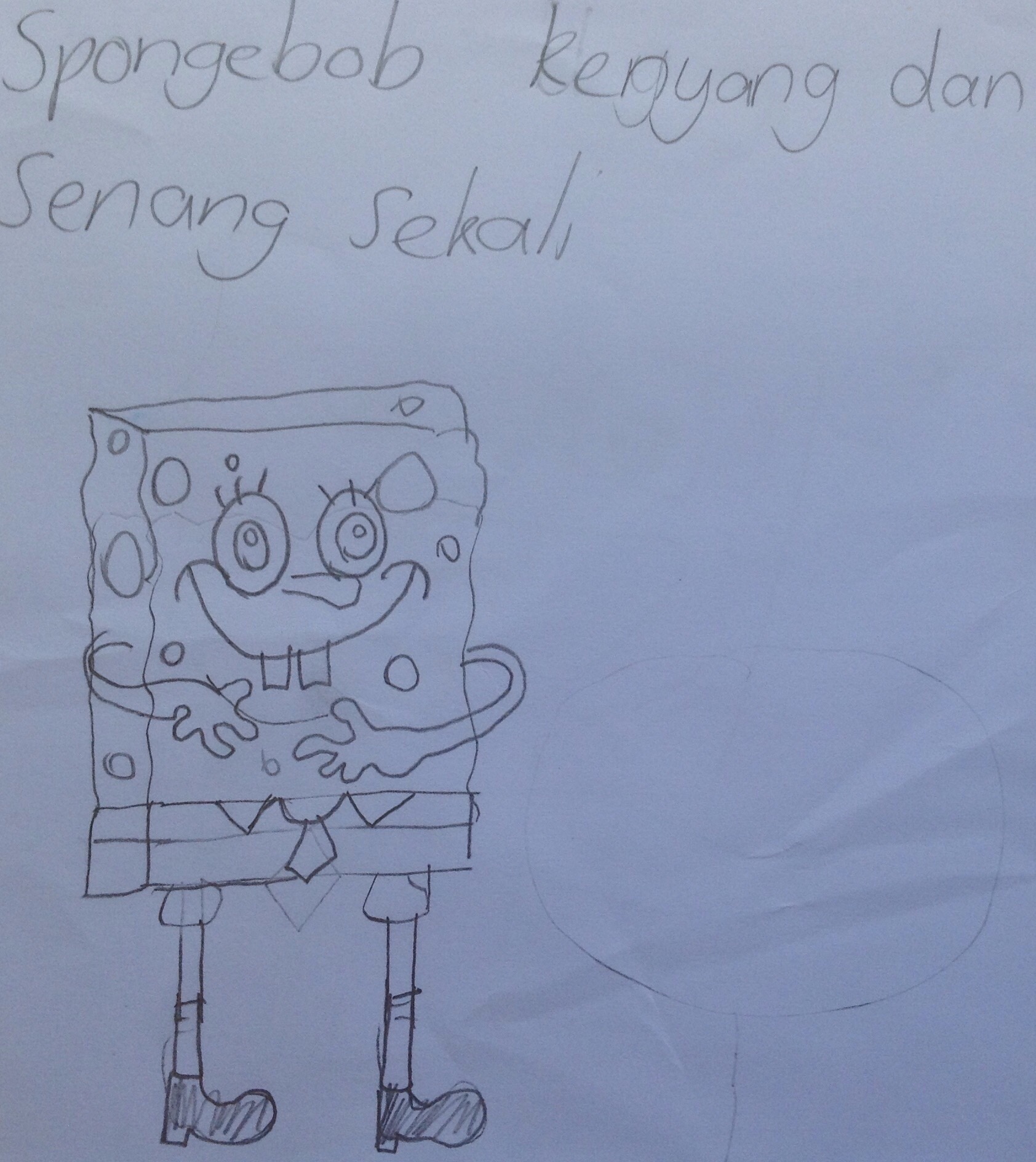
Spongebob kenyang dan senang sekali.

I wrote each sentence in very large font and then printed it onto A3 paper. I cut up the sentences into strips and then put each sentence in different spots around the room randomly. One was on the telephone bench, one on the computer desk, one on a back table, one on another back table and one on the table near my desk.

In groups of 3, students had to nominate
a reader – the fastest and most confident reader with a good memory,
a writer – the neatest and fastest writer who is also a good speller
an illustrator – the best drawer/illustrator.

Before we started, each group needed to organise 2 clipboards, 2 pencils and have 5 sheets of A5 white paper.

The reader had to, in any order, find a strip of the story, read it, memorise it, and then run back to his/her team and retell the writer the sentence. The writer then neatly wrote out the sentence onto one of the A5 pieces of paper, checking with the reader any spelling that they are unsure about. The writer then gives the page to the illustrator who illustrates the sentence.
When all 5 sentences are written and illustrated, the group then puts the 5 pages into the correct order and hands them in to me. I then checked that
a) the pages were in the correct order
b) the sentences were written correctly with no spelling errors
c) the illustrations matched the sentence and demonstrated comprehension.
If all the above were completed, I announced a winner.

It was a terrific and fun activity which consolidated beautifully our focus these past 4 weeks on this vocabulary. I loved the illustrator job which invariably was awarded to the group member with the weakest literacy skills. The look of relief on their faces when they discovered one of the jobs was, in their minds, not literacy based, was really lovely to see. The language that the students used was fantastic and it was truly a collaborative activity. The discussion about the sentences and illustrations was awesome.

My only beef was that as it was a race, the writing and the illustrations were largely rushed. I would love to repeat this again with no time restraints so that the final product could be turned into books which could then be added to the class library.

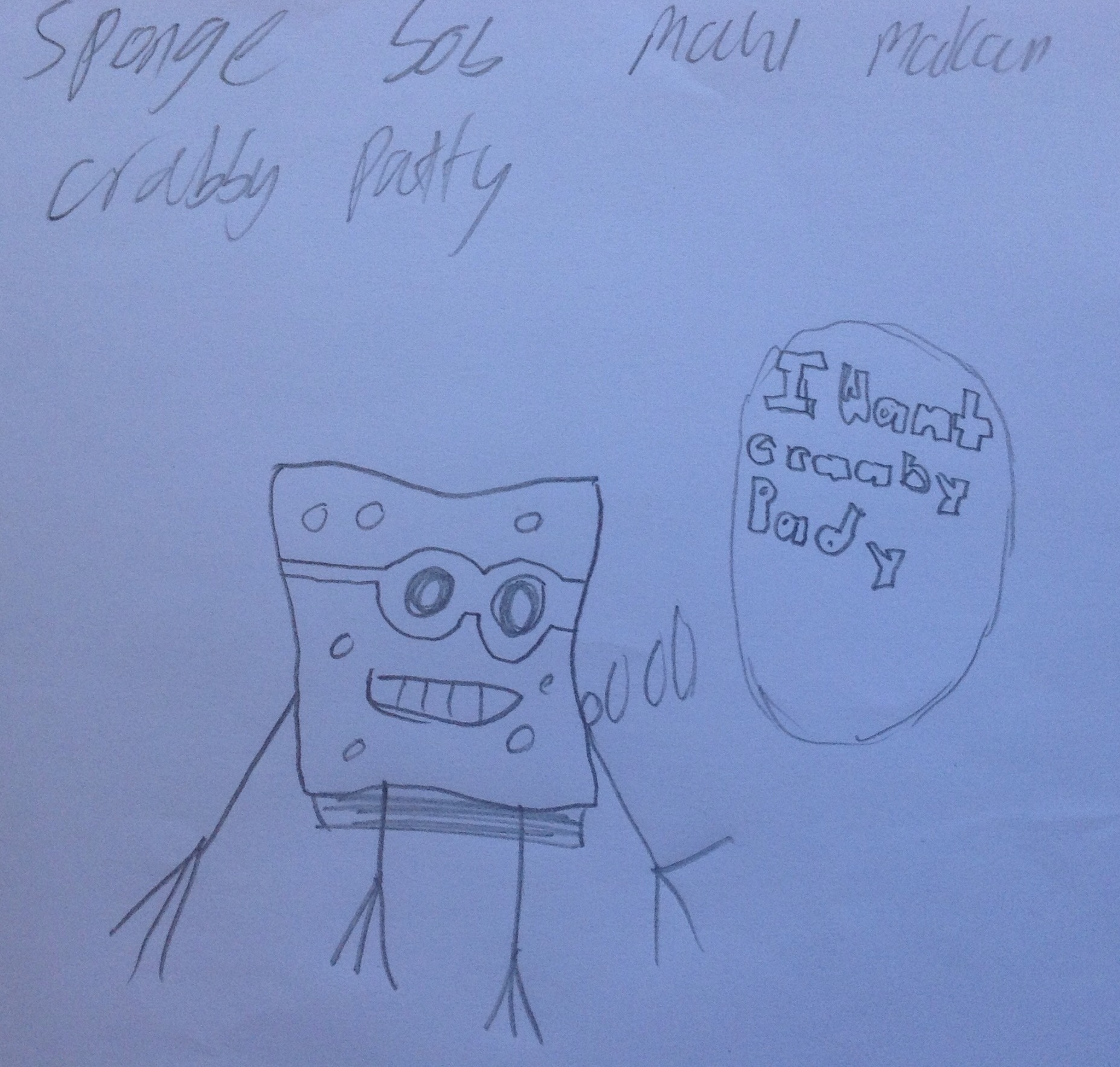
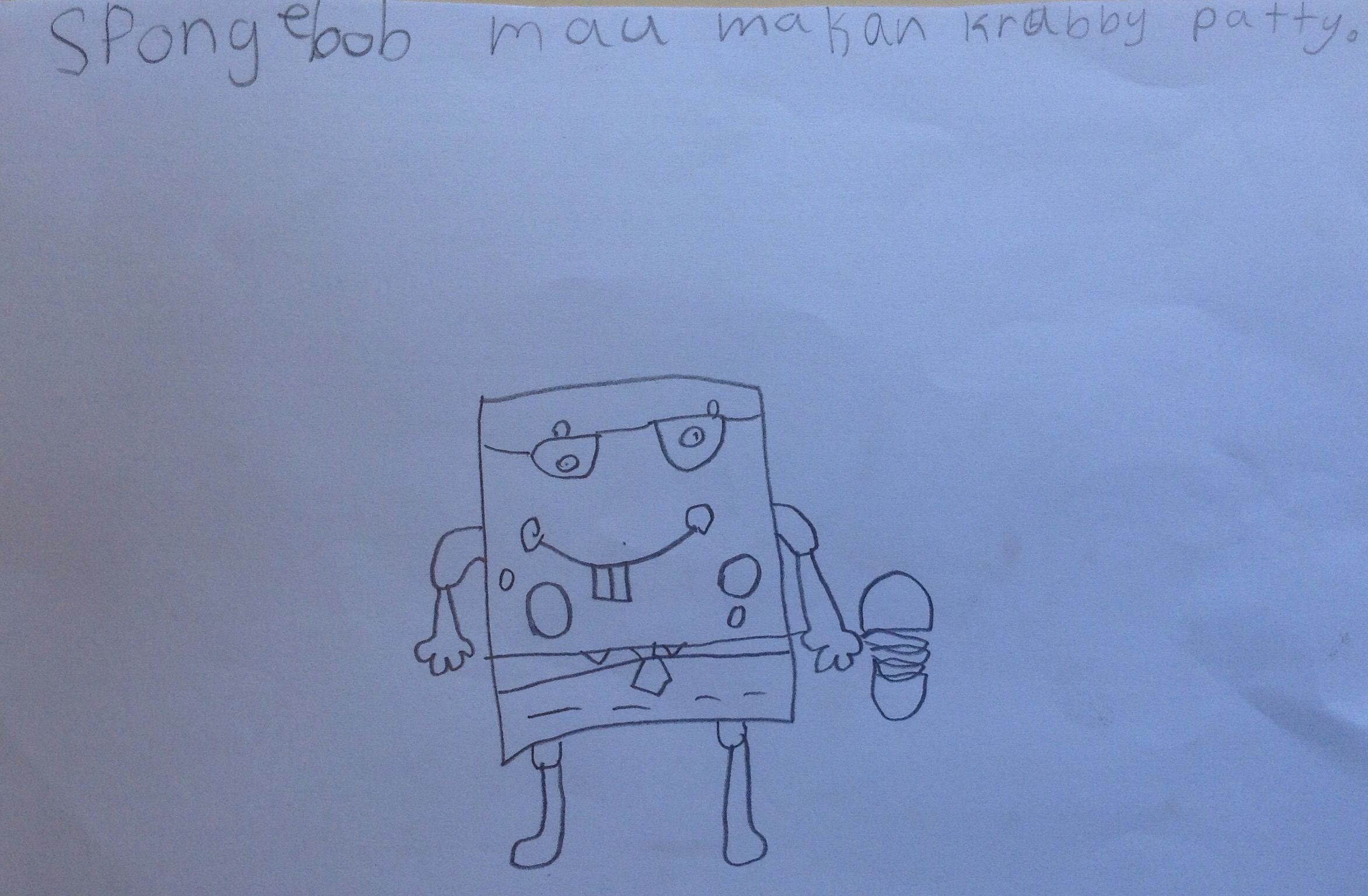
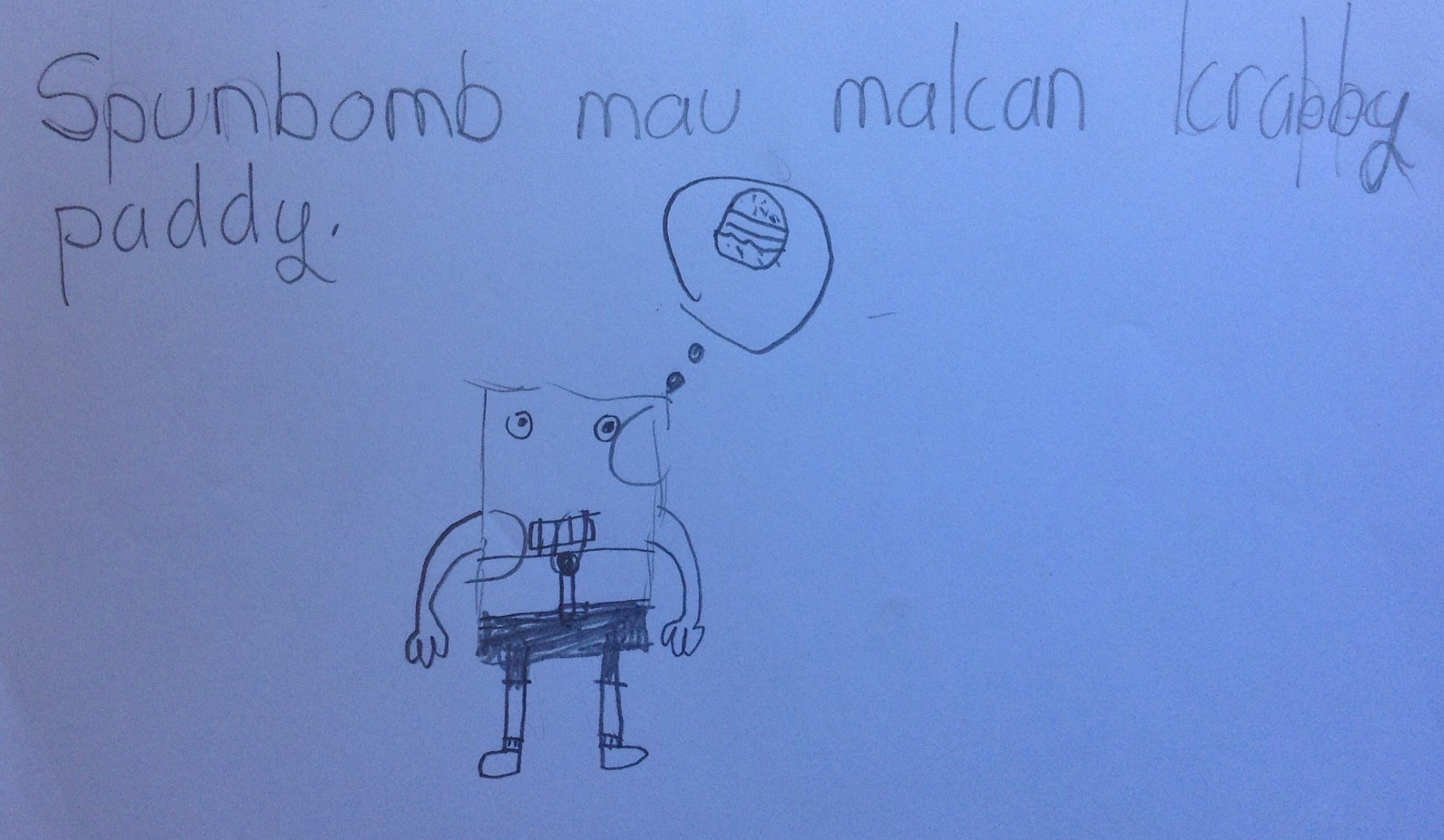
Here are a sample:
Spongebob mau makan krabby patty
Spongebob wants to eat krabby patties.

IMG_9835

IMG_9837

IMG_9840

IMG_9839

IMG_9842

IMG_9841

IMG_9843

IMG_9838

Patrick punya krabby patty
Patrick has krabby patties

IMG_9847

IMG_9844

IMG_9846

IMG_9849

IMG_9850

IMG_9848

IMG_9854

Patrick kasih Spongebob satu krabby patty
Patrick gave Spongebob one krabby patty.

IMG_9856

IMG_9857

IMG_9858

IMG_9855

Spongebob makan satu krabby patty.
Spongebob ate one krabby patty.

IMG_9861

IMG_9862

IMG_9864

IMG_9860

IMG_9859

IMG_9863

Spongebob kenyang dan senang sekali.
Spongebob is full and very happy.

IMG_9870

IMG_9868

IMG_9865

IMG_9867

IMG_9866

Can you just imagine the possibilities there are for taking this even further using these pictures!! Imagine a smart board notebook file with them all and the class matches the sentences to the illustrations, Putting the pictures into the correct order, Retelling the story, Embellishing the story….. the possibilities are endless…

Staying in the Language

One of emphases of TPRS/TCI is for the whole class, including the teacher, to stay in the TL (Target Language) and in the USA, there is a 90% target! We don’t have any such emphasis in the Australian Curriculum, in fact our curriculum appears to largely expect teachers will teach in English.
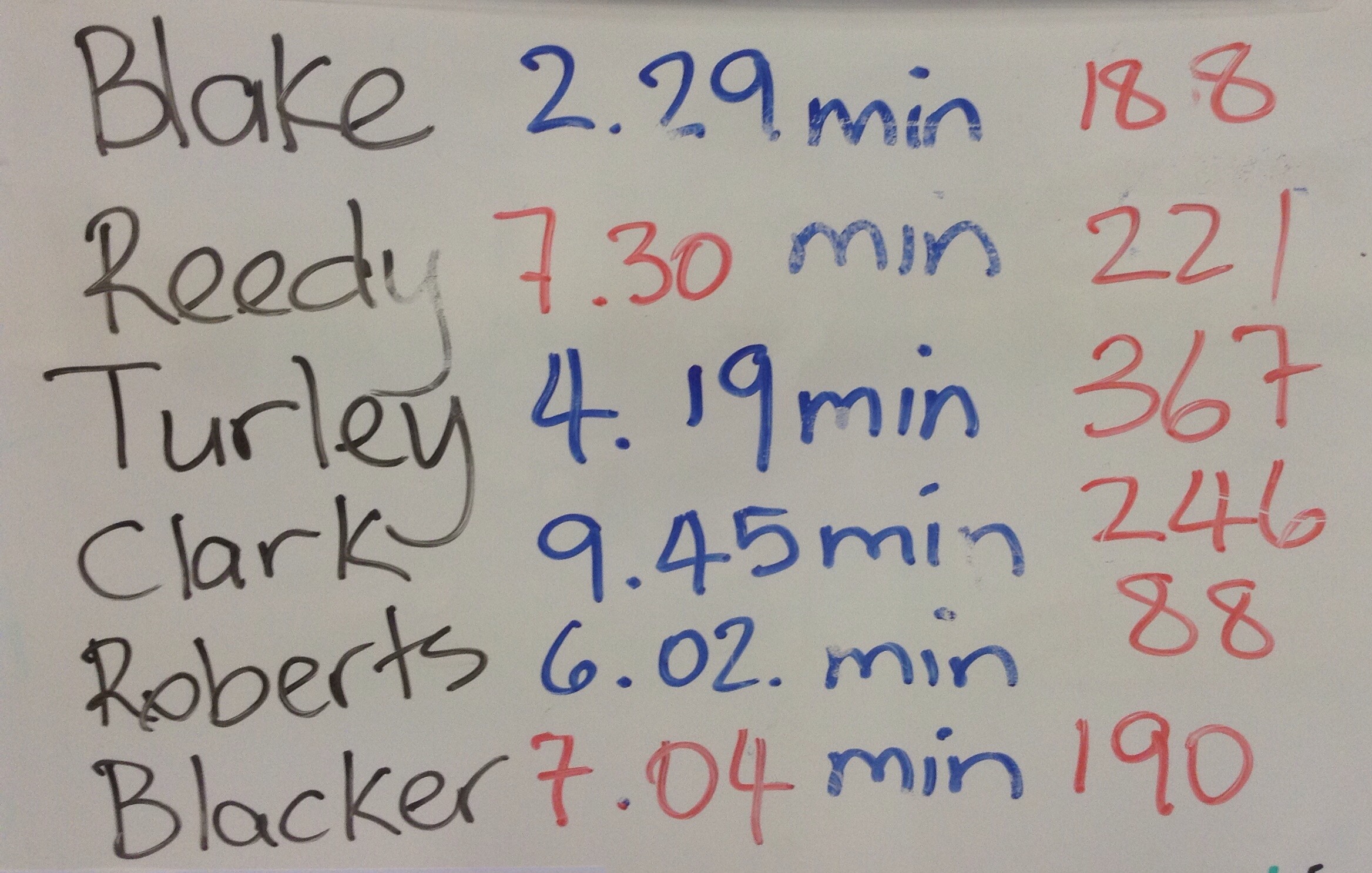
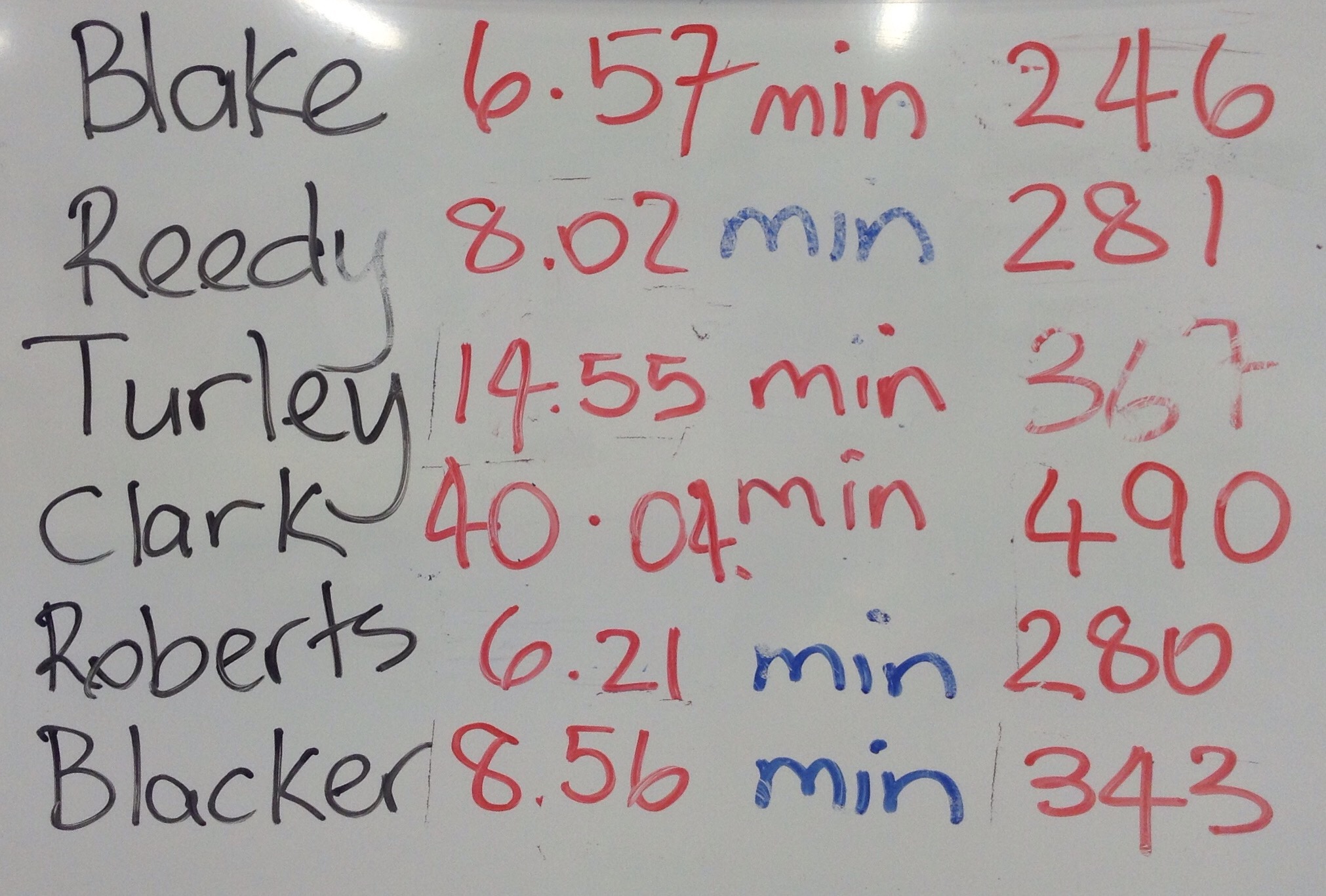
In order to not only record our progress of how many minutes each class stayed in Indonesian in each lesson without blurting (speaking in English) but also to add a level of competition between classes, I introduced the student job of timing just this. A student in most lessons now sits at the back of the room with an ipad, next to the Pembantu Guru, whose job it is to squeeze a plastic pig loudly each time any English is spoken. This is easily the most favourite job we have so far explored! Each time the pig is squeezed, the timer (Penghitung Waktu) stops the timer and records the time. At the end of the lesson, if a new record was achieved, it is added to the board. The second number alongside is the total number of repetitions we get in a lesson of the target structures.
Here is the first photo I took in week 4 with the very first scores:

IMG_9591
And here is week 5:

IMG_9622
Here is week 6:

IMG_9715
And finally last weeks:

IMG_9747The funny thing about this latest shot is that 6/7 Turley came in to class and were determined to beat their score. They agreed it was pathetic that the 6/7 class had the lowest time. They tried and tried and yet someone would blurt out in English after just a few minutes. Finally with 11 minutes to go, they all realised this was their final chance and it was so impressive how they all dug deep to keep a lid on their blurting. It was such an accomplishment for them. The very next class though, was the other 6/7 class. When they walked in and saw that they were the only class yet to beat their initial score, they all decided then and there to not only set a new PB, but to also totally thrash the other 6/7 class. And boy did they ever!! 33 minutes was far in excess of what I was expecting from any class in first term!! I had actually said to classes all I’d really hoped for was 10 minutes!! What made me smile though was that whenever a 6/7 student asked, ‘Boleh saya Bahasa Ingris?” The rest of the class would shout “Tidak boleh!”
So now there is a huge inter class competition between the two year 6/7 classes!! I don’t know who is more challenged by this determination of the two classes to only use Indonesian in class; them or me!! My challenge is that whatever I say has to be 100% comprehensible to each and every student!! No easy feat I can tell you! Today because 6/7 Clark wanted to reach the target of 40 minutes, we went into recess slightly and ensuring comprehension remained, I had to resort to a few quick written translations on the board so that I could continue without blurting myself!! Made me feel a little guilty but it is sooo hard when we have only been using TCI properly for barely 8 weeks!!

IMG_9801

Week One Bridge Program at PEPS

What a week! Our Bridge partners returned home with Marg & I Saturday night and after a good nights sleep, Sunday was spent catching up on washing and looking at a few of our local tourist attractions.

IMG_9725

IMG_9726

IMG_9727 I had hoped to grab some time to program but other than a quick look, it didn’t happen. Thankfully I had done some the week before I left. We all went to bed absolutely exhausted again Sunday night and would’ve preferred having one more day before heading back to school!

On Monday, I decided to teach as per usual to give Pak Pahot & Ibu Eliza the opportunity to observe TCI methodology in the Indonesian classroom. I didn’t say anything beforehand, other than to warn them that I don’t teach Indonesian the way other language teachers in Australia do, as I thought it would be easier to answer any questions afterwards. However, I was disappointed later when there were no questions or comments. I later realised that both Pak Pahot and Ibu Eliza are classroom teachers, not language teachers! After school we discussed the schedule for Tuesday. Both said they had lessons that they’d like to teach. Ibu Eliza had brought a lesson about the 7 presidents and Pak Pahot wanted to teach younger students about 10 native Indonesian fruits. This worked out perfectly with the timetable for Tuesday as the 2 year 6/7 classes were first and the last two lessons were firstly a year 1 class and then a year 2/3 class, so we headed to the SSO room to prepare for our lessons using the PC’s which was easier than getting them onto the school wifi.

Consequently Tuesday was a lovely day for us all. I supported both teachers for 4 of the 5 lessons I usually teach on Tuesdays with translations and classroom management while students thoroughly enjoyed being taught bilingually. Ibu Eliza’s lesson had several components to it and in retrospect would have been less rushed if we had spread it over 2 lessons, yet because we had so much to get through in 50 minutes, they didn’t have any time to get distracted. Students were divided into 7 groups and then given a page with a small picture of one of Indonesia’s past or present presidents at the top. Under the picture, students had to write down 5 questions they would like to know about that president. The questions written by students were varied and ranged from what is his/her name? to: Was he/she a popular president? Each group then had to choose one of their questions and then they were given a paragraph of information about the president they were focusing on. Students had to read through the information to find the answer to their question. Any other information they discovered was written underneath a picture on another sheet handed out to groups. Had we enough time, Ibu Eliza had hoped that each group could share what they had learned about each president, however we were getting close to the end of the lesson, so we jumped straight into the next step which was to hand out another sheet with 7 boxes and 7 pictures of each of the 7 presidents and have students glue them on in order of presidency writing their names down underneath. By the 2nd lesson, Pak Pahot had simplified this for students by numbering each picture on the back! Students then had to ask each other for names of each president. The students responded well to this lesson and as the students needed to work quickly there was little time for off task behaviours. I did enjoy a quick discussion with one group who had Joko Widodo. They asked me to confirm if he was the current president who supported the death penalty. When I confirmed that it was, they then all had a really great discussion on their own opinions. I was so impressed with their comments and that they didn’t all agree yet respected each others opinions.

IMG_9687

IMG_9686

After recess, in my non contact time, Sandy, the year 3 teacher, Skyped us for a mystery Skype. The original plan had been to do the mystery Skype from Sydney but for many reasons, this didn’t happen. Because the aim of a mystery Skype is to guess the location of the other ‘school’, we couldn’t tell anyone at all where Pak Pahot and Ibu Eliza come from beforehand!! We sat in the Indonesian room while the Year 3’s remained in their room, each with maps of Indonesia in their laps. There first question was, “Do you live in the Northern Hemisphere?” which was a great one as it eliminated so much of Indonesia and didn’t take them long to hone in on Medan! It was lots of fun even though the poor students were confused when I asked them to look at us and in doing so turned their back on us as the webcam was on the PC yet we were projected up onto the smart board!! Sorry guys!!

IMG_9698
The students then asked a few questions including;
What are your houses made from? Cement and bricks
Do you have any pets? Pak Pahot has a dog called Whitefang and Ibu Eliza has fish and chooks.
What do you do in your spare time? Reading and cooking
What musical instruments do you play? Pak Pahot plays the guitar, the organ and angklung
Do you have any children? Pak Pahot has a 9 month old son named MIchael.
Who do you live with? Pak Pahot lives with his wife, his son and 3 younger brothers whereas Ibu Eliza lives with her husband and niece. Sandy has blogged about the Mystery Skype in more detail on her class blog. Read the post here and read what the students wrote about the experience!

My one and only lesson I taught that day was introducing reception students to the numbers 1-5 and then it was lunch time.

IMG_9678

IMG_9681

After lunch, Pak Pahot showed a powerpoint he had put together of the 10 fruits he wanted to focus on. He explained that there are over 400 different varieties of fruit in Indonesia and no matter where you are in Indonesia, you will come across a huge selection to enjoy We then looked at the powerpoint and learned what they are called in Indonesian and for many students, we also learned what they are called in English!! Fruits included banana, starfruit, soursop, durian, rambutan and mangosteen. Students then worked in groups to match 5 of the fruits to their Indonesian names using pencils. Each group was then asked to stand up. One student held the sheet while the second student pointed to each of the fruits and the third student said their name in Indonesian. Students were fascinated with the variety of fruit available and surprisingly quite a few have tasted them either here in Australia or on holidays in Indonesia.

IMG_9705

IMG_9706

We then had just enough time to fill up our drink bottles before presenting at the staff meeting. I introduced both our visitors, explained about the Bridge Project and then Pak Pahot presented a powerpoint presentation about his school, his students and the various programs running at their school.

IMG_9723Afterwards there was a brief question and answer opportunity where teachers asked specifics about special education programs, how remedial students are catered for (after school), the school day, etc. I then briefly introduced staff to the AEF website which is an amazing resource for Asia & Australia’s Engagement with Asia. It’s about to be updated too!! I also circulated a timetable for teachers to nominate blocks where Pak Pahot and Ibu Eliza could come in and observe lessons.

The rest of the week was spent by visiting various classrooms which ranged from receptions to year 7’s and covered most subject areas, including PE!! The Sports Day warmup in particular was a huge hit!

IMG_9730The only subject Pak Pahot has yet to observe and is really keen to see is science, so a note in the daybook will hopefully tick that box for him.

Yesterday they spent quite a bit of time with the Year 5/6’s in Mrs Roberts class to work on ‘biodata’ letters for students in Ibu Elizawati’s class. We looked at one of the ones that Ibu Eliza had brought with her which was all in Indonesian and then looked at the various dot points our students would include in their own biodata.

IMG_9714Interestingly, two culturally different aspects arose!! Our students want to add their beloved family pets as they are considered parts of our family and secondly most of the students in the year 5/6 class either don’t have a religion or did not know what religion they are!! What a contrast to Indonesian students!! When I asked Pak Pahot what students could write if they don’t have a religion he was at first confused!! Such a foreign concept for Indonesians!!

Thursday finished with a whole school assembly which was attended by a large number of parents as it was being run by the year 2/3 class. After welcome to country and the national anthem, Pak Pahot & Bu Eliza had everyone riveted with a Batak song and dance. The applause at the end was incredible and a true indication of how much we all thoroughly enjoyed the performance.

IMG_9732

IMG_9728

After school we were invited to drop in to Sandy’s house to get a tour of their chili garden. The look on Pak Pahot’s and Ibu Eliza’s face when they realised just how many chili bushes there were was priceless. I too was impressed and particularly enjoyed the delicious sambal Ibu Eliza made to go with our fish that night!

IMG_9717

IMG_9718

As I don’t work Fridays, today we are enjoying a lazy morning and then we will head in just before recess to join Marg and her year 5/6’s for a Skype call to Port Macquarie where the other 2 teachers from Medan are being hosted. The last lesson on the timetable is choir which I doubt wild horses couldn’t keep Pak Pahot from attending!!

To round off the week, we went out to dinner and Pak Pahot enjoyed tasting kangaroo!

IMG_9722