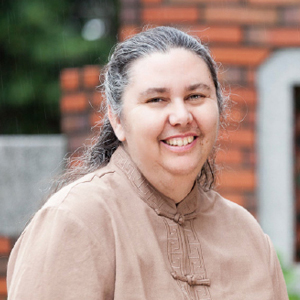
Meeting Blaine Ray in Sydney

Annie and I are heading home after 2 unforgettable days in Sydney with Blaine Ray. What an amazing time and I still can’t believe how fortunate we have been.


Firstly how lucky were we to have Blaine Ray to ourselves almost for 24 hours! We did share him on Tuesday with Stef and her son Daniel, but considering that she is heading up to the conference in Brisbane this Friday, this was a bonus! We were able to pepper him with questions and then listen to his explanations while taking notes. It felt like our own personal workshop specifically tailored for our needs and level. Words simply cannot express how amazing this was and we’ll always be indebted to Blaine for his kindness and patience. 

Secondly, we were able to practise our note taking skills ready for next week’s inaugural TPRS conference on the Fleurieu Peninsular with Terry Waltz & Lizette Liebold! It has been fascinating comparing our notes and seeing the huge gaps in my notes where at times I must have become so engrossed in the conversation I forgot to write anything down! Annie has diligently cross referenced both sets of our notes and created a version that incorporates everything and then on top of that has presented it out beautifully.

(This is from Blaine’s advice that whenever you get universal agreement with a response, never accept it. Choose the opposite and surprise them! Never accept the obvious; eliminate the expected!) 

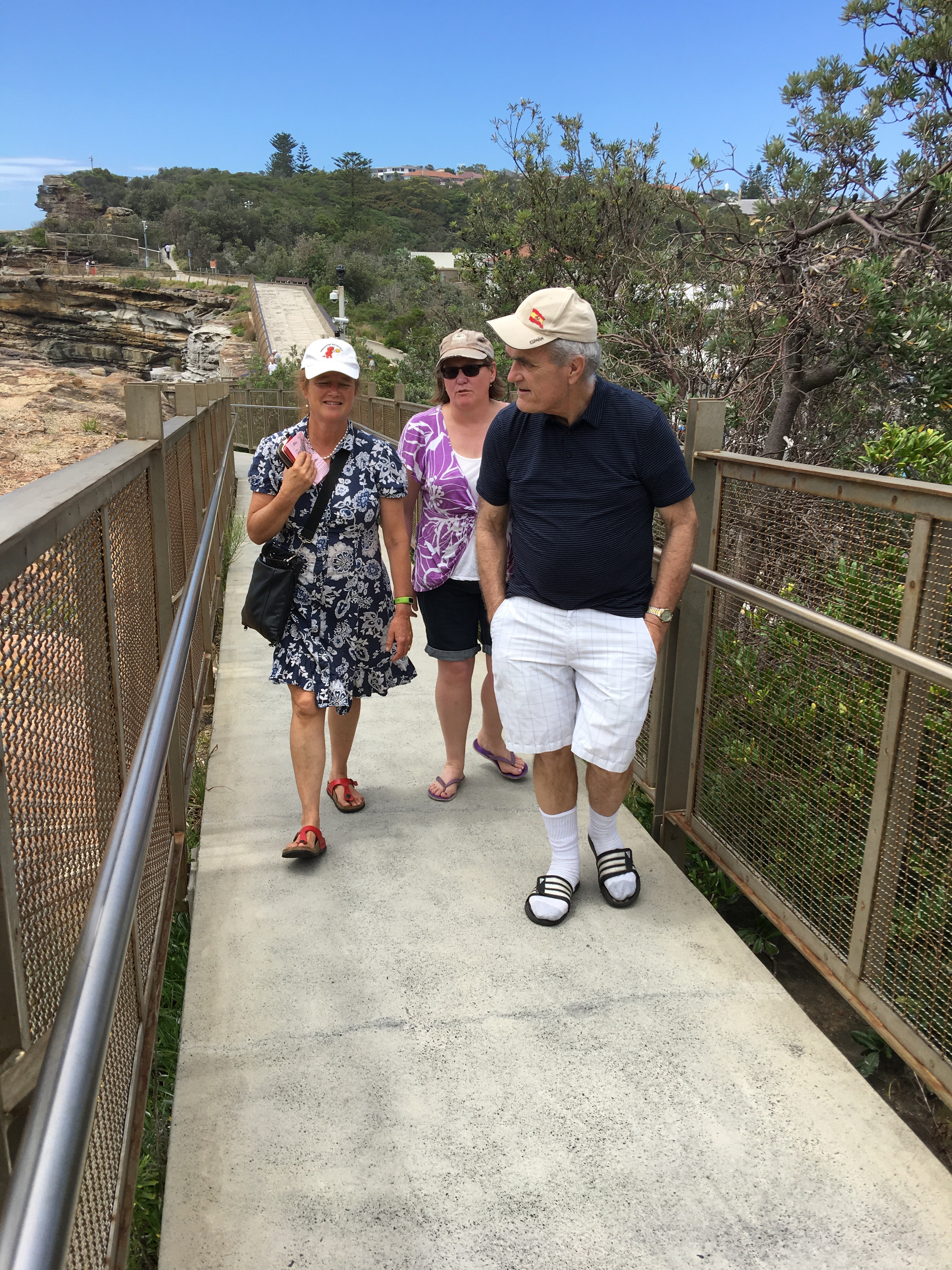
And thirdly, it was simply a lovely break spending 2 nights in Sydney and being a tourist in such a beautiful city with like minded people. We spent most of our time together either walking or eating along the scenic waterfront. Except for the initial trip to our hotel from the airport, all of the travel we (Annie & Cathy) did in Sydney was either by ferry or by train and this is definitely the best way to travel. The ferry system is efficient and relaxed. It was just lovely sitting or standing on the ferries enjoying the gorgeous scenery and the cool breezes with the added occasional bonus of sea spray. The trains too were great. So much quicker and took us directly to the domestic terminal which was in direct contrast to our long and tiring trip on arrival which took at least an hour of zig zagging throughout the CBD streets of Sydney. I’m so grateful that Annie talked me into exploring alternative travel options for our return to the airport!


What a generous and gracious person Blaine Ray is. He happily and enthusiastically shared his knowledge with us and was genuinely impressed to discover that we are 2 of 3 language teachers on the south coast who have been teaching with TPRS in since 2014. He told us afterwards that he had presumed we had only recently heard about TPRS and therefore surmised that our discussions would lack any deep TPRS connection. In fact we spent every single minute chatting about various aspects of TPRS and Blaine answered all of our questions and gave many demos to illustrate his points. He also encouraged us to share all that we learned; a huge relief because I couldn’t wait to write up this post!  I particularly appreciated his personal stories which clearly illustrate his open mindedness towards improving TPRS, unlike others who have created a successful model and then constantly ‘protect’ the model/concept fiercely. Blaine told us of several instances where he had witnessed or discussed with a practising TPRS teacher a successful idea of theirs, which he  immediately saw the value of incorporating it into TPRS procedure and then gave that teacher full credit for that update! Alina Filipescu is one such teacher and after seeing several of her youtube videos, I fully understand why Blaine Ray would be impressed by her teaching.

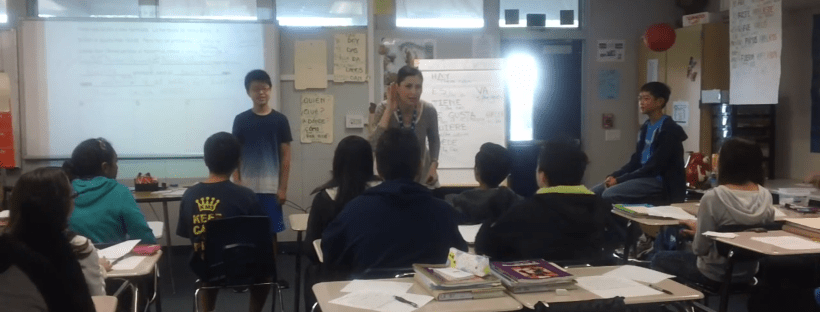
His explanation and demonstration of the 5 steps of teaching a sentence is a procedure I aim to focus on this upcoming term. I particularly would like to work on this to ensure that I am story asking rather than story listening. I can finally understand how we can create a class story based on the target structure. His advice of writing out a script beforehand with a few planned surprises (should the student ideas be too predictable) would help as my mind goes blank when I am in front of a class. He did reassure us though, by saying that once you get started and students get the hang of suggesting the unexpected, we will begin to build up a bank of great surprises perfect for our cohorts that can be drawn upon when needed. I liked his mantra of rejecting the expected; I can fully understand now that choosing an idea that is sooo off the planet ramps up the class stories to make it even more compelling. Blaine demonstrated this with us all at Watson’s Bay with a sentence about a chicca called Annie. He circled this sentence using his 5 steps with us as the class. Whatever we suggested, he would shake his head and reject it with a disappointed look on his face and so we would dig deeper to outdo each other to come up with even better unpredictable ideas. However he continued to reject our suggestions and would then use his own which were always better than ours. I also loved his comeback when I told him that his story didn’t make sense to me; “This is my story and if you don’t like it, go and write your own story.”

Here are the 5 steps of teaching a sentence:

  1. Annie was a girl.
  2. Annie, are you a girl?
    (If the actor doesn’t have the language to answer in the target language, she/he can either read it or mouth it while the teacher provides the voice.)
  3. Yes, I am a girl.
    (The actor must answer in complete sentences confidently as this provides input for the class and is also a clear indicator of the extent to which the whole class ‘gets it’. Any errors or hesitation are indicators that more repetition is necessary.)
  4. Yes, you are a girl.
    (teacher verifies the response)
  5. Class, Annie was a girl.
    (Teacher speaks to the whole class)


This leads on nicely to Blaine’s comments about actors. He made it very clear that choosing good actors is critical. He explained about having auditions to select the best actor which is an idea I’ve tried but not while focusing on the target structure which would be an awesome way in which to add additional input, rehearse the structure and develop student confidence. A good actor must be enthusiastic, must want to try and must have the mindset that this is a cool class. We loved his line that actors have the opportunity to be in the movie rather than to just watch it!

If however, the actor is not performing (maybe he/she is shy or reluctant to act in an exaggerated fashion), try whispering in their ear hints or even demonstrating the required action and if they are still unable to act in the engaging manner required, it may be necessary to replace them. Choosing a bad actor gives negative messages to all the students about our subject. Blaine’s statement that every teacher has a battle for the students hearts resonates for me in my school where we can have up to 5 specialist teachers on top of their class teacher and other support staff. He says the way to win their hearts is through comprehension and play!


Our meals with Blaine were spent juggling our plates & cutlery with our notebooks & pen. Meal times were perfect times to focus on specific aspects of TPRS. The first evening, Annie took notes while I hesitated to pull out my book. Afterwards back at the hotel, I quickly wrote down all that I could remember and was horrified at how much detail I couldn’t remember. From then on, as soon as Blaine began talking, I would whip out my note book and note down the salient points using some of the shorthand I haven’t used since teachers college lectures! 


Over our first al fresco breakfast in Pyrmont, Blaine discussed circling. Questions are the backbone of TPRS and are the key difference between TPRS teaching and everything else. He told us of studies which showed that TPRS teachers ask 3-4 questions a minute whereas legacy teachers rarely ask ANY questions. Questioning is critical because it gives students the opportunity to rehearse while giving the teacher the opportunity to get repetitions on just one sentence.

Here are his 7 rules of circling:

  • Never circle in the same order (too predictable)
  • Use either/or on any part of the sentence (subject, verb, object)
  • Always have a bias towards asking negative questions as they are more challenging
  • Use your question words and point and pause to give processing time
  • Add information to the sentence to create a new sentence. Either circle the longer sentence or part of the longer sentence; whatever is necessary for your students and this is evident through your actor. Eg. Girl wants a monkey, Girl want a big/small monkey, Girl wants a big monkey that speaks Chinese/dog,
  • add a new character (parallel character)
  • add yourself (teacher)

It’s all about asking different people different questions based on the same structure. If it feels boring, ramp it up by adding another character, a celebrity, a celebrity’s pet cat. Adding something new makes it more interesting. Speak to each character. Eg. Are you a cat? What languages do you speak? You are very clever. Each new piece of information can be added to the sentence being circled or just circle the new addition depending on the level of actor confidence and continue till the actor ‘sooo gets it’! If a student actor hesitates or has errors in their answer, this indicates that the class also needs more circling on that sentence. Blaine requires actors to respond in complete sentences to provide further output for the class however class responses are limited to one word responses. In this YouTube video you can see him demonstrating this:

 https://youtu.be/9DRblDN2sXY

Just as critical though are student responses. He told us about Alina Filipescu who coaches her students to give powerful responses. I am definitely going to investigate that idea as I agree it is a skill that needs explicit teaching. 

Answering questions demonstrates comprehension and understanding.
Blaine has 3 procedures for evidence of student engagement

They are:

  • Respond to new statements with ‘ahh’.
  • If I ask a question, respond in the target language.
  • If I ask a question and you don’t know the answer, guess in the target language. Surprise me with your guess and if you don’t surprise me, I will surprise you!

This conversation led us neatly onto the 2 Rules for Students in class:

  • NO social talking
  • Never speak negatively about this class.Regarding point 2, Blaine recommends teaching early on a phrase such as, “I like this class” (Kelas Bahasa Indonesian keren) and whenever a student speaks negatively about the lesson or class, insist they repeat this phrase while reminding them of rule no 2. Personally I can’t remember anyone stating publicly in class that they dislike my classes or lessons, I just get occasional glowering glares or disengaged expressions which I usually do not draw attention to and work harder to turn their attitude around. For one student this happened when she became the class artist.


A major theme that underlay every discussion we had with Blaine was student confidence and teacher patience. He highly recommends all language teachers experience learning a totally new language to fully enable us to  empathise with our students. Teacher thinking about language learning is usually wrong. We have forgotten just how it feels to be a learner and why students want and need patience from their teacher. Teachers can not make their students learn any faster, the only way we can help with their acquisition is to provide more repetition.

Always respond with love and patience until your students CAN:

C= Confidence

A= Accuracy

N= No hesitation.


We want new language learners (slow processors) to become confident fast processors which is the goal of TPRS. Writing translations up on the board can make a big difference with this. Did you realise that your brain starts from the point where it is confident? How much sense does that make! It explains why we can hear the same talk/ explanation several times and yet pick up different facts each time! This is relevant for language learners too! Each time we repeat a structure, it solidifies in the learners mind and helps them become more confident. Every learner is different and begins at a different point. TPRS students are at one of the following stages:

~ understanding

~ getting it

~ soo getting it.

Obviously it the final stage we are aiming for with our students!
 

Post Script:

This post is my grasp of Blaine’s explanations. I hope it is true to his understandings and should there be any errors, I fully accept that they are evidence of my ongoing and constantly developing comprehension of TPRS. 

Student Work – Books vs Folders?

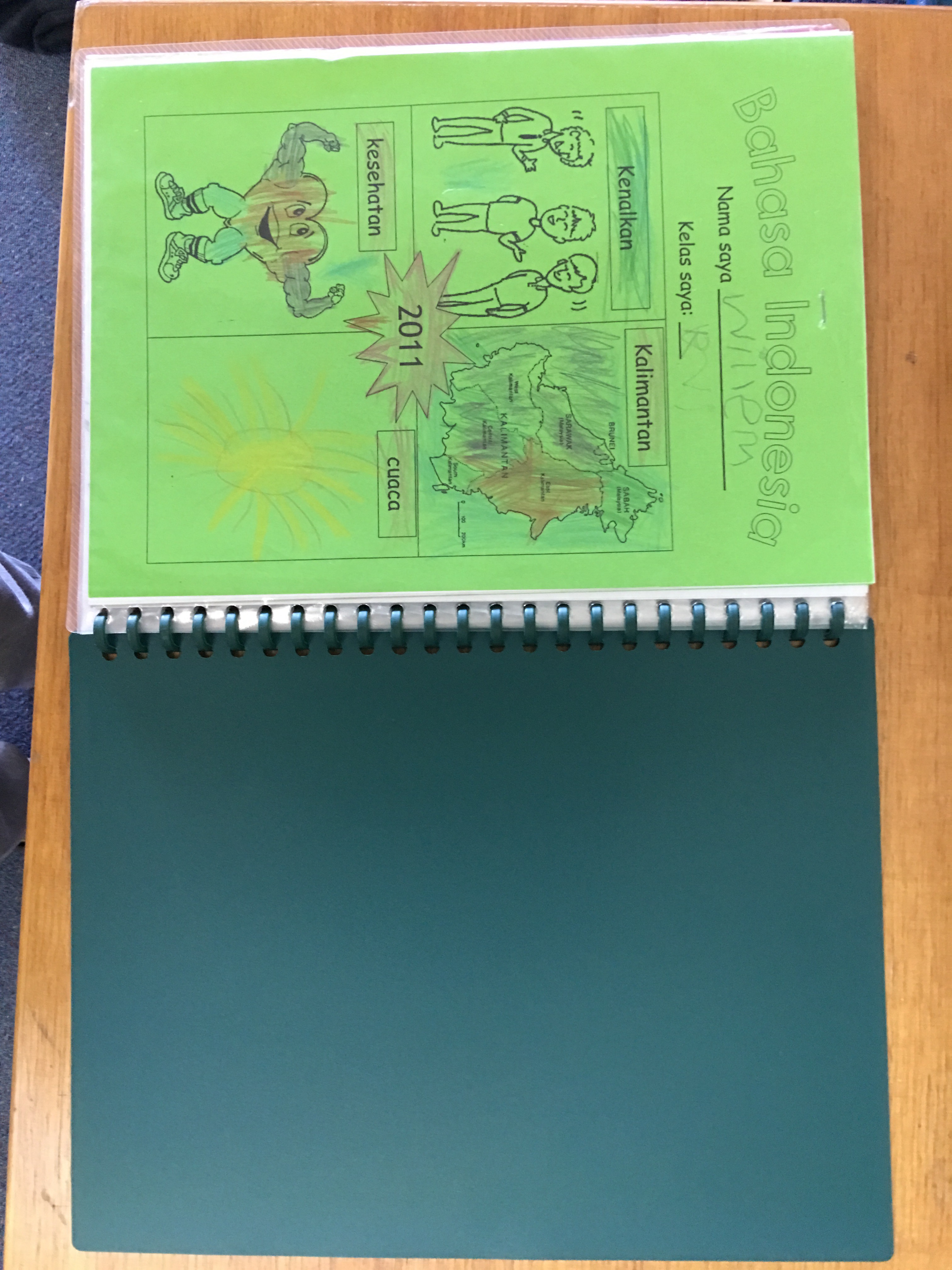
When I first arrived at this school, piled up in the bookcase were huge piles of student workbooks from the previous year’s teacher – most of which had been barely been used. I then repeated this pattern myself for the next few years!! I always felt uncomfortable at the end of each year sending the books home. If the books were not full of book work, did parents  assume students had not done anything? Would I and/or my program be judged if student work was untidy or unmarked or if there were incomplete tasks? After a few years of this dilemma, I trialed ordering students a folder each instead of a lined book.  At the end of that first year, instead of sending student work home, students took out all their work sheets, and put them together in the back sleeve of their folder with a back sheet stating their year level and the calendar year on one side and their front cover in the other. We discovered early the following year, that it was best to staple this together to prevent pages falling out mid lesson and also so that work doesn’t get mixed up from year to year. I have been doing this for nearly 10 years now, and over the last few years, it has been lovely handing the folders to my graduating year 7’s as it contained work from each and every year they have been here at PEPS.

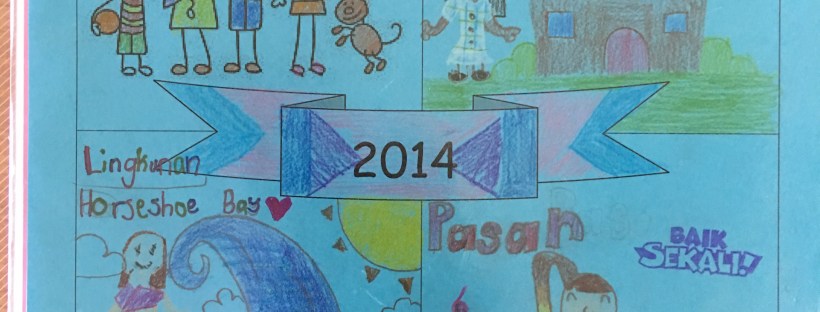
Each year, we begin the program with a front cover for their folder. This front cover has many uses but the main one is to ensure quick and smooth distribution during lessons, therefore their names must be bold and eye catching! When I taught thematically, there would be 4 boxes on the front cover, each one representing the 4 terms in our school year. In each box there would be either an illustration for each term’s theme or it would be blank for the student to draw their own picture inside it. At the end of the year, this front cover is stapled strategically facing the back cover, so that reorganising the folders at the start of each year is made slightly easier.

Since beginning with TCI/TPRS, our front covers has changed significantly and the main reason for this is that week one of each term is the best week!! It is the week when students are most settled, most cooperative and most are absolutely delighted to be back at school so it seems absolutely crazy to spend that week colouring in!! Now, the front cover is only done in the first week of the year and it helps me to gain greater insight into my students likes and dislikes which hopefully strengthens our student/teacher relationships.

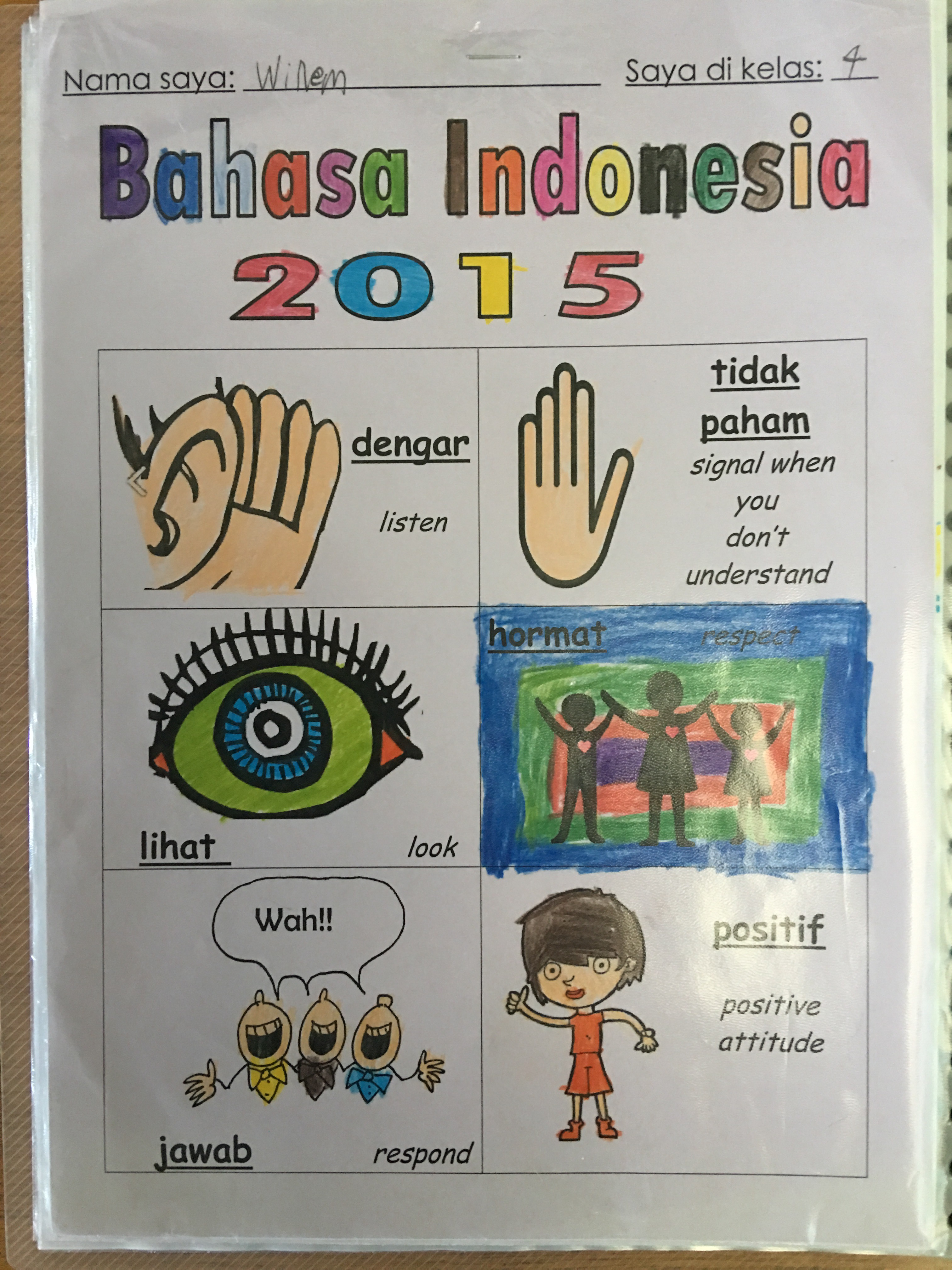
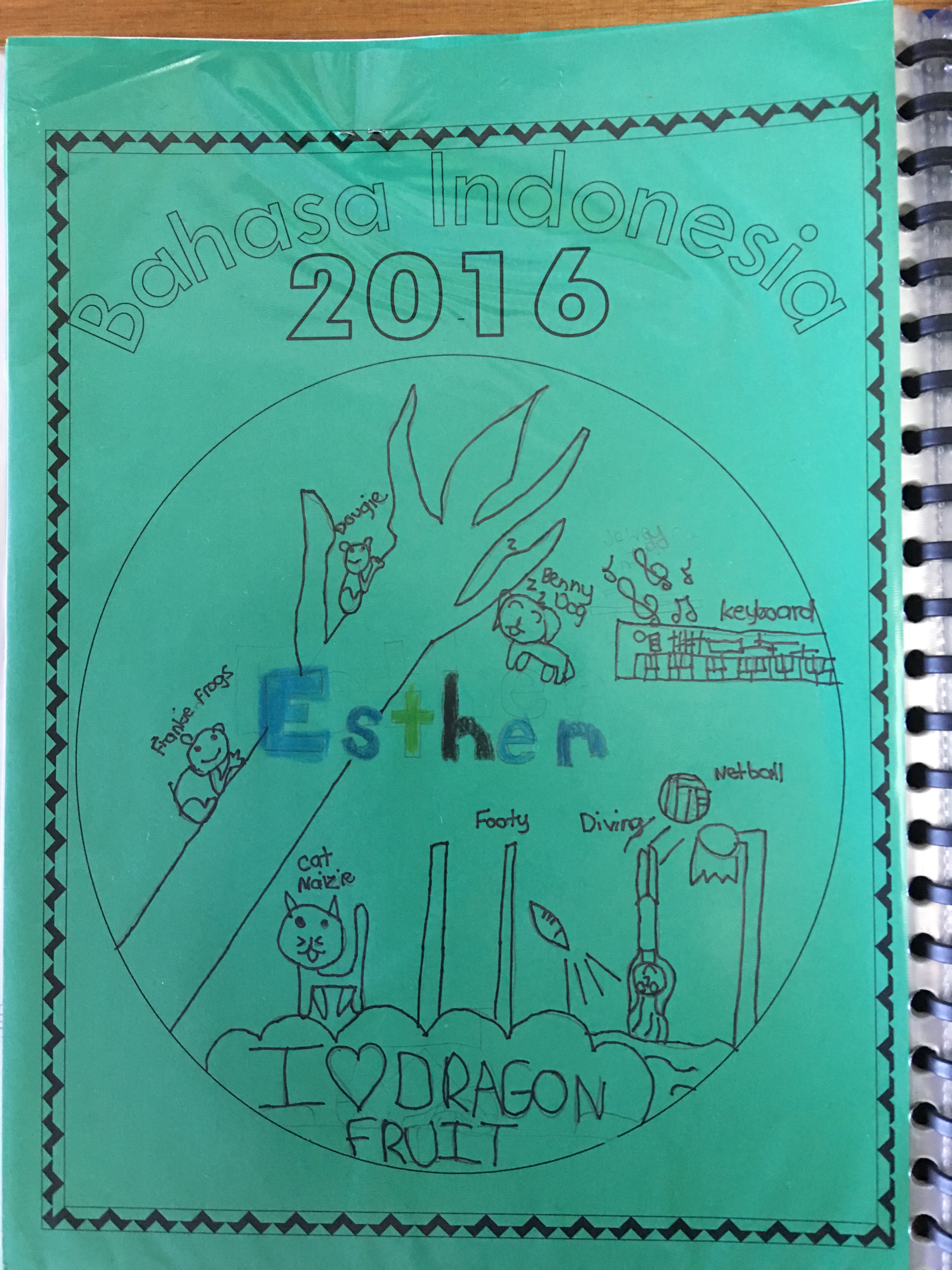
My first cover in 2015, was based on the expectations of students in the Indonesian classroom and was a great way to introduce Teaching Proficiency Through Storytelling to students. Last year, after discussions with Sharon & Annie, We all used the front covers to collect information about students that could be used in class stories. Unfortunately my design was too ambitious and  was only completed fully by a few classes. As the week progressed, each class’s front cover was tweaked more and more so that for those classes that only had that one Indonesian lesson that week, the cover could be completed in a single lesson and didn’t run into week 2!


This year, I plan to have another go with a basic interview styled front cover, but with the option for slower students to write their information instead of only being able to illustrate it!! Hopefully that will reduce the amount of time needed for completion! Here are the front cover drafts I’ve created so far:

 JP firstly then MP & UP. 

Tweaking a pre TPRS cooking unit – again…..

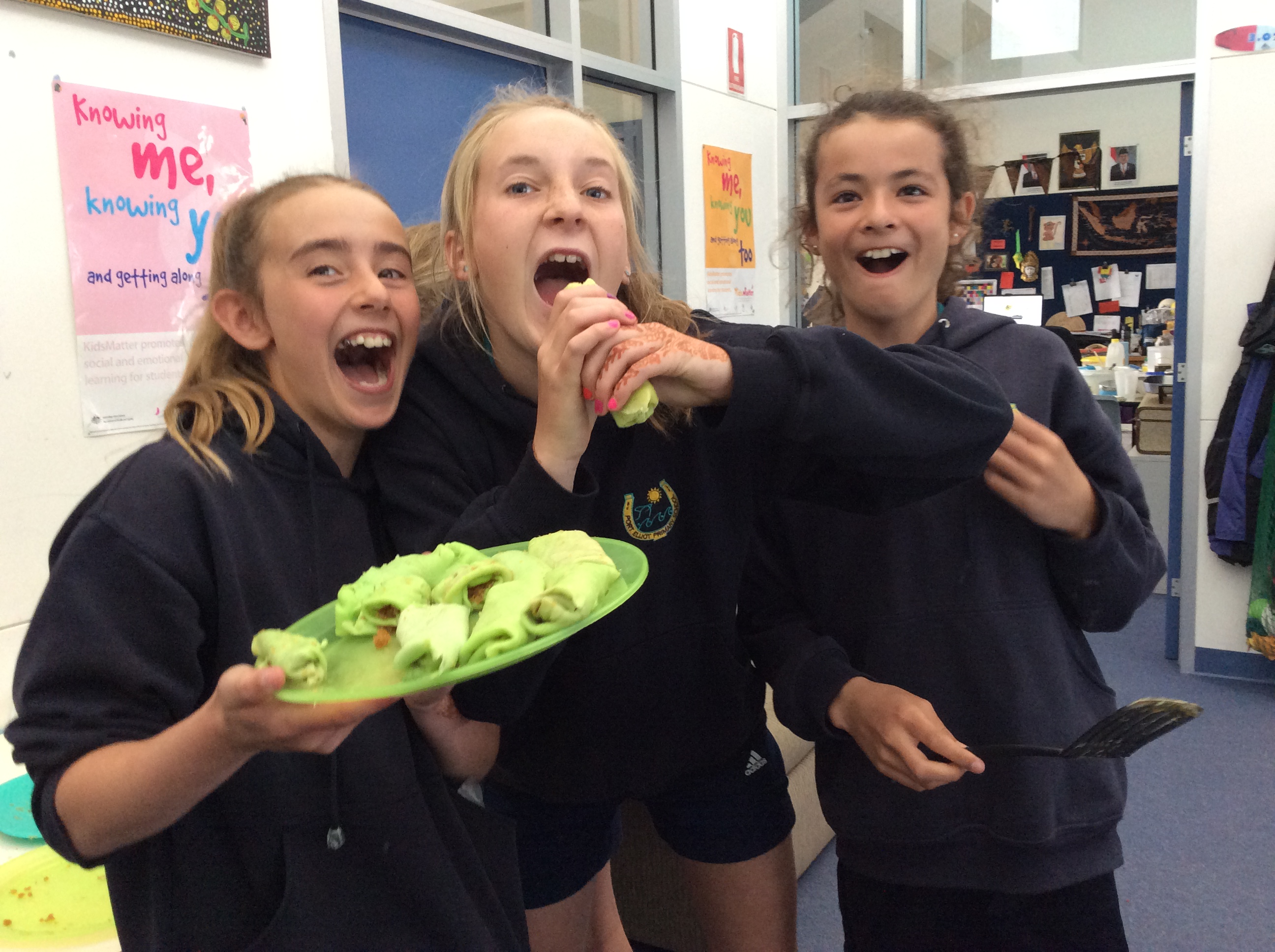
For the second year in a row, I finished with a cooking recipe instead of a story for the year 6/7 classes. This cooking unit is a tradition with my year 6/7 students and it is the only pre TCI/TPRS unit I haven’t binned! This is for several reasons: Firstly it is a food based theme which students constantly love and therefore hopefully is becomes a memorable final unit for my year 7’s before they head off to high school and secondly it ties in nicely with our annual end of year school pasar (market).

As this is a unit I have done with my upper primary students for as long as I can remember, it has been tweaked significantly over the last 2 years as I continue to make it more TCI friendly. Last year was my first attempt which you can read about here. This year’s tweaking though was much more successful (in my opinion) which I can only put down to my ongoing reading and listening to all things TPRS/TCI.

The biggest improvement came quite simply; tweaking the recipes that the unit is based upon.

I always begin this unit by asking each class to brainstorm for recipes they would like to cook. Then the class votes on them all, knowing that the recipe will  be cooked twice; once for students to eat and enjoy themselves and then again to sell at the pasar.  Students suggested dishes are usually based on food they have enjoyed at previous pasars’ or dishes they enjoyed eating that had been made by visiting Indonesians. This year the 3 6/7 classes chose 3 totally different recipes; mie goreng telur Ala Ibu Mia (yummy savoury noodle pancakes), dadar gulung and klepon.

Once each class has decided on what they want to cook and sell at the pasar, I find a recipe for it because the unit of work for each class is then based on that recipe.

This year when I dug out the recipes, I was horrified with the amount of unfamiliar vocabulary each recipe uses! This became my first job – to pare down the recipe to its most basic form and to incorporate as much acquired language where ever possible. Unfortunately with recipes, what cannot be altered, is the list of ingredients and one recipe had 10 ingredients, most of which were unfamiliar!

Here are the stages that the method part of the dadar gulung recipe has changed over the past 3 years:

Pre TPRS  Dadar Gulung Recipe:

2014

  • Aduk kelapa, gula jawa, air dan garam. Goreng sampai air hilang.
  • Taruh tepung, telur, pewarna, santan, garam, santan dan air. Aduk sampai halus.
  • Panaskan wajan. Mengisi sedikit minyak.
  • Tuang 2Tb adonan dadar. Goreng sampai dadar kering. Angkat.
  • Ulangi sampai adonan dadar habis.
  • Ambil satu dadar. Mengisi satu sendok makan intinya. Terus lipat dan gulung.
  • Ulangi sampai dadar dan intinya habis.
  • Selamat makan.


Post TPRS Dadar Gulung Recipe

2015

  1. Campurkan air, garam, gula dan kelapa. Goreng dan aduk. Angkat.
  2. Campurkan tepung, gula, garam, telur, pandan dan susu di mangkok besar. Aduk.
  3. Panaskan minyak.
  4. Kasih satu sendok besar campuran dadar dan goreng dua menit.
  5. Balik dadar dan goreng satu menit lagi.
  6. Angkat.
  7. Ulangi.
  8. Taruh campuran kelapa/gula di dadar. Lipat dan gulung.
  9. Selamat makan!


2016

  1. Aduk kelapa parut, gula merah, air dan garam di wajan. Goreng, sampai tidak ada air. Angkat dan taruh di piring.
  2. Aduk tepung, telur, pewarna pandan, susu dan garam di piring.
  3. Panaskan wajan. Kasih sedikit minyak.
  4. Kasih 2Tb dadar. Goreng. Angkat dan taruh di piring.
  5. Lagi
  6. Ambil satu dadar. Kasih satu sendok inti. Lipat dan gulung. Taruh di piring.
  7. Lagi sampai tidak ada dadar atau inti.
  8. Makan


With the 2016 recipe adaptation, my focus structures became taruh (place/put), aduk (stir/mix), piring (plate) & wajan (frypan). Words like ‘inti’ are not high frequency, so I simply had the translation for that and other such words posted up on the baord to assist comprehension and reduce confusion.

My second task was to introduce the list of ingredients. With dadar gulung, there are 10 ingredients! In order to get as many repetitions on each ingredient, I created power points, showed students the ingredients, let them taste, smell & handle the ingredients where appropriate (tasting coriander was not very successful but it sure helped them to remember it), Plickers & played the drawing/matching game I outlined in my 2015 post.

I love using PowerPoint when introducing new target structures. I go crazy with the transition features whereby you can have a picture/word on the screen and then with a touch something is added or changed to the page in a quirky way.  Most pages have 3 items which with a touch are layered onto each page. This included the English and Indonesian word for each ingredient and a picture to clarify meaning. The order that each came up on the page varied but generally the English word appeared last. The PowerPoint is then not only useful for introducing a list of new words but also for reviewing the list. To keep up the interest, pictures can be changed, slides rearranged and transition styles altered. Including pictures of past students is popular although can be distracting! Here is a link to the PowerPoint I used for dadar gulung.

While the main target structures for all 3 class recipes was ‘aduk’ and ‘taruh’,  ‘piring’ and ‘wajan’ were purely support/minor target structures, I was amazed to discover at the end of the unit how the acquisition of the former was sketchy and needed a few gesture prompts yet wajan and piring needed no such prompts. In fact students were using them in their English discussions while cooking!

For the first time ever, on the day of cooking, I only handed out the Indonesian version of the recipes to groups. The only person who received an English version was the group support person if they had one. Groups that invite a support person (older family member/friend) are permitted to cook elsewhere in the school which I encourage as it reduces the power load in my classroom and hence the overload switch cutting off power! I was so impressed with the groups that remained in my room and their successful comprehension of the Indonesian recipe.

Unlike last year, I was extremely pleased with how the cooking unit progressed this year, especially considering it is such a busy time of year. Reducing the unfamiliar vocabulary down to just aduk & taruh made such a difference. While aduk isn’t high frequency at all in the classroom context, ‘taruh’ certainly is and consequently I have already started incorporating into my lessons with the younger students.

I’ve also thought about the idea of having a year 6/7 cooking text that younger students work towards in Indonesian class during their 7 years of primary school, so that many of the words like ‘taruh’, ‘lipat’, ‘gulung’ can be built upon in a more challenging text.

Dadar Gulung

img_0510

Mie Goreng Telur Ala Ibu Mia

img_0521

Klepon


Awesome Preposition Indonesian Brain Break – Mi, Mi, Mi

One of the fantastic things we learned last week from our AIYEP visitors was a hand clapping rhyme that my middle and upper primary students absolutely loved.

Farah typed out the tweaked lyrics and I put them up on the smart board.

Mi, Mi, Mi

mi atas, mi bawah

mi depan, mi belakang

mi satu, dua, tiga

mi empat, lima, enam

mi ciyo, ciyo, ciyo

mi gulung, gulung, gulung

gulung-gulung kasur


I firstly asked the students to watch  Kak Farah, Kak Ricky, Kak Oscar & Kak Rini. They paired up and demonstrated the hand clapping rhyme. After a few repetitions, I then asked for volunteers to come forward and have a go with the ‘kakaks’. The aim was to get as many repetitions of the rhyme as possible before the students did it themselves and this would increase both their confidence and chances of success!! Again, the volunteer students had 2 goes with their mentor kakak’s.  The class then looked at the lyrics briefly. This was to purely show them what had been chanted and also to quickly translate to explain most of the hand movements.

Students were then asked to choose a partner (student or kakak partner) and be ready to start. We all together chanted satu, dua, tiga, (1,2,3) then began the hand clapping rhyme following along with the kakak’s. There was much hilarity while students had a go for the first time with a partner. Again, for the final time, students were asked to repeat the rhyme with this partner. Then to ramp it up, I asked everyone to change partners, ala Pak Iriantos’ workshop at ASILE. We continued chanting the rhyme and changing partners over and over again, after each run through. It was a great way for students to get repetitions on the rhyme with new partners in a fun way.

Here is a snippet showing you just how much fun it was:

2016 – AIYEP in South Australia

Have you or your students heard of AIYEP ? Even though AIYEP has been around for 35 years, I have only just  learned of it and then only by chance!


AIYEP (pronounced Ay-yep) is the commonly used acronym for the Australian Indonesian Youth Exchange Program. This program was established in 1981 and is fully supported by the Australian Government (DFAT) and the Indonesian Government (Ministry of Youth Affairs & Sport) and promotes peace and understanding between our two countries. Each year the program is based in a different state/Territory in Australia and in Indonesia it is held in a different province. This year, it is based in South Australia and Sulawesi.


The participants, 9 men and 9 women, aged 21-25 years, are chosen from applicants who are either undertaking tertiary studies or working in sectors that will contribute to improving bilateral relationships.


Here in SA, we are almost at the end of the first half of the program. 18 Indonesian youths have 3 days left before heading back to Adelaide to meet the 18 Australian youths who will soon be flying to Indonesia for the final part of the program. The Indonesians arrived almost 2 months ago and have enjoyed staying with host families in firstly a city setting and then lastly a rural setting while enjoying work experience placements relevant to their chosen career path. 


Our region is about to host the farewell ceremony for the Indonesian group who have been here on the Fleurieu Peninsular for just over 2 weeks. Having 18 Indonesian youths in our community has been such a bonus for our Indonesian language programs. Several local families have offered to be the host families for our visitors and are just loving the opportunity to get acquainted with their temporary adopted son/daughter! Due to Indonesian cultural norms, it is usually difficult for them to address adults by their christian name, so they were encouraged to address their host parents are Mum/Dad. The variations of this have been hilarious. At the Victor Harbor Christmas Pageant last night, I smiled each time I heard someone being addressed as ‘Mom’ or even ‘Daddy’. No matter how many times it is explained that ‘Mom’ is American and not used in Australia, it has continued! Too much exposure to USA TV content?


At PEPS, we were fortunate to host 5 for their work placement; 4 in the primary school and one in the kindergarten. The first week was crazy as our inaugural Twilight Pasar Fundraiser was to be held that Friday. They spent equal time observing classroom teachers and supporting Indonesian lessons. Due to crazy pasar preparations, I wasn’t able to explain in any detail about the pedagogy I’m using in my classroom but thankfully Sharon did at Victor R-7, which led to quite a bit of discussion last night at the Christmas Carol concerts between those from education sectors. Prima is so enthusiastic to learn more about TPRS and use it in her classrooms!! Isn’t that exciting?


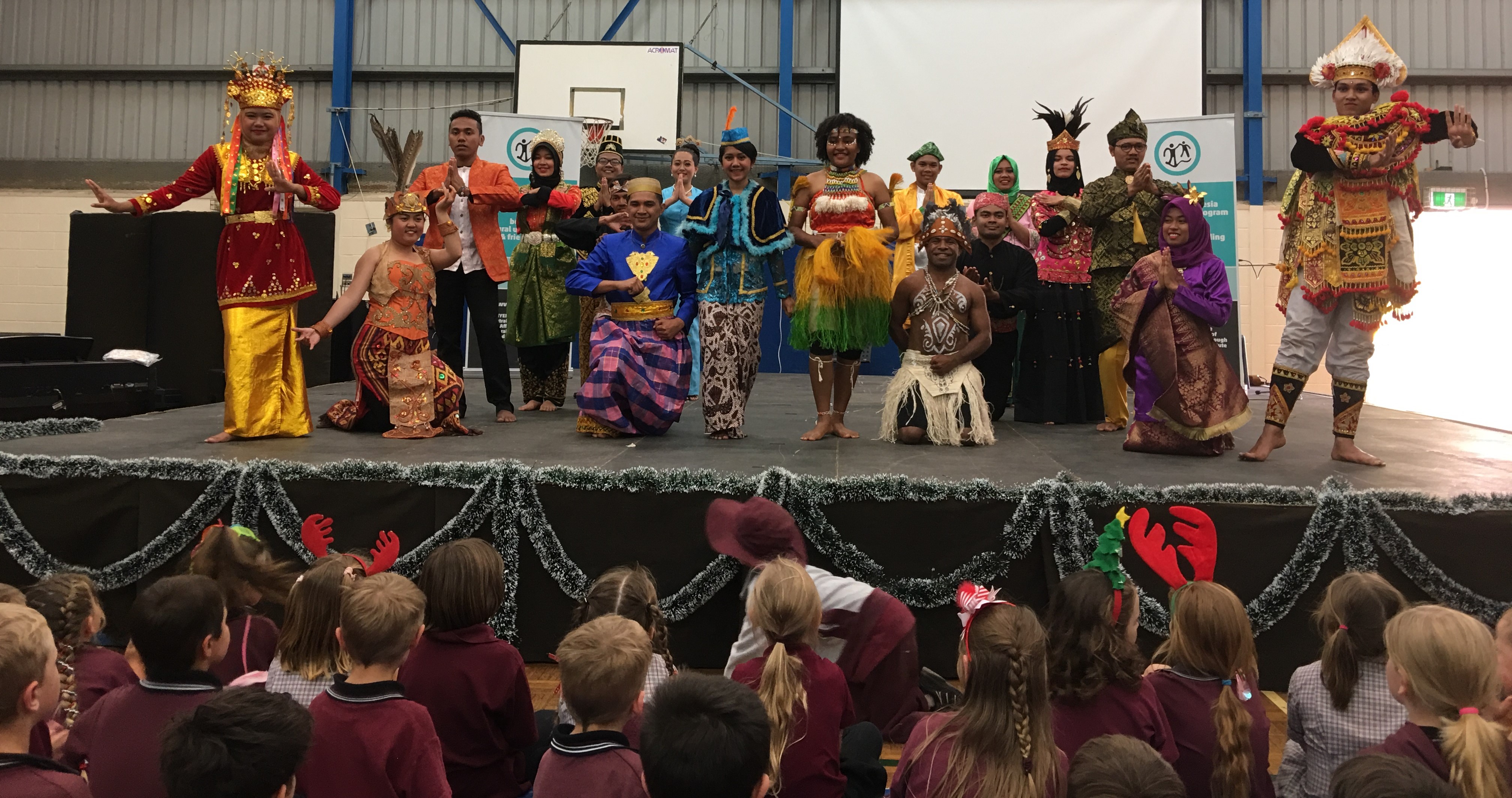
The AIYEP group has had 4 days each week at their work placement and then each Friday, reconnected as a group and traveled around visiting local schools to perform a selection of cultural dances. Their first day of their cultural performances on the Fleurieu coincided with the inaugural Twilight Pasar and was easily one of the highlights of our pasar. The costumes and dances were amazing. Each participant wore traditional clothing from their regions: Aceh, Riau, Java, Kalimantan, Ternate, Papua, Sulawesi and Bangka Belitung. img_1818Consequently their clothing varied immensely, especially that of the women. Sylvi from Java wore a beautiful cobalt blue sarong and jacket with her hair gathered back for an enormous bun. I’ve only seen her in casual clothes; the transformation was breath taking. Fadilla wore a long dress that she adapted to represent the traditional clothing of Central Sulawesi. The bodice was pink and covered in twinkling gold sequins and she also wore a matching tiara. Her layered black skirt had colourful dangling beads hanging from each layer. Her gold earrings were attached to her ears over her kerudung which strangely looked fantastic! Hannet and Luis from Papua wore grass skirts together with lots of body paint and shell necklaces. Their clothing added such a lovely balance to the group as it is so different from the traditional sarong and kebaya.


At PEPS, we had Ricky, Oscar, Farah (Fadilla) and Rini in the primary school and Odah in the kindergarten. During the first week, I presented them with their timetable and sent them off to classes for observations and then in the second week, they were given a choice to continue observing or stay in the Indonesian room. I’m thrilled they chose the latter! Post Pasar, the students were restless, so it was perfect that we had decided to teach traditional children’s games to small groups of students. Oscar chose cublak- cublak suweng, Rini chose bekel, Ricky chose pecah piring and Farah chose lompat karet. Because it was to be a fun week, I asked the students to get into 5 groups and then asked each group which activity they’d like to learn/do. My activity was congklak which most students already know so I was able to get my group going and then walk around taking photos of other groups. Because all but congklak was unfamiliar, there were no disappointed groups. Boys tended to select Oscar & Ricky and it was lovely watching them play simple children’s games and have so much fun. It really was a fantastic way for the students to interact with our visitors.

As the first lesson of the 2016 timetable is a planning lesson, Farah, Ricky, Oscar & Rini used this time on the second Tuesday to film themselves demonstrating and explaining the rules for each game. It took them a while to adjust to speaking slowly and restricting their vocabulary but the final result is awesome. Here are the videos that have been uploaded to YouTube so far:


We are going to miss them once they leave our region this Wednesday morning!


However the main point of this post is not just to share what we have been doing but also so that you can share this information with your students. Lets hope relations between Indonesia and Australia continue to improve so that programs like this continue to be available for our students in their future. There are so few programs like this (that I know of) that encourage Indonesian Language students to continue with their language learning, offering them an achievable goal as it is a fully funded DFAT program.


For more information, see the AIYEP website.

Inaugural Australian TCI/TPRS Conference: QLD & SA

Have you heard our exciting news yet?? For the first time ever, a TCI/TPRS conference will be held in Australia! How exciting is that!  Terry Waltz has accepted our invitation to work with us in both Brisbane & here on the Fleurieu Peninsular. This is a dream come true for all Australian TPRS language teachers who for many reasons have yet to fly to America or Europe to attend one of the conferences held there. We are so thrilled that the internationally recognised Terry Waltz will be leading us at the Australian inagural TPRS conference.

terrywaltzauthor

The two conferences will be very similar however a couple of major differences need to be noted. Firstly, the conference on the Fleurieu Peninsular does not include lunch. We plan to include a 2 hour lunch break to give participants the time to walk to the nearby main street with sufficient time to  network and discuss specific details before heading back to begin the afternoon session. Annie attended the Agen conference in July and found this time so useful. Another major difference is that we are limiting the total number of participants to 50. This is for several reasons but  mainly because we wish to recreate the community atmosphere Annie experienced in Agen.

The Fleurieu based conference will be held at Port Eliot Primary School from January 19 – 21. While the program is still being finalised, registrations are open and there is an early bird option available until 9th December 2016 for the South Australian conference. Follow this link to access the registration form:

https://drive.google.com/open?id=0BxtA-NkdsB6hSVhFQ2ZlSDlUMGs

It will be a 3 day conference with the first 2 days relevant for all language teachers regardless of sector or language taught. On the 3rd day participants will be divided into 2 groups:

Group 1 = (Non Roman alphabetic Languages eg Chinese, Japanese, Arabic, Russian) will work with Terry Waltz who will cover specific TPRS topics relevant for scripted languages such as cold character Reading, TOP tonal spelling, directional gestures.

Group 2: (Roman Alphabet Languages. eg Indonesian, Spanish, French) will be invited to attend  & participate in skills labs that focus on specific TPRS skill development. Time will also be available for participants to work together to create the resources necessary for implementing TPRS in their classes from day 1 of the school year.

If you are keen to attend, download the registration form asap. The early bird registration for the Brisbane venue finishes 19 November and for the Port Elliot venue, it finishes 9th December. Once you have completed the registration form and emailed it off with payment, we strongly encourage you to investigate accommodation options. The more popular ones book out early, so be quick.

If you have any questions, either write them below or contact us via the TCI TPRS Teachers Australia group on Facebook.

We really hope to see you at either one of the conference venues. I guarantee you won’t be disappointed! 

Teaching Spanish w Comprehensible Input- Haste Not Waste

An awesome blog written by Señora Hitz. The blog includes many awesome suggestions and those I believe are appropriate for Aussie teachers can be found on my TCI activities pages found on the home page in the top right hand corner. 

Posts like this, for me, help me to stop and reflect upon an important aspect of TCI/TPRS teaching. They help me to remember and appreciate what second language acquisition is truly like for my students. I hope it helps you too not only with understanding SLOW but also the many facets of SLOW. 

Read and contemplate the truths of ‘Haste a Not Waste’. 

Behaviour Management for Junior Primary

Earlier this year at one of our PLN get togethers, we talked about a behaviour management technique found on Pinterest.  I refer to it in my classroom as the nakal/pandai (naughty/clever) system. Read here for a quick refresher! It has been such a success in my classroom with  younger students that I want to post about the way in which it works for me.

I have created 2 A4 posters from images from Google and sticky taped to the back is an old fridge magnet to make it easier to put up and down on the whiteboard. The nakal poster looks like this:picture credit:

The pandai poster  looks like this:picture credit

I put them up side by side on the white board like this, with a blob of blutack in the middle:

Using these posters significantly reduces the amount of English I need to use for behaviour management with my active bearcubs (love this term from Catharina to describe young’uns!)

Here is how I use the nakal/pandai system in my lessons with my R-2’s.

The students walk in the door and sit down immediately in front of the white board. Students who do this quickly and quietly, receive immediate positive feedback with a smile and a verbal compliment, “pandai’. I then point at the pandai sign, look back at the student, smile again and then add a tally point. I then turn back to the class and give a thumbs up sign to the student before stating to the class, “Jack pandai! Bu Cathy kasih kelas Warner satu poin! Bagus Jack” (Jack is Clever! Bu Cathy has given your class a point. Well done Jack) If anyone does the wrong thing ( rolls on the floor, starts chatting in English to a friend etc), I look at them with a sad face and then do the nakal finger shaking gesture and turn around and tally a nakal point. The beauty of this, is that everyone knows exactly what the problem is and no English is necessary. I used to rely on English to get explain this, but it is no longer necessary!

After calling the roll on class dojo in Indonesian  (Bu Cathy mengabsen), I turn to the class and say, “Bu Cathy mau satu stik!” I hold up their class pot of paddle pop sticks (huge shout out to Natalie Bond for writing the names of all our students on the sticks for me!) and ‘randomly’ choose a stick, looking at the name to check that firstly the student is here today and secondly that they haven’t yet had a turn – each stick is marked afterwards with a dot. I then put the stick in the blutack between the nakal/pandai signs, name side downwards so no one knows whose stick it is. Students have quickly learned the colour of their own stick which is something I will avoid next year by allotting a different colour to different classes.
 Throughout the lesson, I tally whenever students demonstrate successful learning behaviours (pandai) or behaviours that interfere with thir own learning or the learning of others (nakal). The students watch this avidly and cheer when a single tally changes the balance from nakal to pandai!!

With 5 minutes of the lesson left, I invite students to sit in front of the board by saying, “Ayo kelas Lacey, menghitung” (Lets count, Miss Lacey’s class) and together we count in Indonesian. After each, I write the number under the tally marks and then turn back to the class and say, “Show Bu Cathy sembilan.” The students then hold up the corresponding fingers before repeating the process for the second tally marks. Next term, I feel my JP students are now familiar enough with this routine and are consequently ready to learn the word ‘kasihlihat’ (show) especially considering that they know both kasih (give) and lihat (see)! We then get repetitions on each number by saying the 2 numbers one after the other starting off slowly and then getting faster and faster with students trying to keep up with their fingers!! It always ends in hilarity!! We then turn back to the tallies and I ask, “Pandai besar atau nakal besar?” (Clever is big or naughty is big?) and the class generally answer with the correct answer. Some students recognising that the stick on the board is the wrong colour to be theirs will usually try to trick me by attempting to convince me that nakal is larger than pandai!! I then ask the class, “Mau lihat stik?” (Do you want to see the stick?) to which they cry out ‘Ya!”I then become goofy and suggest ridiculous statements like, “Nama saya ular! Nama saya Bu Lacey, Nama saya Spongebob!” (My name is snake. My name is Ms Lacey. My name is Spongebob!) After a couple of these incorrect suggestions, I read out correctly, “Nama saya Lisa.” Lisa jumps up excitedly. I ask her, “Mau lihat treasure box?” to which, of course she replies, “Ya!”

While she is looking in the treasure box (Is there a simple catchy Indonesian  word for this?), the class sing the goodbye song which is generally enough time for ‘Lisa’ to choose something from the treasure box, put the lid back on and then rejoin the class in time to line up ready to leave with the class teacher.

Another added bonus of this system has been student acquisition of numbers! It has been a successful and meaningful way in which  to introduce and consolidate knowledge of numbers 1 – 20 and without a doubt, my receptions this year have the best grasp of numbers than any other previous cohort!

Do you have a behaviour management system that works for you? Please feel free to share below by adding a comment!!