Kata Sandi – Passwords

Bryce Hedstrom has been updating frequently his blog post about secret class passwords and I’m curious! Would it work in the primary school? Would it work with large classes? 

  
The idea is that the teacher meets the  students at the classroom door before each lesson and like entering a secret clubhouse, students say the class password before entering. Passwords can either just be a fun word, a phrase or a response to a set teacher question (eg siapa nama?). The password can be changed as frequently as is necessary and this would depend on how often the teacher sees each class per week. For me, I teach some classes once a week and some twice, so I would start with a weekly password.  The passwords that Bryce has used cover a huge range of words/phrases and his latest additions includes morals like ‘slow and steady wins the race’. 

  
For my students, though, I can see the benefits of this idea with:

  1. Kenalkan questions eg siapa nama, tinggal dimana, berapa umur, suka warna apa etc
  2. Slang exclamations which would be useful/cute during story asking eg NGP (gay-en-peh –  gue nggak peduli)
  3. Repetition opportunity for target structures

  
Go to Bryce’s website and read what he has written so far and then enjoy fossicking around all the other fantastic resources and suggestions he has shared. 

Specialist Teachers Unite!

For the very first week of the year, the 5 specialist teachers at my school collaborated to present a united program to students. The 5 specialist are

  1. Performing Arts
  2. Digital Technology
  3. PE
  4. Geography
  5. Indonesian

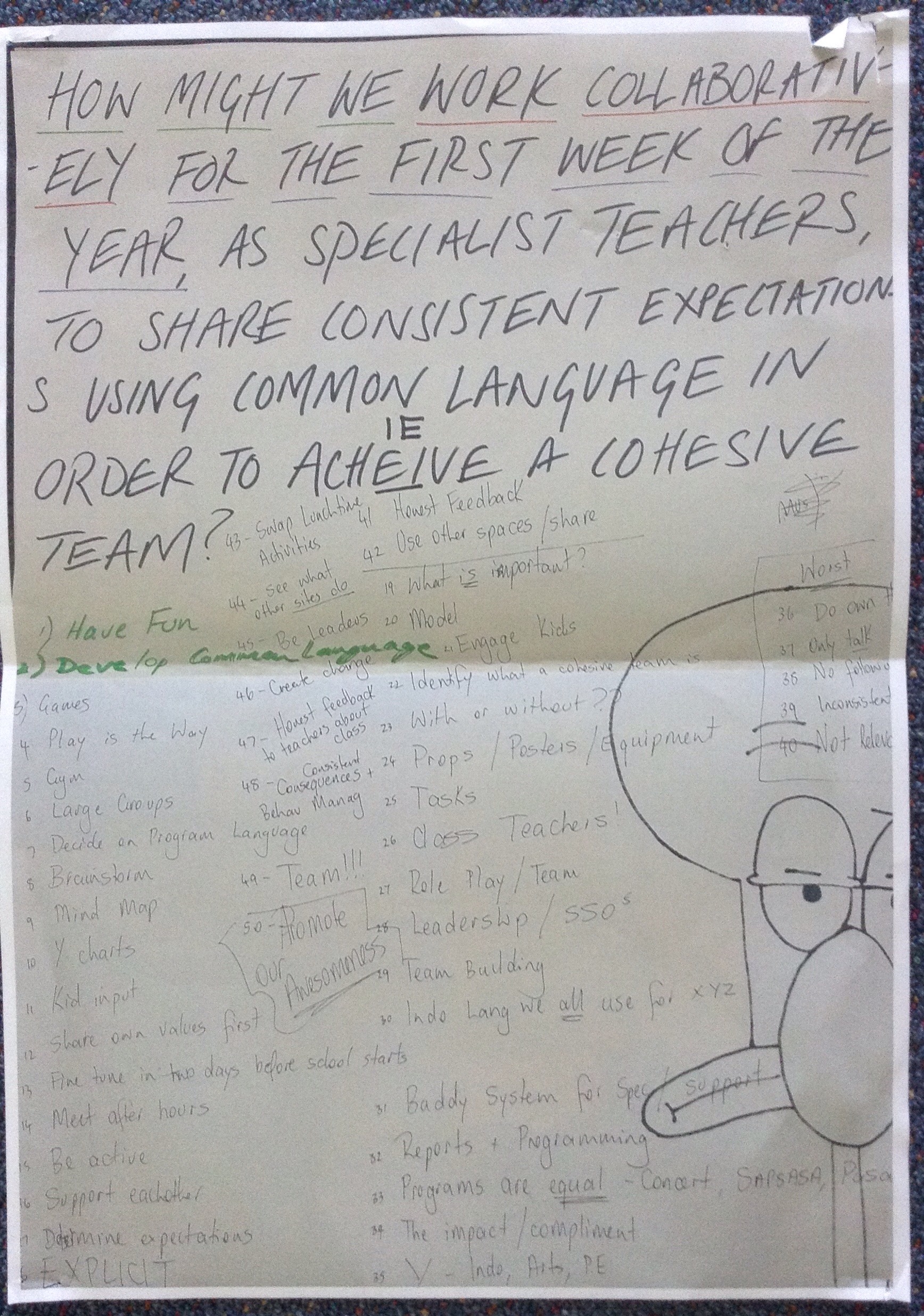
We first discussed the idea during a No Tosh workshop last year with the idea being that instead of students coming to each one of our classes in the first week of school and hearing the same message over and over again from each one of us, we would collaborate and clarify our expectations together. Here are our initial notes:

 We met during the holidays and excitedly agreed to trial the program. The idea was that we all came to our timetabled lessons in the gym with a short activity prepared for a large group of combined class levels. The activities had to provide us all with the springboard to discuss group skills & minor problem solving through our school values of community, confidence & respect.

As none of us work full time and our days are spread evenly over the week, it meant that each day we either had 2, 3 or 4 teachers on deck at any one time working with 2, 3 or 4 classes respectively. Two junior primary classes received our combined spiel 5 times and the remainder received it 4 times yet because the teachers each day were never exactly the same and the classes who came were also never exactly the same, the dynamics changed significantly each lesson.

We began each lesson with our shared expectations and communicated to students clearly that this year there will be significantly more communication between class teachers, leadership and specialist teachers  through a new monitoring system we will hope staff will support to ensure that behaviours in our classes are followed up on.  Other issues we talked about included the fact that our lessons are only 50 minutes and thus all students to repsect the learning of others so that time isn’t wasted.

We then shared the microphone around and led an activity each. It was brilliant being able to focus on group skills and problem solving repeatedly with mixed group levels. We would ask students to get into groups and then after a few minutes, ask everyone to stop. This gave us the opportunity to talk about the confidence needed to be proactive and approach a group and ask to join their group, how the request needs to be answered respectfully and diplomatically, to be resilient and persist till you join a group, make strong choices about who you group up with etc. We did this over and over again in various ways all from our own specialist subject viewpoint and students definitely improved over the week.

My activities included Bu Cathy Berkata (simon says), kancil, buaya, mangga (get into groups of 3 and decide who will be kancil, who will be buaya and who will be the mangga. Berjalan kaki around the gym in your group and each time I say ‘buaya/ mangga/kancil’ the kancil stands with their hands cupped on their head for ears, the buaya lies on the ground and the mangga curls into a ball) and on the last day I extended the language by asking students to ‘cari satu teman – satu perempuan dengan satu laki laki’ and it was fantastic that students used the stop gesture (tidak paham) and others could translate for them.

The geography teacher came up with her own activity which involved rings of students representing different aspects of the globe and then the finale was asking them each to turn either clockwise or anticlockwise. The final movement was amazing and I filmed it which should be good for a future brain break! It truly demonstrates why the weather is never  predictable.

Natalie, our performing arts teacher did one activity where she divided the students by gender. Each group had to put themselves into a line in order of birthdate and then she turned on some very loud music. Each group did well with only a couple of errors (not bad for 2 groups about 40 students) and afterwards she sat them down and discussed with them the impact of noise, congratulated the studetns who had shown leadership & asked the groups to explain the methods used. It was a brilliant activity for upper primary.

Evan brought ipads to the gym and asked the students to get into teams of 10. Each team had to take one continous video on an ipad which was passed respectfully clockwise around the circle and each person had to film the person on their left saying one positive thing about the who was person filming them. The groups that worked collaboratively and respectfully completed the task had time to watch their film yet the groups that did not collaborate well had many disappointed team members who didn’t get a chance to use the ipad. IMG_1615

We met on Thursday afternoon to review the program and we all agreed the week had been a huge success and one we’d be keen to repeat in 2017.  The comments from staff were also incredibly positive noting that the sense of community created in the gym felt very real. We found it a great way to start the year because it gave us a chance to meet the new students and learn their names as well as the names of a few of our many new reception students. It gave Evan and Les some breathing space in which they could learn about our school and students in a collaborative atmosphere before we all go it alone next week . All up the sense of community was strong not just for students but also for the 5 specialist teachers!

Tea With BVP

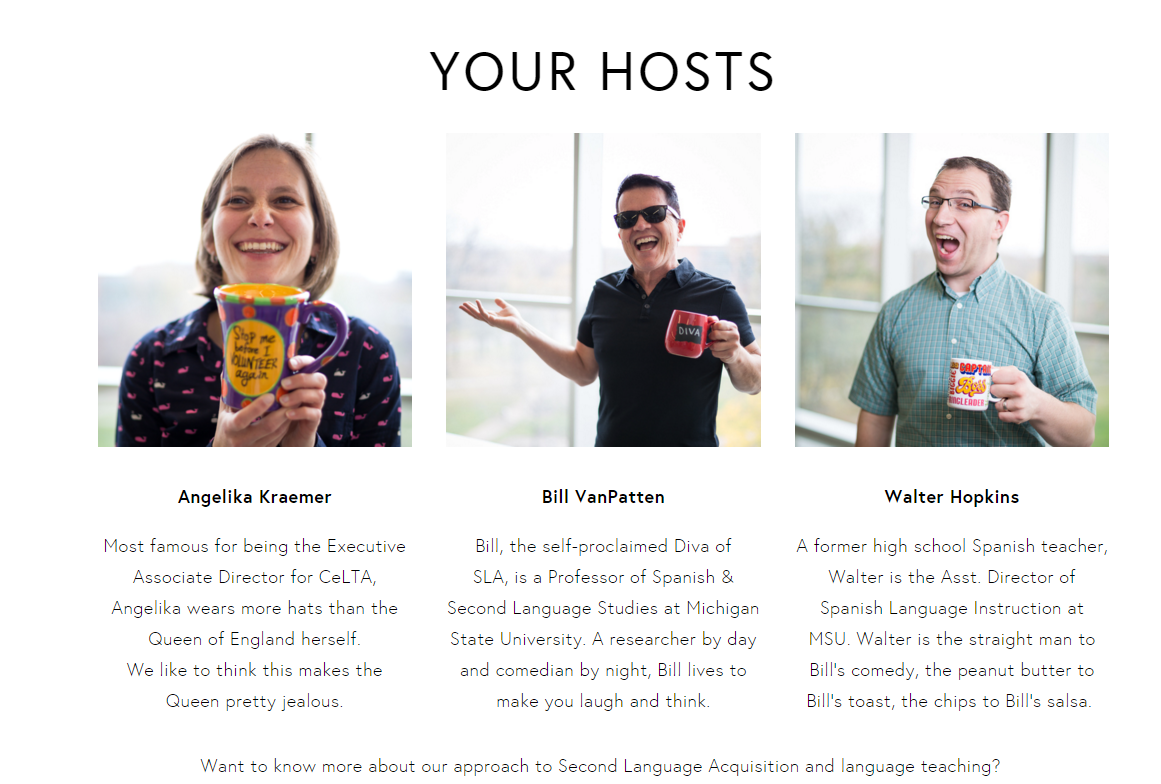
Each Friday morning at 6am (Australian time) Bill Van Pattern hosts a discussion about second language acquisition with Angelika and Walter.

tea with bvp hosts

Every session has a topic and today’s topic is:

“Are vocabulary and grammar learned differently?

Here are my notes that  I took while listening:

  1. Vocabulary and grammar are learned in essentially the same way.
  2. Acquisition is fundamental as opposed to learning (remember that the only thing that matters is the acquisition of language).
  3. Colourless green dreams sleep furiously. (Chomsky) Gibberish but the words fit grammatically!!
  4. Let’s hope teachers aren’t still asking students to memorise lists of vocabulary.
  5. Thematic conversations are not the same as thematic topics (e.g. restaurant, sport, body parts etc) Carol Gaab
  6. Frequency lists – If we use every day language, then we generate frequency vocabulary naturally.
  7. Verbs account to 20% of language. Nation (1990) 4000 – 5000 most frequent words account for up to 95% of written text & 85% of speech. Carol Gaab
  8. Be aware that context in classroom will be different to context out of classroom. If we prepare for outside experiences out of the classroom, then it is out of context. Stick to what students need in class. Stick to what is important to your cohort of students.
  9. Body parts (as a theme) will come naturally into speech when students need to know that specific vocabulary.
  10. Acquisition is effortless and involuntary – Karen Rowan
  11. You don’t have to talk about grammar unless your students ask for a clarification
  12. Is grammar acquired involuntarily? Word meaning is thought about consciously but grammar is not, by language learners.


As Bill is a professor of second language acquisition at Maine University, his knowledge of relevant theory and practice is prodigious. He would be a compelling lecturer because he sprinkles irreverent comments throughout which at first seem bizarre but once attuned to his sense of humour, listening to him becomes very entertaining.

The conversation between the 3 presenters is largely theory based but it is balanced practically by Walter & Angelika as well as the many language teachers who contribute to the discussion either on Twitter, Mixlr, by email, or by calling in and talking directly to the panel.

The conversations can either by listened to live however if that isn’t possible, then go to the TeawithBVP website and listen via links to past episodes on sound cloud.

Every week there is a SLA Challenge Quiz – a multiple choice quiz with prizes (coasters today) depending on the number of questions you get correct. Those listening on MIxlr generally help who ever is taking the quiz by posting answers. A true example of the collegiality that exists amongst TCI practitioners!

Here is a taste of the SLA Quiz!

Q1 just like grammar that has syntax and morphology, vocab is largely is largely acquired by

  1. ?
  2. Interaction with input
  3. knowledge of the first language
  4. Examining Trumps speeches


Q2 Researchers refer to vocabulary as?

  1. A morphological units
  2. The mental lexicon
  3. The syntactic and network
  4. One fish red fish blue fish


Q3 words can be changed not only from one meaning to another but also from a found to an adverb. How do we refer to how a word changes from one category to another?

  1. Inflection
  2. Extension
  3. Derivation
  4. Freudian catharsis


If you are keen to learn more, then sign up for the newsletter on the “Tea with BVP” website.

Another option is to listen to BVP talking about aspects of second language acquisition. Here is the first in a series and this one is titled “What Everyone Should Know About Second Language Acquisition.”

https://youtu.be/X1LRoKQzb9U?list=PL7AsHYMEToB7gSRuN1WBRF4hL6QOSLagr

IFLT/NTPRS/CI Teaching- How To Involve The Whole Class When Storytelling

A great thread appeared overnight on the iFLT/NTPRS/CI Teaching Facebook page Have you joined yet? If not, I highly recommend it. It is a global  community totally dedicated to all levels and aspects of TCI. Your own personal PLC where you can comment on other posts or ask questions about teaching with Comprehensible Input and TPRS. For those of us here in Australia, where TCI is only just taking off, this group is awesome. Whether you prefer to be a lurker or a contributor makes no difference because the other teachers here bring a wide variety of experiences and the knowledge they share is impressive. They too cover the spectrum of experience and once you take the first step and. join, you will discover what a warm and generous community it is. My only word of caution though is: go with your gut feeling. Remember that we Australians aren’t the only ones frustrated by the lack of training available here and thus interpretations of TCI vary. If a suggestion sounds a little off centre, don’t worry or stress; it is most likely because of a different understanding of what TCI actually is. If you need clarification, ask openly on the page and no doubt an experienced practioner will chime in and clarify. There are certain names to look out for and you’ll recognise them from all your readings. 

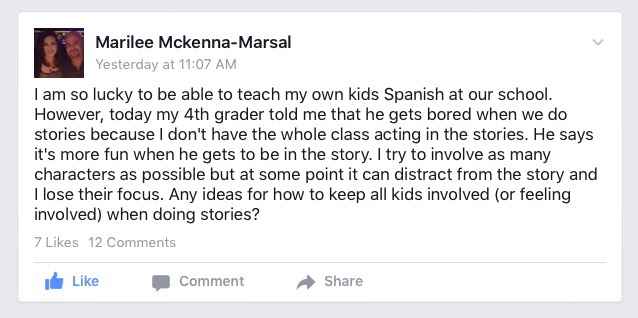
The thread I enjoyed reading this morning asked how to involve more students when reviewing a story. It was posted by a parent/teacher who has a child in one of her classes.  I remember the pros and cons of teaching my own children and this was definitely one of the pros. I totally appreciated the insights into both my teaching and the students in the classes. 

Here is her question: 

 
The answers to the question were awesome and most of them are worth sharing becausse they would work very well in our primary classrooms. Interestingly though, is that secondary teachers have also shared here!  

   
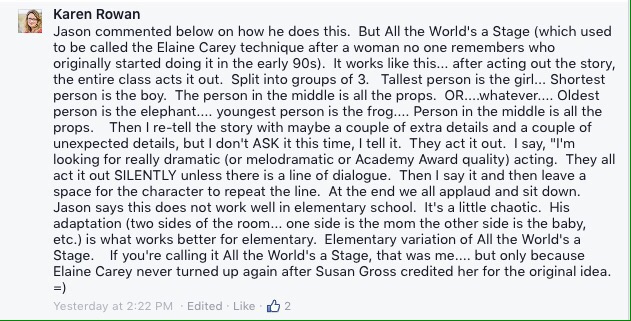
The answer below by Karen Rowan actually fits in after Grants initial comment above.


So many great ideas here to not only gets heaps of repetitions but also to keep our students engaged in the story.

Martina Bex is Luar Biasa!

Are you thinking that maybe you might like to dip your toes in the TCI/TPRS ocean this year? If so, then Martina Bex has a brilliant series about how to do this. Her latest post is called ‘TPRS 101 : Give it a Try’ and you can read it here. I highly recommend this post because she has clearly outlined the steps to follow for your first ever lesson. The only thing to keep in mind is that this is for secondary language teachers, so the questions I would ask  my primary students would be based entirely on language they are already familiar with mixed together with lots of cognates. Eg where did you go yesterday, who did you see yesterday, what did you eat, what did you drink? My students understand the Indonesian concept of ‘yesterday’ meaning sometime in the past, it might have actually been yesterday or it might have been last month. Very useful when simplifying language and keeping it comprehensible. 

For my students I could introduce the target structure ‘dapat’ (am thinking dikasih may be too confusing. ) ‘Dapat apa?’ And then ask that student ‘Dapat Xbox tetapi mau apa?’ Which uses all familiar language except ‘dapat’ which is the vocabulary being targeted and has to be used repetively to ensure acquisition. 

What other questions could we ask Indonesian students whose vocabulary is very limited? Feel free to add in the comment section below. 

Kursi Luar Biasa

I read of an idea in which individual students enjoy being interviewed just before Sharon pointed out that we haven’t fully covered aspects of the 3-4 & 5-6 curriculum regarding student personal information.  To me the idea of a special star student seemed a terrific way to not only cover this aspect of our curriculum but would also give middle and upper primary students the chance to shine and enjoy the limelight answering questions about themselves to a captive audience.

I have also been toying with the idea of how to widen student knowledge of Indonesian exclamations, so I decided to combine both together with ‘murid luar biasa’ and translated it to students as ‘the awesome student’ however this didn’t feel right, so in the second week I changed it to kursi luar biasa and for some reason, it felt better. Luar biasa is now the new Indonesian catch phrase and has been used constantly – to my delight!

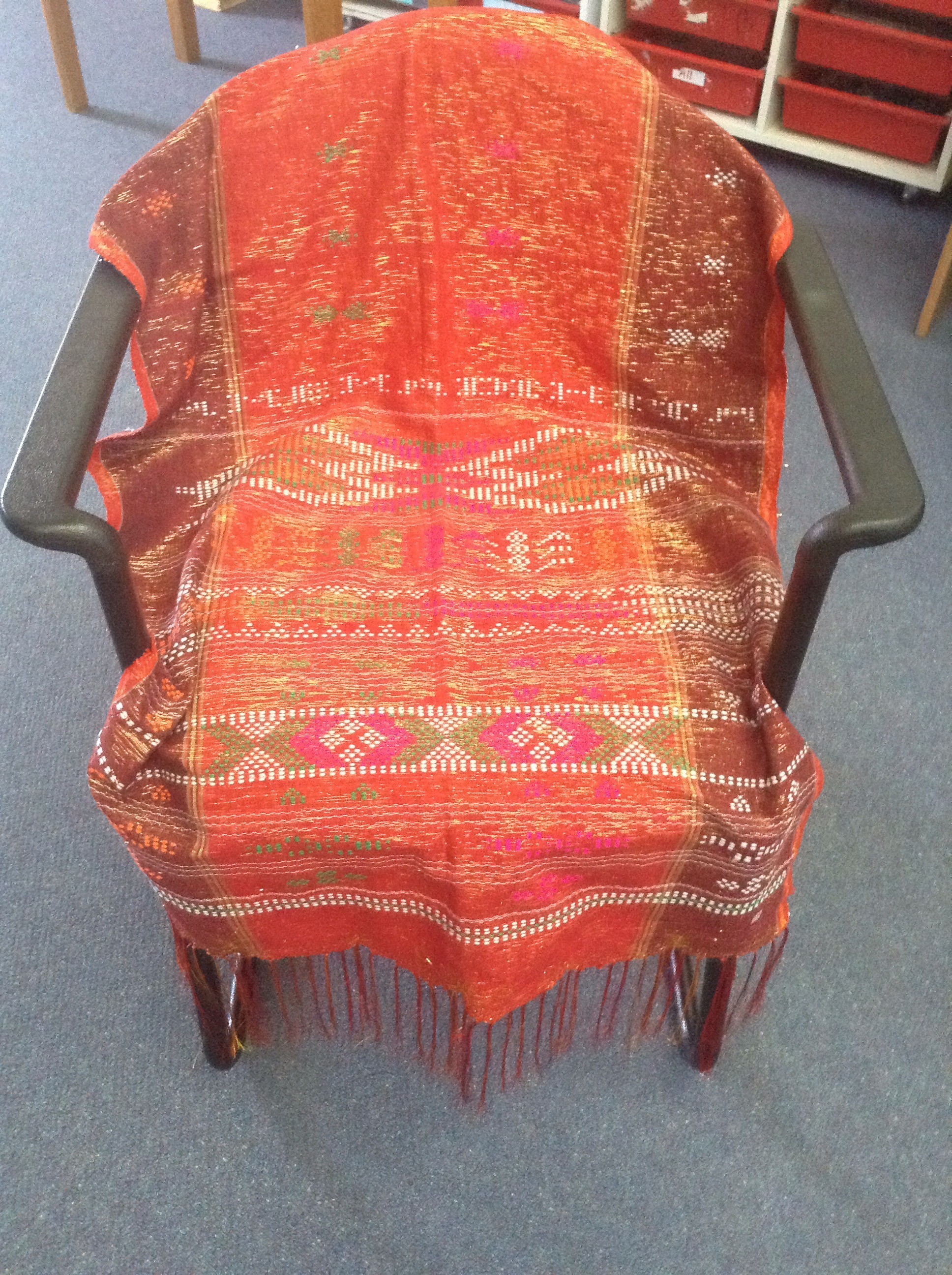
I took the secretary chair and covered it with the beautiful Batak shawl Pak Pahot gave me in February and transformed it into the kursi luar biasa.

  I explained to students that anyone can sit in the chair with ‘first in, best dressed’ (rewards students who get to class on time) however once they’ve had a turn, they can not sit in it again util everyone who wants a go has done so.
While I only trialled the kursi luar biasa for 2 weeks, it was hugely successful. I began with our stock kenalkan questions and was pleasantly relieved just how much students have remembered even though we haven’t had a ‘kenalkan’ focus since term 1 2014!! This reaffirms my belief in the power of TCI/TPRS.  Next I started thinking of other questions I could ask students and that proved challenging. Questions that incorporated language structures they were familiar with and ones that students could answer using just the language they have acquired so far.

While I had thought my questions were largely lame, all students who have chosen to sit in the kursi luar biasa chair must disagree with this because there has been no shortage of volunteers. What I have enjoyed in particular is the opportunity to talk to  just one student and learn something surprising about them. I learned that one of my families has a pet snake, which was compelling for the class as well as for me!! It was pure gold because I could circle this information to include other students by asking if they too owned a snake, who was scared of snakes, have you seen a snake, are there snakes at school etc. E.g. Jodie sudah lihat ular di sekolah or  Jamie mau lihat ular di sekolah? Another student told us using ‘gado gado’ that her budgie had died that morning because her grandmothers dog had killed it. I’d never have known if not for her choosing to sit in the chair that day. But the most heart warming part of this was when the entire class said with compassion, “kasihan” that I knew the kursi luar biasa is well worth continuing with.

The session goes for as long as I feel that I  have whole class engagement and once I run out of questions or the class starts getting restless, we stop and move on. It is the perfect way to ask students personal questions in context and get repetitions of this language. I am looking forward to honing my questioning  techniques next year as well as developing a bank of questions which not only rely on known language structures but also lend themselves to open-ended answers.

Questions I have used so far include:

Tinggal dimana?

Umur berapa?

Siapa nama?

Kelas berapa?

Punya adik?

Punya kakak?

Siapa nama adik/ kakak/ ibu/bapak?

Punya anjing/kucing/tikus/burung?

Suka warna apa?

Suka makan apa?

Kemarin kemana?

Mau punya apa?
Feel free to add suggestions!!

Dadar Gulung

Traditionally in term 4, my year 7 classes study a cooking recipe before cooking it in groups because, lets face it, anything to do with cooking is popular and it’s a positive note for them to finish on after 8 years of learning Indonesian at primary school. This year, the challenge for me was adapting such a unit of work to be compatible with TCI methodology.
As usual, I began the term by asking the students in each class to vote for the food their class woud like to cook. Each class narrowed their wishlist down to 2; a savoury and a sweet recipe. Previously I split the 9 week term in half, with classes studying recipe #1 for the first 4 weeks, before focusing on recipe #2 over the final 4 weeks. The final week is always a right-off with graduation, class  parties etc and it’s nice to have a week up my sleeve just in case! I quickly discovered though that attempting two recipes was one recipe too many. Thus for the majority of the term we focused on the one recipe that both classes had chosen: Dadar Gulung.


In adapting this unit of work, my first task was to simplify the ‘authentic’ recipe drastically to reduce the large amount of unfamiliar and unnecessary vocabulary. This turned out to be even easier than I imagined. Yet, what I couldn’t avoid was the long list of ingredients, mostly low frequency vocabulary except for maybe water. Here is my recipe  in English and following it is the CI version.

Here is my simplified recipe:dadar gulung recipe
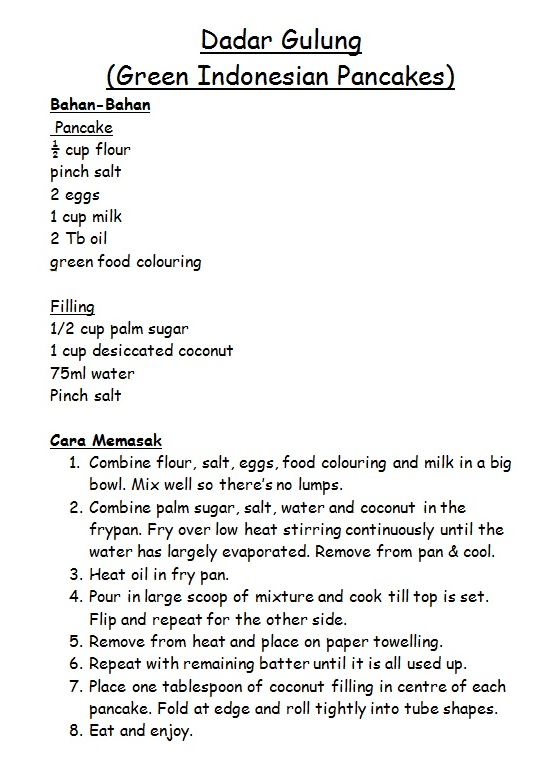
Here’s my adapted version of the method:

  1. Campurkan gula dan kelapa. Goreng dan aduk. Angkat.
  2. Campurkan tepung, gula, garam, telur, pandan dan susu di mangkok besar. Aduk.
  3. Panaskan minyak.
  4. Kasih satu sendok besar campuran dadar dan goreng dua menit.
  5. Balik dadar dan goreng satu menit lagi.
  6. Angkat.
  7. Ulangi.
  8. Taruh campuran kelapa/gula di dadar. Lipat dan gulung.
  9. Selamat makan!

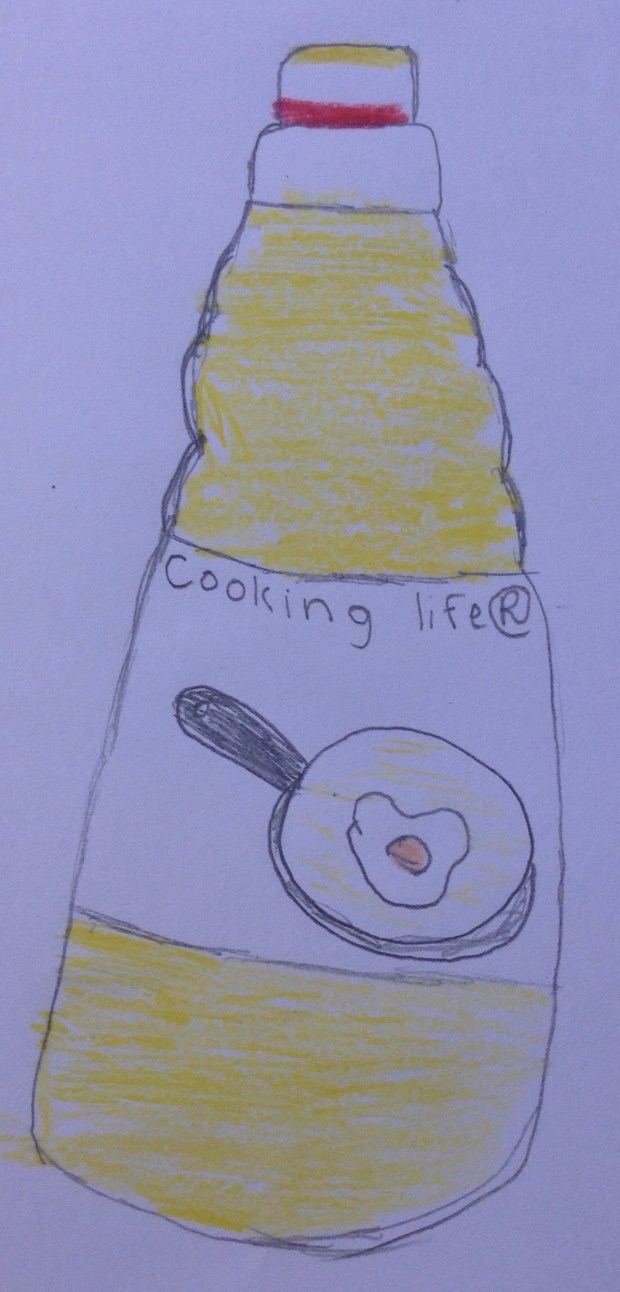
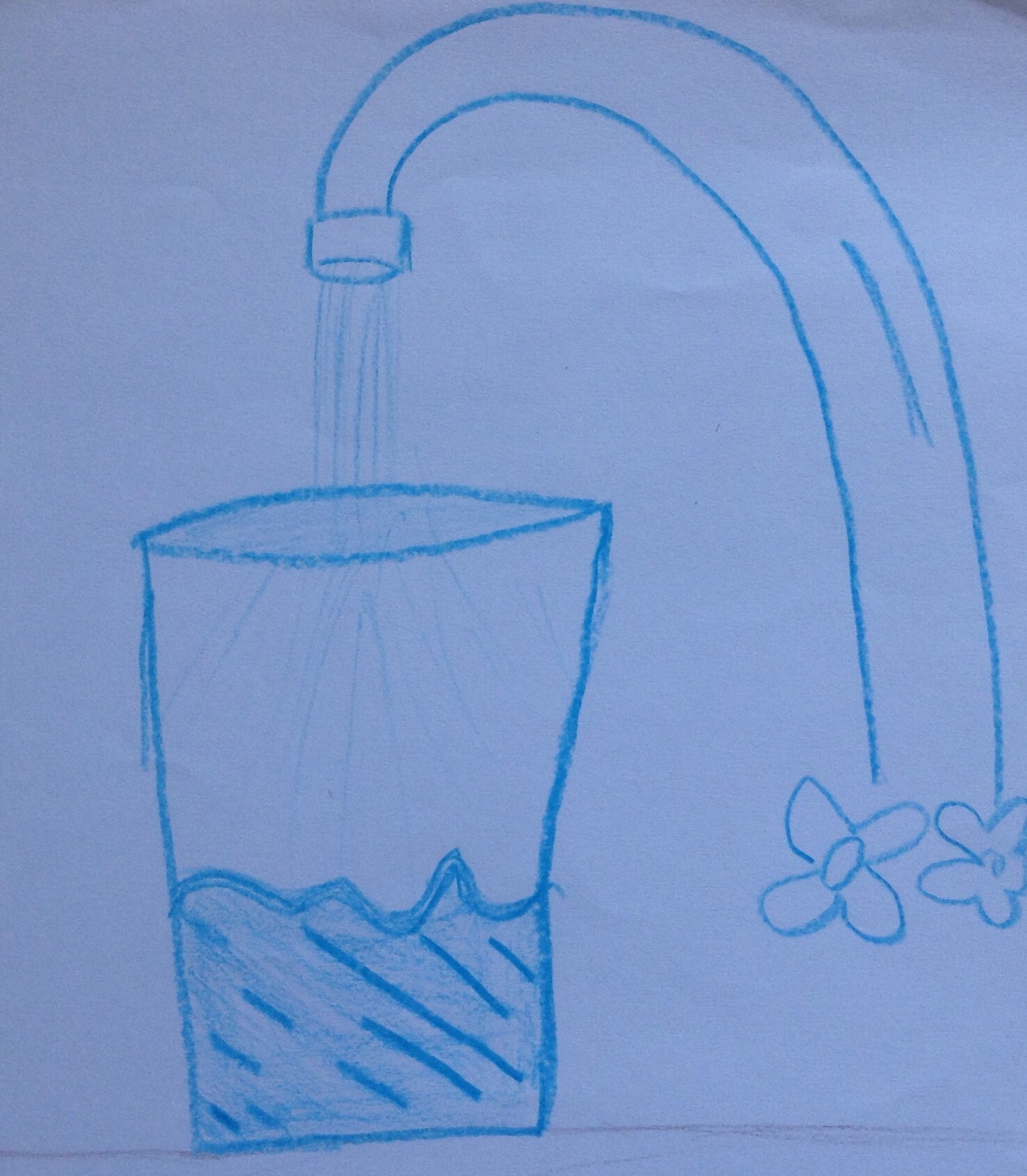
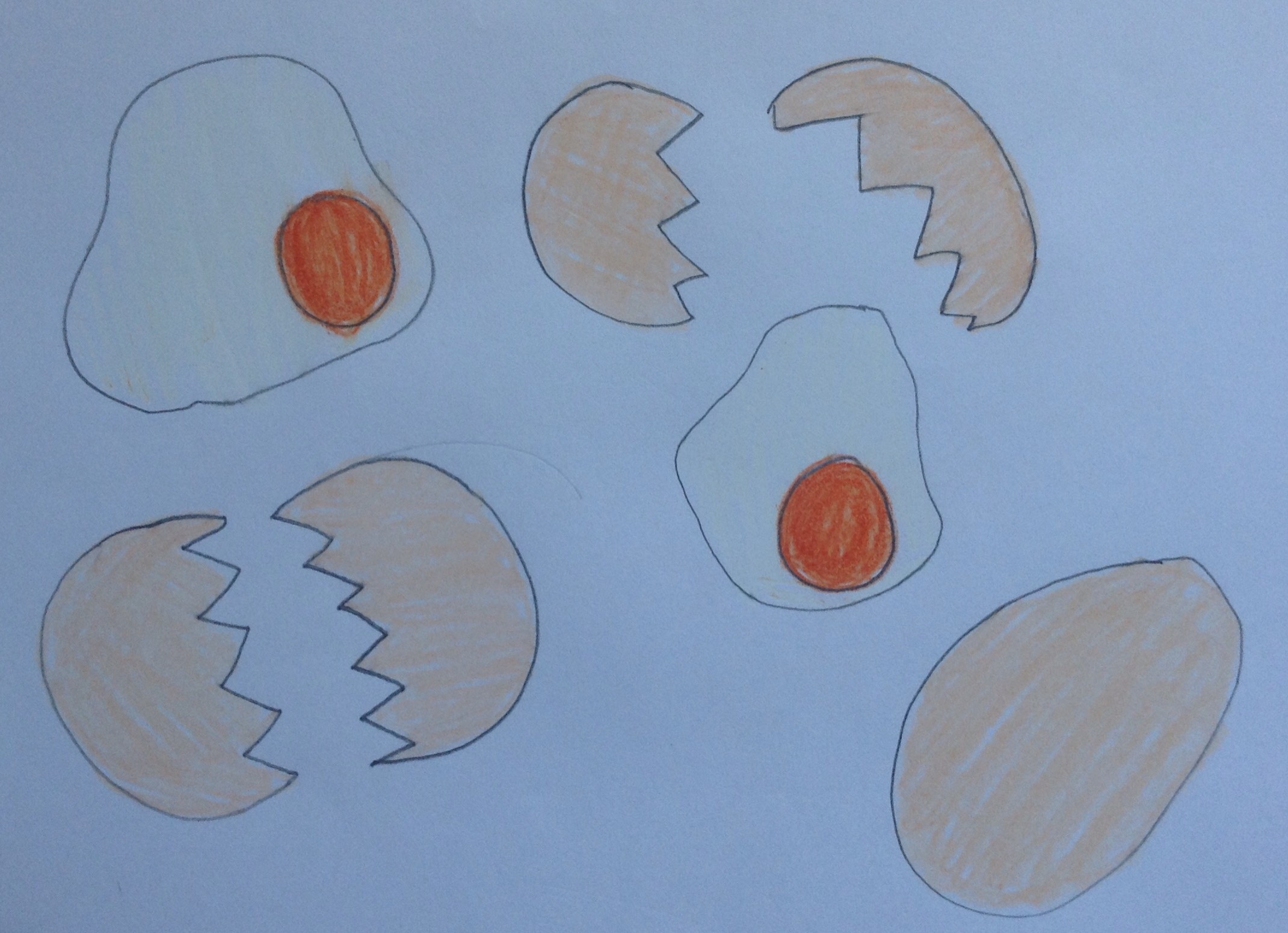
I decided to tackle the ingredients first with the thought that as soon as they were acquired,  the method would be largely (although still not i+1) comprehensible. I began with a google search for images and found a large image of each ingredient. I then printed an A4 copy of each and laminated them. I didn’t label (ie write the Indonesian on) the pictures which at times was useful and other times frustrating. Probably should have though to assist with acquisition. I began by introducing this new vocabulary and encouraging students to come up with ways they could remember each. Both classes suggested remembering ‘minyak’ (oil) is  easy because it is yuck (yak)!! Next students got into 6 groups (the number of trestle tables in my room). Each group was given 11 sheets of A5 paper & 11 laminated cards, each with one of the ingredient words on it. As a team, each ingredient had to illustrated, one per piece of paper. Here are just a few of them:
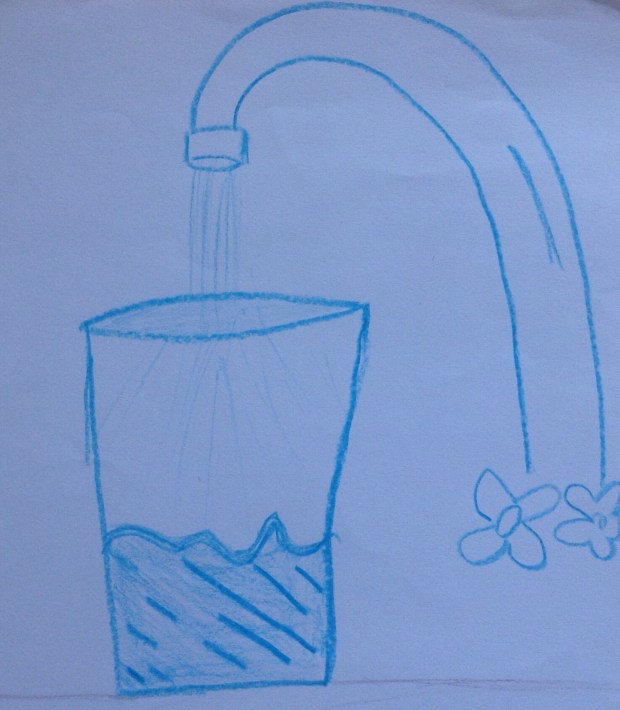



We then played a game to get as many repetitions of this new vocabulary  as possible: all picture sheets and cards were turned upside down and mixed together in the centre of the table. On go, teams had to turn everything over and then match up the illustration with the word card. When groups had played this several times with their own pictures, they were asked to stand and rotate to another table and we replayed with the pictures from another team. This was hilarious because some of the pictures were left field. You can imagine what some teams thought of some of the gula merah pics!! When the teams were at the final table, I then added a further variation to the game by asking the teams to nominate their best 2 players to play off against the other teams and after that round asked the groups to nominate the 2 players who had participated the least for a final competition. In each team there were passive team members, some were lacking in confidence while others were over ruled by more dominant team members, so this gave them a chance to participate and shine. My instruction to the non-players insisted that their hands remain under the table and to only speak in Indonesian! This worked beautifully! More repetitions!! From me and their fellow students!

From that lesson onwards, I began lessons with a vocabulary review by asking students to tell me what the ingredients are for dadar gulung. (Dadar gulung pakain apa?)The only word which stumped them right to the end was kelapa parut!! Considering most of the language used in this unit is low frequency, it will be interesting to see how much is retained long term.

The next lesson I planned to teach included a cooking demo so that the students could both watch the method and listen to the recipe in context while completing a listen and draw however it was precisely that week I fell sick. Such a bummer. Unfortunately by the time I was well again, end of year interruptions and severe depletion of energies resulted in this not happening. Instead students did the listen and draw without the demo, cloze and a ‘unjumble the sentences’ type of activity. It was very rushed towards the end due to the loss of time which was such a shame.

I also had to squeeze in a very quick introduction to the 2nd recipe the classes were each cooking. One class chose Mie Goreng Telur Ala Ibu MIa (which was perfect because I coud recycle most of the dadar gulung method vocabulary) and the other class had chosen mie goreng. In those lessons, we also had to finalise groups  (students choose their own) and determine the equipment needed to cook the recipes. It was very rushed but thankfully it all finished well.

When classes cook, I provide the ingredients and students have to bring in the equipment as they will be cooking the recipes by themselves in their group. I do it this way for several reasons – the main reason being that I firmly believe students should take equal responsibility in preparing for this. It also weeds out the apathetic students who have in the past sabotaged the experience for the others in their group.  These non contributing students are divided out amongst the junior primary classes to ‘help’. This year though, for the first time ever, every student cooked!! The one student who didn’t bring anything in had spoken to me privately explaining how difficult this would be for him, and he was fortunately in a group being supervised by one of their Mums who knew him and his circumstances well.  Phew, because this was the only thing we did all year that he showed any interest in and it was great for him to finish up on a positive note. A final bonus for doing it this way is that students take home all the dirty dishes and I don’t get left with the washing up!

I encourage groups to invite a ‘supervisor’ for several reasons. The supervisor can be a parent, an older brother or sister (lovely opportunity to catch up with ex students who themselves get a kick out of revisiting an Indonesian cooking lesson) or a responsible family member/friend. Having community members is great for PR but more importantly, the electricity board in my room cannot support more than 4 electric frypans at any one time.  Thus a supervisor enables groups to cook elsewhere in the school, either in our canteen, the staffroom or even in their own classroom. The added bonus of this is that I usually end up with only 1 or 2 groups cooking in the Indonesian classroom!!  Bliss.

I begin the cooking lesson by handing out copies of the recipes and then standing back as the groups organise their ingredients.
Here are a few photos taken from one of the classes:

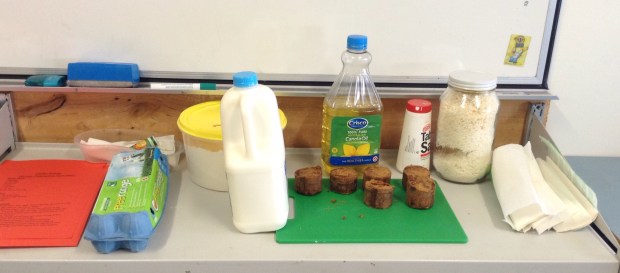
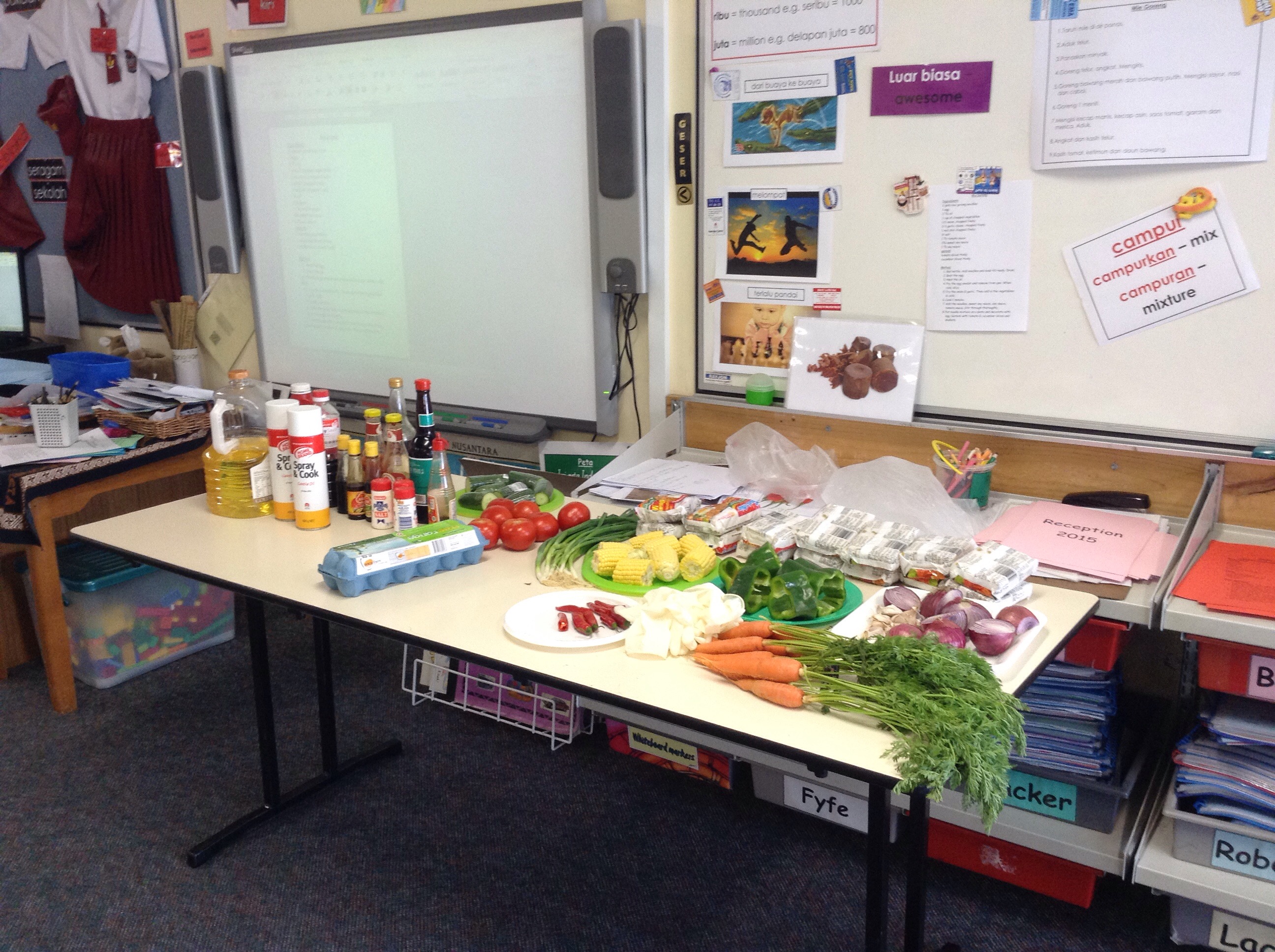
Firstly, the ingredients as I set them out. Some are portioned already and some aren’t.

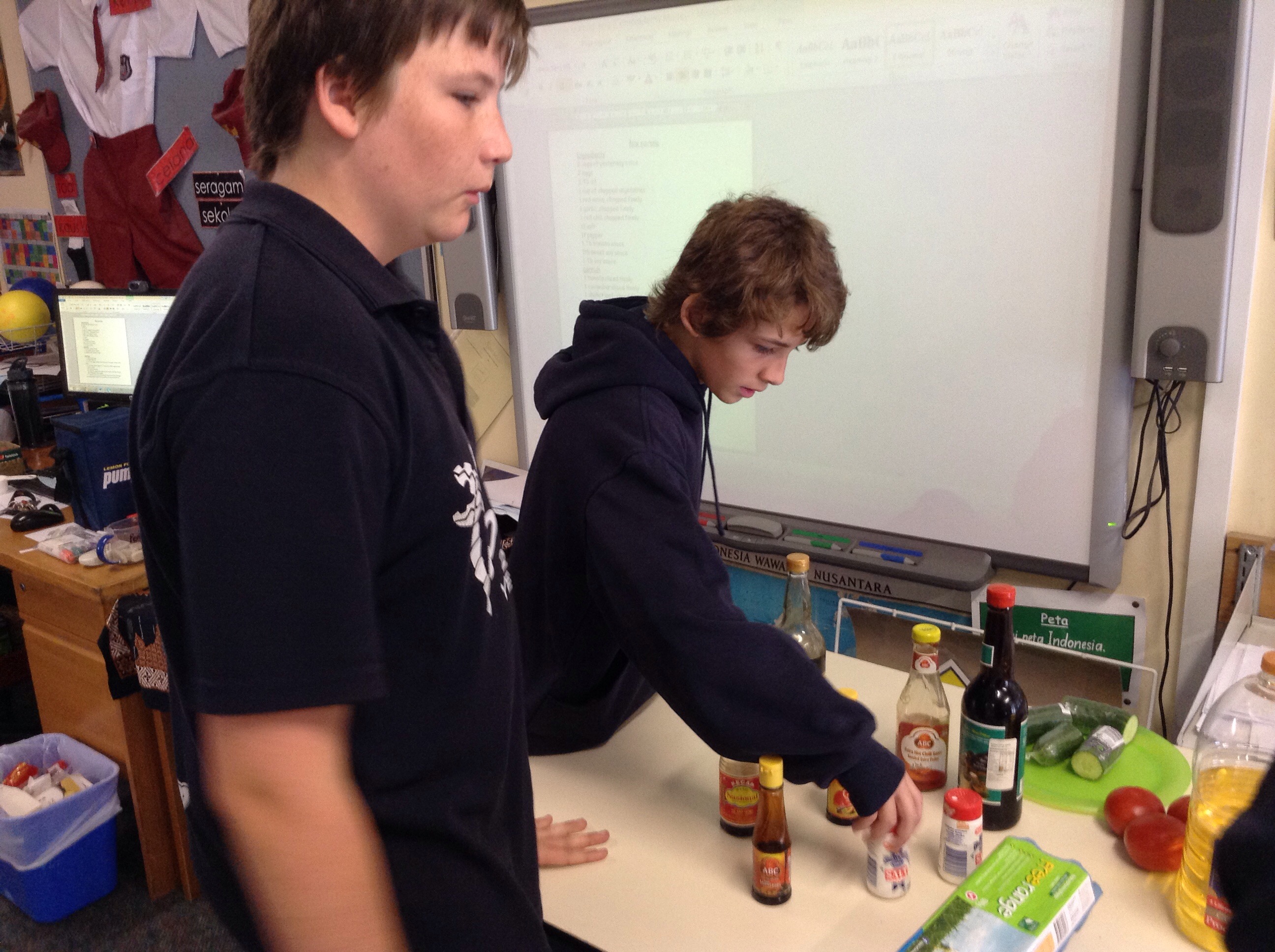
Students helping themselves to the ingredients
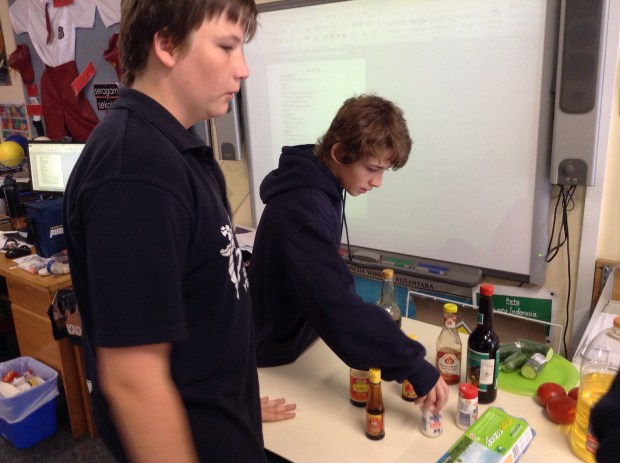
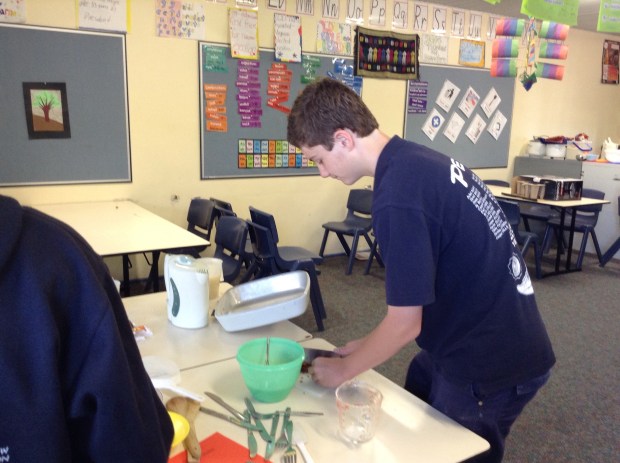
Students cooking:


The unit of work was finished with a Kahoot! challenge.  What an amazing and engaging way to complete the unit. As I said in my previous post, I had issues with lagging which we still haven’t been able to trouble shoot even with Kahoot! support. Quite a shame really because it has so much potential. I intend to investigate it further next year in the computer room and see if by eliminating the ipads, the lagging stops. It was such a fun way to wrap up the unit with a concentration on structures. Even kelapa parut was learned by the end!

Overall, in reflection, I feel that this topic was more of a ‘bail out’ and whether this was due to insufficient time or that it still needs a lot of tweaking, I’m not quite sure. Also at this time of the year, it is more important to do what is manageable because of the sheer number of balls teachers juggle with end of year requirements.  Another issue is that the year 7’s in term 4 are challenging and the sooner the  SA government moves them to high school in line with other states and our national curriculum the better, but that’s a whole different topic!

End of Term 4 Reflections

Fourth term is just about to finish; just one more week to go. It has flown by so quickly! As I’ve written several times, this term I focused on the traditional tale, Kancil & Buaya. During the last holidays our hub group met to adapt the story so that the vocabulary in the story was largely comprehensible for our students as well as introducing a few new structures. I think we did a great job with it and although much longer than any of our previous stories, was enjoyed by my year R – 6 students. 

My tweaked adapted version: 

Kancil berjalan kaki ke sungai.

Kancil lihat mangga di sebelah sungai.

Kancil lapar dan mau makan mangga.

Kancil tidak bisa berenang.

Kancil lihat banyak buaya di sungai.

Kancil lihat banyak buaya lapar di sungai.

Bagaimana kancil bisa makan mangga?

Kancil berkata, “Halo Buaya! Ada berapa buaya di sungai?”

Buaya berkata, “Tidak tahu!”

Kancil berkata, “Saya manu menghitung. Ayo buaya, antri.”

Buaya antri.

Kancil melompat dari buaya ke buaya dan menghitung.

Satu, dua, tiga, empat, lima, enam, tujuh, delapan, sembilan, sepuluh.

Kancil berlari dan tertawa.

Kancil makan mangga.

Buaya marah.

Kancil terlalu pandai.

Isn’t that an awesome adaptation? The vocabulary for the original story was so complicated! It is so rewarding to turn an incomprehensible story into a comprehensible story! 

I then parred  the story down even further for junior primary students. Their simplified version looked like this:

Kancil berjalan kaki.

Kancil lihat mangga.

Kancil mau makan mangga.

Kancil lihat buaya.

Kancil berkata, “Saya mau menghitung buaya. Ayo buaya, antri.”

Buaya antri.

Kancil melompat dari buaya ke buaya dan mengitung.

Satu, dua, tiga, empat, lima, enam, tujuh, delapan, sembilan, sepuluh.

Kancil makan mangga.

Kancil senang sekali.

Each week, I focused on a new structure from the above story and incorporated it into the JP story. It became an embedded reading! The most useful structure was undoubtedly ‘tidak tahu’. What a great phrase! I love how students have acquired ‘tidak tahu’ so thoroughly and use it appropirately in conversations!

My major reflection regarding this story is that it would be a great story for first term when we have 11 weeks rather than fourth term which is more like an 8 week term! There is so much potential for this story. I feel like we barely skimmed the surface of its potential.

To finish up the terms work, students did a free write and played the word chunk game last week and then this week I am going to experiment with Kahoot! using my 6 ipads. I have created a 20 question game to review the story. Feel free to open Kahoot! and search for Kancil dan Buaya. While there, have a look at the Dadar Gulung review game I made for my 6/7’s. It was such a success! It turned a group of year 7’s who are too cool for school, around last week. They begged to play it 3 times!! The amount of repetition was awesome. I did have a few connectivity issues which I emailed Kahoot! about. They have replied already, so I will discuss their comments with our IT guru tomorrow to see what needs to be done before Tuesdays lessons. 

Reporting and Assessing to the Australian Curriculum

On Wednesday last week, the Indonesian teachers met again with Mel Jones, the Coordinator for Primary Australian Curriculum (CPAC) for our region. The purpose of our meeting was to focus on reporting and moderation. Attending included Cheryl & Sharon from VH R-7, Jemma from C.A.S., Annie from G.P.S. and myself from P.E.P.S.

The meeting was brilliant on so many levels but mostly because we were able to attend training specific to the teaching of Indonesian with other local Indonesian teacher colleagues. Non-metropolitan language teachers know how rare these opportunities are! In fact ‘rare’ doesn’t even come close to counting the times! Let’s just acknowledge that this is the second time that we have been provided by DECD Indonesian language teacher specific training in our local area!! Let’s hope there are many more!

Our meeting began with the awesome question: How can sites that provide students with less than the recommended number of minutes of Indonesian instruction per week cover the curriculum and therefore report accurately against it? We discovered that several sites within our district are way under quota for no other reason than that the program is not supported nor valued by leadership. In both cases, the staff and principals have been lobbied, both verbally and in writing, offering various solutions to rectify the issue, yet it all seems to have been conveniently swept under the carpet. To return to the burning question, do teachers who cover less than half the amount of the curriculum due to time limitations, give their students ‘D’ & ‘E’’s or do they shift the goal posts and create their own bell curve? What is your take? We all agreed it was tough to grade the students poorly because of an administrative oversight/decision.

Mel then introduced the Reporting Resource: A-E Guide (see below)

reporting resource A - E Guide

as a baseline for devising a grading system relevant for assessing Indonesian language students. We spent quite a bit of time on this as between the 5 of us, 3 teachers use TPRS methodology and the other 2 use traditional methods. This lead to some interesting discussions and ensured the guide we agreed to was inclusive of both methodologies. Yet once, we started looking at student work against our determined criteria, we discovered that it didn’t completely recognize the Achievement Standards which students had acquired. For example, one piece of work we gave a ‘C’ using this criteria yet when we looked at it against the Achievement Standards, the work sample ticked more than 50% of the points, so how could it only be given a ‘C’? So we went back to the drawing board and agreed that the reporting guide is actually quite accurate as it stands and all we had to do was remove the ‘in new contexts’ for the grades ‘A’, ‘B’ & ‘C’ and then we were all satisfied with it.

Sharon began first with her writing samples from a free write she had done with her year 2’s. We all agreed the samples were amazing. Jemma was blown away and instantly wanted to know more about TCI methodology because if this is what year 2’s are producing, TPRS/TCI must be worth investigating! We discussed the task itself (write as much as you can about this picture –a picture from the folk story we have been focusing on this term – Kancil dan Buaya) and realized that we should have given the students more detailed instructions to ensure they were clear on how they could incorporate vocabulary from previous stories into their writing and thus achieve an ‘A’ for the task. For example, students could have included colours , numbers, body parts, clothing (kancil tidak pakai sepatu) etc.

We next looked at Cheryl’s task which was based on her terms focus on the Daniel Bradbury book, “Ada Berapa?” a beautiful counting book. She had created an A3 sheet with 5 pictures taken from the book and students had to write sentences about the pictures using the language modeled in the text. Cheryl was very apprehensive sharing her results after Sharon, which is understandable, yet for me, the student work she presented demonstrates clearly that TPRS/TCI methodology assists student language acquisition far greater than traditional methodology. Cheryl also asked for more information about TPRS/TCI and is keen to look at the Ben Slavic book, “TPRS in a Year”. We suggested she develop each skill one by one, so it is less intimidating. I really hope she does because it will help both her and her students enormously. We all start with baby steps.

We all agreed it was brilliant to have time to collaborate with colleagues in preparation for the 2016 implementation of the Indonesian languages curriculum.  For me, I was especially thankful for the chance to look once again at the curriculum through reporting eyes and be involved with the creation of a grading guide which is highly compatible for all language methodologies.

2015 World Teachers Day Award Ceremony – Presented by CEASA

Last Friday night, the SA World Teachers Day Awards Ceremony & Cocktail Party was held at EDC in Hindmarsh. During the ceremony, it was explained that while World Teachers Day is celebrated internationally on October 5th, in SA (and other Australian states), it is celebrated on October 30th so that it falls midterm rather than during the school holidays. World Teachers Day  was established in 1994 by UNESCO to “acknowledge the important contribution made to our community (by teachers) in an increasingly complex, multicultural and technological world.” Source: education.nt.gov.au

While traveling last holidays, I recieved an email from CEASA confirming my nomination for an award and inviting me and 2 guests to attend. I immediately added the date to my diary and began wondering what does one wear to a cocktail party? 

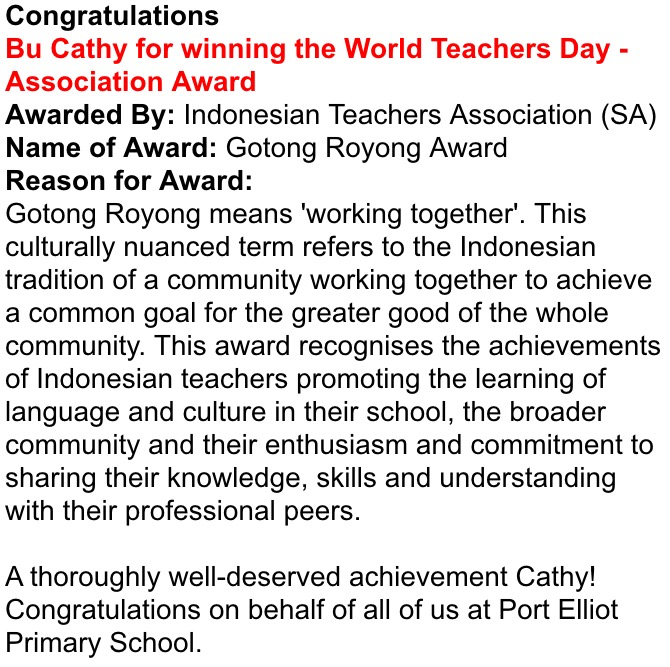
Upon our return to school, the principal had included into our weekly staff bulletin the news of my nomination with the following information: 


I was so pleased that Brenton had included this information because when I spoke to my Dad inviting him to attend, he asked me why I’d been nominated and I realised I didn’t know! I was  just so chuffed to be nominated, the why hadn’t occured to me! 

So you can imagine my distress and disappointment when I woke up Friday morning severely unwell. I rang my Dad in tears and after quizzing me on my symptoms (viral and not flu was his diagnosis), he recommended paracetamol and bed rest. I did as he said and woke several hours later feeling that the hour drive to Adelaide was now manageable. I got ready, packed an overnight bag and headed off. I got as far as Port Noarlunga and just had to stop. I was sooo tired and all I wanted to do was put my head down. I debated briefly with myself and decided that it was better to keep going and have a decent nap on my arrival into Adelaide. It was the hardest drive I have ever done. I finally arrived at my daughters flat where she took one look at me and put me to bed. She woke me an hour later and we headed off to collect my father, who it should be mentioned, usually avoids sick people like the plague!! (ha ha) It is a testiment to how proud he was that he accompanied us at all. 

The award ceremony itself is a blur. The room was set up with chairs facing the front lectern. The front chairs divided in half with one side for award recipients and the other for important guests and award presenters. The back section was for invited guests and that is where Dad & Bec sat with my phone to photograph the action and atmosphere. I sat in a row of 5 people and felt very rude not talking to them but I was so conscious of being contagious. I later realised that I had spent the morning castigating whoever had shared this virus with me for daring to step foot outside their front door when so ill and here I was doing just that! I really hope I was able to keep my germs to myself that evening! 

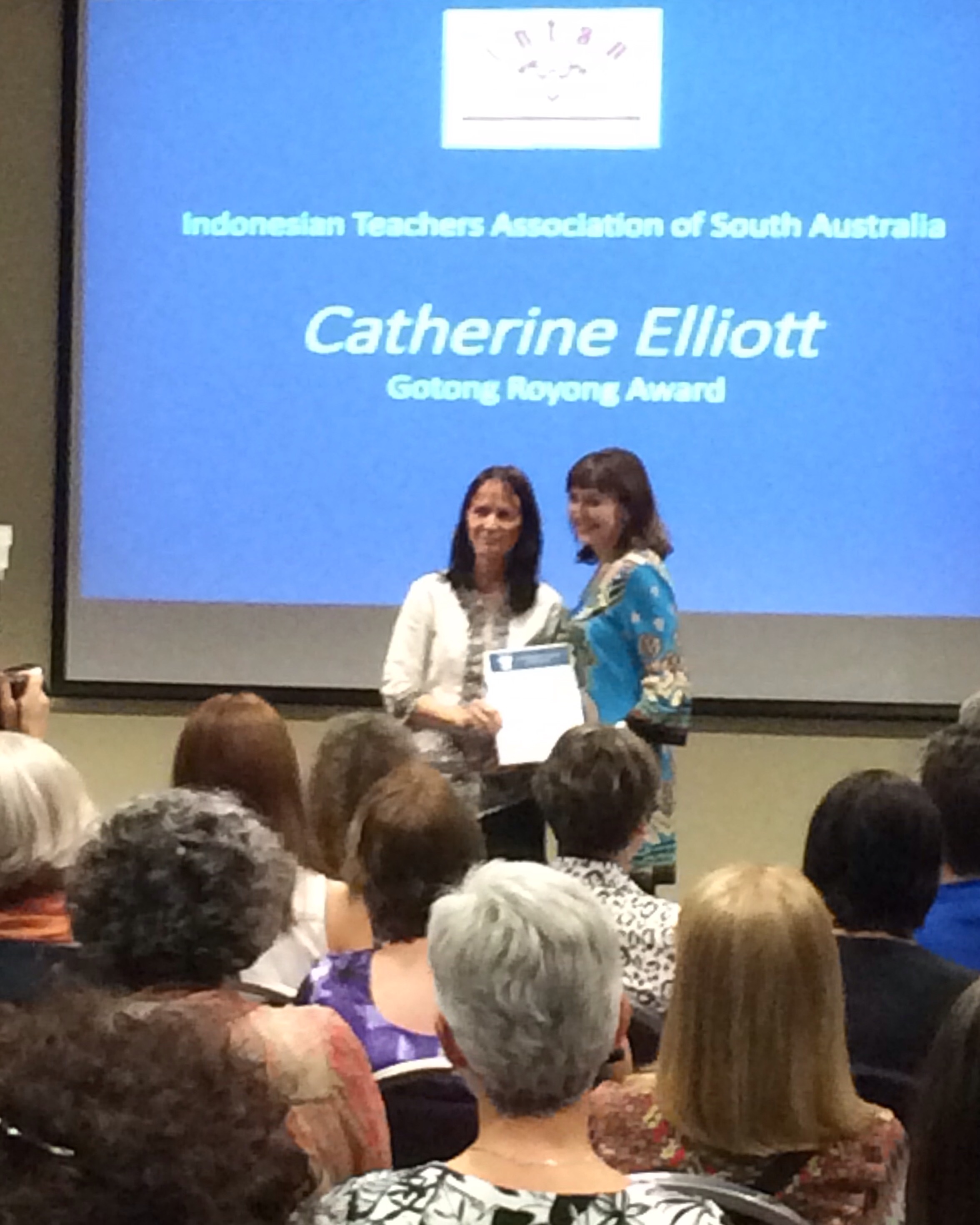
Sonya Feldhoff (891) was the MC and she did a stirling job. After short speeches by various stakeholders, the awards were presented smoothly and swiftly. One by one, each row of awardees was invited to stand and wait in the ‘wings’. As Sonya read out our name, we walked across the ‘stage’ to Susan Close, the Minister for Education and Child Development, who was ready to present us with our certificate.  

 Together we then turned and faced the cameraman who was sitting in the front row and then in front of everyone, smiled with the certificate front and centre. I was able to do all but the smile, and I am dreading receiving my official photo because my face just would not cooperate! 

I returned to my seat and spent the rest of the evening alternating between struggling to keep my eyes open and checking my watch. It was with great relief that the ceremony finished half an hour earlier than scheduled. I quickly searched for Dad & Bec who were enjoying a glass of red. They took one look at me, put their glasses down and we turned to head down the stairs. Going against the throng who were heading for the promised food and drink, we ran into Brenton, Julie & Andrea representing INTAN. They begged for a photo before we headed off and I was grateful for that because I too wanted one yet was uncomfortable about transmitting my revolting virus to either the president, the vice president or the secretary of INTAN who had so generously given up their Friday evening to witness the ceremony.  I sincerely hope my zombie-like state and early departure in no way interfered with their enjoyment of the evening!! 


Thankyou INTAN for nominating me for the 2015 Gotong Royong Award. It was such an honor to receive this award and I am truly humbled to have been acknowledged by such a wonderful organisation. Receiving the award has helped me realise just how lucky I am to have a job which incorporates my two passions – TPRS and Indonesian. Terima kasih sebesar besarnya teman teman di INTAN.

Dad & me