Harnessing Volcanic Energy – Geothermal Power

What a fascinating topic! I have just discovered (on Twitter) that Indonesia has very recently changed legislation to cut the red tape currently needed for harnessing energy from volcanoes. Read this article about geothermal energy, how it is harnessed and how earthquakes surprisingly help geothermal plants.
From this article, students would be able to brainstorm many inquiry based questions around a topic which appeals to students of all ages.

IMG_8711.PNG Geothermal plant in Iceland
source: http://www.photoree.com/photos/permalink/5824949-42244487@N04

iMovie Trailers – A Fun & Easy Icebreaker!

What a fantastic idea to use next week with a group of visiting Indonesian students and teachers. They will be in our school for just the afternoon and working with 2 different classes as a once off. I have been wracking my brains to come up with a project idea whereby students collaborate together on the iPads. This is perfect! Thanks & great timing!

teachingwithipad's avatarteachingwithipad.org

iMovie trailers on iPad/iPhone/iPod touch

Here is a great ice breaker activity for you if you have a few iPads to use in your classroom. iMovie comes free from Apple with new devices. If you have an older iDevice, it will cost you $4.99USD.

You will need around one iPad per group of 2-6 students. Or, if you only have one iPad, create a trailer as a class.

iMovie trailers is a very fun and easy way to create awesome short videos. Your class will probably be able to finish within one to two hours.

Note that you don’t need to worry about any spoken lines. Have your students first choose a theme, then figure out the written parts either before or during filming.

How to film, step-by-step

Have groups of 2-4. Students should take turns filming and make sure each person is featured in the movie.

1. Open iMovie…

View original post 667 more words

There is/There are

Indonesian has the same high frequency word for ‘there is’ & ‘there are’ and is also a tricky language concept to teach. I love this teaching suggestion and would rename it, “Ada apa dibawah topi?” Would be great for all ages and the question in itself lends itself to a variety of topics.

Martina Bex's avatarThe Comprehensible Classroom

Screen Shot 2014-08-29 at 7.51.59 AM

Hay–the word for “there is” or “there are” in Spanish–is one of the highest frequency structures in any language. However…it’s not one of the easiest to teach because it is difficult for students to form a mental picture with which to associate it. As with any new structure, give your students the translation (ideally, in written form; for pre-literate kids, tell them what it means verbally and remind them several times) and establish a gesture for it. It is important to give them the translation in addition to the gesture so that they do not misinterpret the gesture. My gesture for “hay” is to stand with my hands in front of me, open-palmed and beside each other, and then to dramatically pull them out to the sides, as if presenting something, like, “Here you go! Here it is!” (I keep promising one reader that I’ll film all of my gestures…one day…).

After…

View original post 568 more words

Mystery Skype Practise With Pak Bagus & Kak Dayu

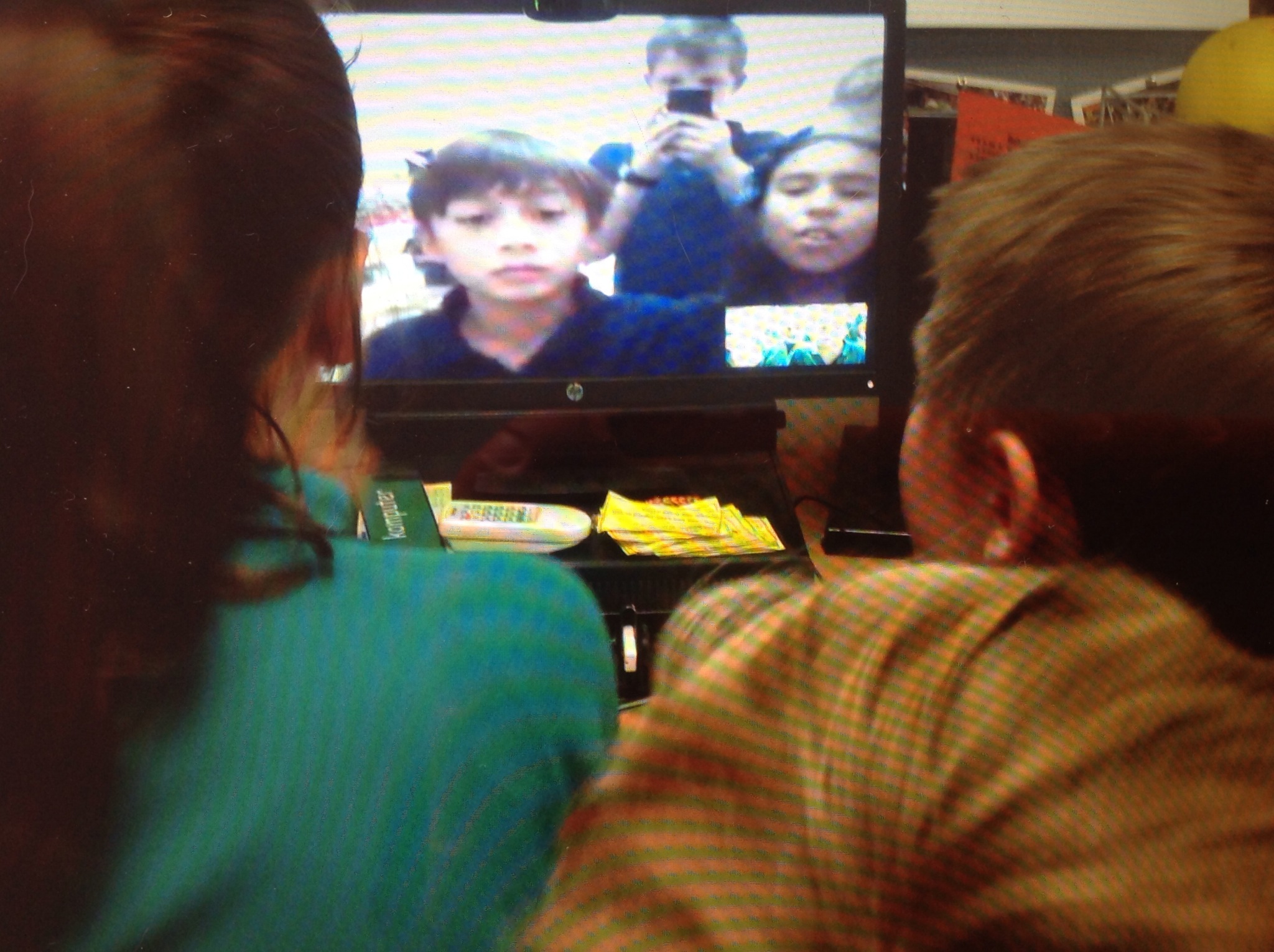
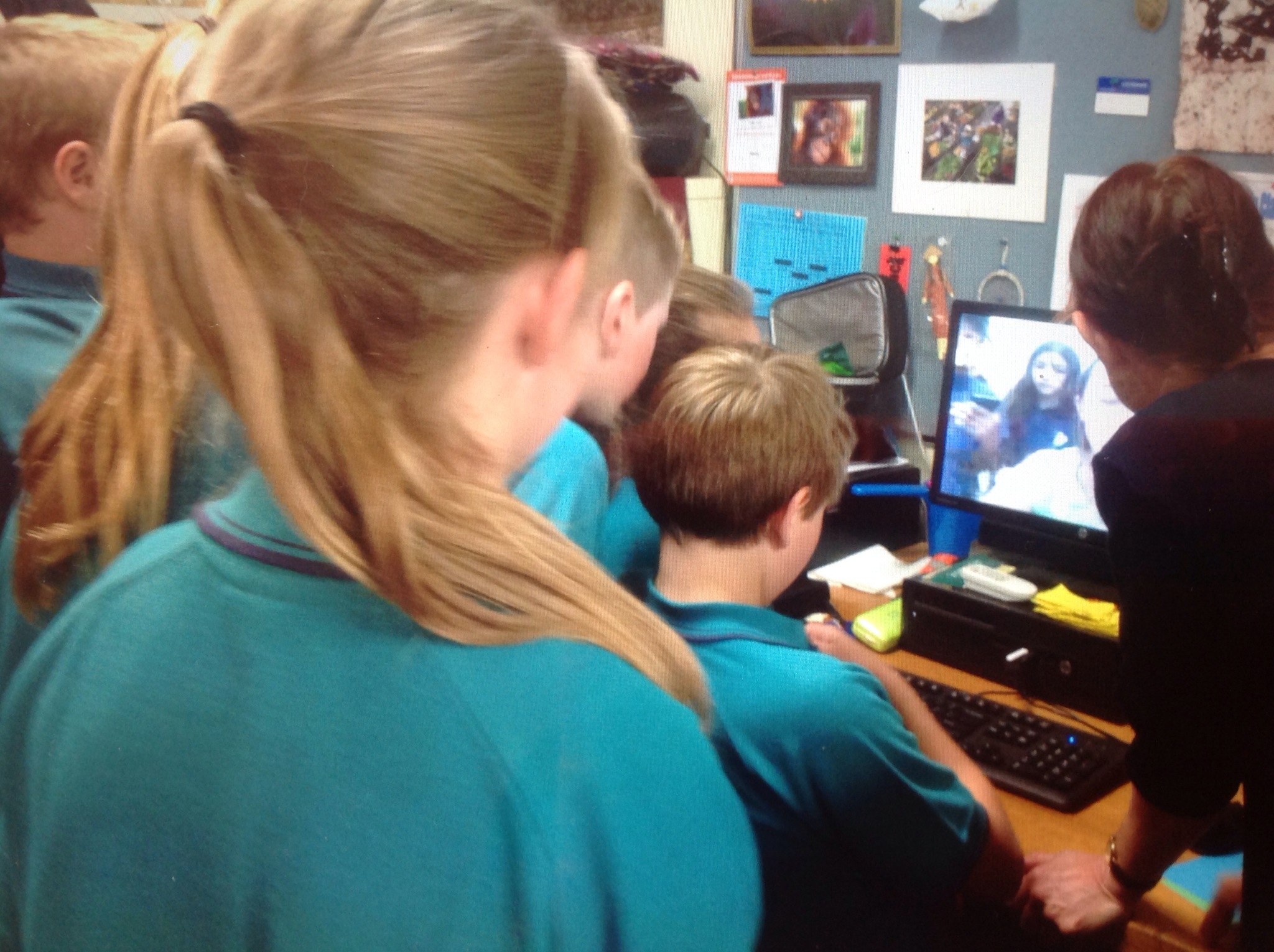
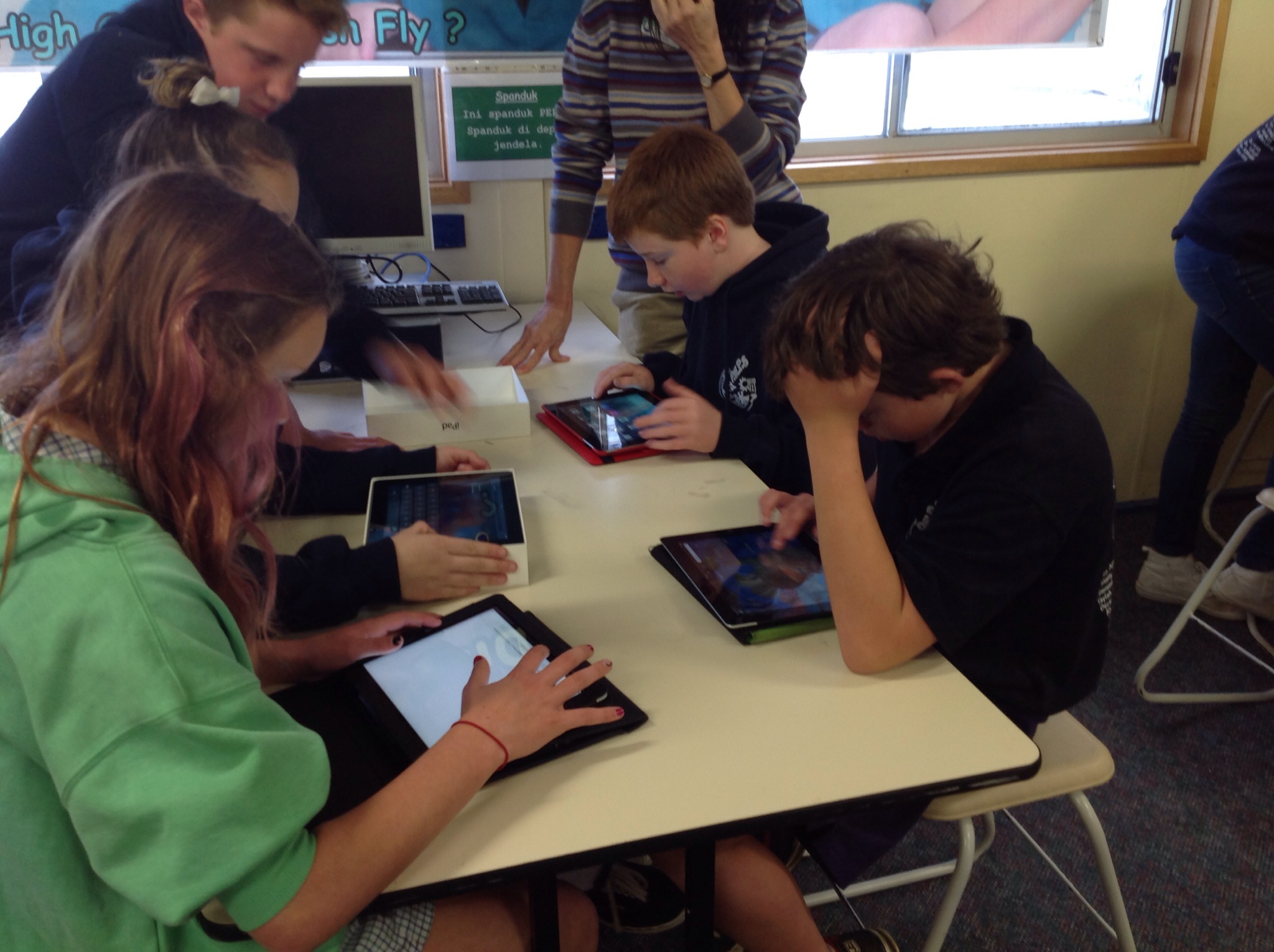
2 Weeks ago, our school was lucky once again to be involved with the amazing APBIPA program whereby we hosted several Indonesian visitors who wish to experience first hand Australian Languages pedagogy. Leading up to the visit of Pak Bagus & his daughter, Trisna (Kak Dayu as she was known to students), I promoted their upcoming visit with both staff and students and to parents via the school newsletter. One aspect though that was kept secret, was their origin. This was so that students could have a face to face experience of Mystery Skype.

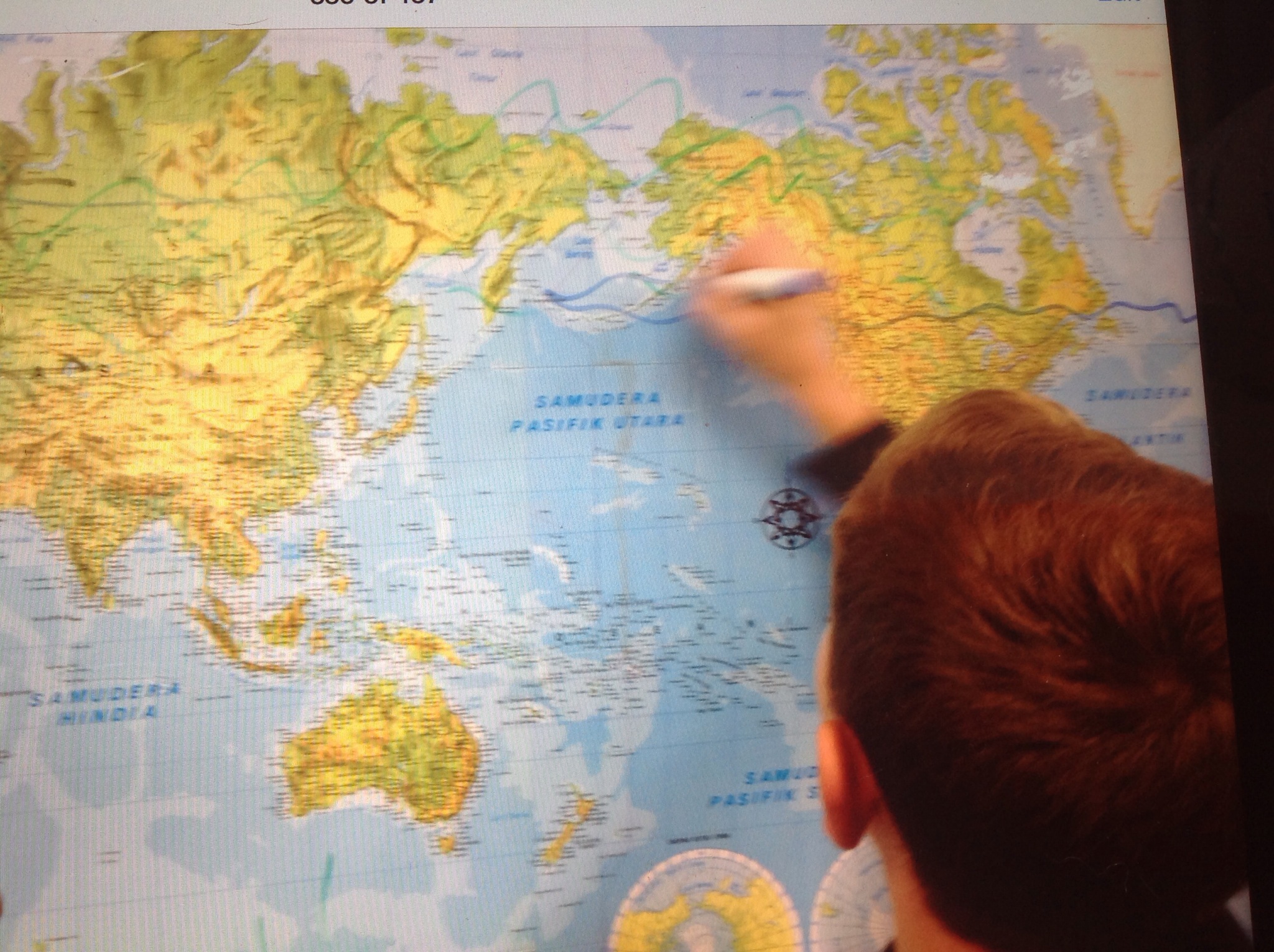
I found a google doc outlining the jobs a class in America uses for Mystery Skype. The job list for participating students sounded good, so we used that to get us started. Here are a list of the jobs we adapted (copied) from their suggestions:
Mappers
Google Earth Mappers
Logical Reasoners
runners
Supervisors
Question askers & Greeters (combined)
Question Keepers
Photographers

After discussing the duties and responsibility of each job, students then chose which job they would like to do and when we had too many names, we firstly played om pim pah and then rock, paper, scissors to whittle down the names.

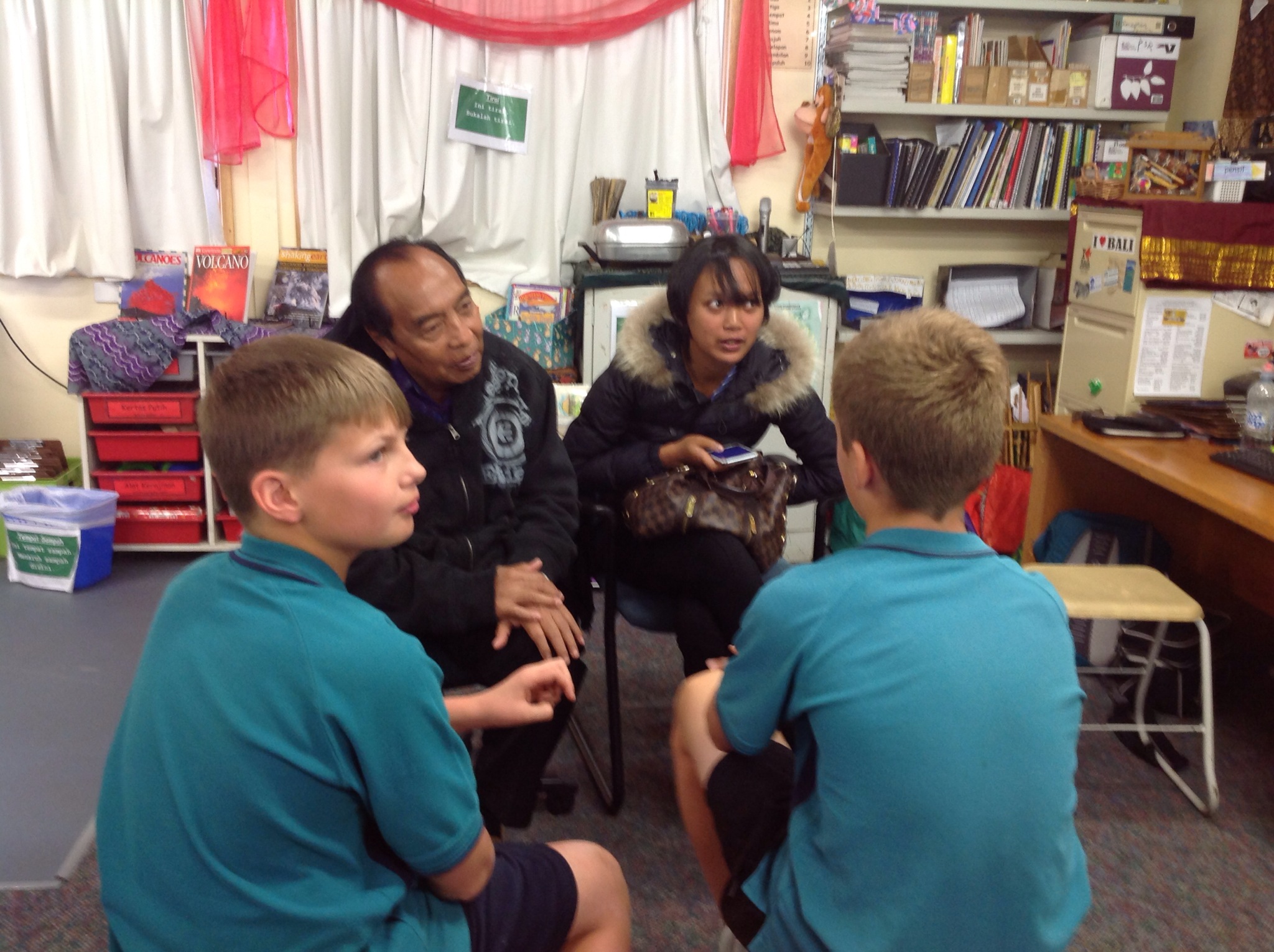
Our Question Askers/Greeters did a great job in all 3 classes. They sat on stools in front of our guests who sat in comfortable chairs They began by first introducing themselves to Pak Bagus & Kak Dayu and then chatted generally to fill in the time while waiting for the Runners to pass on the question from the Logical Reasoners. Observing the relaxed and polite manner in which the Question Askers/Greeters chatted was really lovely to witness and it was great for them to have the opportunity and time to do so. Consequently the students discovered quite a lot of additional facts about Pak Bagus & Kak Dayu.

IMG_8690.JPG

IMG_8683.JPG

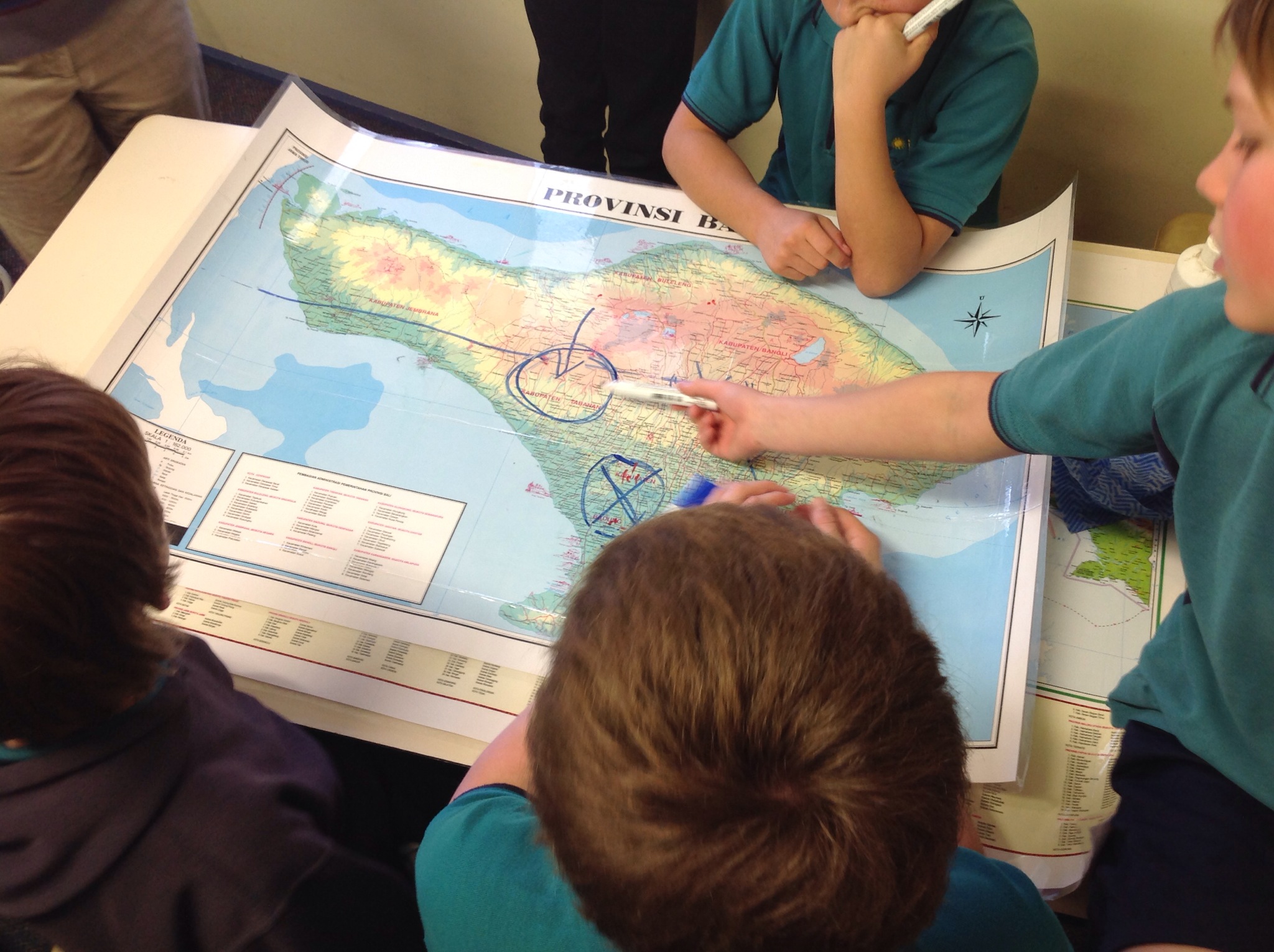
The Google Earth Mappers struggled with using Google Earth on the iPads. Their inability to keep up with the search was also due to the fact that at times, the runners did not fully consult with them nor keep them updated with the latest discovery. We now have 2 computers set up in the Indonesian classroom which should help enormously during a ‘real’ Mystery Skype!

IMG_8680.JPG

IMG_8684.JPG

The Logical Reasoners did a brilliant job working collaboratively with the mappers. I realised late in the lesson that I needed to remove myself totally from this part of the room. It was the most exciting place to be but I was not helping them by adding comments and suggestions. It was so hard to relinquish control! However, once I did so, I discovered that I preferred being the observer and watching how the students were collaborating together. It was such a great sight.

IMG_8682.JPG

IMG_8689.JPG

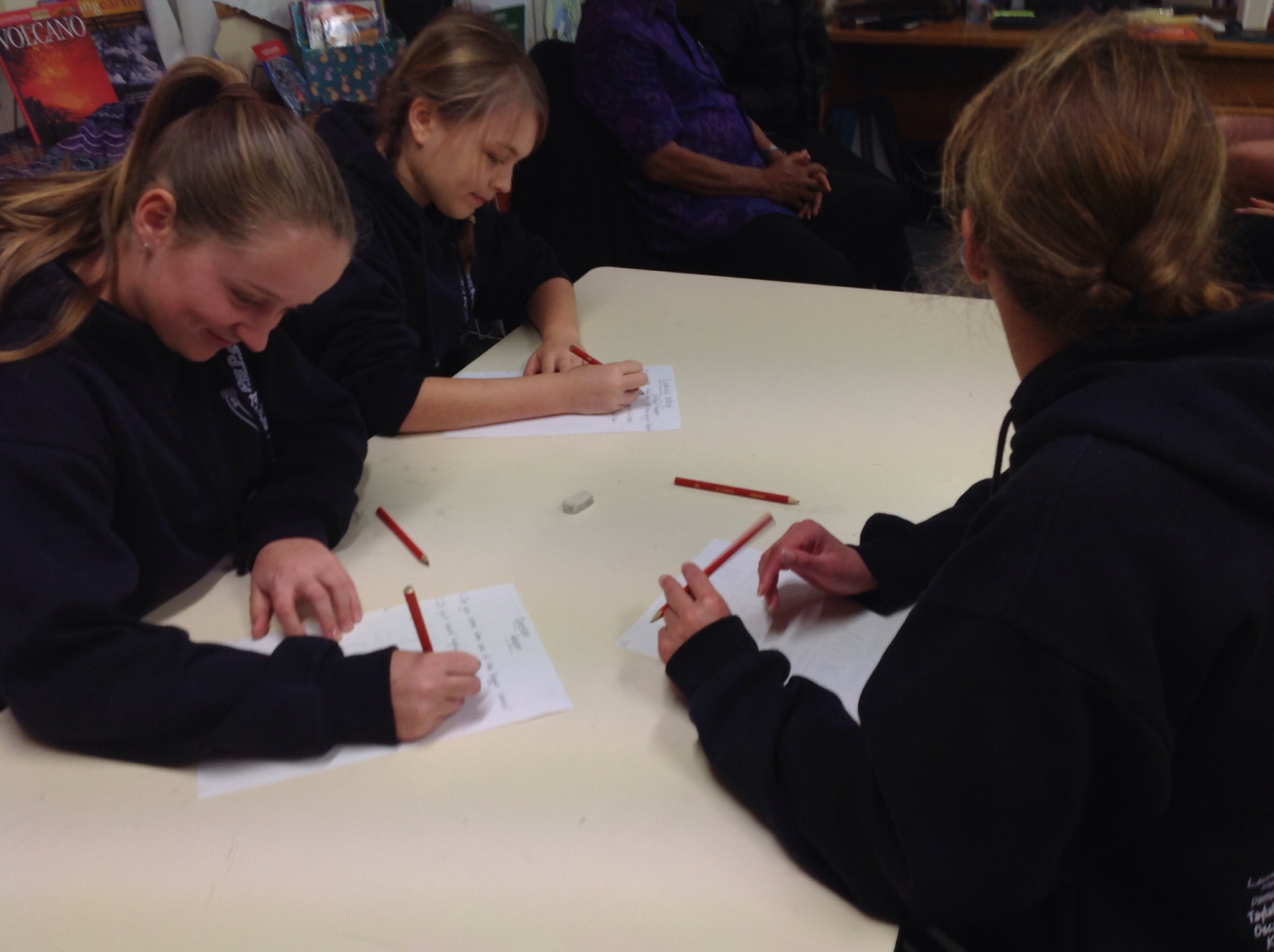
The Question Keepers did an awesome job. They waited patiently between questions and worked collaboratively to record both the questions and the answers. I felt that they weren’t consulted as much as they should have been to ensure questions weren’t repeated, but I’m sure this will be rectified during a ‘real’ Mystery Skype when the competition will be fiercer and tighter.

IMG_8681.JPG

A couple of the Supervisors lacked confidence both in understanding fully their role and also in their own ability to keep others on track. We did have a few students in one particular class who chose not to contribute in any way to the Mystery Skype and the supervisors made a combined decision to ignore them – a valuable and useful teaching techniques I occasionally use myself!

The photographers did an awesome job and the great photos in this blog are proof of that!

All 3 classes thoroughly enjoyed this dummy run and are even more impatient to have a proper Mystery Skype session!

IMG_8691.JPG

IMG_8692.JPG

A Dream Photo Shoot Through APBIPA

Over the last 2 weeks, 2 schools on the south coast were extremely fortunate to have met Pak Ida Bagus Sudana & his 19 year old daughter, Trisna. Their visit was coordinated entirely by Pak Nyoman from APBIPA and as usual our visitors were perfect Indonesian ambassadors who supported the Indonesian Language program beautifully.
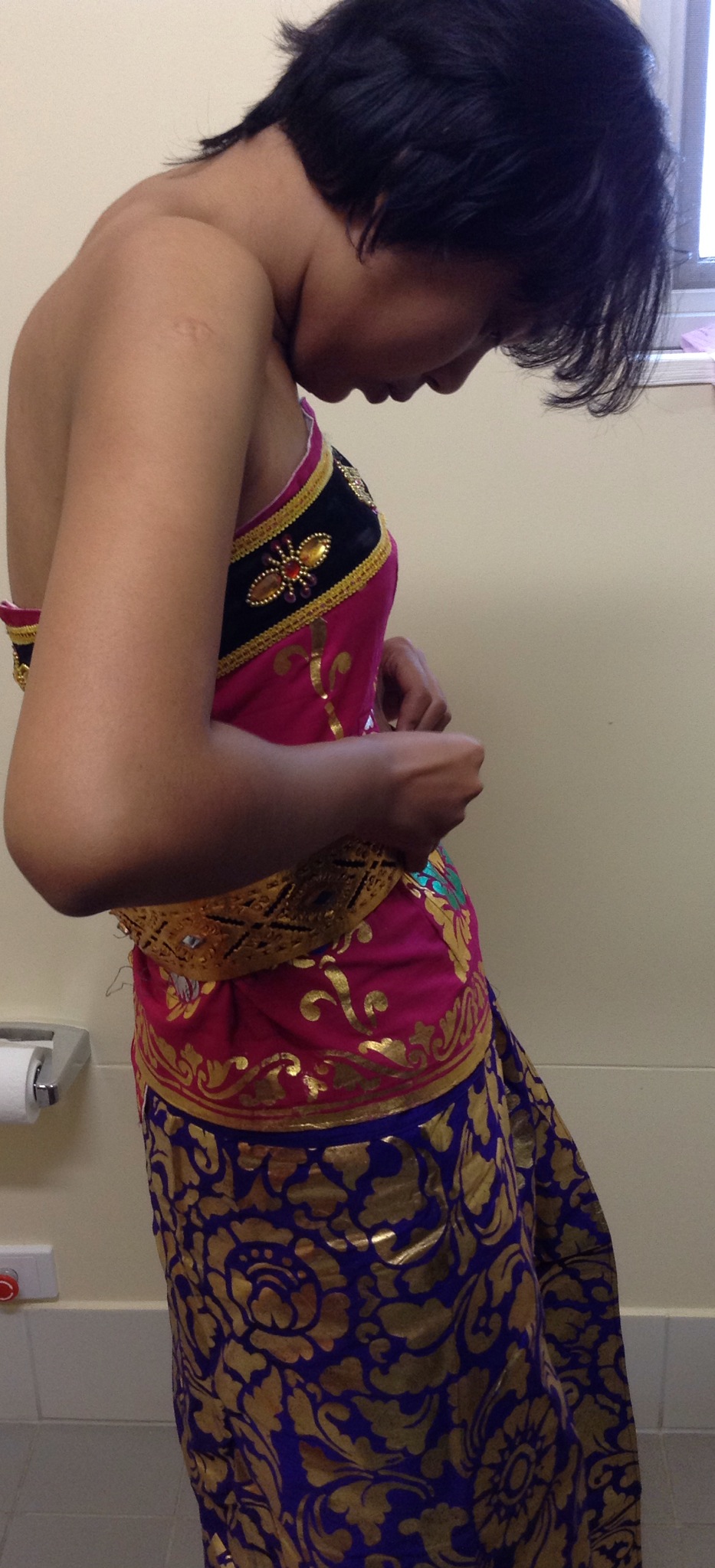
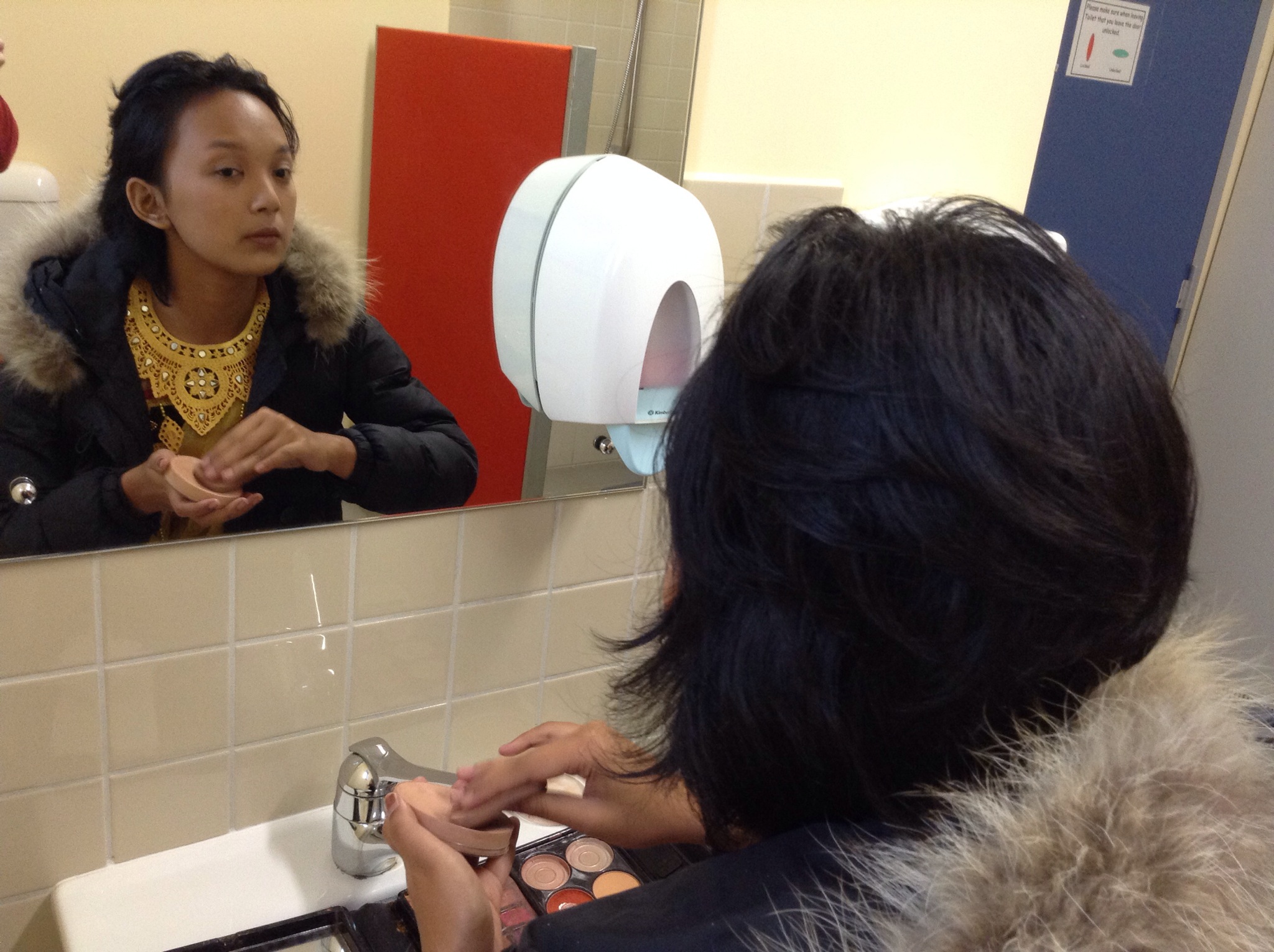
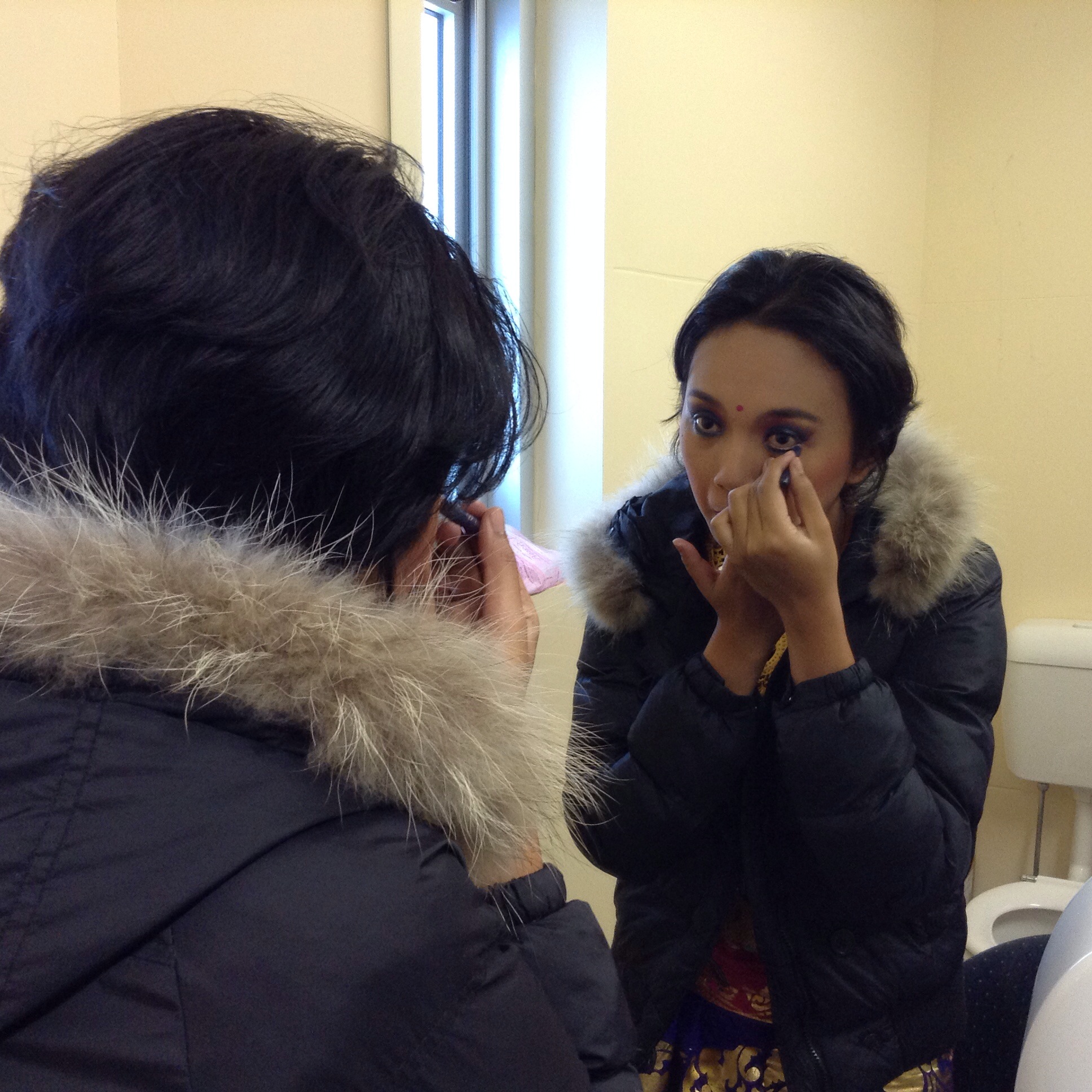
For me, the event that blew me away was the privilege of watching Trisna prepare for Tari Puspanjali (the welcome dance). The entire time I was taking photos, I wanted to pinch myself. Having Trisna all to myself to photograph! How rare is that – being able to watch a dancer prepare for a dance? In Indonesia, she would have been surrounded by family and friends all helping, here all she had was her father and me, although my expertise was limited to doing up a few safety pins!
Here are just a few of the photos I took: IMG_8384-0.JPGIMG_8396.JPG

IMG_8391-0.JPG

IMG_8390-0.JPG

IMG_8418.JPG

IMG_8400.JPG

IMG_8410.JPG

IMG_8402.JPG

IMG_8422.JPG
Trisna then put her jacket back on as it was quite chilly and then began applying her makeup:

IMG_8445.JPG

IMG_8450.JPG

IMG_8429.JPG

IMG_8435.JPG

IMG_8454.JPG

IMG_8459.JPG

IMG_8466.JPG

IMG_8458.JPG

IMG_8479.JPG

IMG_8496.JPG

IMG_8502.JPG

IMG_8485.JPG

IMG_8548.JPG

IMG_8511.JPG

IMG_8534.JPG

IMG_8524.JPG

IMG_8572.JPG

IMG_8552.JPG

IMG_8581.JPG
Once the makeup was completed to her satisfaction, Trisna put her runners back on and we headed to class. There waiting for us was the year 4 class who were also blown away by Trisna’s finery and beauty.
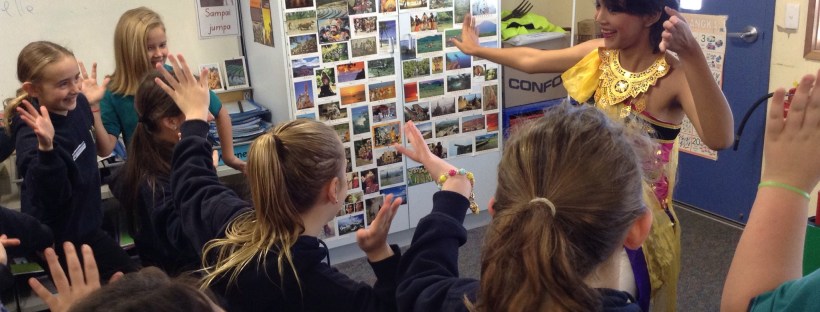
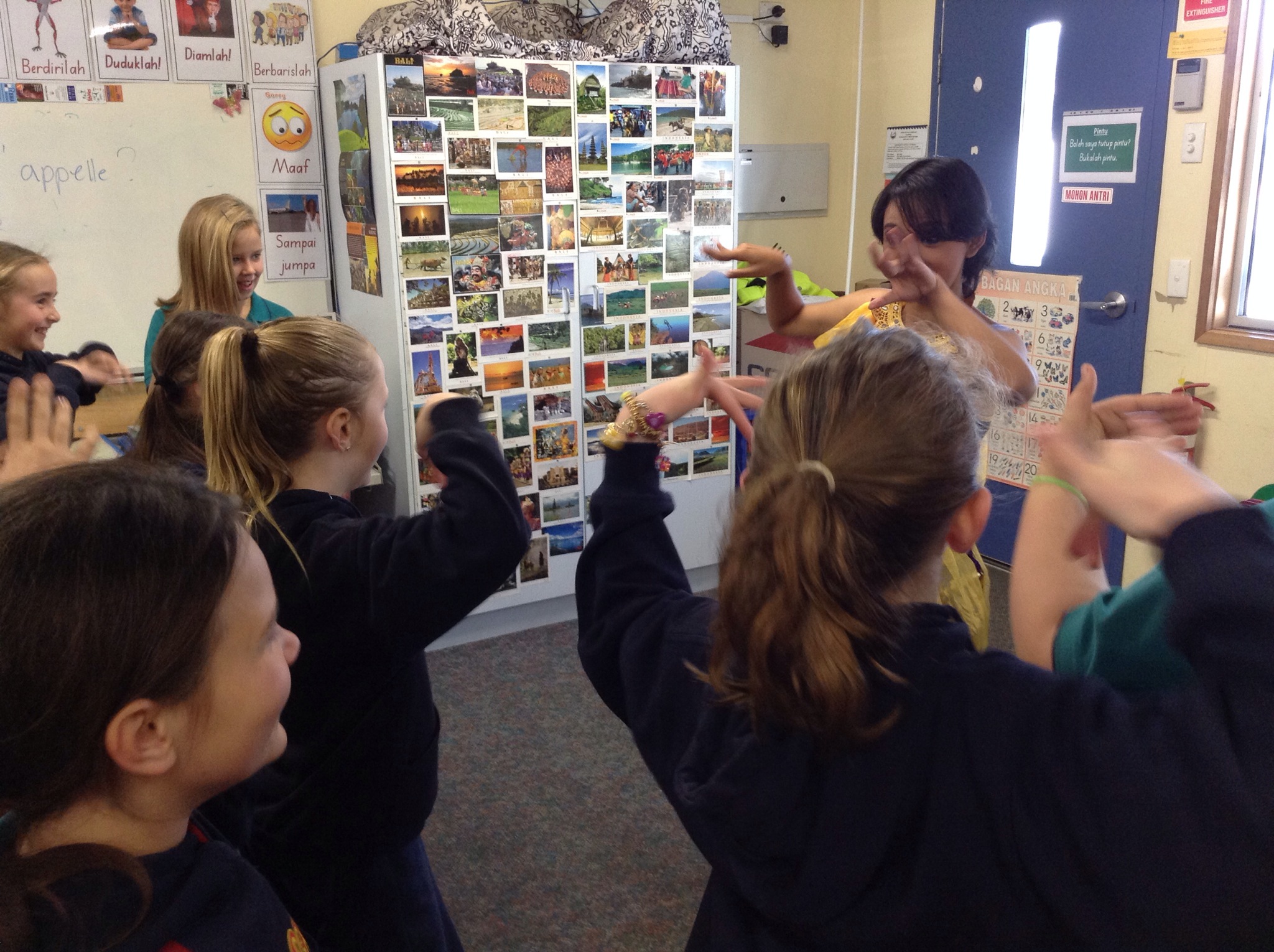
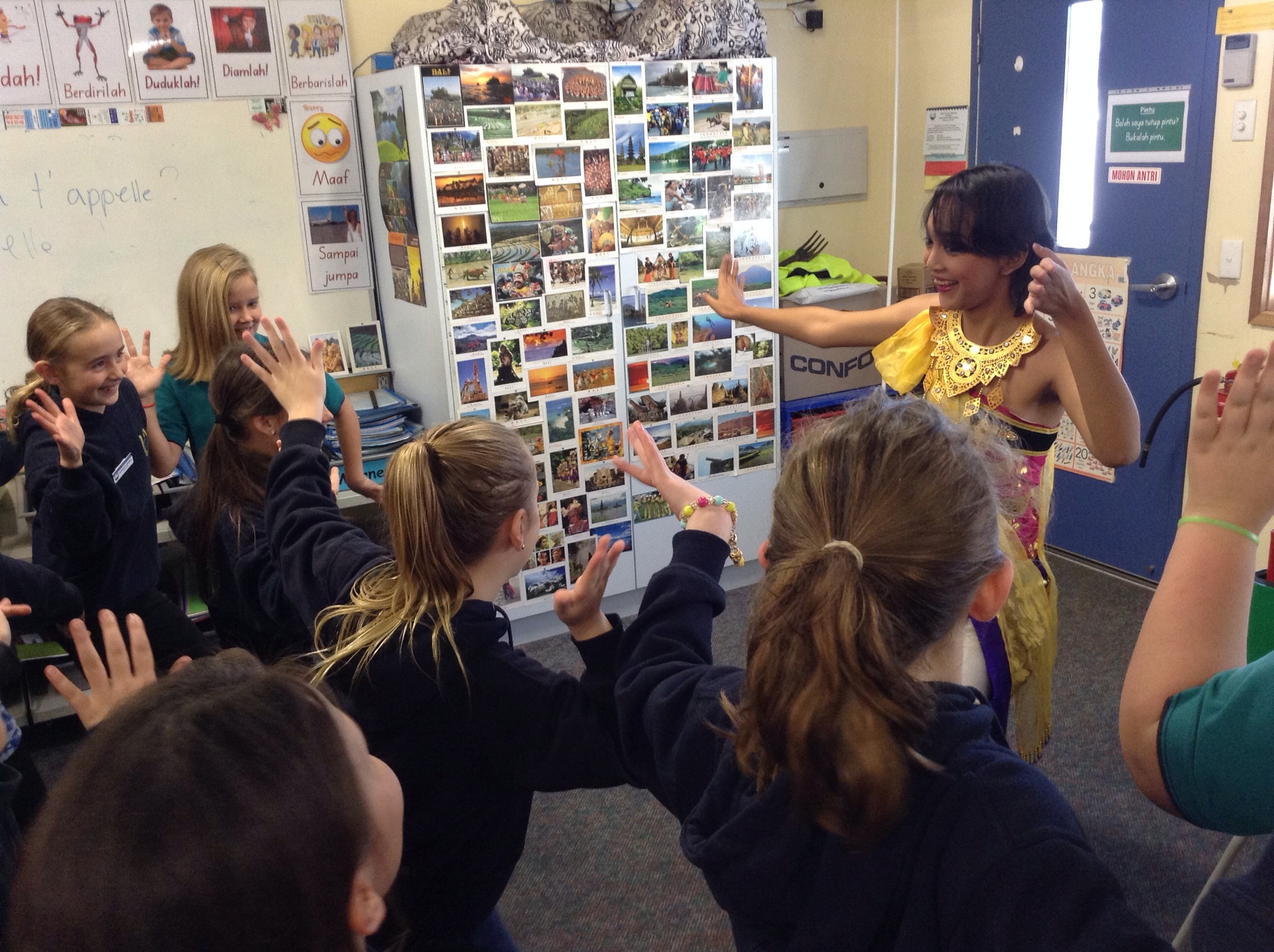
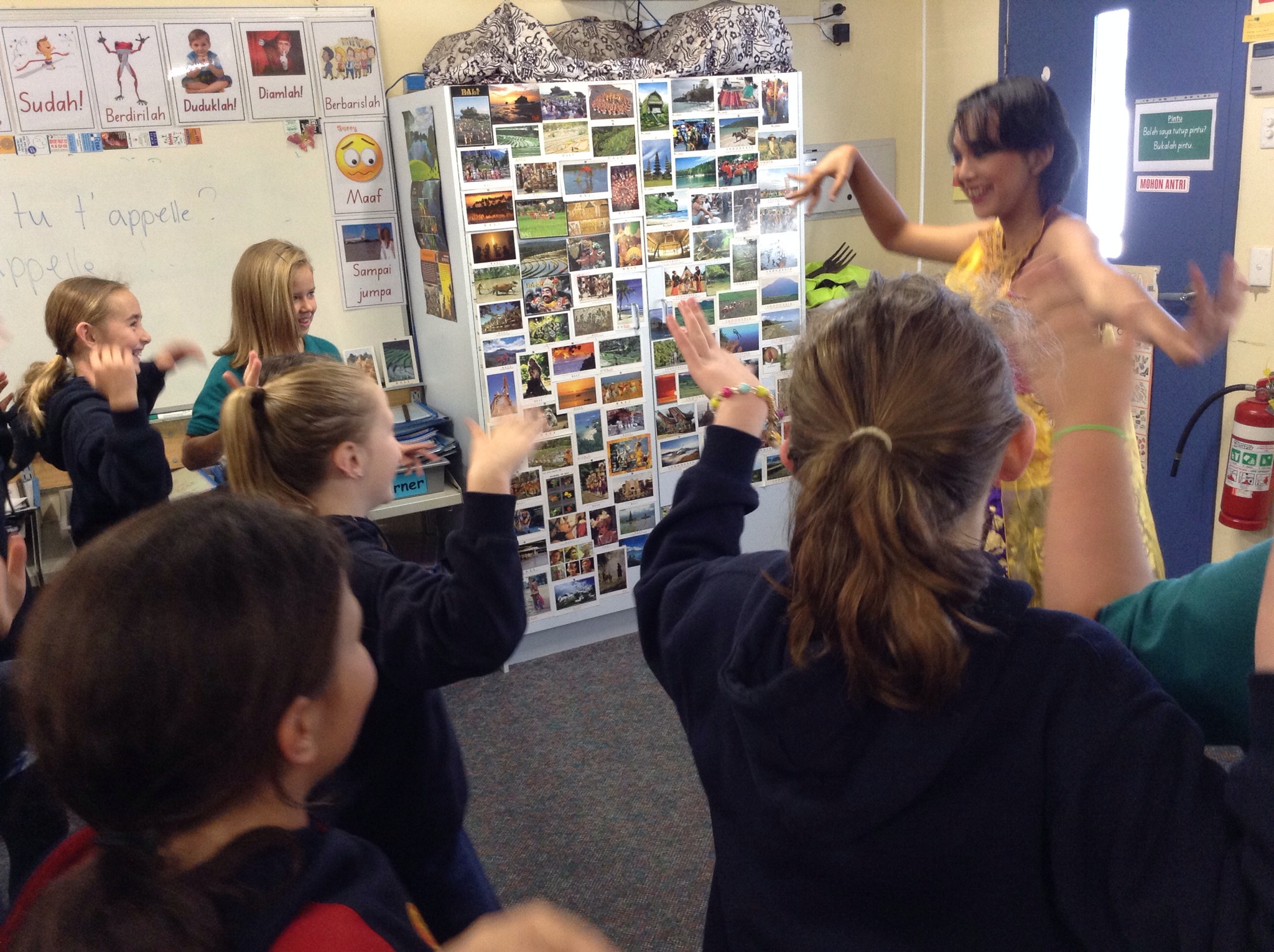
We talked briefly about the dance and the costume and then Trisna led the class through the beginning of the dance. I was very keen for my students to experience themselves attempting the dance because I remember all too well just how hard it is to do from my ELF experience last January in Bali. The dance looks so slick but it isn’t till you dance yourself that it becomes clear just how many difficult aspects there are that need coordinating.

IMG_8584.JPG

IMG_8585.JPG

IMG_8586.JPG

The inaugural Fleurieu Languages Teachmeet

A huge thank you to the Languages teachers who joined us at PEPS for the inaugural Languages Teachmeet. We were a large group of Indonesian teachers, a Japanese teacher and her Japanese Assistant teacher (what an awesome program that would be), a French teacher, Sandy, (a PEPS classroom teacher wanting to experience a teachmeet & in doing so was of immeasurable help & support not only before with the setting up but also during the teachmeet with the timing & taking care of the smartboard & pc) and Kris Paul, a French & German Language teacher with a passion for ICT. We were a good mix of primary and secondary which was lovely.
Even though the teachmeet was scheduled to start at 4pm, teachers were still arriving at 4:20, a testament to just how busy our lives are and how we all managed to squeeze this around other commitments. As a result of the staggered arrivals, we introduced ourselves numerous times before watching a short English youtube clip which explains what a teachmeet is. I chose to do that so that we are all clear on how they run and that we all have the same expectations, especially in relation to the time limit that each person gets to share.
4 people came prepared to share which was brilliant considering we were all experiencing our first teachmeet and in most cases meeting each other for the first time. An instant PLN session!
Kay was the first to share. She explained how she uses set phrases related to her themes (in this case, going on holiday) and has the students chanting them while simultaneously making robotic actions with their arms
– thus combining action with speech to help the vocabulary settle into the long term memory. She then builds on the sentences and eventually students are able to use the phrases to write several sentences, in upper primary, up to a paragraph. IMG_8609.JPG
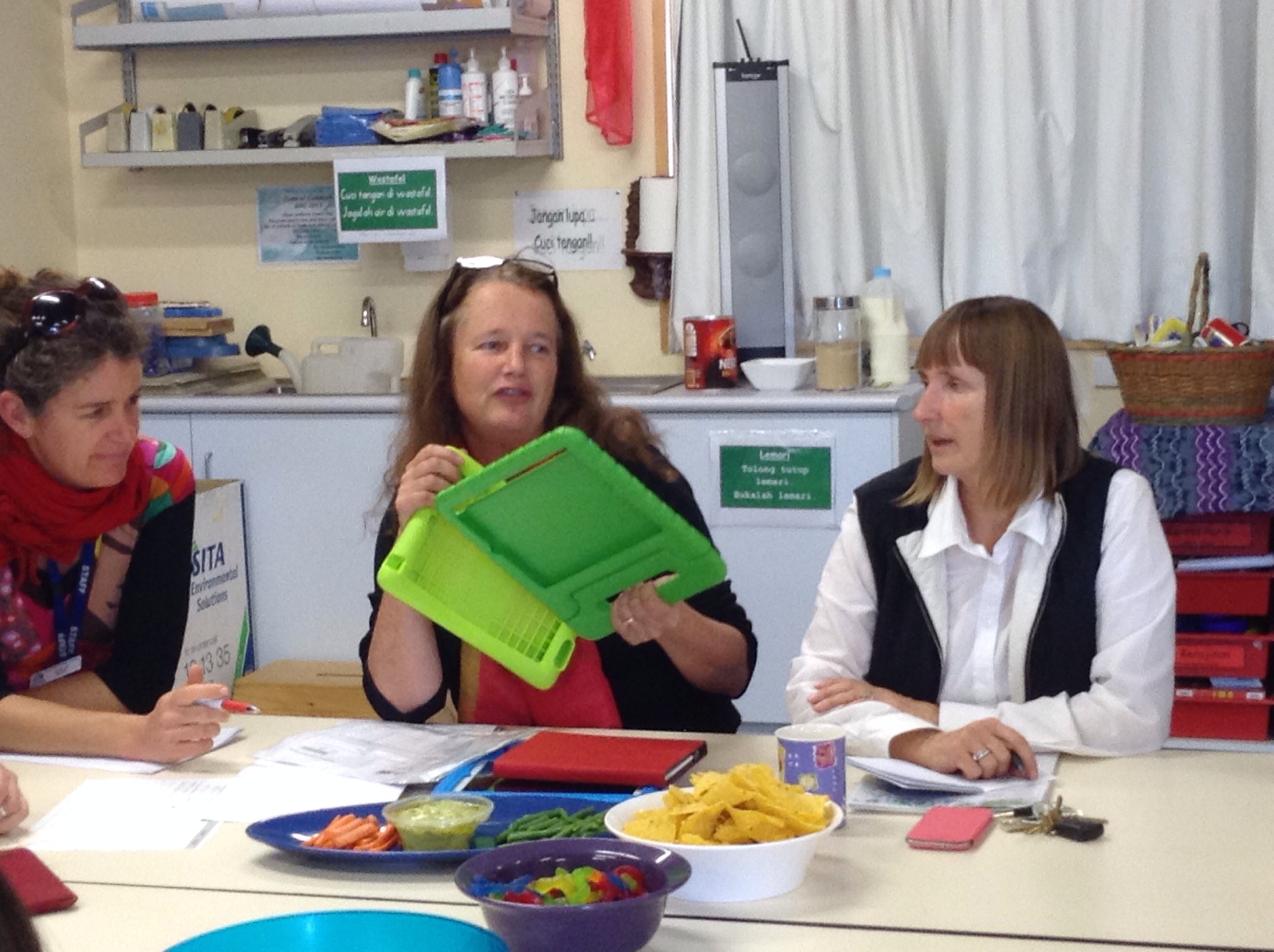
Annie shared next, showing us the iPad covers she bought recently. She particularly likes this design due to their durable shape and the fact they have a handle. She also recommended getting a variety of colours as this helps student remember which iPad they were working on in previous lessons. On Annie’s recommendation, I also bought one of these to trial and I totally agree with her, they are an ideal design for schools added to which the price is very reasonable- about $15 each.IMG_8612.JPG
Emma next spoke about animoto and the Storykit app. We were able to connect her iPad to the smart board with a VGA cord, thus alloowing her to show us the project she has made with storykit.

IMG_8615.JPG
Kris was next and she shared with us all her wikispace specifically for using ICT in the Languages classroom.
https://web2-4languageteachers.wikispaces.com It is well worth a look. This followed on nicely from Emma’s presentation as the wiki contains heaps and heaps of information about the many apps suitable for use in the Languages classroom.

IMG_8619.JPG
I finished off by firstly showing my blog

IMG_8623.JPG
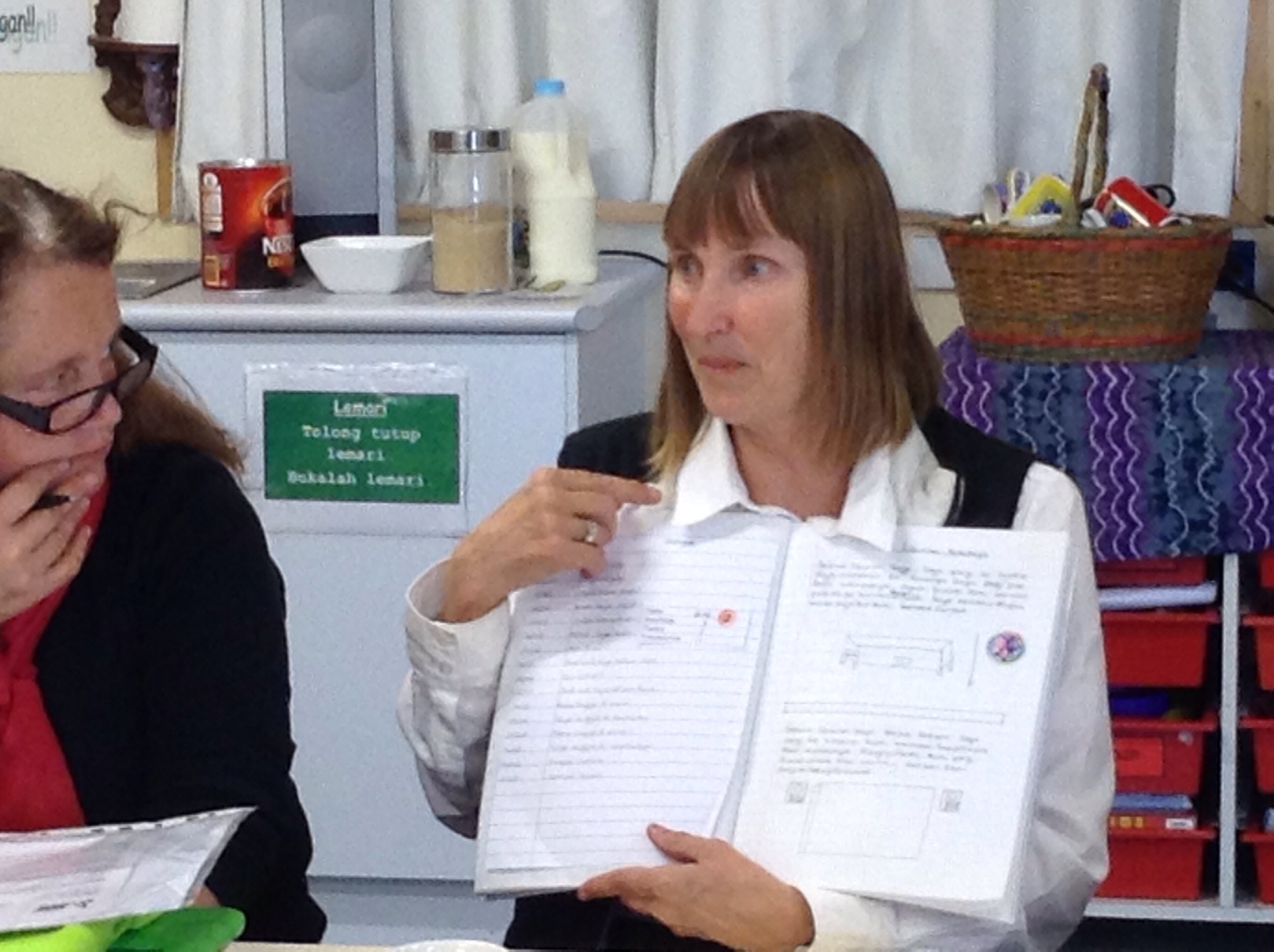
and then giving a talk about the book creator app. I showed one of my students finished product and then handed out the ipads for teachers to have a look at book creator themselves.

IMG_8624.JPG
This finished up the main part of the teachmeet. We have agreed to meet again week 5, term 4 at PEPS again and in the meantime, I will email participants information about our wikispace and how to become members.
It was amazing meeting everyone and in some cases putting a face to a name and visa versa. We also had quite a few other interested Languages teachers who didn’t join us purely because of distances they would have had to travel, so I will be having conversations with our amazing ICT person about using Skype next time.
I hope everyone else got as much as I did out of this first teachmeet and I am already planning what I can share at the next one!! Should we have a theme???

Maths Skills Vs The Ethics of Queueing

I found this really interesting article on Facebook, I think, posted by a teacher in Indonesia.

A teacher in Australia once told me: “It is much more important that our students know how to line up, than to be good at maths.”To which my reaction was, “Wow, teachers are allowed to think like that?”, because the exact opposite happens in our country (Indonesia).

When I asked her why, this was the Australian teacher’s answer:

It only takes each teacher about 3 months of intensive work to ensure students grasp maths skills, however, over the students’ 12 years of schooling, teachers also need to train students how to line up and appreciate the valuable lesson behind queueing.

Not all students will choose to work in professions that require maths skills beyond addition, subtraction, division and multiplication. Some will be dancers, olympic athletes, singers, musicians, artists etc. Only a very small number of students from any one class will choose a profession requiring a high level of maths. Whereas every student would benefit throughout their entire life from the moral and ethical skills learned through queueing.
Indeed, what other life skill is more important than queueing? There are many valuable lessons to be learned from queueing.

Time Management – Those students who want to be at the front of the line needs to be organised so they can be first in line.
Respect For Others – They learn to respect the rights of others, to acknowledge that those who line up first, get to stand towards the front. To consider others and not just focus on themselves.
Discipline – Student learn discipline, order and conformity so that they don’t impinge on the rights of others.
Creativity – Students think creatively about ways in which to avoid boredom while queueing. (In Japan, students read while queueing)
Socialisation – Students learn how to socialise by greeting and chatting with others in line.
Patience – Students learn resiliency and patience while queueing.
Cause & Effect – Students learn about consequences; if they are the last to line up, the consequence is that they will be right at the end of the line.
Disgrace – Students will be shamed by their peers if they try to jump the queue or push in.
Collaboration – Student learn to collaborate with the students immediately around them in the line; for example, if one needs to go the toilet, the others will hold their place for them.
Honesty – Students learn honesty both in relation to themselves and others.

The Australian teacher then said that there are many more benefits from queueing, and invited me to discover them for myself. Her explanation startled me and gave me something to consider.

Soon afterwards, I took my children to Kids Zania in Jakarta. Whenever we had to wait our turn in a queue, we saw parents and their children having serious issues with the aspects of queueing. There were parents who encouraged their children to sneak to the front of the line, thus taking the place of someone who had been waiting patiently, while telling their child, it’s ok to pretend that you don’t know any better. Another parent growled at their child and called them a coward because their child wouldn’t jump the queue. Another parent used a million excuses to justify why their child should be allowed to jump the queue – still young, tired of waiting in line, they live far away and have to leave soon etc. Another parent was furious because he was accused by one of the children in the line of queue jumping.
There were lots of foreigners also at Kids Zania and goodness only knows what they were thinking watching this all.

So sad that parents, teachers and the Department of Education focus solely on literacy, numeracy etc. Even though advanced countries have realised that teaching morals and ethics are much more important than just learning how to count.
Why is this country distancing itself from ethical and moral practices? What does the future hold for us if it is those children who queue jump their whole life, become our future leaders?

This should be a valuable lesson for all parents and educators in our beloved country. We need to realise that while queueing in itself is simple, within it are many life skills that will benefit children and should be practiced until they become second nature for all Indonesian children.

Come on, let’s teach our younger generation how to queue, for a better Indonesia.

I love it more for the Indonesian perspective on queueing rather than for the strange claims made by an “Australian teacher”.
Soon after reading this article, I then found this post on an American blog which seemed timely. It contains a list of ideas shared by teachers on ways they use to help with teaching their students about lining up and moving about the school thoughtfully. It certainly is a skill valued by our society, however not sure that it is more important than numeracy and literacy!!

Jalanan ; A Movie About Busking in Jakarta

While traveling in Indonesia last year, I caught many buses. Throughout Java and Bali, I frequently had buskers jump on board and serenade us before handing out the lolly bag to collect donations. Read my post here. What a fascinating topic for a film and one I really hope to get a chance to see it one day!
https://theconversation.com/jalanan-busking-and-dreaming-in-the-city

IMG_8294.PNG
Have a look at this Youtube promo:
http://youtu.be/TtIOFyNyF6U

Jalanan: Busking and dreaming in the city

AUTHOR – Eric Sasono

By telling the stories of Boni, Titi and Ho, Jalanan brings to the screen the hardships and precarious lives of marginalised people in one of the most economically promising Asian countries. Courtesy of Jalanan Movie Team
Daniel Ziv’s documentary feature Jalanan (Streetside), currently screening at the Melbourne International Film Festival, is a film that seeks to move its audience.

Documentaries sometimes invite viewers to social and political engagement. To do this, they might put viewers into uncomfortable situations. Jalanan, the story of three Jakarta buskers, Boni, Titi and Ho, is this kind of film.

Ziv, an Indonesia-based Canadian filmmaker, filmed the three street singers for six years. He pointed his camera at their reality and homed in on the social and political forces that shaped it.

By telling the stories of Boni, Titi and Ho, Jalanan brings to the screen the hardships and precarious lives of marginalised people in one of the most economically promising Asian countries. Jalanan presents the three as aspiring individuals with self-actualisation needs amid the hardship they encounter on a day-to-day basis.

Everyone is looking for something

Boni, an illiterate “singer-songwriter”, has been living in a canal tunnel with his wife, Rita for ten years. He dreams of a proper home yet all he can do is paint the word “Hyatt” on the tunnel wall.

Titi is a mother of three. Her children are scattered in three different cities. She sends money for her sickly father’s medication and for her child’s education in the village. Titi stresses how important it is that her children “not be a busker” as she is, signifying the importance of making the leap in social class.

The other busker, Ho, sings his political songs with a rugged voice, suggesting that his listeners “hang the corruptors”. He lives alone and tries to find true love.

Jalanan is screening at this year’s Melbourne International Film Festival.
With these aspirations, the documentary subjects qualify as protagonists in a neo-classic Hollywood story: an individual tries to achieve something and faces obstacles in the process. Jalanan benefits from this model of storytelling. It avoids didactic forms and, rather, asserts some kind of audience self-identification. Wanting a better place to live, improving social status and finding true love are universal aspirations.

Just like in Hollywood, Jalanan also brings closure to the protagonists’ venture, keeping the audience from seriously questioning what happens to them after the screening.

Beyond the film, the filmmakers have started a crowd-funding initiative to provide houses for the buskers.

Watching poverty in luxurious malls

Viewers in Indonesia won’t escape the irony when they go to cinemas in luxurious shopping malls to watch Jalanan. But filmmakers have no choice but to screen their work in this way if they want their films to reach a larger audience in Indonesia. Gentrification of Indonesian movie theatres since the 1990s has seen small cinemas fold and mega-cinemas thrive.

Jalanan provides enlightenment and entertainment, of some sort, for the middle and upper class of Jakartans who are willing to spend their money on a diverting spectacle. In Indonesia, it has a limited distribution in 21 Cinepelex, the cinema chain that dominates the country’s film distribution.

From the screen to public policy

Despite its limited distribution, Jalanan has benefited from its status as a documentary film. Audiences often perceive arguments presented in a documentary as undeniable truths. Sometimes, the documentary form can prompt viewers’ social and political engagement.

Jalanan managed to do this when acting Jakarta governor Basuki “Ahok” Tjahaja Purnama watched the film with his staff (the governor, Joko Widodo, now president-elect, was taking leave for his presidential election campaign). Ahok saw many things that fell under his responsibility go wrong in the documentary. Seeing the “jail”, which is actually a social rehabilitation institution where Ho was locked up, disturbed Ahok. In the film, Jakarta public order officers arrested Ho for busking and for not having his identification card.

According to Rolling Stone Indonesia, Ahok immediately discussed with his staff what he saw in the documentary. He instructed them to close down the “jail”, expedite the development of apartments for the poor and ease regulations for newcomers to get their Jakarta ID card. He also ordered his staff to eradicate corruption in public offices, especially the religious affairs agency responsible for providing marriage certificate.

Jalanan’s influence on public policy in Jakarta might be a one-off. It’s hardly a typical outcome for a documentary, after all. Documentary films work hard to promote social or political engagement – or at least an awareness – with their subject. For the next level of engagement, it helps to have “reformist” public officials in the audience.

The Melbourne International Film Festival 2014 runs until Sunday August 17.