Giving a Presentation in a Foreign Language

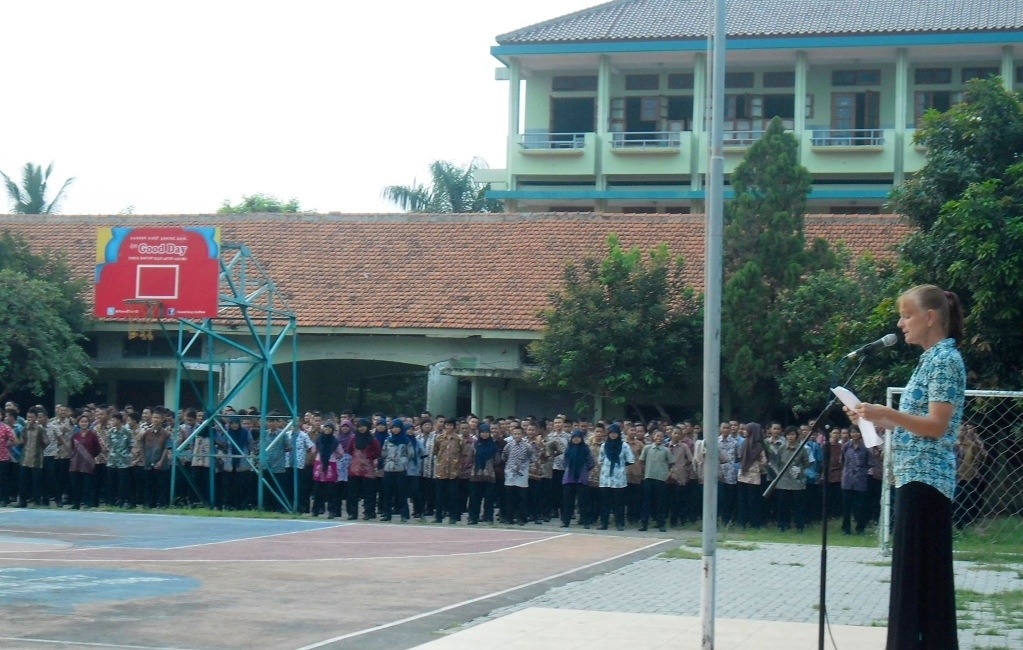
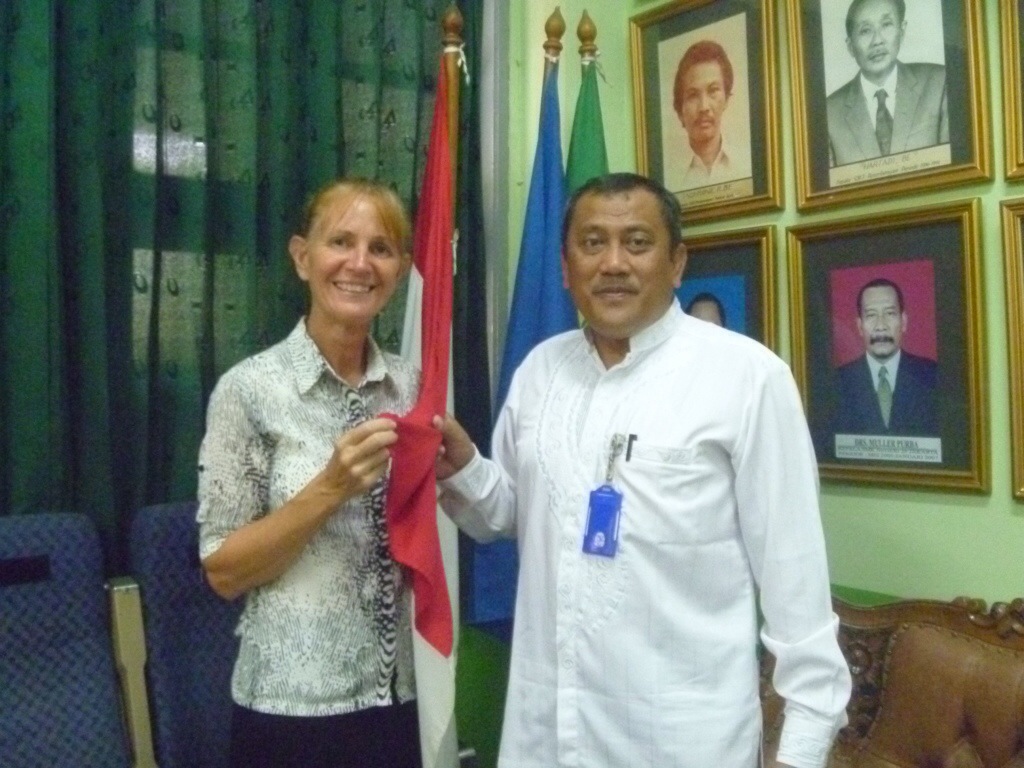
What fantastic advice! Last year while traveling around Indonesia, I gave several speeches in Indonesian, all of which were nerve wracking. In each case, I wrote out my speech and then read it to my audience (which was usually the staff and students from an entire school!) verbatim. It is definitely a skill I need to perfect and one I actually want to perfect. >
20140801-110426-39866072.jpg

6 Must-Know Tips for Giving a Presentation in a Foreign Language
Posted on 14. Oct, 2013 by meaghan in Language Learning

Speaking in a foreign language can be a challenge in and of itself—giving a presentation in a foreign language makes that challenge even more…. well, challenging. Whether you’re presenting to your classmates, your co-workers, or your community, you’ll want to practice a little harder than normal. These tips will help you perfect your presentation, leaving minds blown rather than tongues tied.
6 Must-Know Tips for Giving a Presentation in a Foreign Language from Transparent Language, Inc.

1. Don’t script yourself.
Practice, practice, practice—but don’t memorize. Scripting yourself is a terrible idea for any presentation, regardless of language. It doesn’t make for a very compelling or natural presentation, and you might panic if you forget or veer away from your script, especially if it’s in another language!
Instead, narrow your focus. Acquire the specific vocabulary you need to discuss your topic, but rely on what you already know to fill in the gaps. Practice speaking about your topic out loud to yourself, so you’ll be prepared to improvise when all eyes are on you.

2. Prepare notes.
Didn’t I just tell you not to script your presentation? Yes I did, but here’s the loophole: prepare notes! Add speaker notes to your slides or jot down major points on a set of notecards. Do not read directly off these notecards! The less you look at them, the better.
The placebo effect of notecards is powerful—knowing you have an important statistic or difficult word in the language written down in front of you should make you less nervous that you’ll forget it. And just in case you do forget it, voila, there it is.

3. Practice speaking.
This is an obvious one, but seriously, if you’re preparing to speak in front of people for an extended period, you need to be comfortable speaking in the language in general.
You want to be comfortable speaking about your specific topic, but also in using the language fluidly and confidently. Talk out loud to yourself in your second language as much as you can—around the house, in the shower, while driving, etc. Say whatever it is you want! Rage about that guy who cut you off on the drive home, talk about what you want to do this weekend, make up a story about your neighbors who just walked by. Get comfortable pronouncing the language and speaking it fluidly. Then practice the specifics of your presentation.

4. Keep it simple.
When you present, you want to sound intelligent and compelling. There’s nothing wrong with that. But when you present in another language, focus first on being understood and making your point.
Trying to sound sophisticated only works if you actually sound… sophisticated! But if you mispronounce the big words you insisted upon using and mumble through those prolific examples you just had to include, you’re actually hurting your cause. Keep it simple and within the reach of your current language skills. Impress people with your message itself, not the way you phrase the message. Besides, giving a presentation in your second language is impressive enough as it is.

5. Don’t apologize. (In Indonesia, disregard the first part of this. I learned that it is considered good manners to begin speaking with a rider – Mohon maaf kalau ada yg salah)
Do not start off by apologizing for your language skills (or lack thereof). Instead of making that excuse for yourself, be aware of your shortcomings and address them without drawing attention to them.
If you have a thick accent when speaking in your second language, speak slower than you normally would so your audience can understand you. If you mispronounce a word, don’t get flustered or laugh it off—say it again once or twice so your listeners can catch on. Writing off your mistakes to the fact that “this is your second language” won’t challenge you to get better and do it right.

6. Be culturally appropriate.
This isn’t related to the language, but it’s just as important as the advice above. Unless it’s a class assignment, chances are you’re giving your presentation in another language because you’re abroad. If that’s the case, research the culture of your audience.
Be aware of hand gestures or facial expressions that are potentially offensive. Figure out if humor is well-received, or if you should show your personality in another way. Speak to colleagues or native speakers who are aware of the culture—and while you’re at it, practice giving your presentation to them!
Source: http://blogs.transparent.com/language-news/2013/10/14/6-must-know-tips-for-giving-a-presentation-in-a-foreign-language/

20140801-103305-37985388.jpg

Australian Blog Honour Roll – What Would The Criteria Be?

As I was checking my Twitter account, I followed a link leading to an EdTech’s (Must Read) K – 12 Blog Honor (sic) Roll.’ ‘ Here it is.
I looked at a few of the blogs on the list and they are amazing but with a definite North American view.
It really started me thinking. Firstly do we have quality EDTechies blogging to create an Australian Honour Roll? Of course we do!! While I love the enthusiasm of the USA blogs, I would prefer blogs relevant to me, to my teaching and most importantly based on the Australian Curriculum.
So I tweeted to ask just that question and within minutes had my first reply!:

20140702-092611-33971319.jpg
I next thought about what criteria I would consider to be of value to someone like me; i.e. a practicing teacher. What would I find of value to read about in blogs?
Following are the dot points I came up with:
-Australian
-High focus on using technology to support Australian Curriculum
-current practicing teacher or one who is working with teachers
-focus on global learning
-creating digital citizens
-grappling with the Australian Curriculum
-A Languages & Culture focus (would be awesome!)
-Great ideas on how to achieve all of the above

So maybe if I am searching for such a blog, others are too? Could this be the direction this blog could head in because surely I am not the only (Languages) teacher out there searching for blogs that include all of the above dot points! While I am in no way an EDTech guru, I am happy to share my explorations but would love to share with others at the same skill level but more importantly would love to read blogs from those with more EDTECH skills and knowledge and working in the classroom.

Any other ideas to add to my list of criteria? Add a comment!!

Write, Draw, Pass

This idea could word well with the prepositional language I am planning to introduce this week to uper primary students! as well as reviewing classroom objects. Imagine a picture of “pena diatas lem”

Martina Bex's avatarThe Comprehensible Classroom

This is one of my favorite party games, which Ashley VanHemert so brilliantly reminded me to use in the classroom! She heard of the idea from Amy Wright at UAF. This is an excellent activity for Preferred Activity Time.

STEP ONE: Give each student one side of this form (I put two forms/page to save paper):

Write, Draw, Pass *Updated on 03/26/2012

STEP TWO: You have several options. In Box #1, in the target language, …

  1. Have students write a creative, descriptive sentence (ex: a fat dog with big eyes runs to the store).
  2. Have students write a descriptive word image (ex: a pretty girl with long hair)
  3. Write (1) or (2) for students so that they don’t have to think of them. Here are some that I recently used in one of my classes:

**Make sure students only include colors if you are planning to use crayons or colored…

View original post 573 more words

More journaling ideas

This post makes me think how asking students to write a review as an end of term assessment would make an awesome post and a good opportunity for them to review and evaluate the unit of work from their perspective. Wish I had done this last term actually!! A few hiccups last term with students using ipads inappropriately was disappointing but was also a valuable opportunity to reiterate iPad usage rules and expectations!

marishawkins's avatarMaris Hawkins

I have been plugging away on my blended class for next year.  I have planned some more journaling ideas for my students. These could be used for a blog or a paper journal.  I always give my students the option to write about any topic that is important to them as well.  I want to help those that need a little inspiration each time.

  • ¿Te gusta viajar en avión?  ¿Por qué?
  • ¿Cuáles son tus preferencias cuándo viajas en avión?  ¿Te gusta hablar con las personas durante el viaje?  ¿Te gusta ir por el control de seguridad?  ¿Cuál bebida bebes en el avión?  ¿Dónde te gusta comer en el aeropuerto?
  • Mi película favorita es…
  • Yo pienso/no pienso que hay extraterrestres (aliens) porque…
  • Estoy contento/a cuando…
  • Si eres un animal en el zoológico, ¿cuál eres? ¿Por qué?
  • Cuando no dormiste una noche, ¿qué hiciste (did)?
  • Si puedes vivir en Antártida, ¿quieres?  ¿Qué…

View original post 26 more words

Sepak Takraw: Soccer or Volleyball? Neither.

sepak takrow would be such a great topic, so here I am collecting more resources!!

Indonesiaful's avatarIndonesiaful

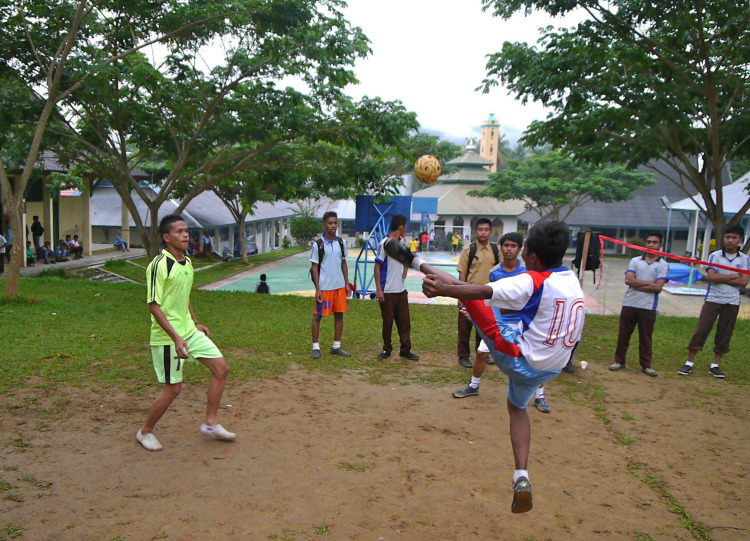
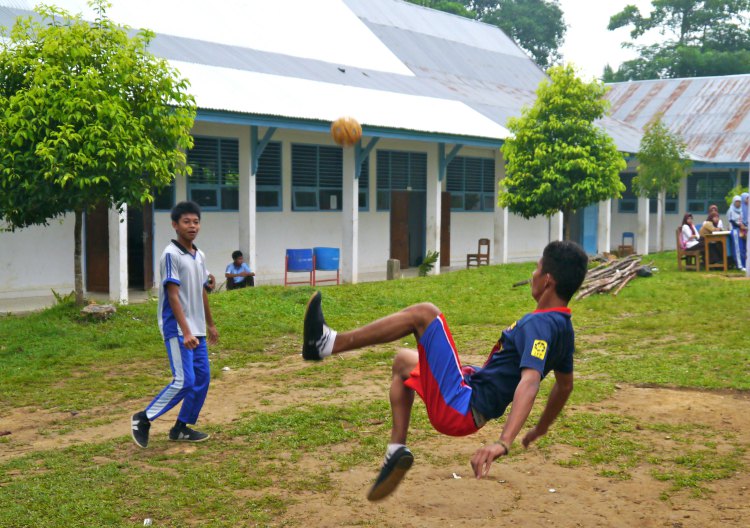
“While walking through campus at SMAN 7, Kendari in Southeast Sulawesi, it’s difficult not to notice the sprawling scissor -kicks and diving headers of the students playing Sepak Takraw.  Sepak Takraw, meaning “kick ball” in Malay, is not a competition for the uncoordinated and inflexible.  The game is played similarly to volleyball, with a single-point system, rectangular court and elevated net; however, unlike volleyball, a player cannot use their hands.  Thereby, the three participants on each team have to relay the ball over the net (without it touching the ground, or going out of bounds) using a combination of feet, legs, chest and head.” 

P1050166PVP1050026PV

“The ball used in Takraw has a circumference of 17 inches and is woven out of a material called rattan.  The rattan ball has a hard surface, but is very forgiving with its lightweight and hollow center.  The game begins when a player on the serving team…

View original post 49 more words

Poverty in Kupang

A fantastic piece of writing about education in NTT.

Nick Hughes's avatarIndonesiaful

Nick_SMAN3 entrance The main entrance to SMA Negeri 3 Kupang, one of the best public schools in the city.

It’s a common sight in Kupang—a thirteen or fourteen-year-old boy collecting fare money from uniformed school children as they pile out of his crowded bemo. The boy, like many others his age or even younger, works as a konjak, riding around on the bemo (minivans that serve as Kupang’s public transit system) that buzz around the city, hanging out the open side door, collecting fares from passengers, and trying to cram as many people into the vehicle as possible.

These konjak perform their duties with great enthusiasm. They shout at idle pedestrians as their bemo speeds past, jump out of the still-moving van to usher passengers inside when they call for a ride, and show hesitant customers where the few inches of free space are on the deluged benches inside the car…

View original post 525 more words

6-Word Memoir

what a great idea to use with any middle or upper class that knows how to use a language dictionary or even as part of a lesson learning how to use one. has lots of potential. love the matching idea too by the comprehensible classroom. great revision.

Using Memes in Spanish

What a fantastic idea! I think this is a great idea and would work very well with upper primary students.

spanishplans's avatarSpanishPlans.org

What’s the most important thing in a foreign language class? To give students comprehensible input and show them the language in context. When you can accomplish this and entertain the kids at the same time to keep their interest, you’ve got yourself a win-win situation. During the Food Unit, we decided to google image search some vocabulary words/terms and we found some delicious memes.

Google Image Search is such an easy way to show students differening vocabulary. Want to compare the word “tortilla” in Mexico and in Spain? Google Image Search “Tortilla” and “Tortilla española”. The students can clearly see the difference directly from the pictures. Can same comparisons with “torta” and “torta de chocolate”

Anyway, we found some great memes incorporating the phrases “Tengo hambre” and “Estoy lleno”.

View original post 265 more words

Prezi Again

Today i experimented with Prezi again.
Tried to set up a keluarga prezi using the app and was getting somewhere when i minimised the screen and then when i went back to it, nothing was there. So frustrating. Did i do it the first time on the iPad or the desk top? The iPad app looked totally unfamiliar!
I remember there being more on the screen. But then again, i used a preset template. Maybe i should have done it that way again. I tried adding words to a photo of a family tree.