Languages Curriculum Workshop

A couple of Sundays ago, three Indonesian teachers from the Fleurieu Indonesian teachers Hub Group met with Andrea Costen, an Indonesian teacher currently working in 2 Adelaide High school settings.
The 3 of us have, for varying reasons, been impatient to begin our investigation of the Languages Curriculum and therefore have been planning this meeting for months. While INTAN has/had a curriculum forum planned for later this term, we invited Andrea to come and give us an introduction beforehand and now we are so glad we did.
We met at one of our homes which was lovely because while we were learning, we could listen at times and lift our eyes to the beautiful grounds and views that surrounded her home. It was a glorious day, and the view simply was the icing to the cake and just added to the discussion that was happening inside.
We each had a copy of the revised draft Australian Curriculum: Languages Indonesian.all 93 pages of it! I had forgotten that it actually includes 2 pathways and we only really needed the first – Foundation to Year 10 Sequence however it was valuable to also have a copy of the Years 7 – 10 (Year 7 Entry) Sequence too and understand where it fits in!
We began the workshop by peppering Andrea with questions mainly about programming and other nuts and bolts aspects of applying the curriculum in the classroom. With 2015 looming fast, we explained our urgency. All 3 of us will have or have had significant amounts of leave over 2013-2015 and we each are concerned about the resulting gaps which will impact on its application and implementation in the classroom.
However Andrea immediately put us at ease by informing us that it was recently brought to her attention that 2015 has been identified as being a year of familiarisation and at this stage the Languages Curriculum will not be mandated until 2016. Music to our ears!

Andrea next introduced us to the language in the curriculum, the layout and illustrated her points with examples from her own teaching. It was so inspiring.

We began our journey through the Languages Curriulum at the very beginning with the Band Descriptors which describe the learners.

There are 2 major strands
– Communicating &
– Understanding.

The sub-strands for Communicating are:
Socialising
Informing
Creating
Translating
Reflecting

& for Understanding are:
systems of Language
Language Variation and Change
Role of Language & Culture

Content Descriptions are the compulsory and required content elements whereas the Content Elaborations are purely illustrative suggestions.image
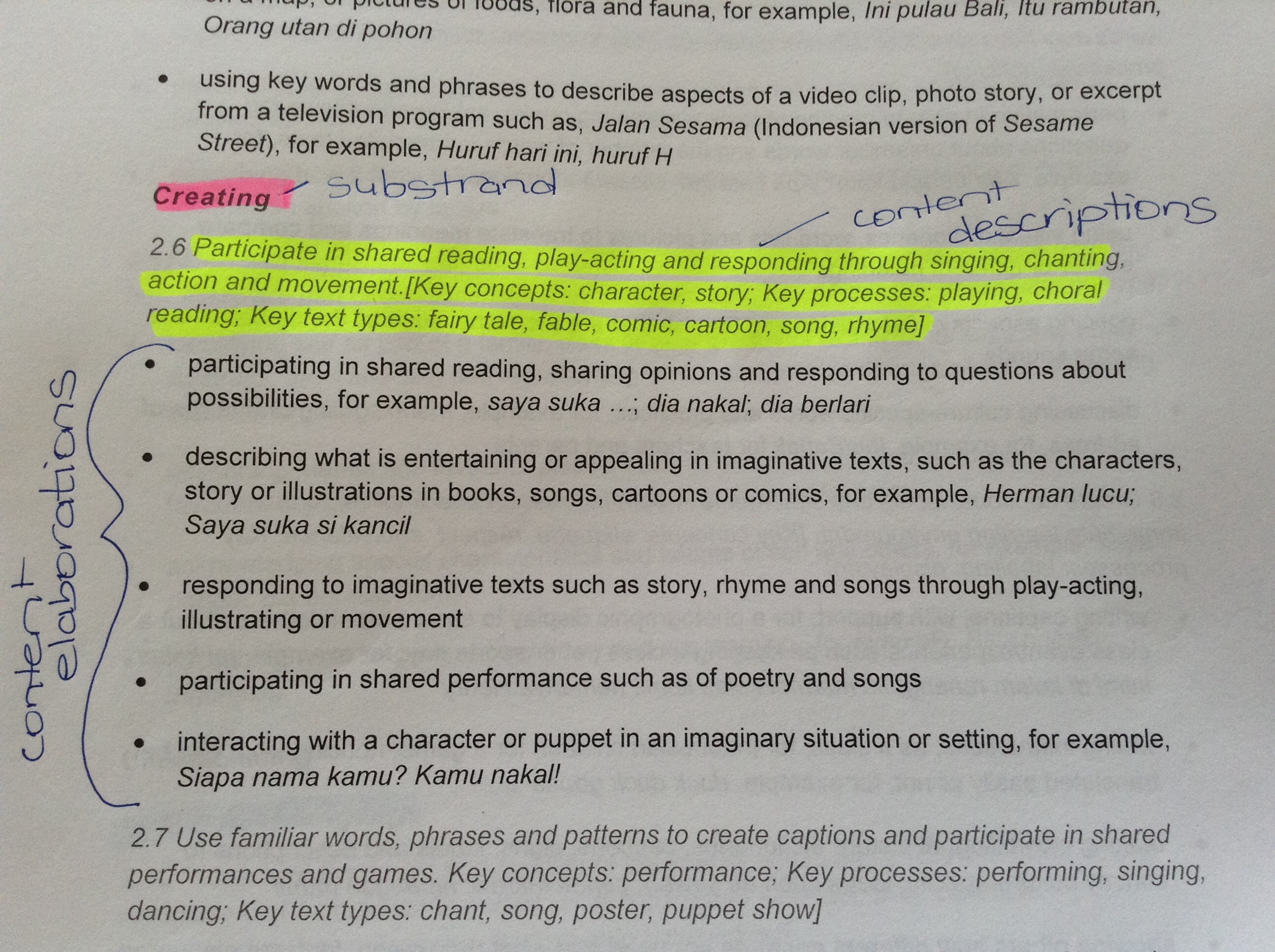
I emerged from the workshop busting with enthusiasm to trial some of her ideas the following week! I also emerged with pages and pages of notes which I will edit and include because I am hoping others will find them interesting and thought provoking too.

‘Identity’ is a concept underpinned throughout the entire Curriculum. This helps remove the ‘strangeness’ & foreignness’ from language teaching which in turn increases tolerance. Teachers use language & culture ‘hooks’ to connect their students.

Intercultural teaching is big picture thinking and not the 5 F’s. It promotes deeper thinking and understandings.

Instead of having a set task for each class to complete to represent and measure the learning covered during a term theme, could we at the primary level instead pose an inquiry question based on what teacher and students believe to be the most important understanding we want to know as a result of the term theme? For example, What role does schooling play in the community? Or, How do we take care of ourselves and others? How do we promote good health?

Language teaching should be about encouraging thinking rather than about providing answers.

This can be achieved by asking students about what we need to know and then listing the points which can then be ticked off as they are each covered. It could also include asking students to contribute to the list of key vocabulary to be introduced/revised. I love this idea. I do begin each topic with a list of vocabulary which is often targeted through flashcards and games. I have in the past simply added any student initiated words however I realise that this in itself demonstrates how teacher centric my teaching is. This is going to be extremely challenging for me with my current stye of teaching yet also very exciting and leads perfectly to my next dot point.

In learning about the new Languages Curriuclum, Indonesian teachers should play with the shift in thinking rather than in the shift in programming. The shift is in pedagogy.

Know your students. Andrea gave examples of how she had surveyed her students to discover what other languages they had learned or already spoke. This is definitely something I would like to investigate further with my students. I asked my upper primary classes the following Monday about this and discovered that not only did we have students who spoke Punjabi and Greek, but one of our recently returned students from the APY lands speaks Pititjantjara! That was very exciting because a group of Year 6-7’s are currently preparing for a 10 day school bus trip to the AYP Lands! It also gave students the opportunity to consider what level of fluency gives you the right to say you speak a language. Being able to say “Aloha” does not make one fluent in Hawaiian!

Andrea then finished off with some homework tasks for us. Here they are:

1. Look at the ACARA website and familiarise ourselves with it. Look through one of the subject areas and explore how everything is set out because that is how the Languages Curriculum will be.

2. Design a profiling tool to get to know our students. Andrea shared hers, a survey she asked all students to complete.

3. Look at the achievement standards and look at how they are sequenced and build in complexity.

Once again, a huge thanks to Andrea for meeting with us down here on the Fleurieu and providing us with so much information on the revised Curriculum- Indonesian.



This is what happens when a colleague comments on a post…..

Last weekend I posted on the Indonesian class blog about the vocabulary students have been focusing on this term. One of my colleagues commented that she too would like to learn some of this vocabulary which immediately set me thinking about the ways in which I could achieve that.
I am very impressed with my brainwave, as were the students who were only too happy to assist me with my plan.
Here it is:
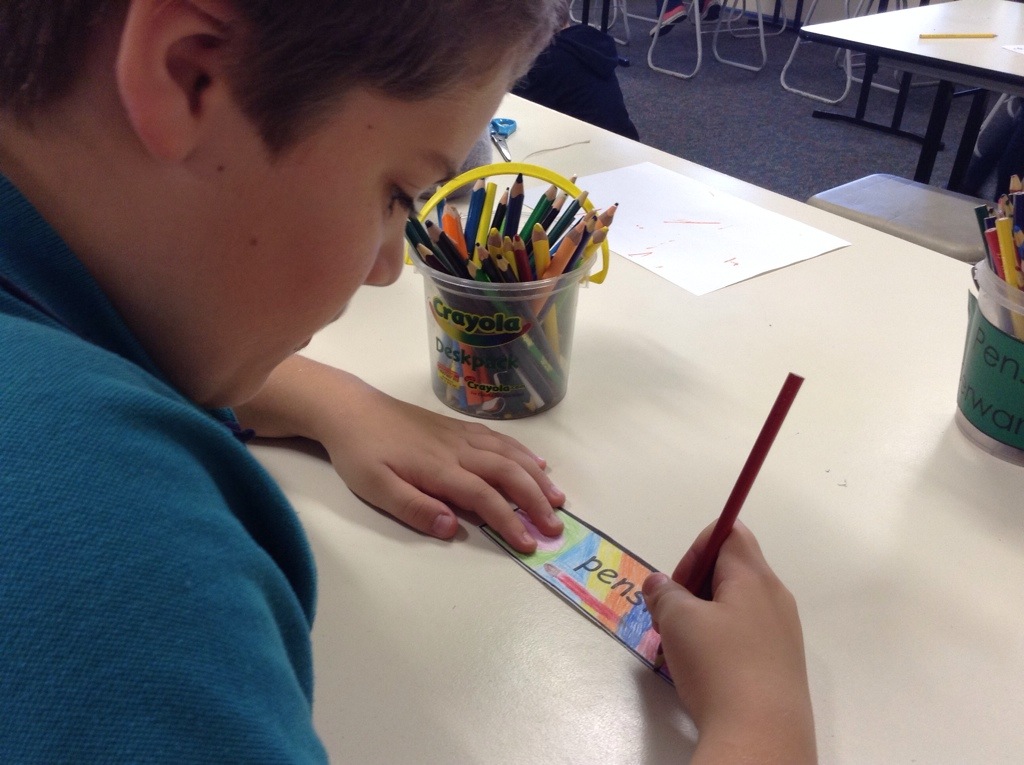
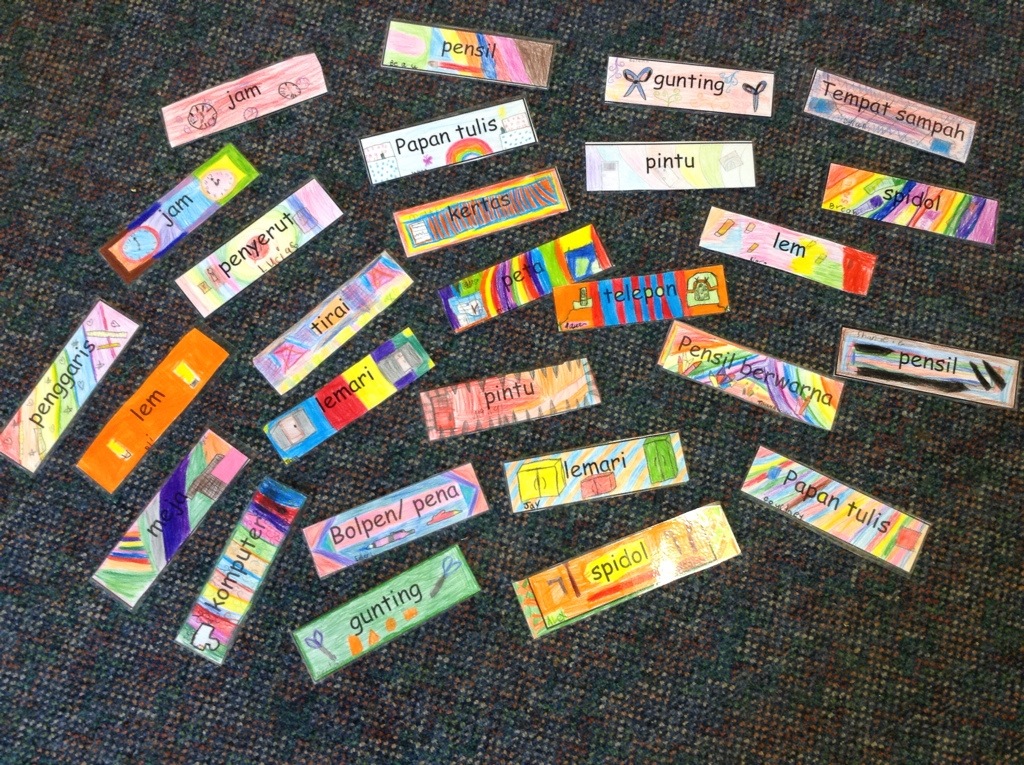
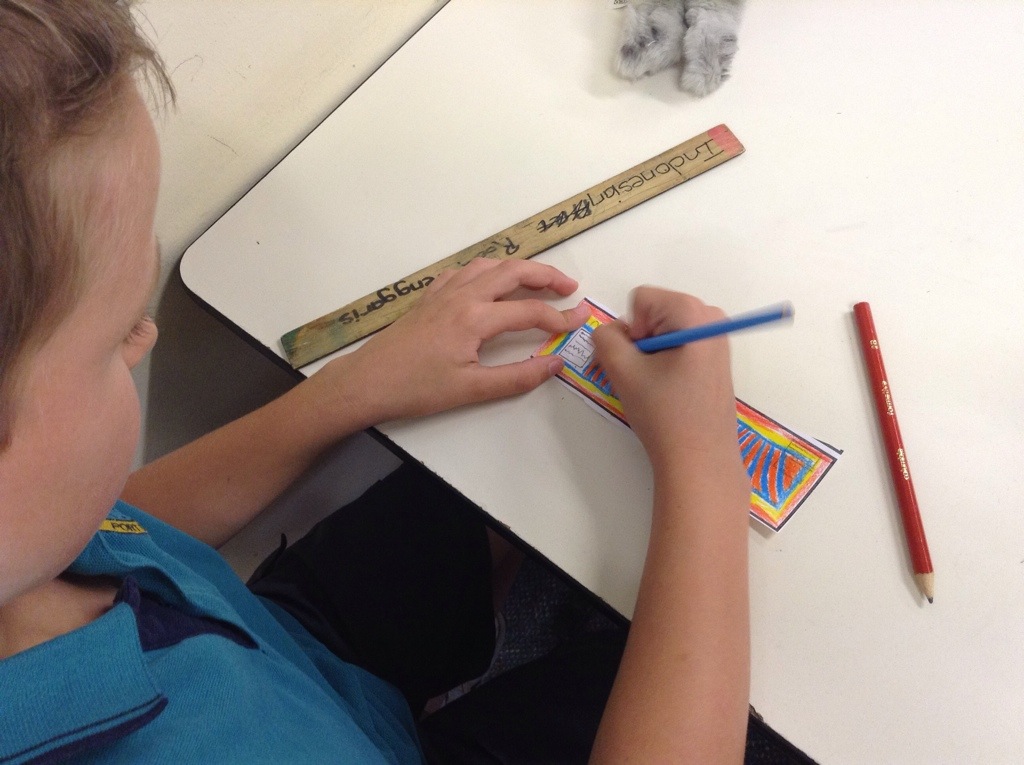
I ran off a black and white copy of certain flashcards and then handed them out to students. Their task was to illustrate one of the words clearly so that their classroom teacher could ‘translate’ them immediately on sight. Students did a brilliant job and when they were laminated, the colours became even more vibrant.
I had great pleasure delivering the first set to Sandy W. on Thursday with a packet of blutack so that she can now label classroom objects around her room eg, the clock, the door, the white board, etc.
I now look forward to hearing the feedback from students about Sandy’s efforts of using and understanding these words in her classroom!
20140531-115700-43020271.jpg

20140531-115800-43080013.jpg

20140531-120343-43423504.jpg

Write, Draw, Pass

This idea could word well with the prepositional language I am planning to introduce this week to uper primary students! as well as reviewing classroom objects. Imagine a picture of “pena diatas lem”

Martina Bex's avatarThe Comprehensible Classroom

This is one of my favorite party games, which Ashley VanHemert so brilliantly reminded me to use in the classroom! She heard of the idea from Amy Wright at UAF. This is an excellent activity for Preferred Activity Time.

STEP ONE: Give each student one side of this form (I put two forms/page to save paper):

Write, Draw, Pass *Updated on 03/26/2012

STEP TWO: You have several options. In Box #1, in the target language, …

  1. Have students write a creative, descriptive sentence (ex: a fat dog with big eyes runs to the store).
  2. Have students write a descriptive word image (ex: a pretty girl with long hair)
  3. Write (1) or (2) for students so that they don’t have to think of them. Here are some that I recently used in one of my classes:

**Make sure students only include colors if you are planning to use crayons or colored…

View original post 573 more words

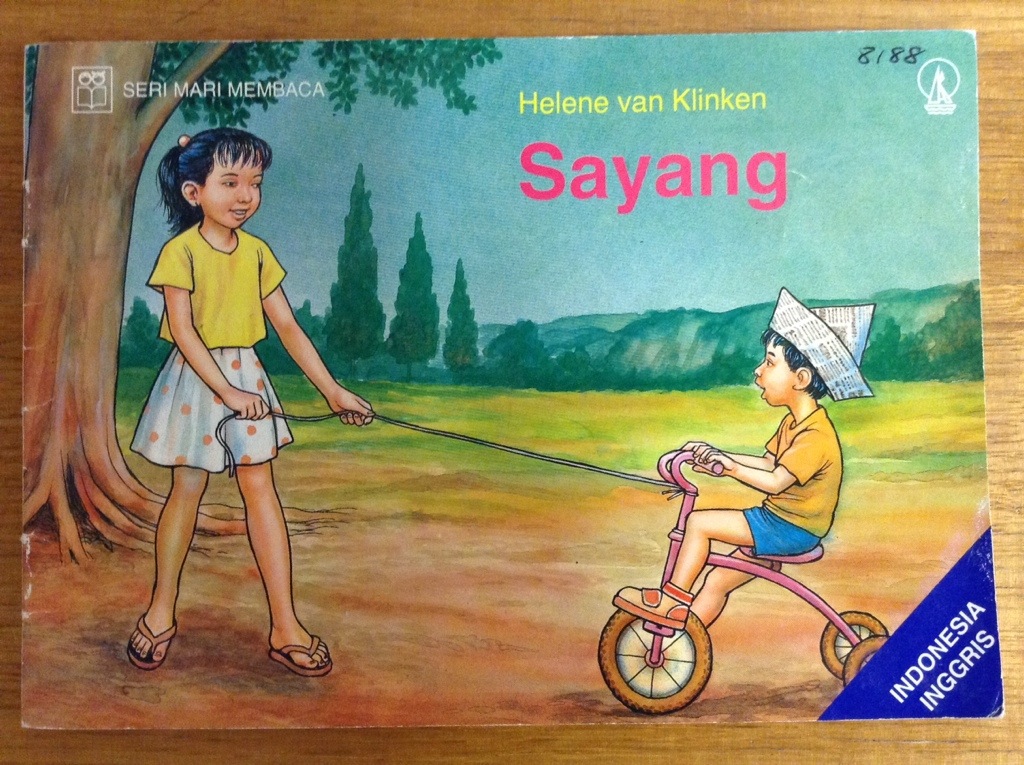
‘Sayang’ written by Helene van Klinken

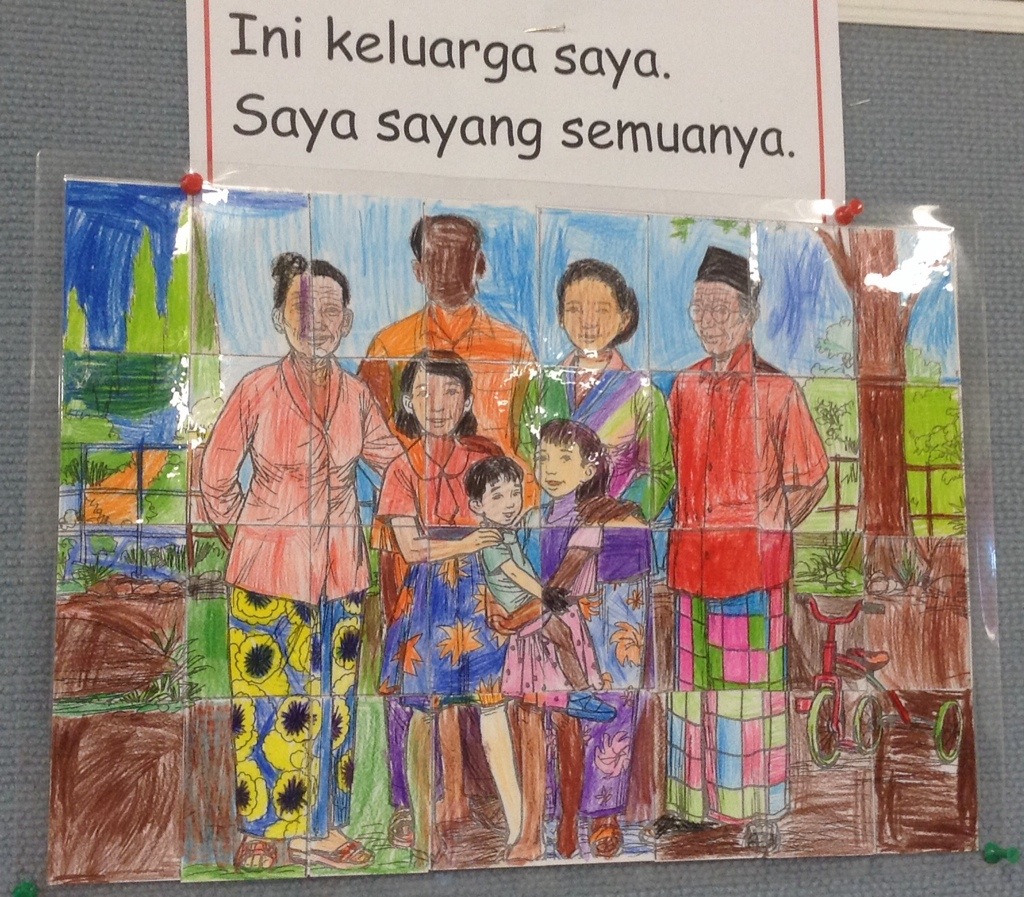
Last term, the junior primary classes looked at the text, “Sayang” as part of their study about keluarga. The book is one of books in the Seri Mari Membaca, a series which I believe is out of print now.

20140503-145552.jpg
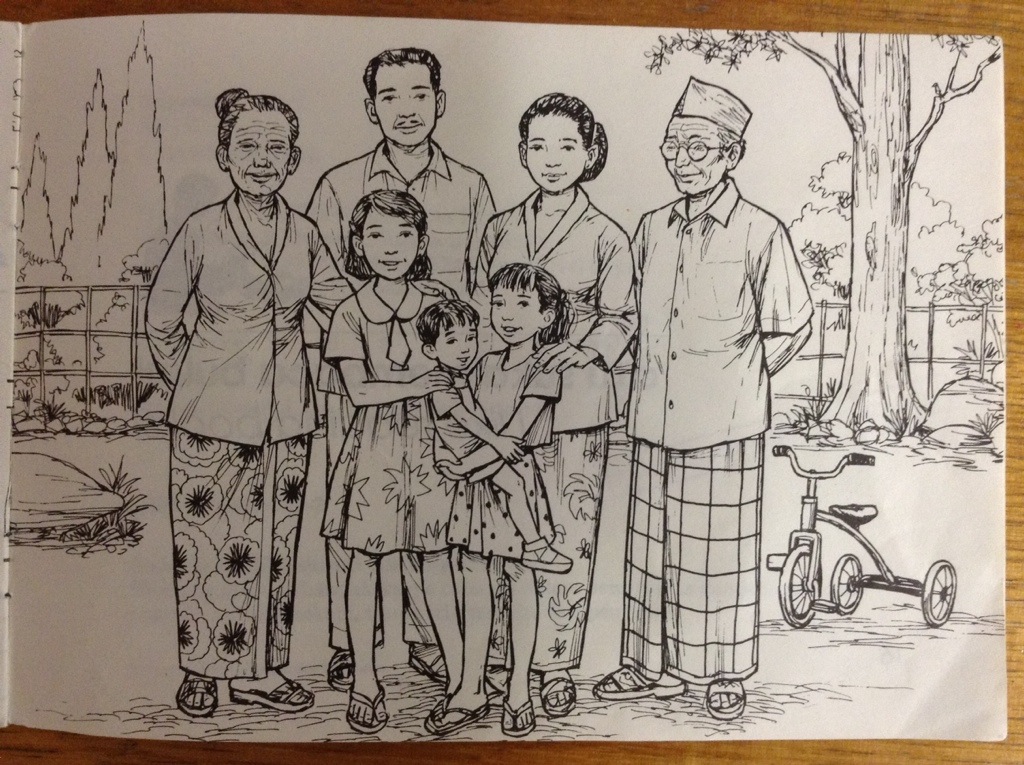
The illustrator of “Sayang” is Sutarno and it is the illustrations that I love most about this book.

20140503-150332.jpgI love that the illustrations are of Indonesian people in an Indonesian setting and they are not westernised. I acknowledge that they are a bit stereotyped however, as it is not a negative stereotyping, it should provide a good opportunity for discussion.
The text in my copy has been altered by a previous Indonesian teacher who seemingly wasn’t comfortable introducing the word “aku”!

20140503-150720.jpg
As these books are tiny (21cm x15cm), I decided to create a notebook file of the story for my students to make it more appealing. I photographed each illustration and then wrote my own text as I wanted to utilise the opportunity to introduce verbs, names and keluarga vocabulary. As Helene van Klinken has done in all her books, I kept the text repetitive to make the text as comprehensible as possible. For example, for the page about her mother, I wrote;
Ini Ibu saya.
Namanya Setia.
Ibu memasak di dapur.
Saya sayang Ibu.
I then asked an Indonesian friend to read the story while I recorded her doing so and attached each segment to the relevant page. This was a brilliant idea on so many levels. Firstly, my students were able to listen to a native speaker, which they absolutely loved. Secondly, Bu Mei read the last sentence of each page by putting stress on “sayang” (just as we would say, I loooove my mum) which fortunately emphasised the very word that was the point of the story! Thirdly, it was brilliant because it saved my voice! I could sit back for each of the 6 classes and just click on the picture and Bu Mei’s voice would fill the room and had us all spell bound!
Each time we focused on this story, students commented on the lack of colour in the pictures, so during week 10, I photocopied each illustration and enlarged it to A3. I then drew an 8×4 grid over each one and this was photocopied again as the master. Each class was assigned one of the picture grids, which was cut up into 32 rectangles. Each student was given one of the rectangles to colour in. The first class to complete this task provided me with the best example of why it is important to sit with others who are working on the same part of the picture!! Some of the following classes did an excellent effort and worked so cooperatively together. The pictures have all been laminated and are now up on a display board above a table where I often heard students discussing them while working on their work last week.

20140503-153815.jpg

20140503-153831.jpg

More journaling ideas

This post makes me think how asking students to write a review as an end of term assessment would make an awesome post and a good opportunity for them to review and evaluate the unit of work from their perspective. Wish I had done this last term actually!! A few hiccups last term with students using ipads inappropriately was disappointing but was also a valuable opportunity to reiterate iPad usage rules and expectations!

marishawkins's avatarMaris Hawkins

I have been plugging away on my blended class for next year.  I have planned some more journaling ideas for my students. These could be used for a blog or a paper journal.  I always give my students the option to write about any topic that is important to them as well.  I want to help those that need a little inspiration each time.

  • ¿Te gusta viajar en avión?  ¿Por qué?
  • ¿Cuáles son tus preferencias cuándo viajas en avión?  ¿Te gusta hablar con las personas durante el viaje?  ¿Te gusta ir por el control de seguridad?  ¿Cuál bebida bebes en el avión?  ¿Dónde te gusta comer en el aeropuerto?
  • Mi película favorita es…
  • Yo pienso/no pienso que hay extraterrestres (aliens) porque…
  • Estoy contento/a cuando…
  • Si eres un animal en el zoológico, ¿cuál eres? ¿Por qué?
  • Cuando no dormiste una noche, ¿qué hiciste (did)?
  • Si puedes vivir en Antártida, ¿quieres?  ¿Qué…

View original post 26 more words

Permission to Upload

Term 1 began with a high awareness of the importance of discovering which of our students have permission to have their image uploaded onto the internet. I began my search in the front office to discover that while we had lists of who can have their image uploaded, there were no lists of the opposite. So I scanned the lists against my class lists for every class and came up with the students I needed to target. Turns out this list was also hugely popular with class teachers, especially ones who have class blogs!
This process also highlighted that we as a school needed to update the wording on our enrollment forms for new students, which was done almost immediately. Previously the permission focussed on publishing images in newspapers and newsletters and only vaguely covered class blogs, the school Facebook page, specialist teacher blogs, teacher youtube channels etc., so a more up to date and succinct edit was undertaken. Yeah!
My next step was to target students who were on my reverse list. I began by approaching parents I have know a long time to ask them why they had not given permission for their child’s image to be uploaded. The answer I commonly received was that when they first enrolled their child (6 years ago in some cases), the internet was only just being used in schools and they were unsure of the impact of it, so to be safe, they ticked the ‘no’ box. However, all agreed that now they would happily sign a permission form reversing this decision.
An email was then sent out to all teachers about permission letters currently in use to achieve this purpose! No point reinventing the wheel!! 2 teachers replied and kindly gave me permission to tweak their permission letters. I love the professional sharing amongst colleagues the happens at our school!!
This letter, was approved by my principal, run off on letterhead and now sits on my desk in a plastic sleeve. As students are photographed, filmed or recorded in any way, I check their name and if still on my reverse list, I ask them if they would like their photo/ film to be uploaded onto my blog and if they do, I hand them a copy of my letter. So far I have had 3 returned and I have also been able to scratch a few more off my lists as class teachers are also going through this process for their own blogs.
While the reverse list wasn’t that long, most classes only had about 5 names on the list, it has been a real thorn in my side as all of my upper primary classes have done some amazing work this term which I am itching to share but as I am still waiting for 1 or 2 students, I am debating whether to continue being patient and continue to speak to those students or just go ahead and edit them out of the photo/film. I am leaning towards the second option because I know that once I start a new topic, a new term, new projects, I will find it very difficult to look backwards and find the time and energy to complete it. Guess then, what I will be doing today ready for term 2 tomorrow??? And in the meantime, I will continue to blur faces using a new app I recently discovered.

20140427-075115.jpg

Term One Reflections

First term was a very long 11 weeks. It began with me readjusting to teaching 4 days a week as opposed to traveling 7 days a week and finding time to blog was challenging and the longer I left it, the easier it was to find reasons why I was too busy! So here goes….
My first 5 weeks back are a bit of a blur as that was how long it took me to get back on my feet and cope with the exhaustion of both teaching and doing the preparation needed to teach. It also took me 5 weeks to rediscover the balance of what was needed for a 50 minute lesson with each year level!
HIghlights for the term include the following:
1. Bu Maylanny’s visit.
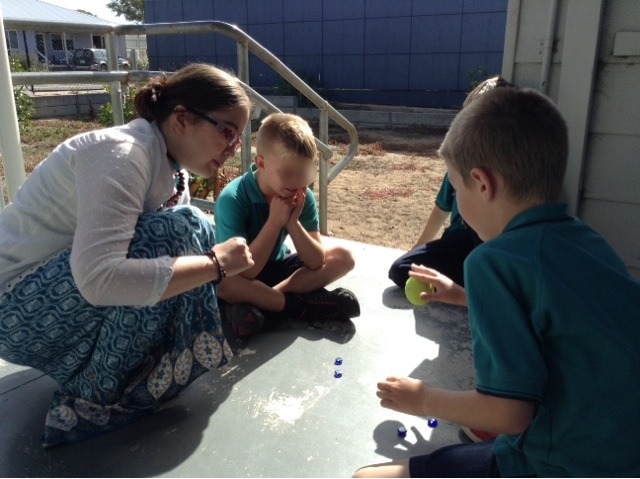
Bu Maylanny is a university lecturer from Bandung (West Java) and her 2 week stay was nowhere near long enough. Her visit was organised by the wonderful Pak Nyoman at APBIPA. She spent 2 days with us at PEPS and I still have students telling me how disappointed that they missed working with her in class. She taught us how to play bekel ( an Indonesian game very similar to knuckles except with a ball).

20140426-144324.jpg

20140426-144621.jpg
We played this with several classes and they all really enjoyed the challenge. Very tricky picking up beads with one hand and bouncing and catching a ball in the other!
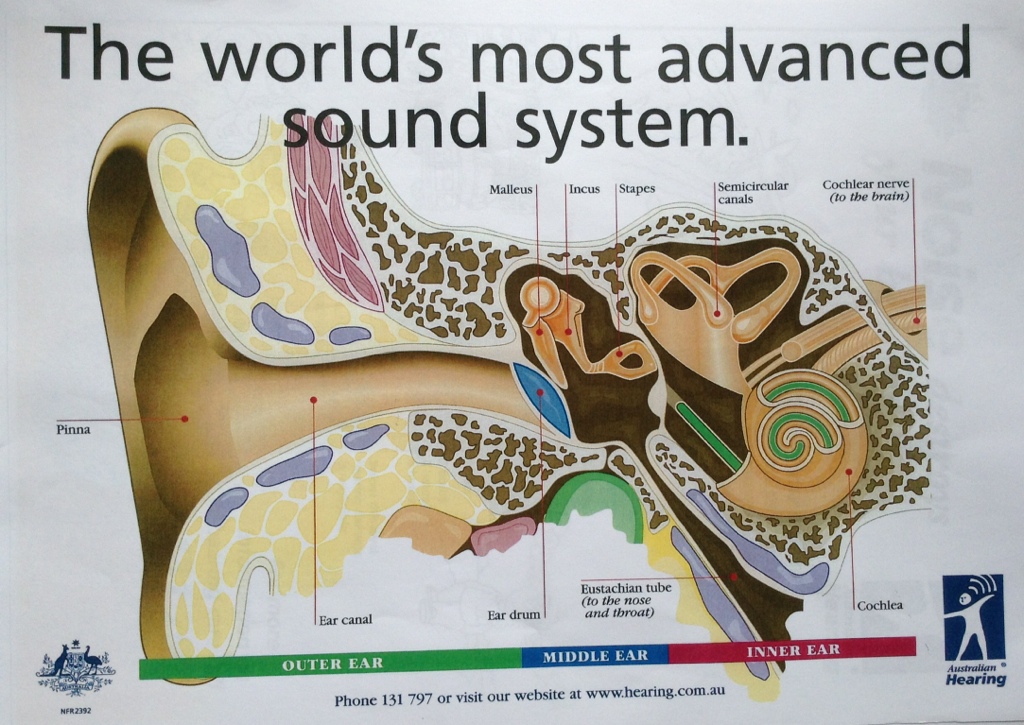
2. Hearing Impaired Worksop; “Supporting Students With Hearing Impairment”

20140426-145524.jpg
I am very lucky to have a sound field system in my classroom complete with microphone. There are several hearing impaired students at our school however I find that using the sound field system benefits everyone as when learning new vocabulary every one can hear clearly and it also benefits my voice enormously as I can just speak normally instead of having to talk loudly all day. I used to have huge problems with my throat and voice and thanks to the sound field system, this has largely been eliminated.
The one thing that I brought away with me from the workshop regarded the use of smart boards. I use mine constantly both for introducing and revision and it was pointed out to us at the workshop that smart boards are usually used in darkened rooms. My room has blockout curtains on one side and there is no doubt my hearing impaired students would have difficulty trying to lip read to support their hearing while simultaneously looking at the smart board!! Can’t believe I hadn’t considered this already!
3. State Grant for Establishing a Sister School
The schools on the south coast all applied for this grant and we were all successful which is sooo exciting. We each won $2000 which will go towards buying ipads so that students can communicate with our sister school next term about “sekolah”.
4. Congklak
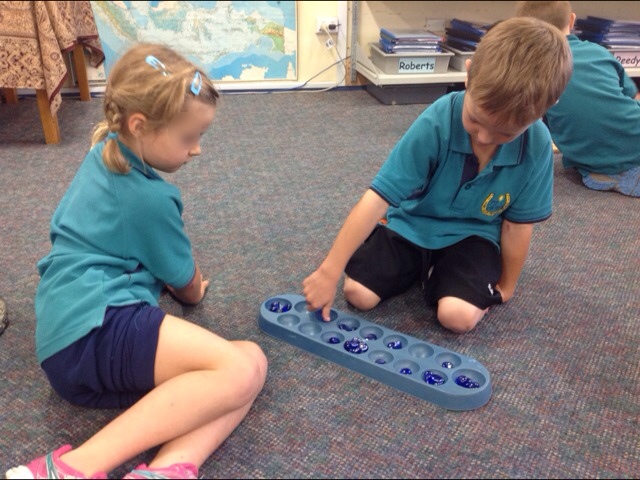
This term I finished up with teaching all the junior primary and middle classes how to play congklak. It is a game I have only usually taught upper primary students but have realised that years 1-3 can also play it and enjoy it. It was hugely popular with all students!

20140426-155002.jpg

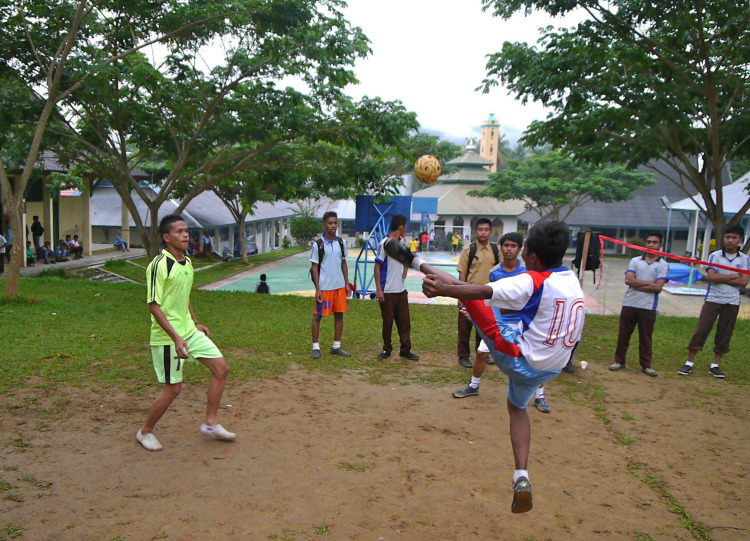
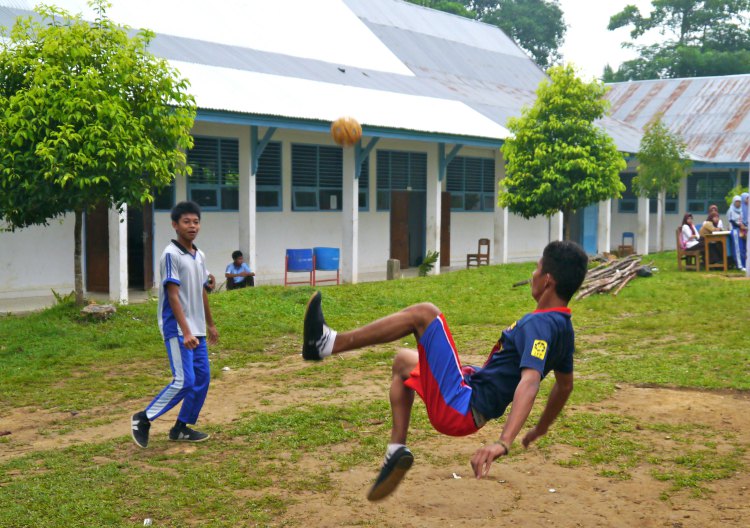
Sepak Takraw: Soccer or Volleyball? Neither.

sepak takrow would be such a great topic, so here I am collecting more resources!!

Indonesiaful's avatarIndonesiaful

“While walking through campus at SMAN 7, Kendari in Southeast Sulawesi, it’s difficult not to notice the sprawling scissor -kicks and diving headers of the students playing Sepak Takraw.  Sepak Takraw, meaning “kick ball” in Malay, is not a competition for the uncoordinated and inflexible.  The game is played similarly to volleyball, with a single-point system, rectangular court and elevated net; however, unlike volleyball, a player cannot use their hands.  Thereby, the three participants on each team have to relay the ball over the net (without it touching the ground, or going out of bounds) using a combination of feet, legs, chest and head.” 

P1050166PVP1050026PV

“The ball used in Takraw has a circumference of 17 inches and is woven out of a material called rattan.  The rattan ball has a hard surface, but is very forgiving with its lightweight and hollow center.  The game begins when a player on the serving team…

View original post 49 more words

Poverty in Kupang

A fantastic piece of writing about education in NTT.

Nick Hughes's avatarIndonesiaful

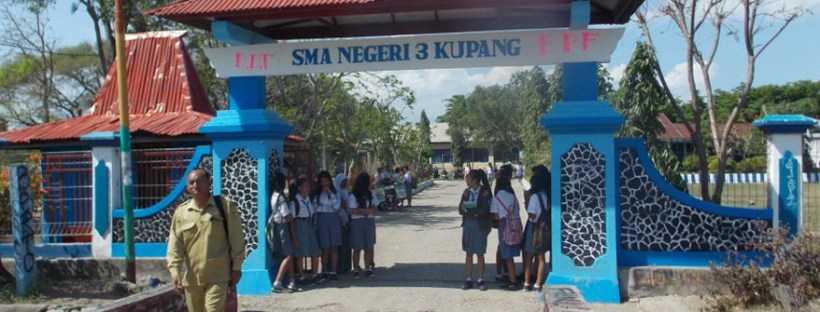
Nick_SMAN3 entrance The main entrance to SMA Negeri 3 Kupang, one of the best public schools in the city.

It’s a common sight in Kupang—a thirteen or fourteen-year-old boy collecting fare money from uniformed school children as they pile out of his crowded bemo. The boy, like many others his age or even younger, works as a konjak, riding around on the bemo (minivans that serve as Kupang’s public transit system) that buzz around the city, hanging out the open side door, collecting fares from passengers, and trying to cram as many people into the vehicle as possible.

These konjak perform their duties with great enthusiasm. They shout at idle pedestrians as their bemo speeds past, jump out of the still-moving van to usher passengers inside when they call for a ride, and show hesitant customers where the few inches of free space are on the deluged benches inside the car…

View original post 525 more words

Jakarta

I have just found an amazing video about Jakarta which will be perfect for preparing my students for our Jakarta visitors later this term. Have a look at this! This video not only gives students a fantastic idea of Jakarta but it also explains why it is a mega city! I thoroughly recommend it for just about all ages. Even very young students will gain something from the visual feat which are excellent and provide many opportunities for extra curricula discussions.